


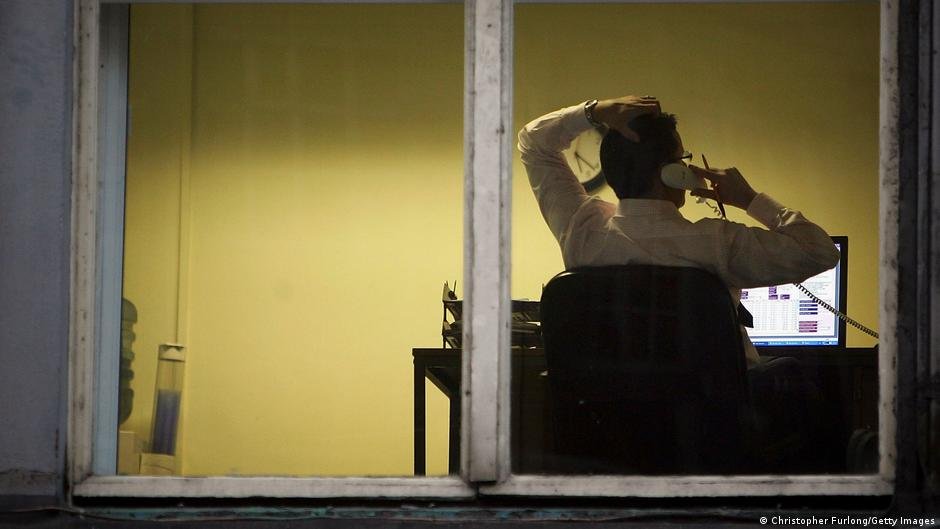
Individuals who stay up late demonstrated superior performance in mental assessments compared to those who wake early, according to research. However, this does not imply that everyone should operate throughout the nighttime hours.
Do you consider yourself a “night owl” who prefers staying up late and working deep into the evening, or perhaps a “morning lark” who rises early to make full use of the morning hours? Regardless of whether you see this as a choice, a routine, or simply part of your nature, it defines your “chronotype.”
A study indicates that your sleep schedule type might influence your overall mental abilities. It was observed that individuals who prefer staying up late typically scored higher cognitively compared to those who wake early.
The research from the UK, released on July 11, 2024, in the journal
BMJ Public Health
examined information from over 26,000 individuals who had undertaken several cognitive assessments.
The objective was to determine how various facets of sleep—such as length, routines, and quality—influenced mental acuity and comprehensive cognitive function.
What the ‘night owl’ study found
They discovered that sleeping between
7-9 hours a night
proved ideal for optimal brain function. However, they discovered that an individual’s chronotype influenced their test performance.
Individuals who were inherently more energetic during evenings scored higher on cognitive assessments compared to those who preferred mornings,” stated lead author Raha West from Imperial College London, UK, in a press release. “These sleep-wake tendencies aren’t merely individual choices; they can influence how well we process information.
However, this doesn’t imply that all early risers experience poorer cognitive function. “The results show a general pattern where most night owls tend to exhibit superior cognitive abilities,” explained West.
Moreover, your chronotype is not fixed—you have the flexibility to adjust it in any direction. Additionally, merely ensuring a restful night’s sleep can enhance your cognitive abilities as well.
The study of sleep patterns known as chronotypes
Chronotypes aren’t fixed—they can change throughout our lives.
“Kids usually prefer mornings, teenagers and young adults lean more toward evenings, and older people frequently return to a preference for mornings,” explained Feifei Wang, a sleep specialist from Eötvös Loránd University in Budapest, Hungary.
However, Wang stated that there was substantial proof indicating our tendencies regarding sleep and wakefulness periods remained consistent over time, even
When we change time zones
.
“Whether someone tends to be more active in the mornings or evenings depends on a mix of genetic, hormonal, environmental, and lifestyle elements. These components work together to define a person’s chronotype,” explained Wang, who did not participate in this latest research.
Chronotypes are partially determined by variations in our circadian rhythms—the internal bodily clocks responsible for regulating crucial processes like sleep and metabolism.
The genes associated with an individual’s internal body clock encompass those known as “CLOCK,” “PER,” and “CRY.” These play a significant role in determining one’s chronotype. As Wang explained to LIFEHACK, they determine “whether someone leans more towards being a morning person or an evening person.”
However, you can teach yourself to become a morning person or an evening person.
“We have demonstrated that undergraduate students can shift their chronotypes forward by nearly two hours within a span of two years,” stated Ignacio Estevan, a sleep specialist from Universidad de la República in Montevideo, Uruguay. It’s worth noting that Estevan was not part of the recent research.

‘Till dawn studies’ impair exam scores
Estevan has explored the link between chronotypes and academic performance. His findings indicate that the test scores of night owls and early birds were influenced by the time of day the tests were administered.
“Estevan reported that individuals with laterchronotype preferences performed poorly academically during morning shifts when compared to those who woke up earlier. This difference wasnot observedduringtheafternoonshifts,” he explainedtoLIFEHACK, emphasizingthathisstudyaddedtoscientificevidenceindicatingthatschoolstarttimesaffectchildren’sacademicresults.
Certain specialists believe that synchronizing school schedules with students’ natural body clocks could improve their future prospects.
In conclusion, stated Estevan, both testing and cognitive performance were contingent upon
good quality sleep
Research generally indicates that individuals who get more sleep tend to achieve higher scores on exams.
Estevan mentioned that this could be attributed to the significance of sleep for both learning processes and optimal brain function. His studies have revealed that pulling an ‘all-nighter’ to cram at the last minute negatively impacts exam performance.
“Approximately 15% of the students in our research didn’t get any sleep prior to the exam, and their performance was the poorest,” stated Estevan.
What’s the most effective approach for getting a restful night’s sleep? According to Wang, maintaining a consistent bedtime routine, ensuring your sleeping space is dim and peaceful, making an effort to unwind, avoiding caffeine and stimulating substances post-dusk, and minimizing nighttime light exposure—especially right before bed—are key steps.
Edited by: Zulfikar Abbany
Primary source:
Sleep duration, chronotype, health, and lifestyle factors influence cognitive function: A UK Biobank cross-sectional analysis; published by Raha West, Daqing Ma, et al. in BMJ Open Sport & Exercise Medicine (July 2024).
https://doi.org/10.1136/bmjph-2024-001000
Author: Fred Schwaller