


Chania is among our top picks on Crete! Located in the northwest part of the island, this charming small harbor city ensures nobody remains unmoved… LIFEHACK invites you to explore one of Crete’s loveliest villages!
Previously the heart of Crete, Chania stands as an exquisite gem of the Mediterranean! As a vibrant, multi-cultural hub, this city has transitioned through eras under various dominions including Minoan, Roman, Byzantine, and Ottoman rule. Every civilization has etched its influence onto the fabric of the city, molding its present character. Boasting historical landmarks, quintessential Mediterranean districts, along with its picturesque Venetian harbor, Chania captivates visitors from around the world.
,
Chania stands out as one of the most picturesque villages in Crete.
Planning a visit to Crete? Learn more about it to get ready for your journey:
- Crete: 4 upscale hotels for booking during your vacation
- Crete: Hidden Gems on the Island You Simply Must Visit
- Crete: Top spots for snorkeling around the Greek island
Chania, a Mediterranean gem
When exploring Crete, be sure not to miss out on Chania! This lively city brims with authentic charm and will particularly enchant those interested in cultural heritage and laid-back living. One of Chania’s standout features is its historic Venetian harbor, which dates from the 1300s. Towering over this picturesque harbor is a 21-meter-tall lighthouse, making it an iconic sight. The waterfront area boasts numerous shops and eateries housed in buildings featuring colorful facades. It serves as an ideal location for watching the sun dip below the horizon while enjoying your favorite beverage.
A short distance down the road, continuing along the historic waterfront of Chania’s old harbor, lies the Janissary Mosque – alternatively referred to as the Kioutsouk Hassan Dome. This structure stands out as one of the city’s loveliest sights. Constructed during the 18th century under the guidance of an Armenian architect, this edifice embodies typical Ottoman design. Its architectural style encapsulates the various influences that have contributed to the city’s rich past. While meandering through the vibrant, cobblestone lanes nearby, visitors can almost feel like they’re stepping into different eras!
The Firkas fortress (barracks in Turkish), built in the 17th century to protect the entrance to the old port, is home to ancient cannons as well as the Marine Museum. What’s more, the fortress offers a unique panoramic view of the entire port.
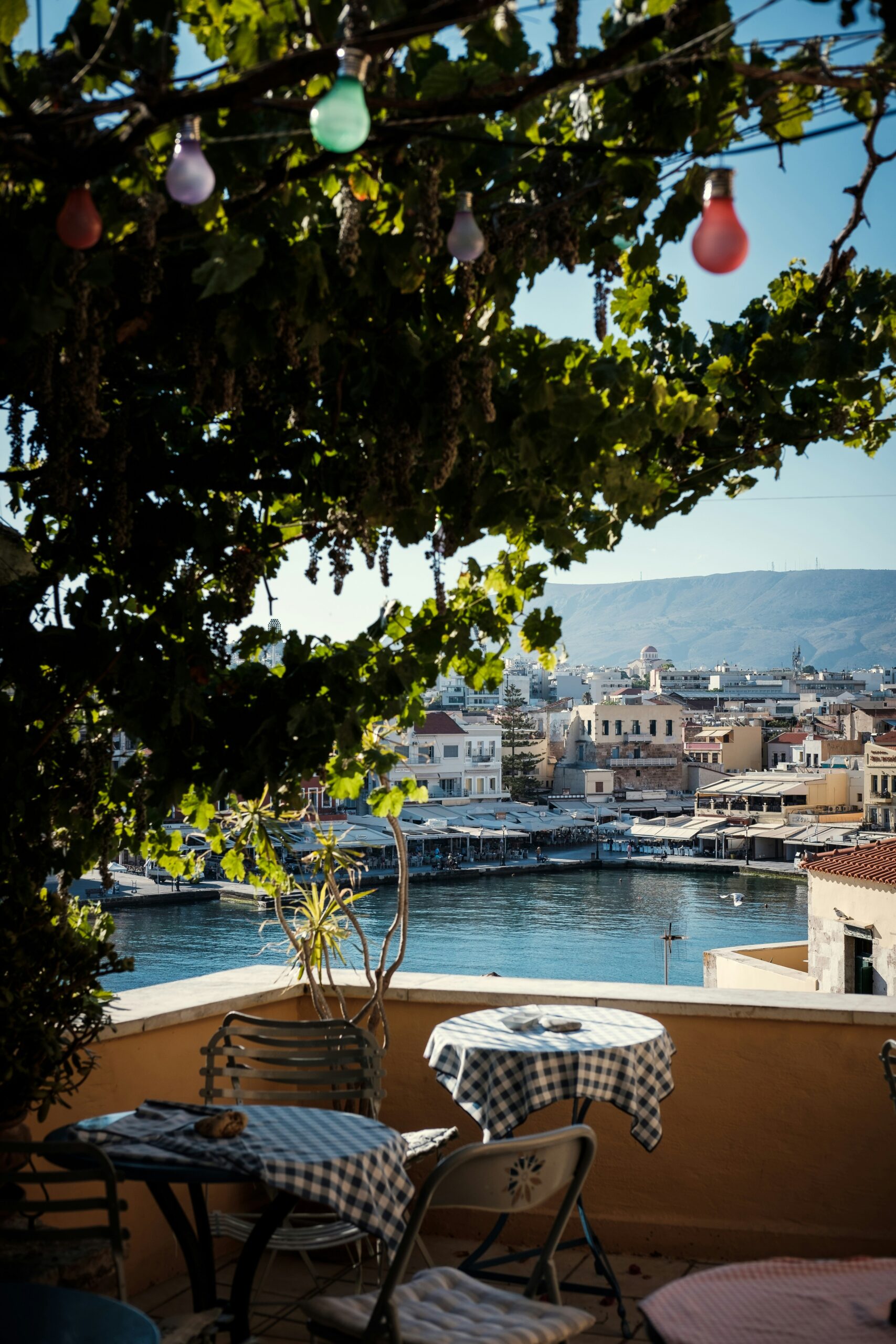
The ancient town of Chania…
The historic center of Chania, designated as a UNESCO World Heritage site, features structures from the Byzantine, Venetian, and Ottoman periods. Strolling through this area, navigating its winding lanes, offers great pleasure as one can appreciate the architecture adorning these homes’ exteriors.
In the Kastelli area, you can still glimpse remnants from the ancient city of Kydonia, which dates back to the era of the Minoans. Within the Splanzia neighborhood, the Church of Saint Nicholas (Agios Nikolaos) – known as the Sultan’s Mosque due to its distinctive minaret built during Ottoman rule – is another site worthy of exploration. Lastly, housed within a previously standing Franciscan monastery, the Archaeological Museum showcases numerous artifacts from prehistory, reflecting an intriguing mix of architectural styles throughout history.
Visiting the historic district offers a great chance to explore the centuries-old covered marketplace, which has been operating daily for more than 100 years! This place is truly iconic, offering an array of finds.
traditional Cretan products
For example, olive oil, thyme honey—the regional specialty—spices, along with textiles and jewelry…
The Akrotiri peninsula
East of Chania lies the Akrotiri peninsula, which is equally deserving of a visit! This area, encircled by mountains, cliff formations, and an abundance of olive groves, houses the Tomb of Venizelos—the key figure behind Greece’s independence—as well as many caves.
In the northern part of the peninsula lies Stavros Beach.
one of the loveliest shores in Crete
In reality, this pristine waterside location served as the setting for the concluding shot in the film.
Zorba the Greek
The film directed by Michael Cacoyannis from 1964. This petite lagoon, encircled by majestic rocky outcrops, provides tourists with an incredible vista!
In wintertime, the mountaintops get blanketed with snow, offering tourists an entirely distinct perspective of the scenery!