
by admin | Jul 19, 2024 | architectural design, architecture, beautiful places, buildings, skyscrapers
Across cities from Dubai to Shanghai, towering skyscrapers are reshaping the urban landscapes around the globe. These architectural marvels stand as emblems of financial strength, defying gravitational limits with their steel and glass structures.
Ever since the completion of the Home Insurance Building in Chicago in 1885—the inaugural skyscraper—vertical construction has continually expanded the boundaries of architectural possibility. These towering structures do more than just serve their main purpose; they vie with each other in terms of daring design and visual appeal. Below are some of the most striking skyscrapers that nearly kiss the clouds above ultramodern urban centers.
Burj Khalifa, the desert spear
When discussing skyscrapers, one cannot avoid mentioning the tallest among them. Standing at 828 meters high,
this Dubai landmark
intrigues with its breathtaking grace. Conceived by the architectural studio Skidmore, Owings & Merrill, the Burj Khalifa features 163 stories housing offices, upscale apartments, and the planet’s premier Armani Hotel. The tower’s sleek profile, drawing inspiration from a desert blossom known as the spider lily, embodies the grand aspirations of this modest emirate, which serves as its de facto capital.
bling
At night, its sparkling exterior stands out as a luminous landmark in this city rising from the sands.
Shanghai Tower, glass dragon
The Shanghai Tower, with its distinctive spiral form, resembles a dragon poised for flight, emphasizing both its groundbreaking architectural style and its deep connection to Chinese cultural symbols. Standing at 632 meters tall, this structure isn’t just visually striking; it represents cutting-edge concepts in modern city planning. Its dual-layered glass exterior, built-in wind generators, internal garden levels, and water recycling systems make it an exemplar of eco-friendly construction. Additionally, within its 128 floors resides the planet’s loftiest open-air observation deck, bringing visitors tantalizingly close to the heavens.
One World Trade Center, located in New York, rises like a phoenix.
A symbol of resilience, the One World Trade Center rises majestically at the location where the September 11, 2001 attacks took place in Lower Manhattan.
New York
Its eight-sided design, prism-like exterior walls, and towering 124-meter steeple render it both restrained and impressive. Standing at an imposing height of 541 meters (or 1,776 feet, echoing the year of America’s Declaration of Independence), it has emerged as a prominent symbol in the Manhattan skyline.
skyline
.
Taiwan Tower 101, bridging tradition and modernity
Standing at 508 meters tall, Taipei 101 held the title of the world’s tallest skyscraper until it was surpassed by the Burj Khalifa in 2009. The architects from C.Y. Lee & Partners drew inspiration from the form of a bamboo stalk, which signifies progress in Chinese tradition when designing this iconic tower. Its jade green hue and architectural elements reminiscent of ancient pagodas exemplify modern interpretations within an Asian aesthetic framework. Additionally, Taipei 101 gained recognition for incorporating a massive harmonizing pendulum—a 660-tonne steel sphere—that helps stabilize the edifice during storms or seismic activities.
The Shard, Crystal palace
Created by renowned Italian architect Renzo Piano, The Shard looms over the London landscape at an impressive 309.6 meters tall. This towering structure’s sleek pyramidal form and entirely glass exterior resemble a massive piece of breaking glass along the Thames River. Comprising 11,000 glass panes, its facade mirrors London’s evolving cityscape, transforming this skyscraper into what seems like an adaptable urban chameleon. It stands as an awe-inspiring work of architecture that has reshaped modern design.
British capital’s skyline
.
The Petronas Twin Towers stand tall as Kuala Lumpur’s iconic pair.
Symbols of modern
Malaysia
The appeal of the Petronas Twin Towers stems from their connection to Malay culture and Islamic artistic elements. These sleek structures, reminiscent of minarets, feature a gleaming façade made of stainless steel and glass that reflects sunlight like “multifaceted diamonds,” as described by architect César Pelli. A notable landmark for tourists is the see-through skybridge connecting the twin buildings at the 41st level, which continues to be both a fascination and a test for those with acrophobia.

by admin | Jul 11, 2024 | architectural design, architecture, buildings, culture, tourist attractions
Simply mentioning his name evokes visions of remarkable modern structures featuring distinctively avant-garde designs: Frank Gehry stands as a legend in the architectural realm. His creations—and he remains actively involved in designing new ones—possess a bold identity that consistently leaves people amazed.
Only a select few architects possess such global recognition that simply mentioning their names evokes vivid mental pictures of groundbreaking design. Among these luminaries, Frank Gehry stands out unequivocally. For more than six decades, he has consistently pushed boundaries with each new creation, proving that although architecture is a solemn profession, it can still embrace whimsy and creativity without losing its gravity.
Who is Frank Gehry, the architect?
Frank Gehry, born in Toronto in 1929, pursued his studies in architecture at Los Angeles in 1947. Afterward, he embarked on his professional journey with several companies initially focusing on residential and commercial designs. By the 1960s, when he established his independent practice—now recognized as Gehry Partners LLP—he transitioned towards handling more extensive undertakings.
His career took a significant turn with the renovation of his personal residence in 1978, known as the Gehry Residence in Santa Monica. For this project, Frank Gehry opted for unconventional building materials like plywood, metal, and corrugated steel. This endeavor is frequently considered an architectural manifesto by the designer.
In 1989, he received the esteemed award
Pritzker Prize
– akin to a Nobel Prize for architects – and proceeded to secure various accolades over his career recognizing his contributions to modern architecture.
Aside from his notable accomplishments in architecture, Frank Gehry is deeply committed to education and has shared his knowledge as an instructor at various renowned institutions such as Yale University and UCLA.
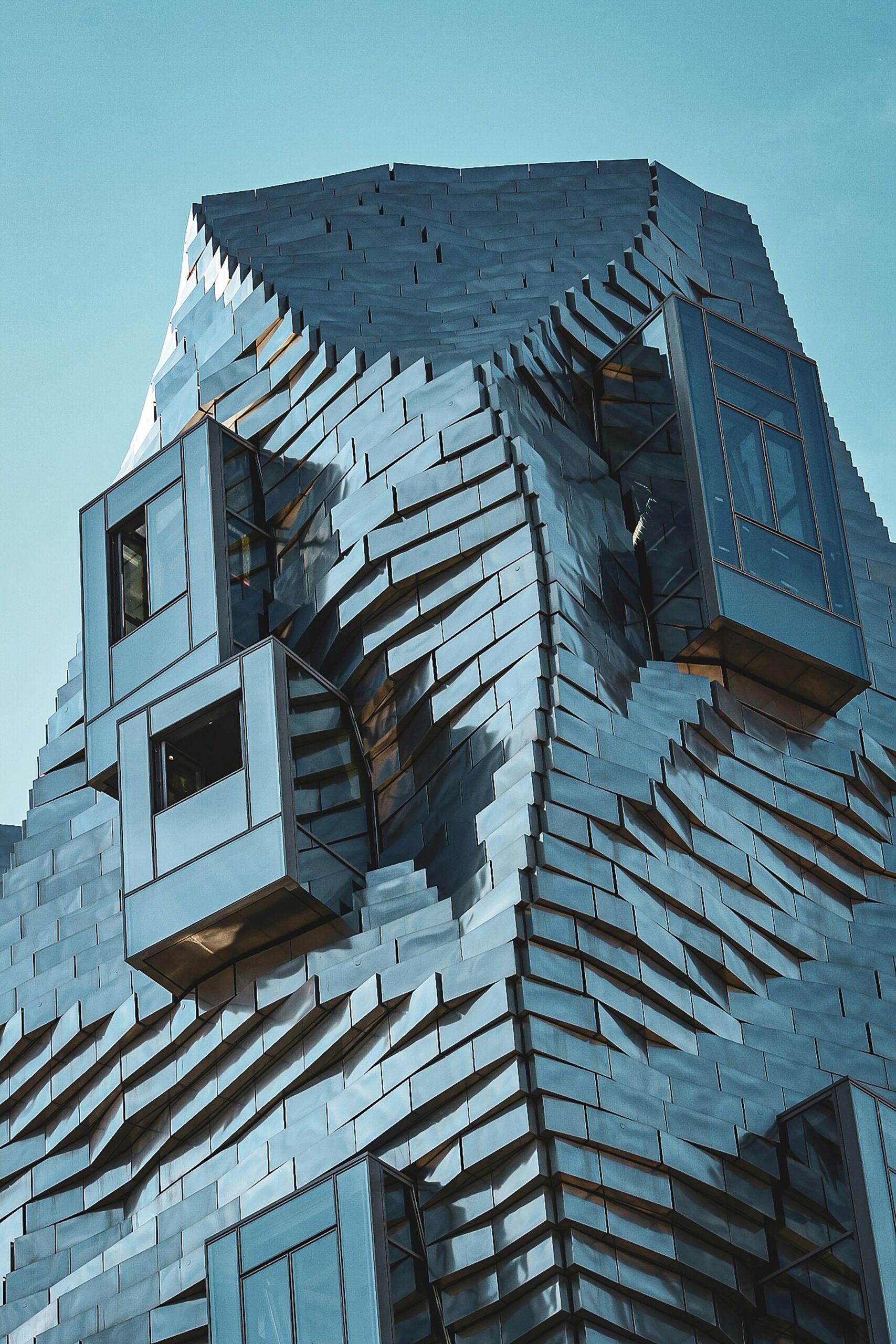
What characterizes Frank Gehry’s approach to architecture?
Frank Gehry, an innovative architect known for his unorthodox design methods, is renowned for utilizing irregular shapes, distinctive materials, and an artistic style that emphasizes sculptural elements. His works are frequently categorized under the deconstructivist movement.
His designs are distinguished by their smooth contours, flowing surfaces, and daring application of reflective elements like titanium, stainless steel, and glass. He conceived these structures as complete works of art meant for habitation, seamlessly blending with the surrounding landscape and reflecting the cultural ambitions of nearby communities.
Five must-see masterworks by Frank Gehry that you should visit
The Guggenheim Museum Bilbao in Spain
Launched in 1997, this museum of modern art, featuring its flowing designs and striking materials, has dramatically reshaped the landscape.
Bilbao
has even single-handedly revitalized the city’s economy—a phenomenon now widely referred to as the “Bilbao effect” or the “Guggenheim effect.”
Guggenheim Museum Bilbao
Abandoibarra Etorb., 2, Abando,
48009 Bilbao, Bizkaia, Spain
+34 944 35 90 80
guggenheim-bilbao.eus/en
The Walt Disney Concert Hall in Los Angeles
The building, which opened in 2003, houses the Los Angeles Philharmonic Orchestra. It features a facade made of stainless steel and an acoustically superior interior design, showcasing Frank Gehry’s exceptional architecture.
Walt Disney Concert Hall
111 S Grand Ave
Los Angeles, California 90012, United States
+1 323-850-2000
laphil.com/about/our-venues/about-the-walt-disney-concert-hall
The Louis Vuitton Foundation in Paris
Like a ship moored incongruously in the middle of the Bois de Boulogne, the
Fondation Louis Vuitton
Captivates us with its contemporary, lyrical design. The edifice, opened in 2014, consists of twelve glass sails held aloft by a steel skeleton, hovering over the primary structure. A sight to behold.
Fondation Louis Vuitton
8 Avenue du Mahatma Gandhi
75116 Paris
+33 (0) 1 40 69 96 00
fondationlouisvuitton.fr/en
The Museum of Popular Culture (MoPOP) located in Seattle, Washington
Known as the
Experience Music Project
|
Science Fiction Museum
(EMP|SFM) Up until 2016, the Museum of Pop Culture (MoPOP) was renowned for its vibrant, irregular design featuring striking curved forms that evoke a disassembled electric guitar.
Museum of Pop Culture
325 5th Ave N
Seattle, WA 98109, United States
+1 206-770-2700
mopop.org/
The Dance House in Prague
Created in partnership with Czech architect Vlado Milunić, the design incorporates his expertise.
Dancing House
has emerged as a symbolic structure in
Prague
, readily identifiable due to its undulating, meandering outline, which appears to depict a couple of dancers. Actually, Frank Gehry initially referred to it as
Ginger and Fred
with regard to the renowned 20
th
dancers from the century Fred Astaire and Ginger Rogers.
Dancing House
Jiráskovo nám. 1981/6
120 00 Nové Mě sto, Czech Republic

by admin | Apr 12, 2024 | architectural design, architecture, home design, interior design, roofing and roofs
Architecture has developed to include numerous innovative styles influenced by many cultures. A widely adopted style taken from Japanese architectural traditions is the concealed roof. Although distinct from traditional Japanese designs, contemporary interpretations of this feature tend to be sleek and straightforward.

Over the past few years, hidden roof designs have become increasingly popular. Property owners appreciate these roofs for their cost-effectiveness, visual appeal, and practicality. Furthermore, they offer multiple design options to match individual tastes perfectly.
14 hidden roof designs
Invisible roof designs are popular due to their sleek look achieved through striking visuals. These roofs also come with multiple practical benefits including enhanced energy efficiency, superior insulation, and greater resilience against environmental factors.
As shown on Makazi and comparable sites, these are 14 concealed roofing designs accompanied by images.
1. Flat hidden roof

One of the concealed roof styles found in Kenya is the completely flat hidden roof. This design has a totally level rooftop that remains unseen when viewed from below. Its advantages include straightforward building processes and cost-effectiveness.
2. Vegetative or eco-friendly roofs

The term “green hidden roof” implies a design with soil and plants. The primary idea behind this concept is to generate natural habitats for wildlife while also offering thermal insulation and increased seclusion for homes. Furthermore, the plant layer helps decrease quick water runoff, thereby protecting the building’s integrity.
3. Concealed rooftop featuring parapet walls
The concealed roof featuring parapets represents the most prevalent and extensively adopted architectural style. This design incorporates parapets along with extended walls around the perimeter, which serve as a protective guardrail. Additionally, these extensions lend an air of refinement and completeness to the structure’s aesthetic.
4. Roof with skylights

A roof featuring skylights stands out as one of the trendiest concealed rooftop designs of recent years. The idea revolves around incorporating skylights into the hidden roof structure to bring sunlight inside the building. While this approach leaves the exterior appearance untouched, it significantly enhances the internal lighting within the space.
5. Rooftop featuring solar panels
Integrating solar panels into your roofing has become one of Kenya’s favored subtle roof designs. By embedding the solar panels within the roof structure, they blend more discreetly with the overall appearance. This environmentally friendly approach is perfect for individuals aiming to reduce expenses and conserve energy.
6. Concealed roof featuring extended edges

A roof overhang, often referred to as eaves, is an extension of the roofing material beyond the external walls. These projections shield the upper part of the structure from view at particular angles, offer shading, and safeguard the building’s exterior from precipitation.
7. Expansion of terrace or patio area
The terrace or patio is an elevated outdoor flat surface extending from the outer edge of the building under a concealed roof. This area serves as extra room for living or relaxation purposes. It provides a place where individuals can dine, socialize, and relish scenic vistas outdoors.
8. Roof featuring clerestory windows

If you’re searching for discreet roofing solutions for your home, integrating clerestory windows can be an innovative approach. Clerestories consist of tall rows of windows positioned high up on walls, which, upon opening, utilize their elevation to expel hot air from inside the structure. Additionally, these windows allow sunlight into the space while maintaining the concealment of the rooftop from sight.
9. Concealed rooftop featuring a chimney

You might want to incorporate a chimney into your secret rooftop dwelling designs. If you decide to do this, keep certain aspects in mind. Ensure that every edge and joint is treated with lap sealant to prevent water infiltration. Additionally, consulting a professional roofer would be wise for optimal outcomes.
10. Multi-level hidden roof

The multi-tiered concealed rooftop house design is both fashionable and visually appealing. This modern residence boasts a module-style duplex with secretive roofs at each level.
11. Concealed Roof along the Central Seam

The concealed roof design with a central trough incorporates an innovative water management system where both sections of the roof meet at the midpoint. In this area, the gutter mechanism channels all rainfall towards the edges of the rooftop for proper disposal.
12. Slate tiles

High-quality roofing materials like slate tiles boast outstanding toughness and minimal upkeep. These tiles do not absorb water and thus never necessitate sealing. Despite being installed under visible roofs, slate tiles remain the top choice for their resilience and performance. Even when placed beneath an outer layer of another material, these tiles continue to offer superior durability and effectiveness.
13. Mono pitched
Single-slope roofing is perfect for those seeking an inconspicuous yet functional design. Its efficient drainage of rainwater and snow makes it highly practical. Additionally, this subtle pitch maximizes interior room height while offering a modern aesthetic appeal.
14. Contemporary hidden roof
The contemporary hidden roof offers the latest designs in architectural trends. It is perfect for people looking to stand out and be trendsetters. The design features a slanting flat roof that offers clean and unobstructed aesthetics.
Wrapping up
Over time, concealed roofing has become increasingly popular because of its visual appeal and practicality. This type of design is commonly found in modern and minimalistic architectural styles. A major benefit of using a hidden roof is its affordability along with its stylish look.
DISCLAIMER:
The purpose of this article is solely to provide broad, general information and it may not cover specific situations. You should seek personalized professional advice rather than relying on this content for decision-making. Should you decide to act upon the details provided here, all associated risks and responsibilities will fall entirely on you.
Are you looking for insights into Kenya’s top flat-roofed home designs? LIFEHACK.co.ke has compiled an extensive collection of the finest flatroof design concepts to spark your imagination.
In comparison to coastal areas where it was common, the flat roof style has become more popular inland in Kenya. This design helps lower expenses related to roofing in modern homes. However, among various options, what are some of the top choices for flat-roof houses in Kenya?

by admin | Apr 12, 2024 | architectural design, architecture, home design, interior design, roofing and roofs
Architecture has developed to include numerous innovative styles influenced by many cultures. A notable style adopted from Japanese architectural traditions is the concealed roof. Although distinct from traditional Japanese examples, contemporary interpretations of this feature tend to be sleek and understated.
Over the past few years, concealed rooftop designs have become increasingly popular. Property owners appreciate these structures for their cost-effectiveness, visual appeal, and practicality. Furthermore, they offer multiple design options allowing individuals to choose what fits their style most appropriately.
14 hidden roof designs
Stealthy roofing solutions have become fashionable due to their striking aesthetic appeal. These roofs not only enhance curb appeal but also deliver practical benefits like improved energy conservation, enhanced insulation, and greater resilience against environmental conditions.
As shown on Makazi and comparable sites, these are 14 concealed roofing designs accompanied by images.
1. Flat hidden roof
One of the concealed roof styles found in Kenya is the completely flat hidden roof. This design has a totally level rooftop that remains unseen when viewed from below. Its advantages include straightforward building processes and cost-effectiveness.
2. Vegetated or eco-friendly roof
The term “green hidden roof” indicates a design that incorporates soil and plants. The primary idea behind this approach is to generate wildlife havens and enhance insulation and privacy for homes. Furthermore, the plant life helps minimize quick water runoff, thereby protecting the building’s integrity.
3. Concealed rooftop featuring parapet walls
The concealed rooftop equipped with parapets represents the most prevalent and extensively adopted design. This approach incorporates parapets along with extended walls at the perimeter, which serve as a protective barrier. Additionally, these extensions lend an air of sophistication and refinement to the structure’s aesthetics.
4. Roof with skylights
A roof featuring skylights stands out as one of the trendiest concealed roofing options this decade. The idea revolves around incorporating skylights within the hidden roof structure to let sunlight enter the building. While it keeps the exterior appearance unaltered, the inside space gains extra illumination through this design.
5. Rooftop featuring solar panels
Integrating solar panels into your roofing is among the most popular concealed roof designs in Kenya. This approach entails merging the solar panels with the roof’s design, reducing their visibility. This environmentally friendly option is perfect for individuals aiming to cut expenses and conserve energy.
6. Concealed rooftop featuring extended edges
A roof projection known as an eave extends beyond the external walls. These extensions can shield the rooftop from specific viewpoints and offer shading, along with safeguarding the structure’s exterior from rainfall.
7. Expansion of terrace or patio area
The terrace or patio is an elevated outdoor flat surface extending from the building’s exterior wall. This area serves as extra living or recreational space where individuals can dine, socialize, and relish the surrounding vistas.
8. Roof featuring clerestory windows
If you’re searching for concealed roofing solutions for your home, integrating clerestory windows can be an innovative approach. Clerestories consist of tall rows of windows positioned high up on walls which, once opened, utilize their elevation to expel hot air from inside the structure. Additionally, these windows allow daylight into the space while maintaining the privacy of having a discreetly designed rooftop.
9. Concealed rooftop featuring a chimney
You may incorporate a chimney into your concealed rooftop design. Nevertheless, several aspects require attention prior to installation. Initially, apply lap sealant at every edge and junction to prevent water infiltration. Additionally, consulting with an experienced roofing professional would be beneficial for optimal outcomes.
10. Multi-level hidden roof
This multi-tiered hidden-roof house boasts a sophisticated and visually appealing style. It showcases a modern residence layout reminiscent of a modular townhouse, complete with concealed rooftops at each level.
11. Concealed Roof Along the Central Seam
The concealed gutter roof design with a central trough includes an innovative water management system where both sections of the roof meet at the midpoint. In this area, the gutter setup channels all rainfall towards the edges of the roof for proper draining.
12. Slate tiles
High-quality roofing materials like slate tiles offer outstanding toughness and minimal upkeep. These tiles do not absorb water and thus never necessitate sealing. Despite being installed beneath an unseen surface, slate tiles continue to deliver superior resilience and performance.
13. Mono pitched
A mono-pitched roof is perfect for those seeking an inconspicuous roof design. Its efficiency lies in swiftly channeling away rainfall and snow. Additionally, this gentle slope enhances interior room height while adding a modern aesthetic appeal.
14. Contemporary hidden roof
Modern concealed roofing presents the most recent styles in architecture. Ideal for those aiming to make an impression and lead fashionably, this design boasts a sloping flat roof providing sleek and uninterrupted visuals.
Wrapping up
Over time, concealed roofing has become increasingly popular because of its visual appeal and practicality. This design is commonly seen in modern and minimalistic architectural styles. A major benefit of such roofs lies in their affordability along with their stylish look.
DISCLAIMER:
The content of this article serves purely as general information and does not cater to specific situations. It cannot replace personalized professional guidance or assistance and should not be used as the sole basis for making decisions. Should you choose to act upon the details provided here, all associated risks and responsibilities will fall solely on you.
Are you looking for insights into Kenya’s top flat-roofed home designs? LIFEHACK.co.ke has compiled an extensive collection of innovative design concepts to spark your inspiration.
In comparison to coastal areas where it was common, the flat roof style has become more popular in inland Kenya due to lower construction expenses for modern homes. However, among various options, what are some of the finest examples of flat-roof houses in Kenya?


