What Money Knows That You Don’t: An Insight (International Edition)
By Jules Nartey-Tokoli
\xa0
Wealth goes by various terms across different cultures and nations and wields significant power. True, but do you believe you have a grasp on money? Do you truly comprehend it?
A lot of individuals hold various interpretations when it comes to defining money and understanding what it truly represents. In reality, some actually consider money to be an evil force! Do you share this perspective as well? Often, people tend to agree with this viewpoint because they mistakenly quote a Bible verse which states that the love of money is considered the source of all evils.
So, that indeed discusses the
love
of money; the love of money is what is evil but
not
Money serves as a safeguard, as stated in Ecclesiastes 7:12 and 10:19 of the NIV translation: “Wisdom is a refuge just as money is a refuge… but having money answers every problem.”
Therefore, there is inherently nothing wrong or wicked about money itself. However, cultivating a deep affection for it, or in simpler terms, turning into greed, is considered evil. This relentless desire drives individuals to go to great lengths to obtain it and hoard vast amounts even when they possess more than sufficient wealth.
Today, we’ll explore what constitutes real money versus artificial money. In doing so, we’ll clarify what money truly is and what it isn’t. Additionally, in the latter portion of our discussion, we will contextualize these concepts appropriately.
What is Money?
To better understand what constitutes money, let’s examine some definitions from the Merriam-Webster dictionary. According to this source, “money is an item widely recognized for use in transactions, serving both as a standard of value and as a method of settlement.”
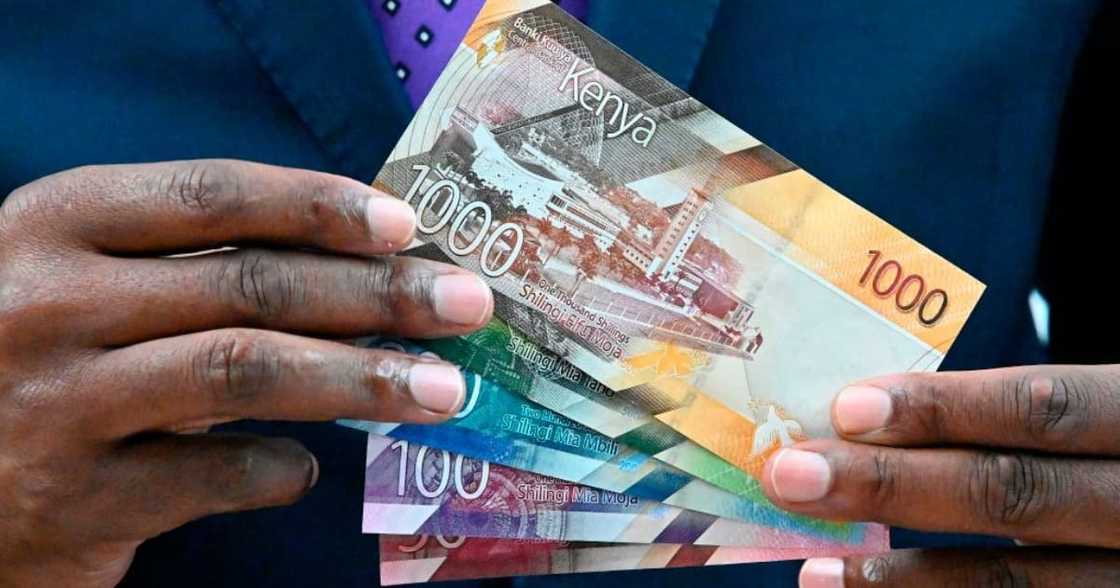
Next up, we have currency, which people frequently confuse with money. The term “money” as commonly used nowadays—be it the US dollar, British pound, Ghana cedi, Nigerian naira, among others—is technically referring to different forms of currency.
A currency is a form of money but not money. While that statement seems paradoxical, it’s accurate in that currency is a physical or tangible form of money (like coins and banknotes), while money is a broader concept encompassing any medium of exchange. So, I found this on the investopedia.com website that I would like to share with you, Money versus Currency:
The concepts of money and currency are frequently considered interchangeable. Nevertheless, although connected, they possess distinct definitions. Money represents a wider notion encompassing an abstract framework for value that facilitates the trading of products and services both presently and subsequently. Conversely, currency is merely a physical manifestation of this concept.
Therefore, since currency represents one physical manifestation of money, I believe you’d concur that various forms of money exist beyond just currency. In my view, these include both natural money and artificial money.
Natural Currency Versus SyntheticCurrency
What does natural money refer to? In my understanding, this includes elements such as human capital, valuable metals, and gemstones. On the other hand, currency represents an example of artificial money. It’s considered artificial since humans invented it, unlike natural money which is believed to be divinely ordained.
For example, during the First World War, cigarettes evolved into a form of currency. Cigarettes were not natural products either, yet they served as a medium of exchange amongst soldiers. That’s how things stood then.
Once again, when discussing money, we typically concentrate on its artificial version, and tragically, many individuals perish over this artificial currency. You might concur that this makes little sense; after all, why would anyone risk their life for something as intangible as artificial money? Naturally occurring wealth isn’t worth risking one’s life for either, so it follows that fabricated monetary forms hold even less value in such circumstances.
Your Responsibility
Therefore, each of us should take the time to determine definitively what genuine money truly means. Once we understand this concept of true money, we can assign actual worth to it.
Therefore, as mentioned previously, natural money consists of human resources, valuable metals, and gemstones. We will now examine each component individually.
Human Resources
When discussing human resources, I’m talking about the inherent values or assets within an individual—skills, knowledge, and experiences—that they can utilize to generate outcomes or accomplish tasks. These resources encompass specific abilities, information, and past encounters that, when integrated effectively, contribute to productive efforts. Essentially, human resources possess the potential to generate wealth artificially, unlike natural monetary sources.
cannot
create human resources.
To illustrate: To start a business many people think about money, which is usually what they refer to as capital. However, there are human resources that each one of us has which we can make use of in order to create that currency, capital that we need to start the business. What are some of these human resources I’m talking about?
As I highlighted before, experiences, knowledge, and talent are crucial factors in this equation. Your experiences pertain to aspects such as your interactions with others, your demeanor, and your honesty.
If you are honest, for example, and you have a good reputation–i.e. your name; how people view you when your name is mentioned or when they see you–you’ll be able to start your business without even looking for cash, currency. How can that be? Yes, because you have the reputation of honesty, for example, you can get goods supplied to you by a wholesaler or even a manufacturer, using your reputation as the currency, the cash. That is because they believe that you’re honest and will definitely really pay what you owe.
Hence, based on your reputation, they supply you with the goods, you go stock them in your shop, if you have one, or store them away in your home, sell them and then bring the money back minus your profits. In this way you have used your human resources, in this regard your reputation as a form of money to start your business.
Be sure to pay attention to the second section.
Feel free to reach out for interaction: +1 (914) 259-0242
jules.ntokoli@soleilvision.com
www.soleilvision.com
The author is a proactive entrepreneur who serves as the Founder and Group CEO of Groupe Soleil Vision, which includes entities like Soleil Consults (US), LLC, NubianBiz.com, and Soleil Publications. Possessing deep expertise in areas such as strategy, management, entrepreneurship, premium audit advisory, and web consulting, he brings considerable experience from his work in both Ghana and the U.S. Known for his insightful contributions, Jules stands out as a leading thinker in sectors encompassing corporate governance, leadership, e-commerce, and customer service. His writings delve into subjects ranging from economics and IT to marketing and branding, establishing him as a key figure in conversations about African development and innovative business practices. Via NubianBiz.com, he fervently promotes inter-African commerce and tech-enabled expansion aimed at strengthening small-to-medium enterprises throughout the region.
Provided by Syndigate Media Inc. (
Syndigate.info
).