
by admin | Nov 7, 2024 | blood pressure, exercise, health, health and exercise, hypertension
As little as five minutes of daily physical activity can reduce blood pressure and aid in preventing cardiovascular issues, according to recent studies.
Incorporating brief periods of physical activity into your everyday schedule – like choosing the stairs over the elevator or going for a bike ride – can help lower these measurements.
Experts suggest that minor adjustments to daily habits, such as replacing five minutes of television viewing with five minutes of jogging, can substantially improve cardiovascular well-being.
The research indicates that exercises which increase your heartbeat, such as dancing, running, or even thorough housecleaning, offer the most advantages.
Researchers from University College
London
(UCL) and the University of
Sydney
examined 14,761 individuals utilizing activity trackers to investigate the connection between their everyday movements and blood pressure levels.
Throughout the day, individuals typically allocated about seven hours for sleep, ten hours engaged in sedentary activities like sitting, three hours standing, an hour of slow walking, another hour of brisk walking, and roughly 16 minutes participating in exercises that elevated their heart rates, including jogging and biking.

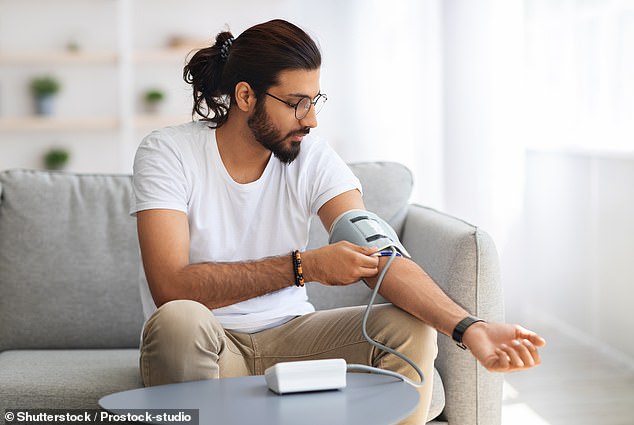
Adding an additional five minutes of physical activity that increases your heartbeat, like climbing stairs, jogging, or biking – instead of engaging in other activities – can decrease systolic blood pressure (SBP) by 0.68 millimeters of mercury (mmHg) and diastolic blood pressure (DBP) by 0.54 mmHg.
The systolic value is the upper figure in a blood pressure measurement, indicating the pressure exerted as the heart pumps blood throughout the body. The diastolic value is the lower number, representing the pressure during the intervals when the heart is at rest between contractions.
According to the researchers, at a population level, decreasing systolic blood pressure (SBP) by 2 mmHg and diastolic blood pressure (DBP) by 1 mmHg is roughly comparable to reducing the risk of heart disease by about 10 percent.
This might be accomplished by shifting 20-27 minutes away from other activities towards exercise for the higher figure, and allocating 10-15 minutes for the lower figure, according to the study in Circulation.
For instance, replacing 21 minutes of sitting idle, 22 minutes of standing, or 26 minutes of leisurely walking with activities like cycling or running could produce similar outcomes regarding systolic blood pressure levels.
To improve diastolic blood pressure, one could replace 10 minutes of brisk walking, 11 minutes of inactive sitting, or 13 minutes of sleep with appropriate physical activity.
In the UK, high blood pressure stands as the primary factor for strokes and heart attacks, affecting approximately 14 million adults, among whom about five million remain undiagnosed.
If not treated, the heart might enlarge gradually because of the elevated pressure, pump less efficiently, and could result in heart failure.
Dr. Jo Blodgett, the lead author from UCL, stated, “Our research indicates that for the majority of individuals, engaging in exercise is more effective at lowering blood pressure compared to lighter activities like walking.”
‘Good news is that regardless of your level of physical capability, you can positively impact your blood pressure levels relatively quickly.’
The distinctive aspect of our exercise variable is that it encompasses all types of activity similar to exercises, ranging from climbing stairs to brief cycling trips, most of which can easily be incorporated into everyday life.
‘Even for individuals who aren’t very active, walking can still provide certain advantages when it comes to lowering blood pressure.’
‘However, if you aim to alter your blood pressure, increasing the load on your cardiovascular system via exercise will yield the most significant impact.’
Read more

by admin | Sep 16, 2024 | exercise, health & fitness, health and exercise, health benefits, running and fitness
The familiar adage “slow and steady wins the race” appears to hold true for the health advantages derived from physical activity as well.
Actually, the evidence is mounting that consistent, leisurely jogs might fortify your cardiovascular system and lower your chances of developing type 2 diabetes.
diabetes
And bolster your immune system and general fitness much more effectively than pushing yourself to run at maximum speed.
This applies equally to other forms of cardio exercises performed at a more relaxed pace, like swimming, rowing, and cycling. In fact, running groups specifically catering to slow runners and walkers are now being established.
‘Dan Gordon, an associate professor specializing in cardiorespiratory exercise physiology at Anglia Ruskin University, notes that jogging slowly has become increasingly favored by casual fitness enthusiasts,’ he states.
Over the last ten years or so, we’ve experienced a frenzy for high-intensity interval training (HIIT). Although I recognize the possible advantages of HIIT, one drawback is that it can be quite demanding, making it hard to start if you aren’t already in good shape.


He points out this indicates a high attrition rate; however, when the activity involves lower intensity and reduced exertion levels, individuals tend to be more persistent and less inclined to quit.
He mentions that there are also ‘verified physical advantages associated with running at this intensity’.
This was demonstrated in a Danish study from 2015, where 5,000 individuals were tracked over a period of 12 years. The participants were divided into different groups as part of the study.
Four categories include: those who do not run (sedentary), as well as individuals who engage in light, moderate, or intense jogging activities.
Those who jogged at a leisurely and moderate pace exhibited the lowest mortality rates from all causes, whereas those who ran strenuously showed a comparable death rate to the inactive group.
A hypothesis suggests that this could be attributed to how low-intensity jogging decreases resting blood pressure and enhances cardiac function.
Professor Gordon elucidates: “Essentially, this enhancement boosts efficiency by enlarging the cardiac muscle. With a larger heart muscle, it has greater force when contracting. Additionally, it expands the chambers inside the heart, enabling each contraction to pump a higher volume of blood.”
Running slowly also enhances endurance because you can maintain a lower intensity for an extended period — this boosts the creation of red blood cells, allowing your bloodstream to transport greater amounts of oxygen.
These changes in the heart muscle do not get enhanced by exercising at greater intensities through training. A further advantage of low-intensity cardio—often referred to as ‘zone 2’ cardio, which involves operating at about 60-70 percent of your maximal heart rate—is that it prompts the body to utilize stored fats for energy instead of carbohydrates, explains Dr. Lindsy Kass, an exercise physiology lecturer from the University of Hertfordshire. This contrasts with more intense workouts where carbs tend to be burned preferentially.
Converting fats into energy is more efficient and beneficial for your general well-being, notes Professor Gordon. This process is linked to improved blood sugar levels and decreases the likelihood of developing type 2 diabetes.
‘Research indicates that athletes who incorporate additional slow running into their training programs tend to see approximately a 1 percent improvement in VO2 max [oxygen uptake] and race-day speed.’


This represents a considerable edge over competitors, and upon learning about it, one can understand why many top-tier athletes dedicate up to 80 percent of their training regimen to activities within Zone 2.
I previously worked with British rowing, where even though their races last around six minutes, they engage in slow rowing for one and a half hours three days each week,” explains Dr. Kass. “It was during the first year they adopted this training regimen that they began winning all the medals.
A key rationale for top-tier athletes dedicating training sessions to low-intensity efforts is to lessen bodily strain, which aids in preventing infections and injuries.
Professor Gordon states: “When we lead a sedentary lifestyle, we become highly vulnerable to diseases. However, engaging in moderate-intensity exercises can enhance our immune system and decrease our likelihood of falling ill.”
However, once we begin engaging in higher-intensity workouts, our bodies demand significantly longer periods for recuperation—up to 48 to 72 hours afterward—and throughout this rest phase, your immunity takes a hit. Consequently, the greater frequency with which you perform intense exercises without sufficient breaks can increase your susceptibility to illnesses and infections, along with raising your risk of injuries.
What does “slow running” actually entail? According to experts, it’s more about the perceived exertion than actual speed. As Professor Gordon suggests, “While jogging, try singing to yourself; if you manage without becoming breathless, then you’re pacing yourself correctly.”
This principle also holds true for weight training aimed at building resistance.
Reducing speed eliminates momentum within an activity, promoting proper technique and decreasing the chance of injuries.
Certain research indicates that extending the duration of the lengthening ‘eccentric’ phase of an exercise (such as lowering yourself during a pull-up) to twice that of the shortening ‘concentric’ phase (completing the pull-up) may enhance muscle development.
However, avoid moving too slowly—you’ll tire more quickly and won’t be able to lift the necessary weight for optimal muscle strengthening, according to Dr. Richard Blagrove, a senior lecturer in physiology at Loughborough University.
He states: “Most individuals would benefit more from performing a ‘controlled’ [but not extremely slow] lowering phase and a rapid [as quick as feasible] lifting phase using moderately heavy weights for much of their strength training, while incorporating certain exercises aimed at enhancing power.”
Read more

by admin | Jun 20, 2024 | exercise, exercise for weight loss, health & fitness, health and exercise, working out
-
EXPLORE FURTHER: Fitness professionals share their insights on the optimal hour for exercising.
The eternal question remains: When is the optimal time of day to exercise?
However, a fascinating recent study appears to have addressed this issue.
A study conducted in Spain revealed that individuals who engaged in physical activities such as jogging or biking at 6 PM experienced reduced blood glucose levels compared to those who exercised earlier in the day.
The scientists contended that this indicated late exercisers exhibited greater activity
metabolism
and found it easier to withstand hunger cravings.
This indicated that they would both expend more calories throughout the day and take in lesser energy, they proposed.

Research indicates that typically, muscle cells tend to lose their ability to take up blood glucose during the evening hours due to a decrease in insulin levels at that time.
![]()
However, working out in the evening increases insulin levels, which makes it simpler for cells to take up glucose from the blood and use it as fuel.
In this study, scientists monitored 186 middle-aged Spaniards, primarily those who were obese, over a period of two weeks.
Every participant used an accelerometer for monitoring physical activity and a continuous blood glucose monitor to keep track of their blood sugar levels.
The exercise periods were divided into three segments: morning from 6 am to 12 pm, afternoon from 12 pm to 6 pm, or evening from 6 pm to 12 am.
The researchers subsequently contrasted blood glucose levels between inactive subjects, who abstained from exercising for 24 hours, and those who engaged in physical activity at various intervals.


Dr. Antonio Clavero-Jimeno, a sports scientist at the University of Granada,
Spain
, among others, noted in the study: ‘Engaging in exercise during the evening seems to positively impact blood glucose levels in inactive adults who are obese.’
The research was conducted solely among individuals who were obese or overweight, so it remains uncertain if these findings are applicable to people with a healthy weight.
However, this aligns with previous research indicating that working out later in the day is most effective for shedding pounds.
A research conducted at the University of Sydney, Australia, revealed that overweight individuals who engaged in physical activity post-6 pm exhibited roughly a 36 percent decreased likelihood of developing heart disease.
Of those who exercised prior to this period, the advantage was merely half as much—or equating to a 17 percent lower likelihood of developing the condition.
A study conducted in 2022 in Germany with 5,000 participants who were either overweight or obese discovered that individuals exercising in the evenings experienced up to a 25 percent decrease in their insulin resistance.
Several weight-loss studies indicate that exercising in the morning may be most effective for shedding pounds.
These findings are derived from data indicating that individuals who work out during these hours often have lower body weights compared to those who exercise in the evening.
However, these aspects do not consider other variables, like individuals who are more health-conscious may be inclined to begin their day with an exercise routine.
According to physicians, any level of physical activity at any point during the day can contribute to weight loss in individuals who are obese, provided they do not consume more calories than their body requires.
According to the World Health Organization (WHO), individuals should aim for a minimum of 150 minutes of physical activity each week.
Read more
by admin | Jun 18, 2024 | exercise, health & fitness, health and exercise, healthy living, healthy workouts
Abandon activities like lawn bowling or leisurely swimming; instead, seniors should consider taking up weightlifting for a healthier retirement, according to research.
Resistance training showed lasting strength advantages extending many years into retirement, rendering it an excellent choice of workout for older adults.
As individuals age, they inherently experience a decline in muscular functionality, which manifests as weakened grips and diminished leg power. These factors are considered significant indicators of mortality in senior citizens.
Weightlifting, using either free weights, your own bodyweight, or resistance bands, has been demonstrated to aid in preventing such occurrences.
Scientists aimed to investigate the lasting impacts of a year-long supervised strength-training regimen involving heavyweights.

With participants averaging the age of 71, 451 retirees were split into groups of either a year of heavy resistance training, moderate-intensity training or of no additional exercise on top of their usual activity.
Participants who were assigned specific weights engaged in programs three times weekly, whereas those involved in moderate-intensity training performed routines that included bodyweight exercises and resistance band workouts over the same duration.
Every workout in the strength training session consisted of three series with six to twelve reps, using seventy to eighty-five percent of the individual’s peak lifting capacity for each rep.
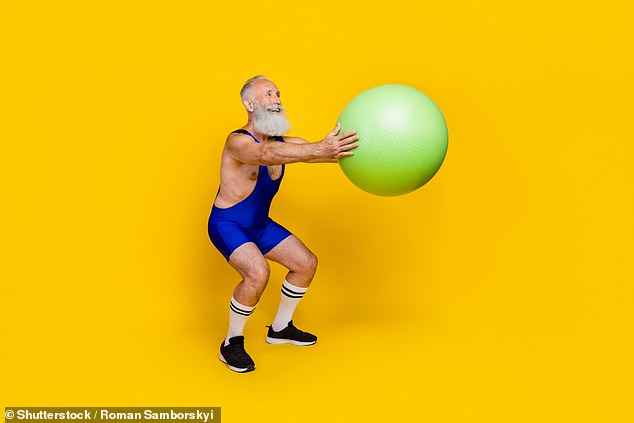
At the beginning of the study, measurements were taken for bone and muscle strength as well as body fat percentages. These same metrics were reassessed after one year, two years, and four years.
After four years, individuals in the heavy weight training group managed to maintain their leg strength, whereas those who did not exercise or only exercised moderately experienced a decline in strength during this period.
Publishing their findings in the journal BMJ Open Sport and Exercise Medicine, the researchers determined that “for healthy older individuals around retirement age, engaging in intense strength training for one year can lead to lasting positive impacts by maintaining muscular functionality.”
The three groups showed no distinction in leg extensor power—the capacity to forcefully and rapidly push against a pedal—handgrip strength (an indicator of general muscular strength), and lean leg mass (body weight minus fat content). All of these measures saw reductions across the board.
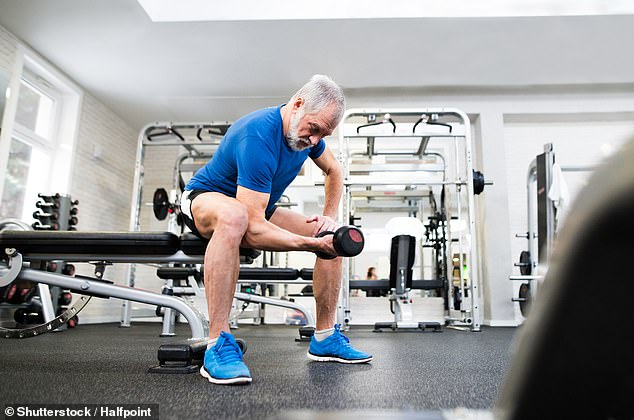
The levels of visceral fat, located internally around organs, went up for individuals who did not work out. However, these measurements remained unchanged among participants in both exercise groups.
The researchers, which included members from the University of Copenhagen, noted that participants in the study tended to be more physically active, averaging almost 10,000 steps per day, compared to the general public.
They included: “This research demonstrates that engaging in strength training using heavy weights even when people reach retirement age can yield benefits lasting for multiple years.”
Consequently, these findings offer tools for professionals and policymakers to motivate elderly people to participate in intense strength training sessions.
Read more

by admin | Jun 14, 2024 | exercise, health & fitness, health and exercise, running and fitness, walking
-
With each 1 percent increment in step variability, there was an increase in energy consumption.
-
READ MORE:
Experts claim that 10,000 steps per day isn’t a magical solution.
Reaching 10,000 steps daily has become a widespread health objective for many people around the globe.
However, a more efficient option might prove effective for shedding pounds, according to experts.
Walking with an irregular pace might aid in burning more calories compared to taking evenly measured strides, according to research.
American researchers monitoring the activities of 18 fit participants found that for each 1 percent increase in stride variation, there was a corresponding 0.7 percent boost in energy consumption.
The study indicated that inconsistent steps ‘have a minor but notable impact’ on the energy expended during walking, according to the researchers.

The team failed to gauge the number of calories expended by the participants.
Nevertheless, Adam Grimmitt, a co-author of the study and an expert in exercise physiology at the University of
Massachusetts
Amherst stated, “It seems reasonable to conclude that greater and more frequent changes in step length would lead to an increased metabolic rate during walking.”
In the study, the participants—ranging from 24 years old and averaging 11 stone 1 pound (70.5 kg)—were instructed to walk at their usual pace for five minutes on a treadmill.
A motion capture system documented their typical stride length at a usual pace of 1.2 meters per second.
They subsequently controlled their movements during a second 5-minute treadmill walking session by illuminating specific areas for the participants to target.
Positions were adjusted by as much as five and 10 percent below or above the typical stride length.
Each volunteer was equipped with a mouthpiece that measured their carbon dioxide output rate, which increases during physical activity.
The discoveries, shared on a pre-print server,
bioRxiv
The researchers suggest that when individuals transition between maintaining stability over short steps and long steps, it can lead to increased muscle contractions and subsequently higher metabolic costs.
‘Their findings indicate that a 2.7 percent rise in step length variability could lead to a 1.7 percent increase in the energy required for walking,’ they noted.
‘The variation in step length moderately but importantly influences the energy expended during walking.’
The research might be most applicable to elderly individuals, especially those suffering from neurological disorders, since their walking patterns show ‘higher step length variability,’ they added.
Researchers, nevertheless, admitted that adjusting lengths in 5 percent increments differs from actual variations observed in natural walking patterns.
The participants still found it difficult to maintain precision when adjusting their stride lengths without extra guidance, they noted.
‘Studies focused on the future should measure the precision of foot positioning and muscle activity across comparable virtual displays.’
Read more


