by admin | Apr 2, 2025 | benjamin netanyahu, hungary, international relations, politics, politics and law
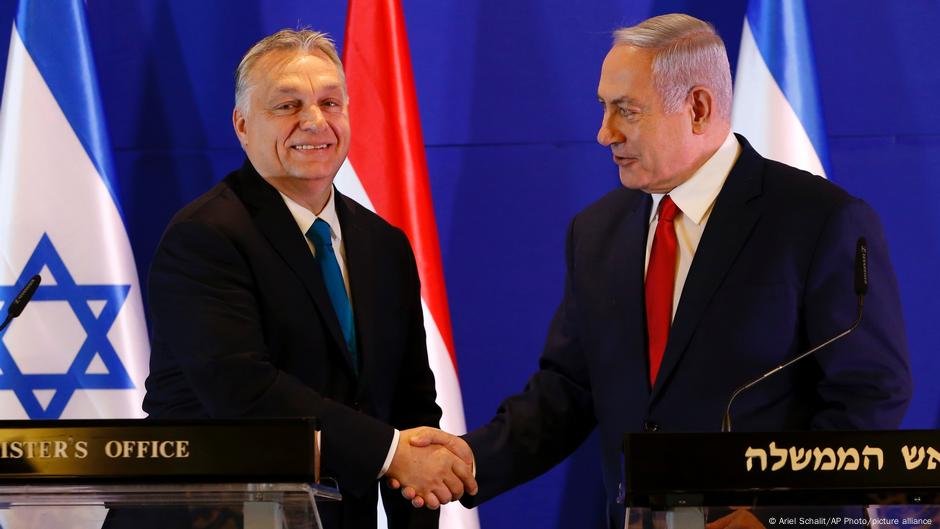
On April 2, Israeli Prime Minister Benjamin Netanyahu announced his upcoming trip to Hungary, which would last for four days. The announcement comes amidst an international arrest warrant issued by the International Criminal Court (ICC) concerning alleged war crimes committed during operations in Gaza. Notably, Hungary was one of the original signatories of the ICC; however, Hungarian Prime Minister Viktor Orban recently stated that their country plans to disregard this particular warrant.
Netanyahu is accused of maintaining connections with Qatar. During his trip, he intends to hold a joint press conference with Orban. He has refuted these allegations, labeling them as “false information.”
This marks Netanyahu’s second international visit since the ICC issued the arrest warrants. These warrants pertain to Israel’s operations in Gaza. Prior to this, Netanyahu traveled to Washington in February.
Orbán firmly backs Netanyahu, describing the ICC’s moves as “bold and entirely unjustifiable.” Israel has dismissed these accusations, asserting that they are driven by politics. The country maintains that it has the authority to protect itself.
by admin | Apr 1, 2025 | crime, criminal justice, criminal prosecution, hungary, politics and law
Israeli Prime Minister Benjamin Netanyahu is ignoring an arrest warrant during his trip to Budapest. The International Criminal Court has few ways to react.
As one of the 125 member states of the International Criminal Court, Hungary has a legal responsibility to detain Israeli Prime Minister Benjamin Netanyahu when he arrives in Budapest and immediately send him to The Hague as per the ICC’s assertion that he is accused of committing war crimes and crimes against humanity during the conflict in Gaza.
Instead, what’s occurring is that Hungarian Prime Minister Viktor Orban is welcoming the Israeli leader with open arms through a grandiose four-day visit filled with opulent displays of unity.
In November 2024, when arrest warrants were issued for Netanyahu and Israel’s ex-defense minister, Yoav Gallant, Orban described the ICC as “audacious, manipulative, and utterly unacceptable.” He vowed that should Netanyahu ever visit Hungary, he would ensure both his liberty and security.
ICC’s limited response
In contrast to national courts, which utilize their domestic law enforcement agencies for enforcing arrest warrants, international courts depend on the judicial systems of their member states to apprehend and hand over suspects; the ICC lacks its own police force.
If a nation does not apprehend an accused individual, the ICC judges may start what is known as a non-compliance procedure. This process could lead to a referral to either the ICC’s Assembly of States Parties (ASP) or the United Nations Security Council.
Despite referral instances, the ASP has limited ability to enforce significant penalties against nations that fail to meet their commitments.
“There are not significant real-world repercussions for failing to comply,” said Mathias Holvoet, who lectures in international criminal law at the University of Amsterdam, speaking to SANGGRALOKA.
He anticipates that the ICC will initiate this process, though his expectations of its potential outcomes remain modest.
The ICC is often depicted as a giant lacking limbs—it genuinely struggles to enforce those arrest warrants. The impetus for action rests with the state’s political determination.
The Israeli leader is additionally encouraged by his support at the White House, with U.S. President Donald Trump being an ally.
issued an executive order
In February, sanctions were imposed on the ICC and its Chief Prosecutor, Karim Khan, specifically in reaction to their involvement with the Netanyahu case.
‘Illiberal ideological allies’
According to certain analysts, the reception offered by Hungary is exactly what Netanyahu aims to use in order to reduce the court’s reliability.
“He aims to visit numerous countries to demonstrate that the ICC is merely a paper tiger and incapable of enforcing the arrest warrant against him,” explains Holvoet from the University of Amsterdam.
Some think this journey also advances Netanyahu’s domestic political objectives.
Daniel Hegedus, an expert on Hungary and regional director for the German Marshall Fund, stated, “He has shown that the arrest isn’t as crucial as several figures within his internal opposition suggest.” He added, “This trip highlights his connections, sway, and capacity for political action.”
Hegebus noted that Orban is providing a platform for his longstanding illiberal ideological partner, which aligns closely with the fresh policy stance coming out of Washington.
Jurisdiction friction
The ICC is a UN-backed court established as the last resort for prosecuting the world’s worst crimes, including genocide. Notably, China, Russia, and the United States are also members.
Israel is not part of the ICC and insists that the court does not have the authority to charge any of its citizens.
In 2015, the Palestinian territories became members of the court, which led ICC Prosecutor Karim Khan to believe he had the authority to seek this action.
Netanyahu warrant
in May 2024.
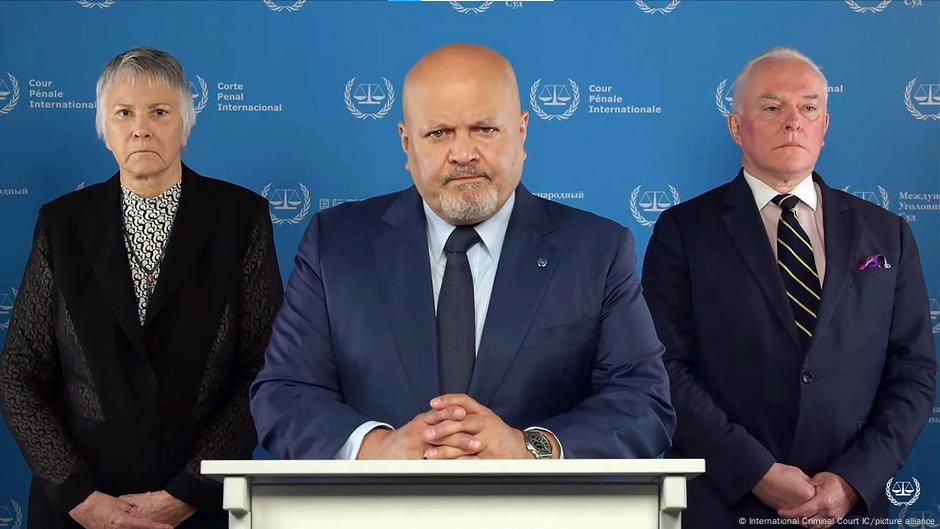
The evidence presented by the ICC against Netanyahu relates to his supposed role in employing hunger as a tactic of combat, committing murders, engaging in persecution, and carrying out other cruel actions during the conflict in Gaza.
A number of country heads have asserted diplomatic immunity during their travels even though they had outstanding arrest warrants from global tribunals.
In January,
Poland
stated that it would allow Netanyahu to tour Holocaust memorials even with the ICC warrant in place, and in March, Germany’s chancellor candidate
Friedrich Merz
extend an invitation to their Israeli peer to tour Berlin.
Legal scholars still argue about whether head-of-state immunity holds more weight than charges of war crimes and crimes against humanity.
Netanyahu’s visit carries some potential dangers.
Specialists think Netanyahu is still risking his liberty by traveling to a nation that is part of the ICC.
As Holvoet pointed out, ‘One can’t predict how a particular judge in a specific city might act.’
NGOs often submit petitions to Hungarian courts with the aim of pressuring for his arrest. As Holvoet pointed out, “While the danger might not be substantial, it does persist.”
Israeli authorities have acknowledged that during Netanyahu’s travel to the United States in February, his aircraft had to follow a more extended path over American military installations to avoid landing in a nation that honors ICC arrest warrants.
Daniel Hegedus, however, thinks that the likelihood of Netanyahu being detained in Hungary is virtually nonexistent.
Hungary is not considered a fully democratic nation, and it’s clear that the rule of law has been significantly influenced,” he stated. “I strongly question whether any law enforcement agencies in Hungary would adhere to judicial decisions rather than following directives from the government.”
Edited by: Rob Mudge
Author: Jack Parrock (located in Brussels)


