by admin | Apr 2, 2025 | consumer price index, cost of living, economic policy, economics, inflation
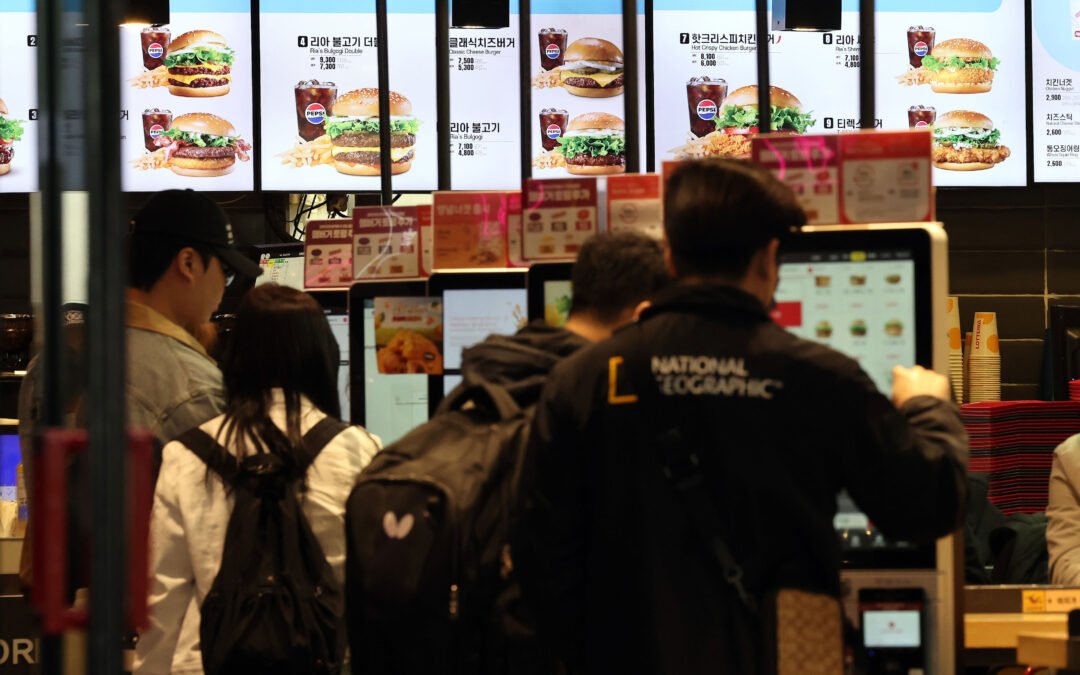
In March, South Korea experienced a 2.1% rise in consumer prices compared to the previous year, which marks the third consecutive month that inflation has surpassed the central bank’s 2% target. This uptick was primarily due to increasing food prices, as significant food corporations raised their prices in response to elevated global raw material expenses and internal political instability.
Statistics Korea reported on April 2 that the consumer price index (CPI) was recorded at 116.29 in March, marking an increase of 2.1% compared to the previous year. Following four consecutive months where inflation stayed within the 1% range—from September through December 2024—inflation picked up speed again, reaching 2.2% in January and slightly decreasing to 2.0% in February.
Oil prices, which were a significant contributor to inflation earlier in the year, increased by 2.8% in March. This rise was relatively small due to reduced international oil costs, influenced by an uptick in U.S. crude output, slowly impacting local markets. In terms of monthly changes, gasoline and diesel prices decreased by 2.1% and 2.2% respectively.
Nonetheless, the expenses for processed foods and dining out rose significantly, maintaining inflation rates higher than the central bank’s objectives. The cost of processed foods escalated by 3.6% in March compared to the previous year, marking the most substantial rise since January 2024. Notably, products like coffee (up 8.3%) and bread (increased by 6.3%) experienced sharp jumps primarily because of escalating input costs. Experts observed that certain food producers exploited the prevailing political unrest to implement price surges that exceeded justifiable levels based solely on increased production costs.
Rising food expenses resulted in higher restaurant charges, with dining inflation climbing by 3.0% for the consecutive second month. Dishes like sashimi (5.4%) and fried chicken (5.3%) experienced notable cost increases, exacerbating customer dissatisfaction regarding escalating meal prices.
Outside of fluctuating food and energy costs, core inflation increased by 1.9% compared to the previous year in March, continuing an upward trend over the last six months with gains mostly within the 1% range. Additionally, the cost-of-living index, measuring 144 commonly bought items and services, went up by 2.4%, surpassing general inflation rates for five consecutive months now.
by admin | Mar 28, 2025 | economic policy, economics, inflation, macroeconomics policy, politics
WASHINGTON, D.C. — A top Federal Reserve official stated on Thursday that it appears “unavoidable” that Donald Trump’s tariff proposals will lead to higher near-term inflation, though this rise might not last long.
After coming back to the White House, Trump has issued threats about imposing tariffs on major trade allies — such as China, Canada, and Mexico — but then partially rescinded these measures, leading to uncertainty among both investors and political figures.
He has levied a 25 percent duty on steel and aluminum imports, declared a 25 percent tariff on incoming cards, and intends to implement additional tariffs the following week.
“Tariffs appear certain to drive up inflation in the short term,” said Boston Fed President Susan Collins at an event held in Boston.
“If an uptick in pricing levels filters through to inflation rather swiftly,” stated Collins, who holds a voting position on the Federal Reserve’s interest-rate setting panel this year. “Subsequently, fundamental inflationary pressures will start playing out.”
“So my basic perspective is shaped within that framework,” she went on, noting that should further tariff rounds occur or become wider-ranging, the resulting inflationary effects might likely “linger longer.”
Collins’ remarks mirror those of her fellow Federal Reserve member and St. Louis Fed President Alberto Musalem, who similarly holds a voting position on the U.S. central bank’s interest-rate committee this year.
On Wednesday, Musalem contended that tariffs might cause a probable immediate and short-term rise in prices, along with an additional indirect effect that could exert a more enduring influence on inflation.
The team at the St. Louis Fed calculated that the overall impact on inflation might be as high as 1.2 percentage points — a considerable rise considering that inflation continues to stay above the Federal Reserve’s longstanding objective of 2%.
The Federal Reserve has a two-part mission to address both inflation and unemployment, mainly through adjusting its primary interest rate up or down.
If inflation remains stuck above the Fed’s target and the labor market remains relatively healthy, the Fed could be forced to pause rate cuts for longer, which would keep the cost of borrowing for both consumers and businesses elevated.
Surveys measuring consumer confidence have indicated a significant drop following President Trump’s return to office, as participants expressed worries regarding the impact of tariffs on the economy and voiced concerns over increasing inflation rates.
Earlier this month, Fed officials penciled in two rate cuts this year, while raising their inflation outlook and cutting their forecast for economic growth.


