


Australians Need $81,000 Income for Average Rental, Report Shows
In Australia, an individual currently requires an annual income of at least AUD130,000 (US$81,700) to rent a standard dwelling without experiencing financial stress.
According to a recent report by the advocacy group Everybody’s Home, even individuals with incomes over $100,000 are experiencing housing expenses surpassing 30% of their earnings in major urban centers and several rural regions. As reported by the source, this trend highlights the widespread nature of the issue across different parts of the country.
ABC
.
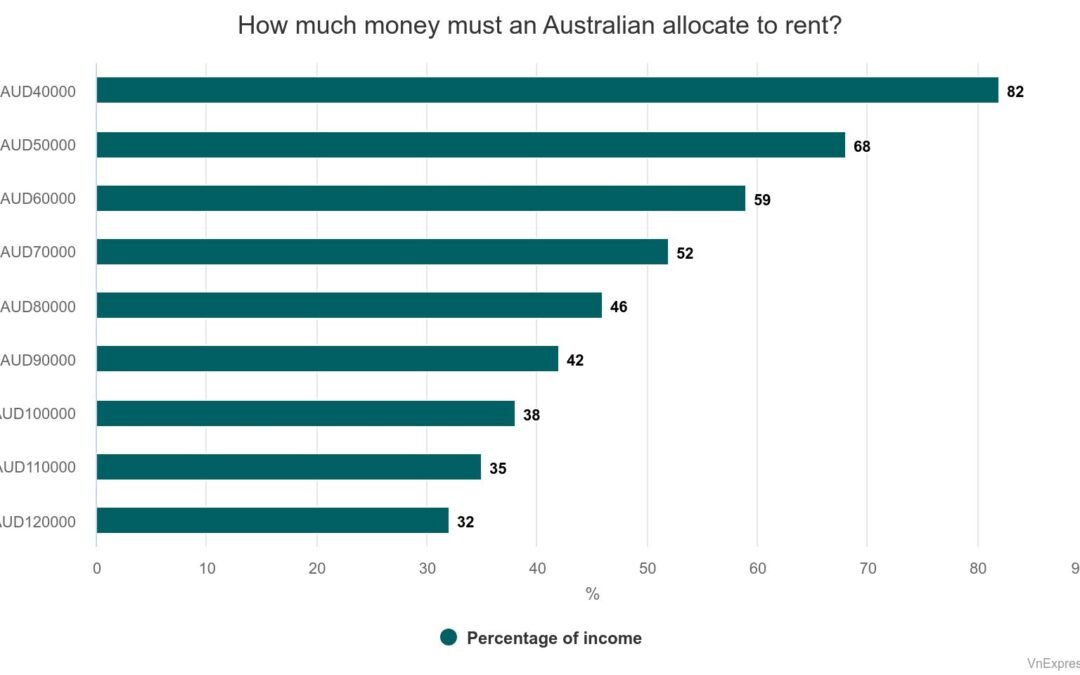
The analysis examined rental affordability for people with annual incomes ranging from AUD40,000 to AUD130,000.
Specialists frequently refer to the 30% benchmark as a crucial measure of housing affordability, especially when considering low-income families.
People earning below AUD130,000 could struggle financially when paying rent.
For an individual with an annual salary of AUD70,000, rental costs would absorb over half of their earnings according to typical property prices.
Individuals earning as low as AUD40,000 might have to dedicate more than 70% of their income towards rental payments.
Maiy Azize, a representative for Everybody’s Home, stated that the study underscores how people with high incomes are also finding themselves burdened by “astonishingly high” rental costs.
She further noted that the circumstances are even grimmer for individuals with lower earnings, as those making AUD 40,000 annually experience significant rent-related financial strain across the country.
The report highlighted capital cities along with their adjacent regions as the costliest places. Notably, Sydney and the Gold Coast presented particularly difficult situations.
In
Sydney
For someone earning AUD40,000, the rent would constitute 102% of their income.
“This figure indicates that rent alone exceeds their entire income, making it completely unaffordable without additional sources of financial support,” the report noted.
Karen Walsh, the CEO of National Shelter—an organization dedicated to enhancing housing conditions for those with lower incomes—spoke to the audience about this issue.
ABC
Many Australians find themselves in a desperate predicament.
“Households with low incomes are increasingly being pushed out of the private rental sector, and due to insufficient supply of social and affordable housing options, they face a higher likelihood of becoming homeless,” she stated.
Everyone’s Place is calling for immediate steps as the national elections draw near, emphasizing that housing should be considered a crucial issue.
The report highlighted that investments in social housing have decreased over the last forty years, not matching the rate of population increase, whereas affordability has worsened considerably.
The Housing and Homelessness Minister, Clare O’Neil, recognized housing as a crucial governmental concern.
“I want everyone to be aware that I genuinely comprehend the strain this housing crisis is placing on individuals, regardless of whether they require social housing, are tenants, or aspire to purchase a home—and I am committed to working tirelessly each day to reverse this situation,” she stated.