


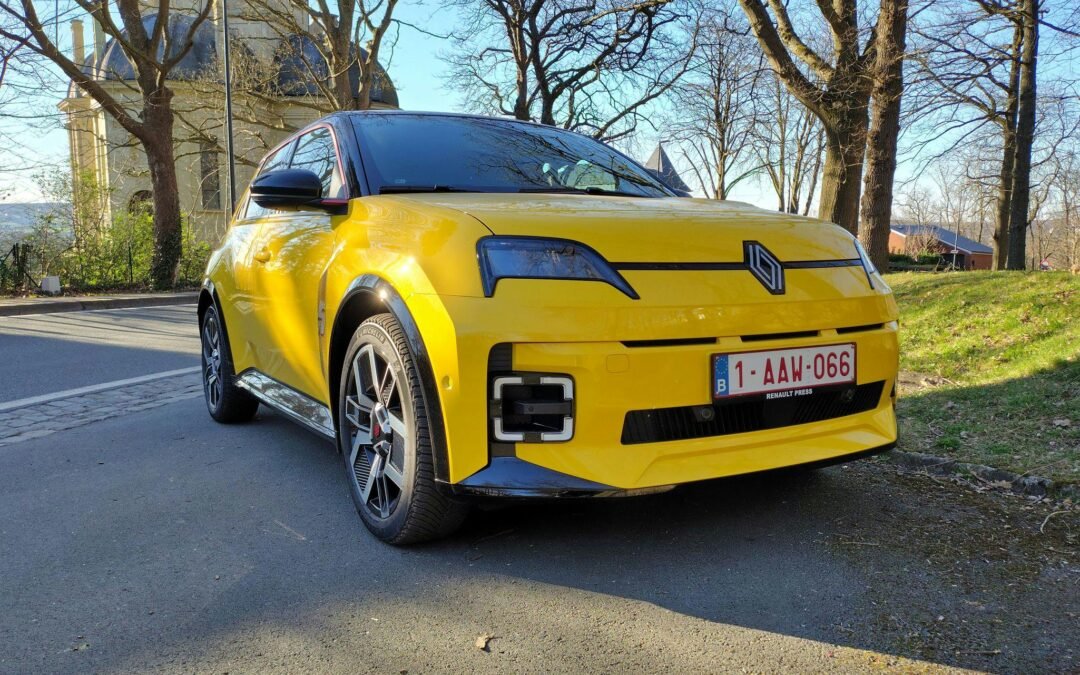
Renault is adopting the neo-retro approach for its latest urban vehicle and is resurrecting a iconic title. The “R5” serves as an excellent homage to the model I recall from my youth. However, this time around, it’s electrified… Time to put it through its paces!
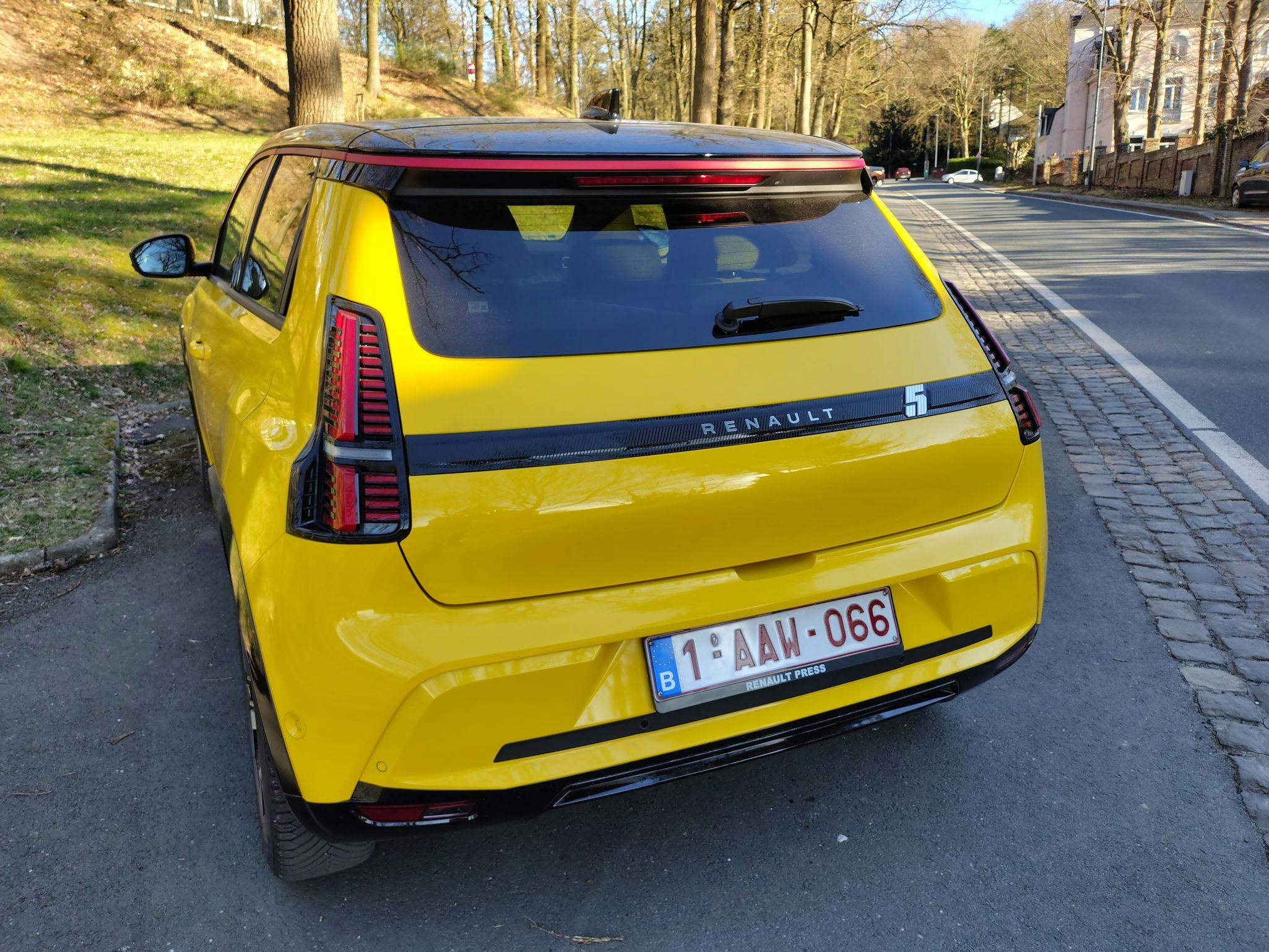
Creating fresh designs with nuanced nods to history has become the go-to strategy for certain brands. Renault is now embracing this approach. The Renault 5 exemplifies this trend quite successfully. Before my eyes sits a contemporary yellow vehicle, yet it evokes memories of the classic R5—particularly the sloping rear window framed by vertical headlights. To aid these recollections, a tiny plaque inside the compartment behind the driver’s seat displays outlines representing various iterations of the Renault 5 lineage. Indeed, this automobile exhibits strong familial ties; despite being shorter than a Clio at just under four meters in length. Nonetheless, the all-new Renault 5 E-Tech gazes firmly into tomorrow as an entirely electric model. During testing, I drove the “Comfort Range” variant equipped with a 52-kWh battery delivering 150 horsepower (or 110 kilowatts) producing 245 Newton-meters of torque. This sums up our introduction.
Small, but…
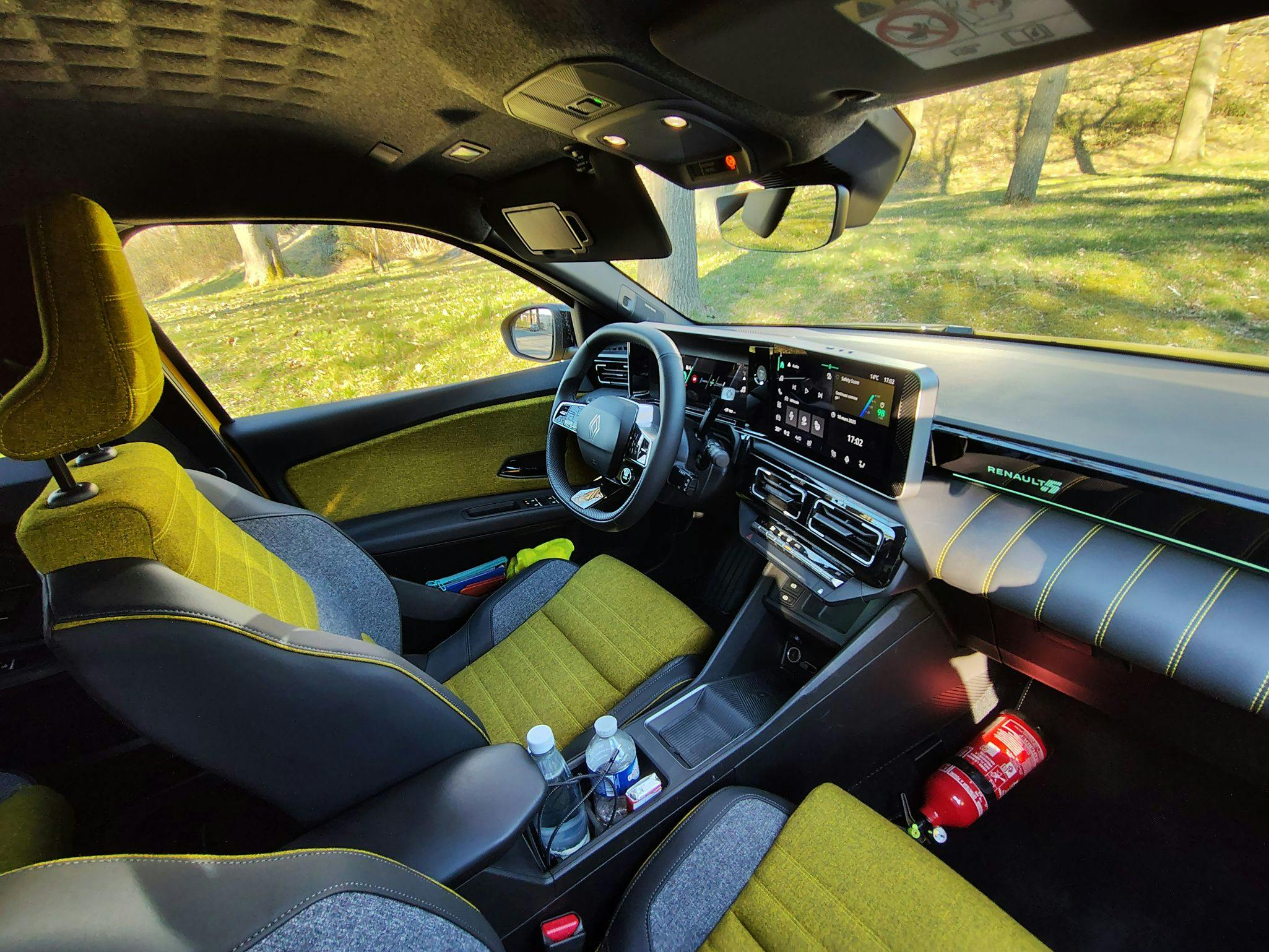
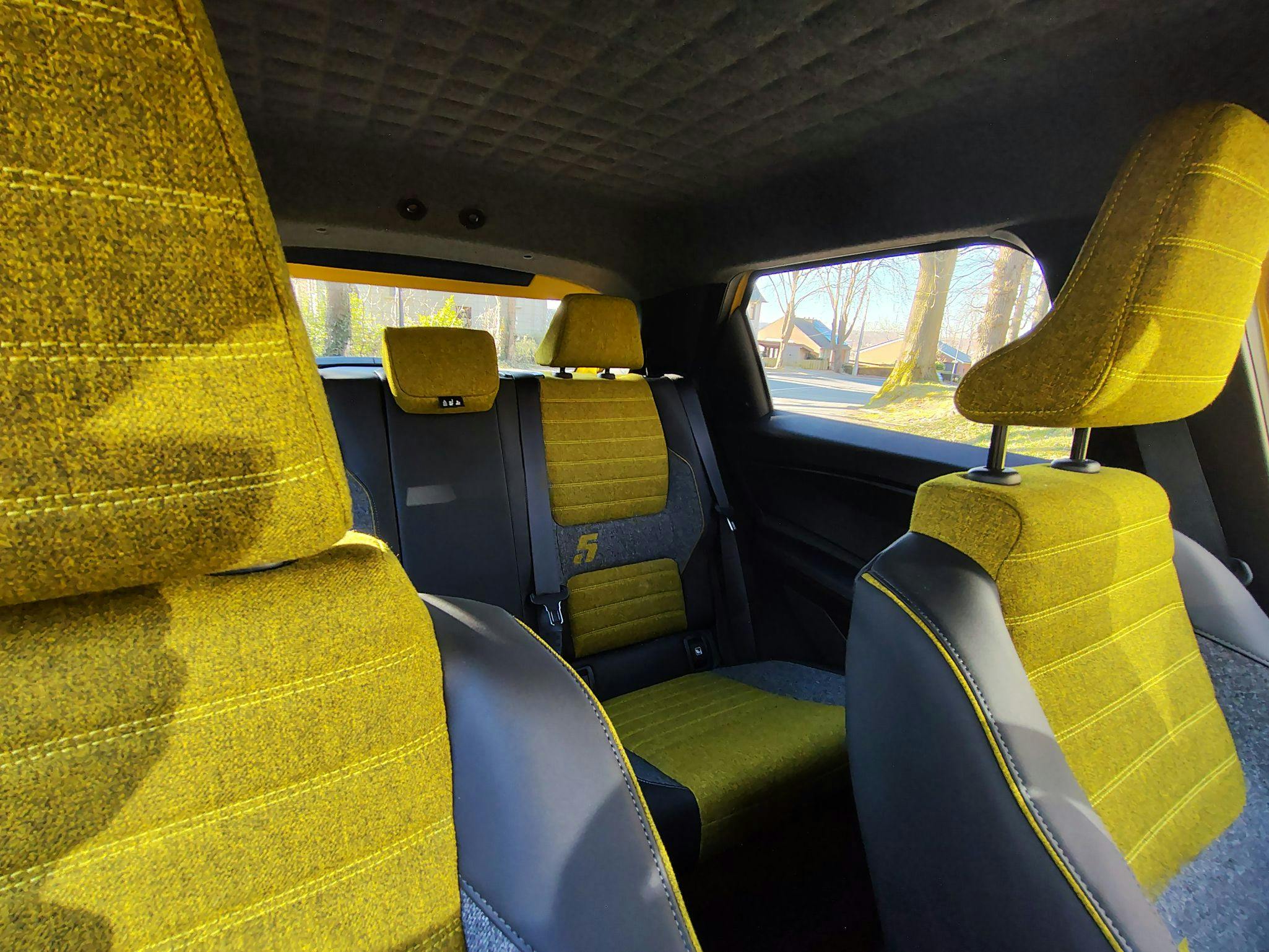
Aboard, the ambiance is remarkable! The Iconic Five finish stands out significantly, particularly the seats which echo those seen in the legendary R5 Turbo. Two 10-inch curved displays sit gracefully upon a dashboard styled with a distinct ’70s flair. Notable among these tributes is a motif inspired by the grille of an older Renault 5 located on the center console alongside features like the wireless phone charger and USB-C ports, along with what we traditionally refer to as the ashtray.
The R5 2025 does not come equipped with a manual gearshift (as expected). Instead, you’ll find the R-N-D selector positioned towards the right side beneath the steering wheel. After your journey concludes, simply press the power button situated on the dash between the dual screens rather than using ‘P’. Above the control lever for windscreen wipers lies another stick dedicated to managing infotainment functions — this places more demand on the driver’s dominant hand. Additional function keys adorn the steering wheel itself; specifically noteworthy is the “Multi Sense” key placed on the right side for selecting different driving modes such as Eco mode, which caps the vehicle’s maximum speed at 115 km/h despite having a top-speed capability of 150 km/h.
Between Winter and Spring
Having experience with electric vehicles, I am well aware of the shortcomings of compact models, regardless of their promising WLTP ranges. While they perform admirably in urban settings—being cheerful, sociable, and dynamic—they tend to struggle significantly on highways. Therefore, I’m eager to put the R5 through highway tests. Particularly because mornings remain chilly during the initial part of the trial period, with daytime temperatures also quite low.
The good news is that my Iconic Five model includes a built-in heat pump, so there’s no concern over conserving energy use for climate control. Ideally, this vehicle should offer approximately 410 kilometers based on an official combined cycle rating of 52 kilowatt-hours. However, reality paints a different picture; the onboard computer swiftly adjusts expectations down to roughly 330 kilometers.
When venturing onto the highway, one realizes how critical it becomes to plan stops frequently during colder months, needing breaks every hour and forty-five minutes due to reaching around ten percent charge after covering nearly two hundred kilometers.
By the conclusion of several days’ worth of trials, warmer weather begins to make itself felt, signaling springtime approaching. Interestingly enough, once conditions improve slightly, the car starts performing better, extending its operational range considerably. Under ideal circumstances, expect close to 280 kilometers on the motorway while maintaining full power from the battery at all times—a duration sufficient for almost exactly two hours without requiring rest periods, although barely meeting basic requirements.
The Time to Live
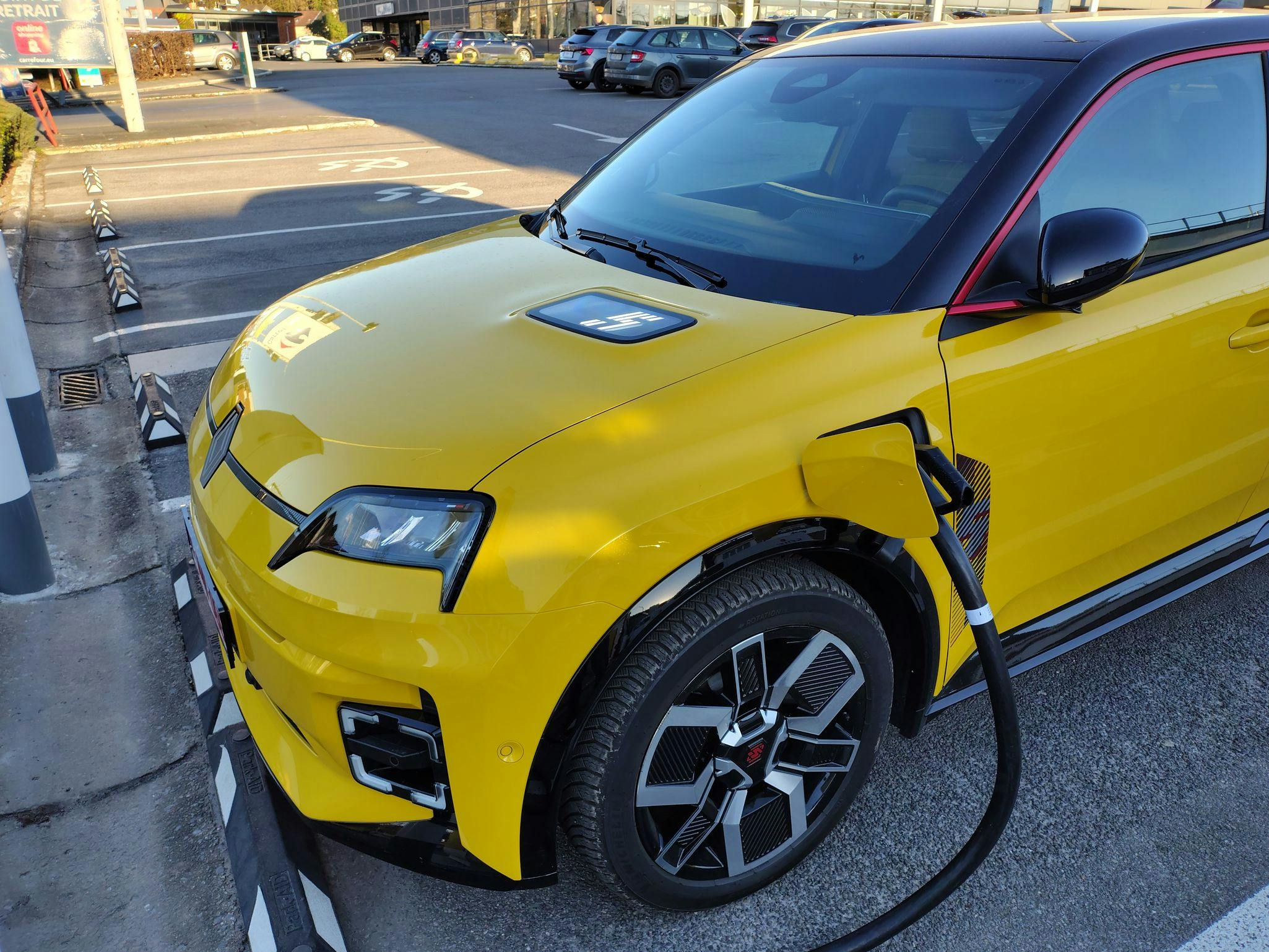
At maximum capacity, the DC fast charger delivers 100 kW. In cold conditions, particularly when frozen, initial charges rarely surpass 40 kW. At around 15°C outdoors, we achieved a peak rate of approximately 70 kW. Consequently, expect to pause for about 30 to 45 minutes to achieve an optimal state where the vehicle’s battery reaches roughly 80-85%, before resuming highway travel. Patience becomes key here. Renault included a thoughtful touch—a ‘5’ emblem on the hood serving as a visual charge status indicator. While waiting at the station under sunny skies, sitting comfortably on a nearby bench allows you to keep track of your progress effortlessly.
During trips exceeding 100 kilometers—especially those driven within speeds ranging from 90km/h to 120km/h—we observed energy usage averaging over 20 kWh per hundred kilometers. Lowering speed and using smaller 18-inch tires fitted with winter rubber brought efficiency closer to 16 kWh per 100 kilometers during city drives. This indicates it might be unsuitable for long-distance commuting but remains feasible for occasional excursions beyond metropolitan areas.
Storage capabilities remain modest; the trunk offers just 326 liters of cargo room. Folding down the rear seating expands this significantly to 1106 liters. Nonetheless, certain features such as the optional Harman Kardon sound system occupy cable management spaces. Similarly, devices connected via conventional sockets used to transform the R5 into a portable power source leave their cords freely accessible in shared zones.
Alive
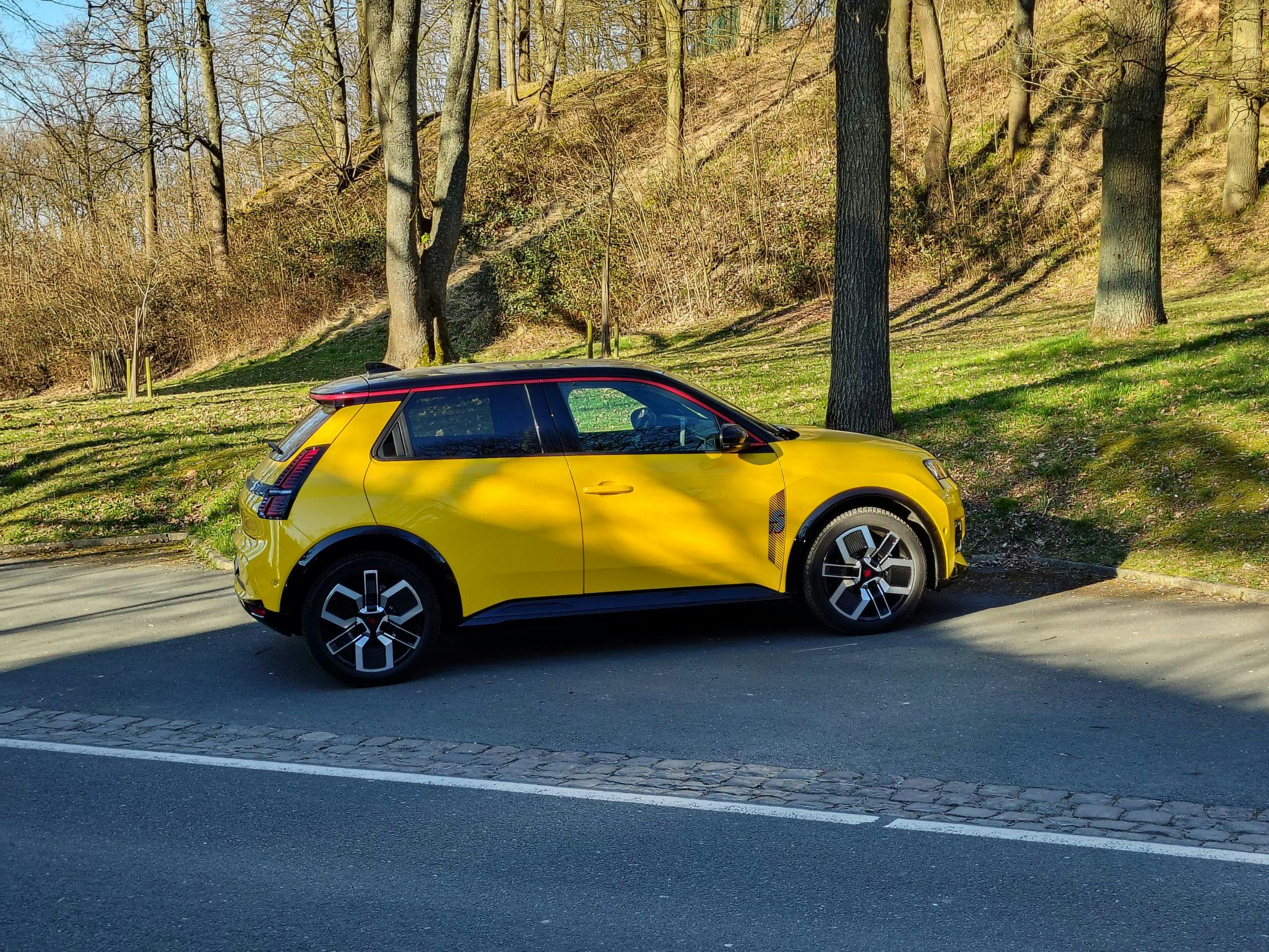
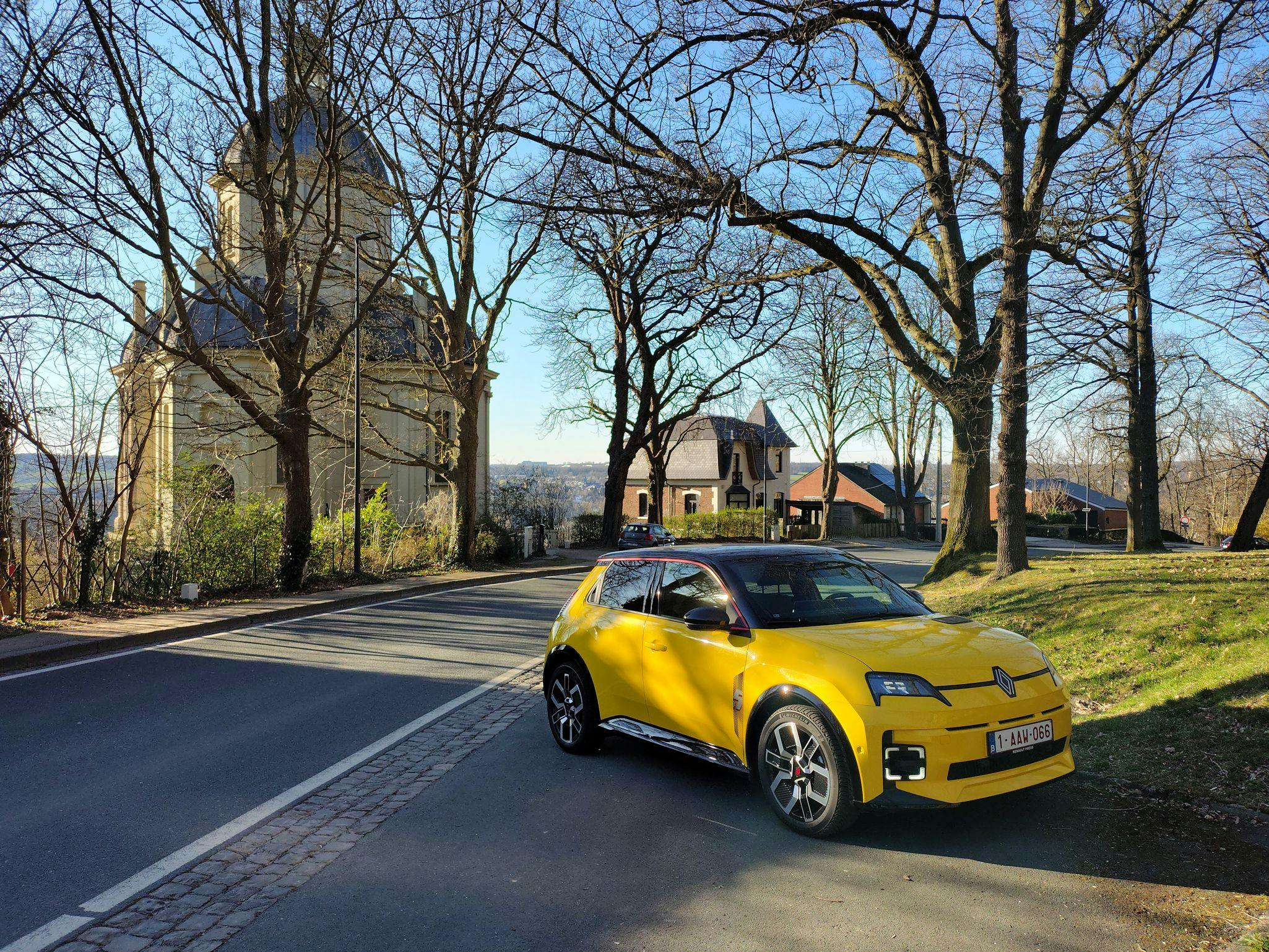
The highlight is undoubtedly piloting the R5. Kudos to Renault for crafting such an agile and responsive electric vehicle. This compact car handles roads with ease, excelling both on highways and through curves, spreading joy among drivers. Its braking system works perfectly, guiding the rear into smooth turns with finesse. During our climb and descent of the Citadelle de Namur for photography purposes, these skills shone brightly.
Naturally, due to its heft, robust suspension was necessary, leading to firmer dampening. On a section of the gently rolling Brussels Ring, the car briefly exhibited some oscillation but quickly stabilized. Though brief, these minor jolts detracted slightly; however, they didn’t overshadow overall comfort significantly enough to diminish praise for the Renault 5 E-Tech’s achievements. Stylishly designed—elegant yet powerful—it accelerates smoothly from 0-100 km/h in just eight seconds without feeling harsh. Four lightly packed adults could enjoy this spirited takeoff effortlessly.
Upfront, luxury abounds. However, those seated at the rear might find legroom limited, particularly if someone as tall as General de Gaulle occupies the driver’s seat.
The prices
The attractive French-made vehicle with 150 horsepower sells for approximately €32,900 in Belgium. Meanwhile, the model featuring 120 horsepower paired with a 40 kWh battery begins at around €27,900 in Belgium. Regarding the Renault 5 E-Tech Iconic Five we’re testing, fully loaded with additional features, it comes to €34,900. Its price in France stands at €35,590. If purchased in Switzerland with similar specifications as shown in photos, expect to pay about CHF 36,000. Despite knowing that this electric urban car has some range constraints, the Renault 5 E-Tech boasting 150 horsepower along with a 52 kWh battery remains suitable for regular use when charging from home at 11 kW. It also allows occasional trips and pulling a light trailer up to 600 kg without issues.
(MH with Duquesne – Source: Renault – Images: © Olivier Duquesne)