


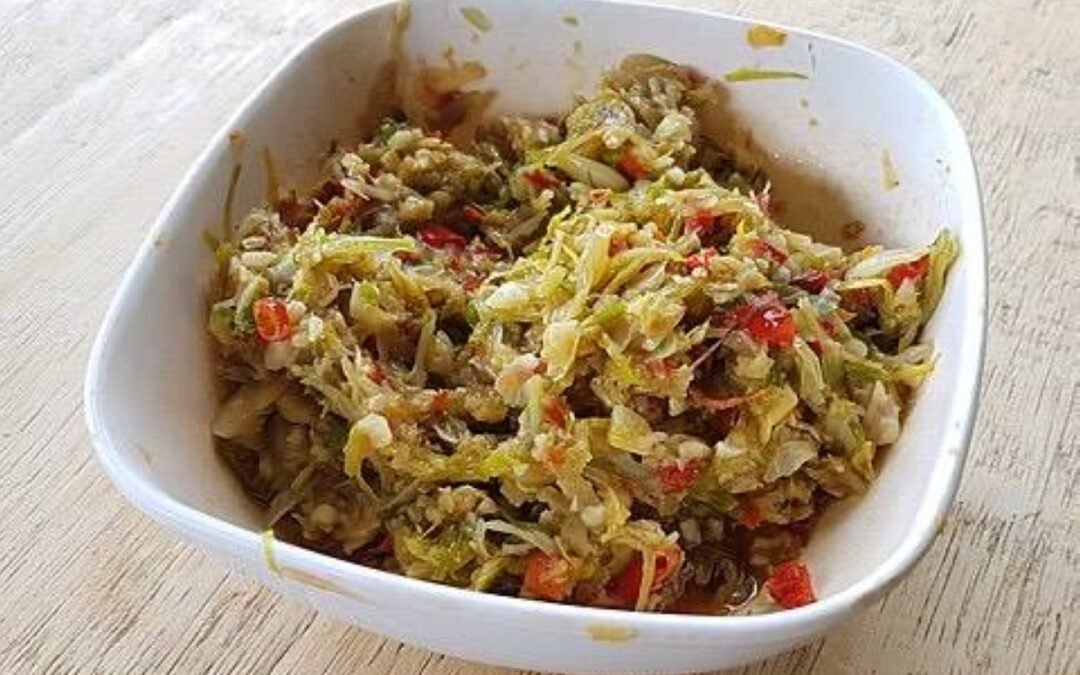

Grateful for Maranao cuisine, palapa stands out as a versatile condiment that complements nearly everything with its robust flavors, deep-rooted traditions, and a distinctive zing in each mouthful. Once we stumbled upon it many years ago, we became enamored. Palapa truly serves as the perfect pampagana (starter).
Initially, palapa might appear straightforward—a golden spread dotted with bits of green and red from minced herbs and peppers. However, do not be deceived by its unassuming look. Each mouthful packs quite a flavorful kick, combining spiciness, sweetness, and an earthly richness. Next thing you know, you have emptied an entire jar.
The key component is sakurab, a kind of wild garlic found in the region of Lanao. Picture it as similar to young spring onions but possessing a more robust taste and scent. It’s mixed together with minced ginger and red pepper flakes. These ingredients are cooked in coconut oil, lending them an enriched smooth texture that mellows their intensity. To enhance the hue, turmeric is included in the mix.
The thing that really distinguishes palapa is its equilibrium. While it has a kick of spiciness, it doesn’t overwhelm; instead, it gently stimulates your palate and makes you crave another bite. The gentle touch of coconut oil’s natural sweetness combined with the grounding flavor of turmeric gives this condiment depth and an irresistible quality that elevates every dish it accompanies.
The greatest thing about palapa is its remarkable versatility. Although some people use it simply as a seasoning, genuine fans understand that it has the ability to enhance nearly every meal.
Below are some of the most common ways to relish it:
Use it as a dip or side dish: Place a scoop beside your barbecued meat or battered fish. The heat from this will beautifully enhance the smoky, caramelized tastes.
Blended with rice: Incorporating palapa into basic steamed rice transforms an ordinary carbohydrate into a irresistibly delicious dish.
Cooking base: A lot of Maranao dishes begin by frying palapa together with various ingredients. This forms the basis for robust, tasty soups and curry-like preparations.
Snack topping: Adding some shredded coconut ‘palawa’ onto boiled eggs, crackers, or even bread can immediately transform a basic snack into a delightfully flavorful experience.
We have tested it with eggs, meats, and fish — all combinations proving delightful in their individual ways. Interestingly, crispy singkamas (jicama) transforms into a zesty delicacy when paired with just a touch of palapa. This condiment also complements robust, long-simmered meals such as beef rendang beautifully; its strong taste cuts through the richness, adding an extra dimension of flavor to each mouthful.
Palapa also offers several unexpected health advantages. The ingredients such as ginger and turmeric are recognized for their anti-inflammatory effects, whereas chili peppers may aid in speeding up your metabolism. Interestingly, even sakurab—the standout ingredient—contains antioxidants that promote general well-being.
We can only wish for a future where palapa becomes commonplace, prominently showcased in Filipino eateries across the country. For now, though, you can easily order jars of this delicious sauce from various e-commerce sites with just an internet click.
For those seeking an unforgettable gastronomic experience, exploring Muslim Town in Quiapo offers genuine Maranao cuisine. Here, palapa is not merely a seasoning but the essence of each dish. Once tasted, you won’t want to miss out again; this flavor becomes your lifelong favorite.
* * *
The author can be contacted via email at kaycalpolugtu@gmail.com or you can follow her on Instagram using the handles @kaycalpolugtu and @aplateofbahaykubo.