


-
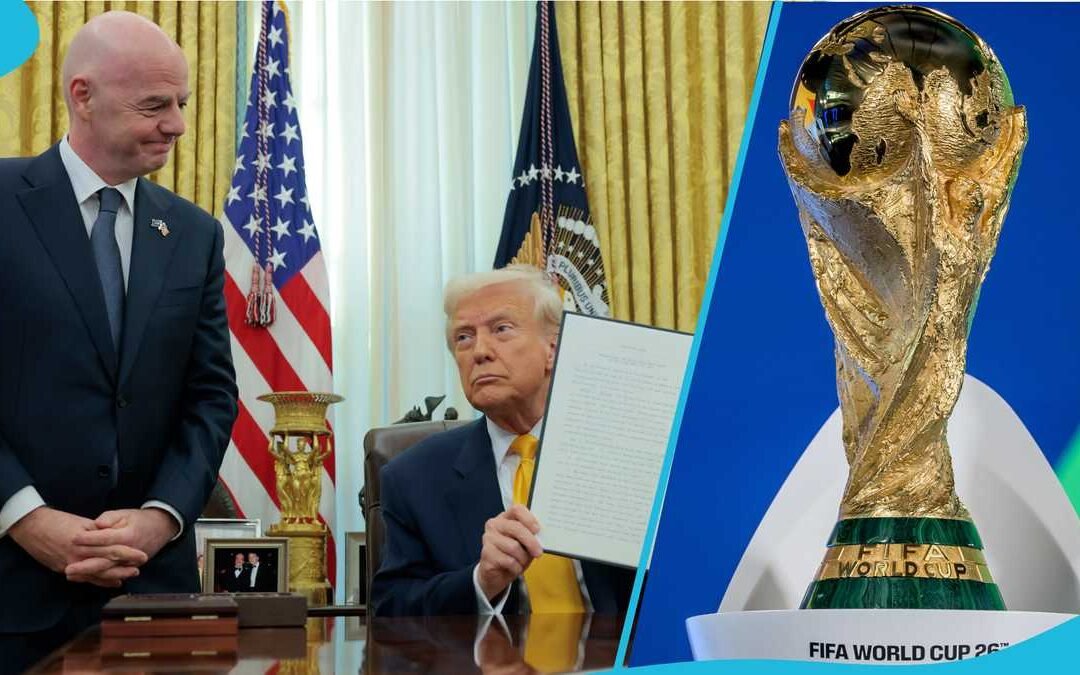
Up to six countries might be barred from participating in the 2026 World Cup because of Donald Trump’s suggested travel restrictions.
-
One squad has already ensured their qualification, whereas the remaining teams are still vying for a spot yet face the danger of being denied entry into the host nation.
-
FIFA is apparently negotiating with the U.S. administration to devise a plan that permits every eligible team to join in.
The 2026 FIFA World Cup, scheduled to occur throughout the United States, Mexico, and Canada, is poised to become a memorable event.
Nonetheless, a fresh dispute has arisen because six countries might be excluded from participation owing to a suggested travel ban by U.S. President Donald Trump.

If implemented, these restrictions might stop participants from multiple nations—which some are still vying for spots in—from journeying to the North American nation for the competition, irrespective of their athletic prowess.
Trump’s travel ban and its impact on the World Cup
As reported by The New York Times on March 14, the Trump administration is contemplating limitations on travelers from as many as 43 nations, which includes several countries whose teams are competing for a spot in the World Cup.
Iran, having already guaranteed its qualification, is said to be part of a preliminary list of countries that are prohibited.
The proposal divides the impacted nations into three categories: Red (Complete travel ban), Orange (Strict visa limitations), Yellow (A 60-day window to resolve issues prior to implementing restrictions).
Iran has allegedly been placed in the “red” classification, making it extremely difficult for their team to travel to the United States. This could likely bar them from participating in the tournament.
What other countries might be impacted?
Apart from Iran, six additional countries vying for a place in the 2026 World Cup might also face consequences. These nations are: Sudan, Cameroon, Burkina Faso, Cape Verde, Democratic Republic of Congo, and Venezuela.
Sudan, Venezuela, and Iran are apparently on the “red” list, indicating they might be subject to complete travel restrictions.
Several other countries are likewise included on the suggested restriction list, which puts their chance of participating in the World Cup at risk.
What steps should be taken to resolve this problem?
With the
Mundial
Less than a year out, conversations have begun to identify a solution.
According to beIN Sports, FIFA has initiated discussions with the U.S. administration to investigate possible waivers for the teams impacted.
As FIFA requires host nations to guarantee entry for all qualified teams, U.S. authorities are facing increasing pressure to confirm that athletes from sanctioned countries will be permitted into the nation.
Should the travel ban be implemented, it might establish a perilous example, eroding the purity of the World Cup and barring teams from participation due to political choices instead of athletic prowess.
As events unfold, FIFA, individual national football associations, and human rights organizations are anticipated to contribute their perspectives to the discussion, aiming to discover a resolution that maintains fairness and inclusiveness within international soccer.