


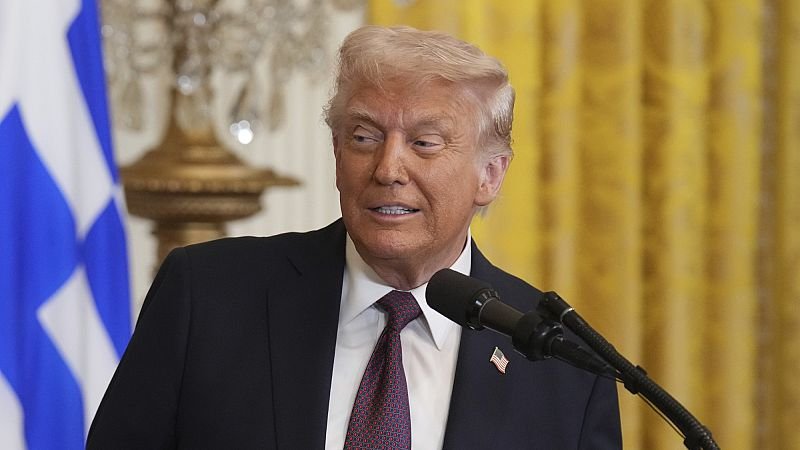
US President Donald Trump stated on Monday that he will be announcing auto tariffs within the next few days, possibly including exceptions for specific nations regarding mutual trade levies. Additionally, he suggested that tariff decisions on items such as vehicles, timber, semiconductor chips, and medicines will be made shortly.
Last month, Trump declared his intention to enforce 25% duties on imported automobiles, medications, and semiconductors starting from 2nd April. Additionally, he issued an executive directive to scrutinize trade dealings with plans for implementing extensive retaliatory tariffs anticipated to commence on the mentioned date. Following this announcement, he provided a temporary reprieve of thirty days regarding car taxes within the framework of the United States-Mexico-Canada Agreement (USMCA), effective since 3rd March.
His remarks intensified the bewilderment surrounding the continuously inconsistent tariff policies, prompting other countries to hasten discussions with the White House aiming for exceptions. “I might grant many countries some leeway,” stated Trump.
U.S. stock markets experience a strong recovery as Tesla jumps 13%.
Trump’s remarks on potential tariff exemptions came at a time when investors were seeking bargains in the US stock markets after a four-week selloff. Dip-buys in big tech stocks buoyed Wall Street, with the Nasdaq jumping more than 2% on Monday. All the Magnificent Seven stocks finished higher, with Tesla leading gains, surging 12%. However, the electric vehicle maker’s shares are still down 31% year-to-date, as CEO Elon Musk’s political intervention continues to spark backlash.
The US dollar experienced a recovery for the fourth successive trading session after the previous week’s Federal Open Market Committee (FOMC) gathering. Chairman of the Federal Reserve, Jerome Powell, minimized the effect of President Trump’s tariffs on the economy, stating that the upward push on inflation would likely be “temporary.” The anticipation of a less stringent approach from Trump regarding tariffs coupled with the Fed’s support has aided in boosting both US stock markets and the value of the dollar.
European shares and the euro decline
By contrast, the rally in the US stock markets may have caused profit-taking moments in European equities, with both the Euro Stoxx 600 index and the DAX declining for the third consecutive trading day. Notably, the record-setting rally in Germany’s stock markets lost steam after the European Union leaders failed to secure a €5 billion Ukraine funding package last week. Europe’s defence sector retreated sharply, leading to broad losses.
Furthermore, Trump’s tariff threats could result in countermeasures from the EU, scheduled to be implemented next month. On March 12th, the European Commission declared that they plan to impose tariffs on $30 billion worth of U.S. products starting in April. This escalation in the trade conflict might spark additional sell-offs within the local markets.
The euro continued to lose strength against the dollar for the fourth consecutive day, with the EUR/USD pairing dropping below 1.08 during Tuesday’s trading in Asia—the lowest level since early March. This downturn was fueled by differing trends in government bond yields between the U.S. and Europe. Specifically, the U.S. 10-year Treasury yield surged by 8 basis points amid enhanced optimism about economic expansion, whereas Germany’s equivalent yield increased just slightly by 1 basis point.