


A
groundbreaking study
published in the
National Academy of Sciences Proceedings
has disclosed the finding of
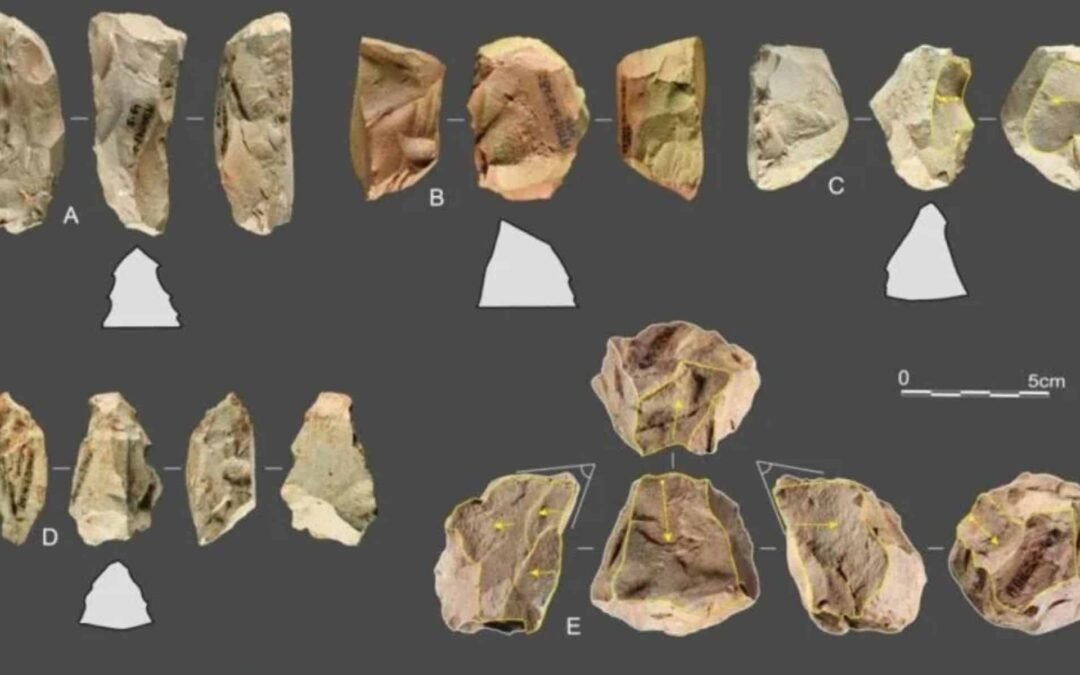
50,000-year-old tools
at
Longtan
, a site in
southwest China
These tools, connected to the
Quina
technology systems, which were once believed to be exclusive to
Europe
This fresh information brings up significant inquiries regarding
human migration
, innovation, and development, indicating that
East Asia during the Middle Paleolithic era
might have been much more dynamic than earlier thought. This research introduces new debates about possible links between
Denisovans
,
Neanderthals
, and various ancient human predecessors, expanding the horizons of our knowledge about early human history.
A Fresh Perspective on East Asia’s Stone Age Period
The discovery of these
Quina tools
constitutes a significant change in the way researchers perceive the
Middle Paleolithic
in
East Asia
This era was previously believed to be quite static, particularly when contrasted with the swiftly progressing civilizations elsewhere.
Europe
and
Africa
However, the results from
Longtan
have uncovered new insights into early human development in this area.
Ben Marwick
a co-author of the study and a professor at
archaeology
at the
University of Washington
highlighted the importance of this finding, stating: “This discovery shakes up our understanding of that region during that timeframe. It truly brings into focus the possibility that there may be more activities from this era awaiting discovery. This could fundamentally alter our perspective on both humans and human evolution in this location.”
An Unexpected Link to Europe
The
Quina tools
discovered in China have been connected to those utilized
Europe
Around this time, evidence suggests that human migration or cultural exchanges may have been broader than earlier believed. These tools, distinguished by their features, indicate
asymmetrical scrapers
, were probably utilized for jobs such as
scraping
and
shaping
materials such as
bones
and
wood
.
Marwick suggested, “We could investigate whether they had previously engaged in activities resembling what Quina later developed. If so, this would indicate a localized evolution where earlier generations experimented with various forms before refining them. Conversely, if Quina emerges abruptly without evidence of prior experiments, it may imply that these techniques were introduced from an external group.”
Rethinking the Position of East Asia
For numerous years, scholars have upheld the belief that
East Asia
stayed fairly secluded and static during the
Middle Paleolithic
However, this finding contradicts that notion. As Marwick stated, “There’s a strong hold on the belief that everything remained constant for an extended period in East Asia. People have not entertained the thought of uncovering evidence that might dispute this view. Yet, perhaps some academics are now inclined to question these assumptions.”
Searching for Human Remains
Although these instruments present fresh opportunities for comprehending ancient human cultures, scientists are equally enthusiastic about discovering
human remains
This might help determine if these tools were made by individuals similar to us, as stated by Marwick. “No Neanderthals have ever been discovered in East Asia,” he noted, “but what about finding one? Alternatively, we might uncover evidence of another species.”
Denisovan
, which represents another type of early human ancestor? Should we discover human remains from this era, we could encounter something astonishing—a previously unknown human ancestor perhaps.”
Enjoyed this article?
Sign up for our complimentary Newsletter
for captivating tales, special material, and up-to-date information
To find more stories like this, check out
Indiandefencereview.com