oleh admin | Mar 25, 2025 | business, economics, investing, investing company news, investing news
In February 2025, The Nigerian Exchange Limited saw a significant drop in trading activities with total transactions falling by 16.07 percent to N509.47 billion from N607.05 billion observed in January.
The decrease was primarily caused by a substantial exodus of foreign investors, with their activities dropping by 40.36% from N71.51 billion to N42.65 billion during that period.
The NGX’s Domestic and Foreign Portfolio Investment Report, published on Monday, indicated that foreign investments decreased by 29.67% to ₦18.05 billion in January from ₦25.66 billion previously. Additionally, foreign outflows saw a reduction of 46.33%, dropping to ₦24.60 billion from ₦45.85 billion.
The decrease in international involvement lowered their total trading share to merely 8.37 percent, down from 11.78 percent in January, underscoring the ongoing prominence of local investors in the stock market.
On the contrary, local investors maintained dominance over the market, representing 91.63 percent of all trades conducted. Nonetheless, their transaction value dropped by 12.83 percent, decreasing from N535.54 billion in January down to N466.82 billion in February.
An analysis of local trades showed that individual investors invested N214.51 billion, marking a 19.76 percent decline from the N267.35 billion recorded in January. Meanwhile, institutional investors put in N252.31 billion, which represents a 5.92 percent reduction compared to the N268.19 billion they had committed in the prior month.
The decrease in international deals highlights increasing worries about investors’ trust in Nigeria’s stock exchange.
Year-to-date, the total transaction volume for January and February 2025 was recorded at ₦1.12 trillion. Domestic investors were responsible for ₦1 trillion, which constitutes approximately 89.78%, whereas foreign investors accounted for ₦114.16 billion, constituting around 10.22%.
In comparison to the corresponding timeframe in 2024 when the total transactions amounted to N1.01 trillion, there has been a rise of 10.62 percent in market activity this year. Nevertheless, the proportion of involvement from international investors has decreased from 11.78 percent in 2024 down to 10.22 percent in 2025.
In the last 18 years, statistics indicate a consistent rise in local involvement in Nigeria’s stock exchange, with domestic activity climbing by 33.15%, from ₦3.56 trillion in 2007 to ₦4.73 trillion in 2024. During this timeframe, international dealings also expanded by 38.31% from ₦616 billion to ₦852 billion. Nonetheless, despite these increases, overseas engagement stayed comparatively modest at around 15% of all trades in 2024, whereas indigenous traders made up approximately 85%.
PUNCH disclosed that foreign investors pulled out ₦455.62 billion from the Nigerian stock market in 2024, far exceeding overall investments and highlighting worries regarding investor trust, even as the Central Bank of Nigeria attempted to stabilize the naira.
Provided by SyndiGate Media Inc.
Syndigate.info
).

oleh admin | Mar 25, 2025 | diplomacy and diplomats, foreign policy, international relations, military, politics
The event sparked online outrage in Japan, leading to calls for more stringent measures against China’s ‘authoritarian breaches of international law’.
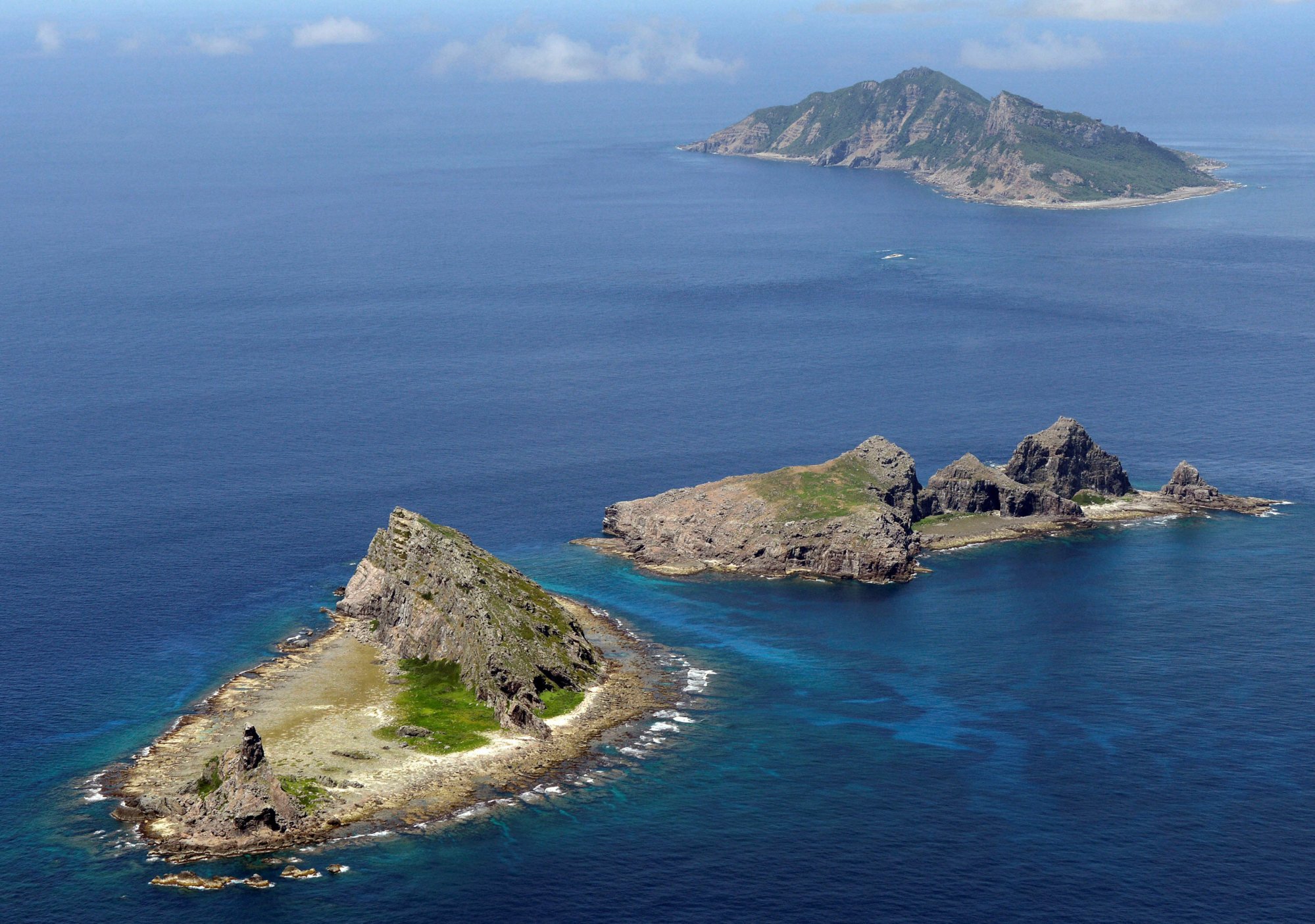
Beijing has been accused of “two-faced diplomacy” after pledging greater dialogue and cooperation during high-level talks in Tokyo on Saturday, only for three Chinese coastguard vessels to enter waters around Japanese-controlled islands the next day, pursuing a Japanese fishing boat.
Japan
Japan’s Foreign Minister Takeshi Iwaya expressed optimism after the trilateral meeting with his Chinese and South Korean counterparts on Saturday. He characterized the talks as “an open exchange of opinions” and stated that the three countries agreed to “foster forward-looking collaboration.”
Chinese Foreign Minister
Wang Yi
seemed to concur, stating in a release that improved dialogue and teamwork could assist the trio of countries in “collectively combating threats” and boosting their reciprocal comprehension.
Contemplating the worldwide issues that had drawn Japan, China, and
South Korea
To “a pivotal moment in history,” Iwaya stressed the importance of bridging divides on Saturday. He stated, “Now more than ever, it is crucial to strive to transcend division and conflict via dialogue and collaboration.”
But the goodwill generated by these statements quickly began to evaporate when, less than 24 hours later, Chinese coastguard vessels entered waters near the
Diaoyu Islands
. The islands, administered by Japan as the Senkakus but claimed by China, have long been a flashpoint in the region.
Experts noted that the coast guard’s behavior contradicted the cooperative ethos promoted during negotiations and reflected China’s diplomatic style—presenting itself as collaborative externally while reinforcing territorial assertions in disputed regions.
Many individuals express pessimism following China’s statements and ensuing activities; however, few are truly taken aback,” noted Ryo Hinata-Yamaguchi, an associate professor at Tokyo International University’s Institute for International Strategy, in conversation with This Week in Asia. “Those who find themselves shocked by these developments lack perceptiveness.
Hinata-Yamaguchi described Beijing’s strategy as “showing a pleasant facade” publicly while aggressively reinforcing its territorial assertions. He explained, “Although they claim benign intent in diplomatic circles, their deeds convey a different message.”
‘Sink ships, arrest trespassers’
The events over the weekend sparked significant anger online in Japan, where people were not just upset about China’s behavior but also criticized their own government for what they saw as inadequate response. In comments on Okinawa’s Yaeyama Daily News website, one user condemned Beijing’s approach, calling it “duplicitous diplomacy.”
The commenter proceeded to assert that the Japanese government was being “duped” and cautioned that Japan might relinquish control over the contested islands if it persisted in trusting China.
“One cannot condone China’s oppressive breaches of international law,” stated an online remark. Other comments urged Tokyo to take more stringent actions, with some users advocating for legal amendments allowing Japan to “submerge vessels, detain intruders, and prosecute them in courts.”
“The Japanese government just gives warnings without taking action, allowing China to act as they please,” the commentator noted.
Toshimitsu Shigemura, a professor of political science and international relations at Waseda University, noted that there was significant distrust toward Beijing within the Japanese government. He explained, “Their statements often contradict their actions.” This sentiment was further illustrated when, on the very day that the foreign minister expressed his desire for collaboration to maintain regional stability, the Chinese coast guard entered Japanese territorial waters and intimidated a fishing vessel.
We can’t rely on China to keep its diplomatic commitments.
Toshimitsu Shigemura, a Japanese professor specializing in politics
“We can’t rely on China to keep its diplomatic commitments,” Shigemura stated, suggesting that this indicates possible tensions within the Chinese administration.
He suggested that the defense ministry might have feared the foreign minister could travel to Tokyo and reach an agreement with Japan that would undermine China’s territorial assertions over those islands. However, by dispatching coast guard vessels into Japanese maritime areas concurrently with discussions between the two counterparts, they are essentially conveying the stance held by the defense ministry.
In recent years, Chinese coast guard ships have been increasingly venturing into Japanese territorial waters more often, a trend that has become particularly noticeable over the last ten years.
A remarkable 353 days of operation were logged.
In the contiguous zones surrounding the islands earlier this year. Experts think these moves are intended to challenge Japan’s authority over the contested area.
Shigemura cautioned that Beijing might intensify the pressure even more, which would leave Japan few choices if a Japanese fishing vessel were to be forcefully halted or seized by China’s maritime police.
In a dire scenario like that, Tokyo has limited options,” he stated. “Force isn’t an option for them, so their main leverage would be threatening to withhold support. Under these circumstances, I anticipate Tokyo might propose resolving the issue via talks and discussions; however, China could interpret this stance as a sign of weakness.
“I anticipate that China will continue exerting pressure around the islands since their ultimate aim is to attempt gaining control over the entire archipelago,” Shigemura noted.
More Articles from SCMP
Hong Kong’s Coleman Wong’s historic run at the Miami Open concludes with a three-set defeat against Adam Walton.
Churchome is the preferred place of worship for Justin Bieber. Previously associated with the contentious Hillsong network, this connection could potentially create a rift between the ‘Baby’ singer and his spouse, Hailey Bieber.
China declares shared navy exercises with Thailand close to a South China Sea harbor.
World Cup victor praises progress in women’s rugby, prior to captaining Kiwis at Tradition HKFC 10s
The article initially appeared on the South ChinaMorning Post (www.scmp.com), which is the premier source for news coverage of China andAsia.
Copyright © 2025. South ChinaMorning Post Publishers Ltd. All rights reserved.

oleh admin | Mar 24, 2025 | economics, financial markets, investing market news, news, stocks

Stocks largely climbed across Asia on Tuesday, continuing the upward trend from Wall Street amid reduced concerns about President Donald Trump’s proposed tariffs. Meanwhile, investors were anticipating the upcoming release of crucial U.S. inflation figures.
A surge in tech giants including Tesla and Nvidia helped New York markets higher, with sentiment buoyed by indications from the White House that next week’s glut of levies would be less severe than feared.
Trump has dubbed April 2 “Liberation Day” as he pledges to impose reciprocal tariffs on trading partners in an effort to remedy practices that Washington deems unfair.
After returning to power in January, Trump has adopted an aggressive policy stance, targeting both allies and adversaries, which has sent shockwaves through financial markets and heightened concerns over the worldwide economic situation.
Recently, he indicated that certain nations might receive waivers or cuts from the upcoming week’s actions, providing investors with a badly needed boost of hope.
Market-watchers say the final outcome would likely see the tariffs changed after negotiations.
The current surge of pessimistic stories—driven by politically biased consumer confidence reports and an influx of negative opinion pieces—appears more exaggerated than warranted, according to Stephen Innes from SPI Asset Management.
Furthermore, IG Market Analyst Tony Sycamore commented: “It’s anticipated that this process will be better organized and structured compared to earlier efforts. The figures set to be disclosed on April 2nd may potentially see reductions following negotiations.”
Nevertheless, the president gave a shock by threatening nations that imported oil and natural gas from Venezuela with significant tariffs, which might affect China and India as well as other countries.
During early trading, markets in Tokyo, Sydney, Singapore, Taipei, and Wellington increased in value; however, those in Shanghai and Manila declined.
Hong Kong’s index fell over one percent, largely due to a nearly five percent decline in the stock price of major Chinese technology company Xiaomi following its successful raise of $5.5 billion through a substantial share issuance aimed at boosting its electric vehicle endeavors.
Despite a rise of approximately six percent in South Korea’s car manufacturer Hyundai after announcing a $21 billion USD investment, Seoul likewise fell.
Attention is also focused on the release of U.S. personal consumption expenditures data this week, as it serves as the preferred measure of inflation according to the Federal Reserve.
The readings will be carefully observed following warnings that prices may increase due to Trump’s tariffs.
The Atlanta Fed president, Raphael Bostic, indicated that the measures suggest the bank will probably reduce interest rates only one time this year.
“I moved to one mainly because I think we’re going to see inflation be very bumpy and not move dramatically and in a clear way to the (Fed’s) two percent target,” he told Bloomberg Television on Monday.
Since this is getting delayed, I believe the corresponding policy measures will also need to be postponed.
Oil prices maintained their gain from Monday, which was over one percent, following President Trump’s warnings about Venezuelan crude oil.
Prominent individuals at approximately 0230 GMT
Tokyo – Nikkei 225: Increased by 0.7% to reach 37,881.70
Hong Kong – Hang Seng Index: Down 1.7% at 23,502.90
Shanghai – Aggregate: DECREASED BY 0.1% TO 3,367.17
Euro/dollar: DROPPED to $1.0799 from $1.0805 on Monday
Pound/dollar: DECREASED to $1.2917 from $1.2924
Dollar/Yen: Increased to 150.64 yen from 150.58 yen.
Euro/pound: INCREASED to 83.61 pence from 83.58 pence
West Texas Intermediate remains steady at $69.09 per barrel.
Brent North Sea Crude: REMAINS STEADY AT $72.37 PER BARREL
New York – Dow: Increased by 1.4% to close at 42,583.32 points.
London – FTSE 100: Decreased by 0.1 percent to close at 8,638.01.
oleh admin | Mar 24, 2025 | emergencies, government, news, politics, politics and government
As the leadership turmoil in Rivers State intensified with attacks on crucial oil and gas facilities, coupled with impending impeachment proceedings targeting Governor Siminalayi Fubara and Deputy Governor Ngozi Odu, President Bola Tinubu took decisive action last Tuesday by declaring a state of emergency in this petroleum-rich region. In doing so, he removed both officials from office along with the obstinate state legislature for an initial term of half a year. Concurrently, he designated former Chief of Naval Staff, Rear Admiral Ibok-Ete Ibas (retired), as the new administrator overseeing the state’s operations.
Upon assuming his duties on Wednesday, Ibas embarked on addressing these pressing issues head-on. Called back into service specifically to stabilize the situation in Rivers and bring stability over the next six months, his mission presents significant challenges. As someone who must draw upon years of military experience, Ibas faces the daunting task of restoring peace and functionality efficiently.
The announcement of martial law in Rivers generated considerable discussion among critics, particularly those aligned against the administration like members of the People’s Democratic Party and various disaffected political figures organized under the banner led by ex-Vice President Atiku Abubakar. Despite accusations leveled against them regarding personal interests influencing their stance, they argue vehemently against what they perceive as unlawful acts—namely, the removal of elected leaders without legitimate justification. However, supporters believe swift intervention was necessary to safeguard public welfare and protect essential resources.
According to Section 305 of the 1999 Constitution, as amended, which outlines the procedures for declaring a state of emergency, the role of the governor under such circumstances remains unspecified. Historically, however, practices regarding governors’ positions during emergencies have been inconsistent within our region.
For instance, in May 2004, Former President Olusegun Obasanjo declared an emergency in Plateau State due to escalating ethno-religious conflicts resulting in significant loss of life and property damage. As part of this intervention, Governor Joshua Dariye along with the entire state legislative body were relieved from their duties for half a year; subsequently, Major-General Chris Alli (retired) took over governance responsibilities aimed at restoring stability in the area.
Similarly, another similar situation occurred just two years afterward in Ekiti State where prolonged political instability prompted President Obasanjo to impose an emergency measure. This resulted in suspending both Governor Ayo Fayose and his deputy, Mrs. Biodun Olujinmi, alongside the local parliament including Honorable Friday Aderemi—the interim Acting Governor—appointing retired Brigadier General Tunji Olurin instead to oversee administrative functions and ensure safety across the territory for six additional months.
Regarding ex-President Goodluck Jonathan’s actions, he imposed an emergency rule in specific local governments severely hit by Boko Haram terrorist activities within Borno, Adamawa, and Yobe States back in 2013. This move did not dismantle the overall political and democratic systems in these regions. Additionally, President Jonathan kept the current chairman roles intact for those influenced local government districts. It seems his decision to avoid disrupting the governance of the three involved states—headed by their respective governors—and their legislative bodies may be attributed to how this emergency measure only targeted select council areas heavily affected.
As far as the Plateau State declaration goes, when it came before the Supreme Court, they could not establish whether dissolving established democratic frameworks under such circumstances was constitutional due to procedural issues with the lawsuit filed against it by the temporarily ousted lawmakers from Plateau. The court deemed the filing invalid since it had been initiated solely by the legislators themselves without formal backing from the state itself.
Several legal scholars have cited the Emergency Powers Act of 1961, an outdated legislation within the nation that once allowed for the dismantling of democratic institutions and the temporary removal of basic human rights during emergencies. This act came into play specifically following the declaration of emergency rule in the Western Region in 1962 under the administration led by Sir Abubakar Tafawa Balewa. Two notable instances include the rulings in Adegbenro v. Attorney-General of the Federation (1962) NLR 338 and F.R.A. Williams v Dr. M.A. Majekodunmi (1962) NLR 328, wherein the highest judicial body endorsed this act as grounds for dissolving governmental bodies. Legal luminary Professor Koyinsola Ajayi (SAN), speaking on Arise TV recently, highlighted that according to his interpretation, “The judges at the Supreme Court felt compelled not to overturn decisions made by the president when faced with immediate threats to life and property; their aim being to reinstate lawfulness and protect citizens.” Their stance regarding the validation of the state of emergency proclaimed in Plateau State remains unchallenged based on these arguments.
Apart from the legal formalities, the key factors in assessing how democratic institutions function within a state under emergency rule seem to revolve around the prevailing circumstances or conditions within that state, along with the extent of threats posed to public order and citizen safety regarding their lives and properties. In times of chaos and unrest, people tend not to recall specific provisions laid out by laws. This point was clearly articulated by Attorney-General of the Federation and Minister of Justice Lateef Fagbemi (SAN), who addressed queries from State House reporters on Wednesday. He stated: “The administration relies on three pillars—the Executive branch, Legislative assembly, and Judicial system—and your actions as the governor have rendered governance ineffective here. Simply stating that funds are being spent—even those allocated by you—is insufficient; these expenditures require prior approval through appropriation by the State Assembly. Such were among the observations noted by the Supreme Court. Ultimately, the court concluded that the behavior exhibited by the governor resembled tyranny, rendering governmental operations non-existent in Rivers. Given this absence of governance in Rivers, why should we seek further?”
Fubara exceeded his limits and ended up undermining himself. His actions were driven more by the emotional backing he received than by strategic thinking. He believed that resorting to force was necessary because he hadn’t resorted to underhanded tactics to secure victory earlier. When certain militant groups threatened to attack oil pipelines and essential facilities, the governor did nothing to discourage them. Instead, he publicly stated that he would inform the public about when these attacks should take place. A week later, several oil sites burst into flames. It doesn’t require much insight to grasp how this devastation came about. Additionally, the governor obstructed 27 legislators from carrying out their duties and dismantled the state assembly building. Four loyal lawmakers were relocated to the Governor’s residence where they assumed the roles typically held by all 32 members of the legislature.
In his announcement of the emergency rule in Rivers State, President Tinubu stated in his speech, “Certain militants have vowed to unleash destruction upon what they consider an adversary—the governor—who has yet to distance himself from these individuals. Additionally, neither the legislature nor the governor have managed to collaborate effectively. They fail to comprehend that their primary responsibility is to cooperate in ensuring stability and effective governance within the state.”
Critics opposing the imposition of an emergency rule in Rivers often cite President Tinubu’s past criticism of such measures when they were declared under ex-President Jonathan for Adamawa, Borno, and Yobe states. However, these critics tend to overlook another instance where Tinubu spoke against then-Governor Godwin Obaseki of Edo State. Obaseki had forcefully taken control over the state assembly and declined to swear in 14 representatives chosen by their local communities throughout his term as governor. In response, Tinubu denounced Obaseki, accusing him of undermining democratic principles by weakening legislative bodies—just as he now condemns Governor Fubara’s actions.
Once more, the National Assembly, specifically the House of Representatives, has incorporated democratic elements into the emergency decree by declaring routine monitoring over the actions of the administrator and allowing the National Assembly to carry out the legislative responsibilities of the Rivers State Assembly as outlined in the constitution. This emergency measure also played a crucial role in rescuing Fubara from an impending impeachment, which could have led to his removal throughout his term and barred him from participating in future elections due to his recklessness.
Ultimately, the President exhibited bravery and commendable leadership by stepping in to safeguard the country’s economy, which could have otherwise suffered severely and nullified previous advancements. A few years back, oil production dipped down to merely 900,000 barrels per day; however, it now stands at approximately 1.6 million barrels daily. Key government programs aimed at assisting underprivileged youth through organizations like NELFUND, along with crucial development efforts including CREDICORP-led infrastructural developments—such as expanding our network of roads—and substantial regular disbursements received by state governors from federal funds might have faced significant threats without prompt intervention. Had she hesitated in making this critical move, these achievements could have easily unraveled.
In my opinion, what is needed at present is for political figures within the nation, especially those from the Niger Delta region, to unite and mediate between the conflicting parties—the embattled Governor Fubara, the Minister of the Federal Capital Territory Nyesom Wike, and the members of the state House of Assembly—ensuring a swift restoration of stability in Rivers State and bringing about a conclusive settlement of the ongoing political turmoil. The National Assembly has taken a significant measure toward resolving these issues by announcing plans to establish a council of distinguished individuals aimed at facilitating dialogue amongst the disputing factions and guiding the state back onto a peaceful course. It is appropriate to acknowledge the federal legislators for promptly endorsing the emergency measures and demonstrating their commitment to swiftly addressing the situation.
Rahman serves as the Senior Special Assistant to President Tinubu for Media, Publicity, and Special Duties. In related news, Ibas has advised the monarchs of Rivers State to avoid engaging in partisan politics during the emergency rule.
Stay updated with live news from Tribune Online! Connect with us on WhatsApp for immediate news alerts, special reports, and behind-the-scenes conversations. Subscribe to our WhatsApp channel today.
Provided by Syndigate Media Inc. (
Syndigate.info
).
oleh admin | Mar 24, 2025 | africa, democracy, politics, politics and government, politics and law
Ex-President Chief Olusegun Obasanjo reiterated his doubts regarding the applicability of the Western democratic framework in Africa, asserting that such models do not align with the continent’s ethos.
However, he faced criticism from Catholic Bishop of Sokoto Diocese, Matthew Kukah, as well as former Secretary-General of the Commonwealth, Chief Emeka Anyaoku.
The conversation occurred during a colloquium convened to honor the 60th birthday of ex-Deputy Speaker of the House of Representatives, Honorable Emeka Ihedioha. This gathering was hosted at the Ladi Kwali Hall within the Abuja Intercontinental Hotel.
Chief Obasanjo contended that what is often called democracy mainly advantages a select few influential elites, thereby keeping most people on the periphery.
He stated: “Democracy was intended as a form of governance that serves all citizens, not merely a select group of individuals. However, where are we now? In my view, ever since we moved beyond Athenian democracy—where everyone had an equal voice and stake in decisions affecting them—the concept has evolved into representative democracy. Unfortunately, this new model hasn’t ensured equitable representation for every individual.”
Now, that kind of endurance isn’t what we’d call true democracy; thus, when discussing whether democracy can fail in Africa, one might say that African democracy has indeed faltered. But then, the question remains—why did it fail?
“It’s because it does not have any aspect of our culture, our way of life, what we stand for, what we believe: what sort of democracy brings you and you grab everything illegally, corruptly, and you say go to court? Even in the court, you cannot get justice.”
He advocated for a framework that would “incorporate Africa’s cultural and historical background to develop a governing system that genuinely benefits everyone.”
“It is, ‘I am because I can grab’ but what sort of democracy brings you and you grab everything and then illegally, corruptly and you say ‘go to court’ when you know that even in the court, you cannot get justice.
It’s not that democracy is failing; rather, it is fading away. If we want to prevent democracy from disappearing, we must consider it within the specific context and circumstances of Africa. I am hopeful that we can reach this point where the kind of democracy that brings tangible benefits will thrive here on our continent.
However, Kukah opposed this view, asserting that “democracy is an ongoing process; it provides you with the chance to attempt and, even if you falter, grants you a better opportunity to rectify past errors.”
Kukah additionally contended that democracy offers the chance to correct errors from previous times.
Democracy serves the welfare of the populace because it has dismantled the feudal form of governance.
The Catholic Bishop of Sokoto highlighted the importance of everyone striving to comprehend the political ideology of British philosopher John Locke, which is based on the concept of social contract.
The former Speaker of the House of Representatives and Senator, Aminu Tambuwal, stated that democracy is not faltering in Africa since it represents an evolving system.
When we adhere to the guidelines, democracy functions effectively; democracy is an ongoing endeavor.
Regarding the Senate resolution concerning the state of emergency in Rivers State, Senator Tambuwal reaffirmed his stance that the necessary two-thirds majority support from the Senate had not been achieved.
During President Olusegun Obasanjo’s tenure, when a state of emergency was imposed in certain states, the National Assembly validated these actions through the requisite two-thirds majority vote. Each member individually cast their ballot to endorse this measure.
The ex-Secretary General of the Commonwealth sounded an alert about the revival of military takeovers in Africa, emphasizing that this trend ought to concern everyone who backs democratic values.
The former Vice President Atiku characterized the honoree, Honorable Ihedioha, as a politician who is both concentrated and resolute.
Emeka and I have maintained this relationship, and up until now, he has proven to be exceptionally loyal, committed, and driven. Even though we occasionally found ourselves on opposing sides politically, we managed to sustain our connection, which speaks volumes about what kind of individual Emeka truly is.
When he informed me about this event, I nearly complained, saying ‘Emeka, it’s Ramadan, and these are the final ten nights when we typically stay awake at night instead of sleeping; we nap during the day.’ But he responded, ‘Boss, please try your best to attend,’ so I agreed, ‘Alright, I’ll manage it.’ And here we are now.
EXPLORE FURTHER ARTICLES FROM: NIGERIAN TRIBUNE
Get real-time news updates from Tribune Online! Follow us on WhatsApp for breaking news, exclusive stories and interviews, and much more. Join our WhatsApp Channel now
Provided by SyndiGate Media Inc.
Syndigate.info
).