oleh admin | Mar 24, 2025 | business, funding, innovation, international aid, technology
During the current Finance in Common Summit held in Cape Town, AfDB Vice President for Private Sector, Infrastructure & Industrialization, Solomon Quaynor, urged for an acceleration in the creation of viable green infrastructure initiatives. He highlighted the importance of scaling up these efforts, stressing that Africa must not be able to tolerate infrastructural development processes stretching over decades.
Addressing a session entitled
Cutting-Edge Technical Support: Closing Africa’s Infrastructure Divide,
Quaynor asserted that Africa needs to close its infrastructure gap by focusing on preparing and developing green infrastructure projects, making sure that both public and private sector tools are utilized efficiently. He highlighted that advancements in the future depend on:
1. Prioritizing the preparation of green infrastructure projects.
2. Developing these green infrastructure initiatives effectively.
3. Leveraging both public and private sector resources appropriately.
-
establishing a competitive marketplace for viable infrastructural projects
-
Speeding up the completion of successful green infrastructure projects from 10 years to just 3 years
-
Strengthening infrastructure development and asset managers like Africa50, as well as scalable green infrastructure project development platforms such as the Alliance for Green Infrastructure in Africa (AGIA) to mobilize large-scale investments.
Given Africa’s substantial needs for investment to close infrastructural and industrialization divides, the gathering delved into ways development finance institutions (DFIs), international collaborators, state-owned developmental banks, charities, and businesses could utilize technical support (TS) to foster enduring economic change. Presenters emphasized that TS should serve as more than just an initial spark; it must be designed to boost private-sector engagement and improve the efficiency of developmental funding efforts.
Quaynor emphasized that technical assistance should also be designed to de-risk investments and create the necessary enabling environment for private capital mobilization.
He said, “Innovative tools for technical assistance enable us to fill funding shortages, enhance organizational strength, and speed up the execution of groundbreaking initiatives. It’s crucial to reconsider our approach to deploying TA so that it results in lasting and expansive investment successes.”
The African Development Bank combines tools from both the public and private sectors to adopt a solution-driven strategy for developing infrastructure projects. Addressing Africa’s infrastructure deficit requires simultaneous focus on preparing and advancing projects, since insufficient viable initiatives continue to be a significant hurdle. Additionally, governments should spearhead efforts to create an atmosphere conducive to private-sector involvement to prevent exclusive claims by private investors. Both efficiency and high standards are crucial.
“Africa cannot continue with infrastructure projects that take between 7 to 10 years to develop—we need to speed up progress and complete them within 3 years, with an emphasis on sustainable green initiatives,” stated Quaynor.
AGIA (Alliance for Green Infrastructure in Africa), an innovative program launched by the African Development Bank in collaboration with Africa50 and the African Union Commission, aims to empower local builders with essential abilities, financing, and backing from seasoned infrastructural experts to expedite eco-friendly infrastructure growth. This effort centers on fostering a competitive arena where projects can thrive, enhancing rivalry, size, and velocity, thereby expanding the roster of triumphant environmentally friendly infrastructures. Through integrated planning and execution, programs such as AGIA are catalyzing large-scale, viable, and sustainable answers tailored for Africa’s upcoming needs.
One major point from the conversation emphasized the significance of tailoring technical aid to meet the requirements of both governmental bodies and private sector investors. Through an emphasis on enhancing capabilities, implementing regulatory changes, and preparing projects adequately, such support can boost the viability of initiatives and open up additional financing avenues. Additionally, attendees examined ways in which digital tools and collaborative online resources could increase the effectiveness and outcomes of these assistance efforts.
As the AfDB remains dedicated to promoting Africa’s economic progress, Quaynor emphasized the organization’s pledge to cultivate collaborations that stimulate innovation in technical support. The bank is currently collaborating with various development partners to deploy this technical assistance effectively, aligning these efforts with the bank’s overarching goals as outlined in its High 5 priorities—especially focusing on industrialization and incorporating infrastructure development initiatives.
The Finance in Common Summit acts as an essential forum for enhancing cooperation between public development banks and financial organizations. During this year’s meetings in Cape Town, there has been a focus on the necessity of adopting innovative methods for providing technical aid. These strategies aim to do more than just back standalone initiatives; they seek to drive broad-scale transformation within Africa’s financial and investment ecosystems.
Provided by SyndiGate Media Inc.
Syndigate.info
).
oleh admin | Mar 24, 2025 | africa, government, international relations, politics, politics and government
Leaders from the East African Community (EAC) and the Southern African Development Community (SADC) will hold their second combined summit on Monday evening to discuss the security issues in eastern Democratic Republic of the Congo (DRC).
The virtual summit will be led jointly by President William Ruto, who holds the position of EAC Chairperson, and Zimbabwean President Emmerson Mnangagwa, who is the SADC Chairperson.
The leaders will discuss a report from the joint EAC-SADC ministerial meeting held on March 17 in Harare, Zimbabwe, as they look for answers to address the continuing unrest in the area.
The leaders from the East African Community (EAC) and the Southern African Development Community (SADC) will hold their second combined summit on March 24, 2025, to discuss the significant security issues in the Democratic Republic of the Congo (DRC), according to a portion of the announcement.
The Southern African Development Community (SADC) will be represented by its Double Troika consisting of Zimbabwe (the current chair), Angola (the previous chair), and Madagascar (the upcoming chair). Additionally, countries guiding the SADC Organ on Politics, Defence, and Security Affairs include Tanzania (current chair), Malawi (upcoming chair), and Zambia (previous chair).
South Africa, which contributes troops to the SADC mission in the DR Congo, will join the virtual meeting alongside the Democratic Republic of the Congo.
The gathering will be the second collaborative summit since President Ruto jointly chaired the first meeting in January, following an agreement made during the EAC Summit on January 26.
Although DRC President Félix Tshisekedi and Rwandan President Paul Kagame had both confirmed their presence at the gathering, Tshisekedi did not attend the meeting.
His spokesperson, Tina Salama, subsequently attributed the conflict to scheduling issues in her statement to the press.
Provided by Syndigate Media Inc. (
Syndigate.info
).

oleh admin | Mar 24, 2025 | economics, finance news, fiscal policy, government, tax policy and law
Islamabad [
Pakistan
], March 24 (ANI): On this date,
International Monetary Fund
(
IMF
) has rejected
Pakistan
‘s
Federal Board of Revenue
‘s (
FBR
request to lower transaction tax rates
property sector
For now, The News International has covered this story.
Previously, high-ranking officials had indicated that the
IMF
had consented to decrease the withholding tax for property buyers by 2 percent starting April 1, 2025, contingent upon receiving written approval from the
IMF
. However, the
IMF
has now formally declared that it will not agree to reduce the transaction taxes for properties.
In addition, the
IMF
has declined to lower tax rates for tobacco and beverages and has recently turned down the proposal
FBR
request to reduce tax rates for the
property sector
. Meanwhile,
Pakistan
and the
IMF
are progressing towardFinalizing a Staff-Level Agreement (SLA). Nonetheless,
Pakistan
will need to furnish written commitments to the
IMF
that the provinces will not get involved in wheat purchasing activities.
The international financial institution has shown its readiness to increase the current $7 billion facility.
Extended Fund Facility
(EFF) with
climate finance
as part of the Resilience and Sustainability Facility (RSF) initiative. This plan will be submitted to the
IMF
‘Executive Board for ratification along with
Pakistan
The News International reported regarding the approval for the issuance of the second installment.
The precise amount of funding allocated through the RSF has not been disclosed; however, it is anticipated that as much as USD 1 billion may be made available via the Climate Resilience Fund (CRF).
Pakistan
Finance Minister Muhammad Aurangzeb expressed optimism on Friday that both parties would soon conclude the Staff Level Agreement.
The
IMF
‘s Resident Chief in
Pakistan
Mahir Binci said, “The
IMF
has not agreed on a lower withholding tax on property transactions and on lowering March 2025 targets,” The News International reported.
On reducing the March 2025 tax collection target, the official sources said that the
FBR
was unable to meet the continuous monthly targets under any circumstances and
IMF
agrees or not, it would experience a shortfall in achieving the desired target of
Pakistan
I have allocated Rs. (PKR) 1,220 billion for this current month.
According to the
FBR
According to their internal evaluation, revenues might decrease by PKR 60 to 80 billion because of a higher number of holidays towards the end of the month for Eid-ul-Fitr. Consequently,
Pakistan
‘Ministry of Finance and the’
IMF
were informed that this deficit of PKR 60-80 billion needs to be accounted for in the revenue collection targets for April and May 2025 instead of June 2025, as increased tax collections are anticipated during the final month of the present fiscal year. (ANI)
Provided by Syndigate Media Inc. (
Syndigate.info
).

oleh admin | Mar 24, 2025 | news, politics, politics and government, politics and law, public policy
Bengaluru
(
Karnataka
[India], March 24 (ANI): The Bharatiya Janata Party (BJP),
BJP
) leaders organized an event on Monday
protest
against Deputy Chief Minister
DK Shivakumar
According to his alleged statement
Constitution
.
earlier in the day, Union Minister Gajendra Singh Shekhawat criticized individuals who, as he put it, had formerly pledged to safeguard the
Constitution
, blaming them for exploiting it solely as a political instrument.
In discussions with ANI, Shekhawat remarked, “Individuals who were wandering about carrying
Constitution
And pledging to defend it, their identity and appearance have been revealed once more. Those who consistently disregarded the
Constitution
in line with their preferences, they have once more revealed their character and showcased it to the nation’s populace… For them, this has been
Constitution
was merely a strategy to secure victory in the elections.”
This comes after
DK Shivakumar
On Sunday, during an event, they discussed the legislation that introduced a four percent quota for minority groups and other backward classes in public contracts within the state. It was claimed that he said, “
Constitution
will be changing.
A commotion broke out within a few minutes of the proceedings in the Rajya Sabha.
Karnataka
Deputy Chief Minister
DK Shivakumar
as mentioned in his reported comments regarding “altering the
Constitution
“.
Union Minister Kiren Rijiju asked the Leader of Opposition, Mallikarjun Kharge, to explain the Congress party’s stance on reservations for Muslims. In response, the head of the Congress stated that no one could alter their position on this issue.
Constitution
.
Addressing the Rajya Sabha, Kiren Rijiju described Shivakumar’s comments as “highly grave.”
Responding to Kiren Rijiju, Mallikarjun Kharge, the leader of the Opposition (LoP) and head of the Congress party, stated that their party initiated the Bharat Jodo Yatra nationwide with the aim of safeguarding the nation.
Constitution
.”
Nobody can change the
Constitution
Drafted by Babasaheb Ambedkar, reservations cannot be abolished. To safeguard this, we undertook the Bharat Jodo Yatra from Kashmir to Kanyakumari. “They [pointing at NDA MPs] are breaking India,” Kharge stated.
Kiren Rijiju responded to Kharge and called for the resignation of
Karnataka
Deputy Chief Minister
DK Shivakumar
.
By raising the topic of Muslim reservations, Congress has tarnished the reputation of Babasaheb Ambedkar.
Constitution
“If you’ve got courage, call for the Deputy Chief Minister’s resignation right now,” Rijiju stated.
Karnataka
Deputy CM
DK Shivakumar
hit back at the
BJP
indicating that they were attempting to distort his comment.
“I prefer not to elaborate too much… Regarding quotas, multiple rulings have been issued, and following each ruling, modifications have been made to the
Constitution
There isn’t anything else… Therefore, they are attempting to distort it. They do not face any problems. I am pleased that Jairam Ramesh has initiated the privilege motion. Additionally, I am seeking advice from my legal consultants,” he stated. (ANI)
Provided by Syndigate Media Inc. (
Syndigate.info
).
oleh admin | Mar 24, 2025 | cricket, cricket players, international cricket
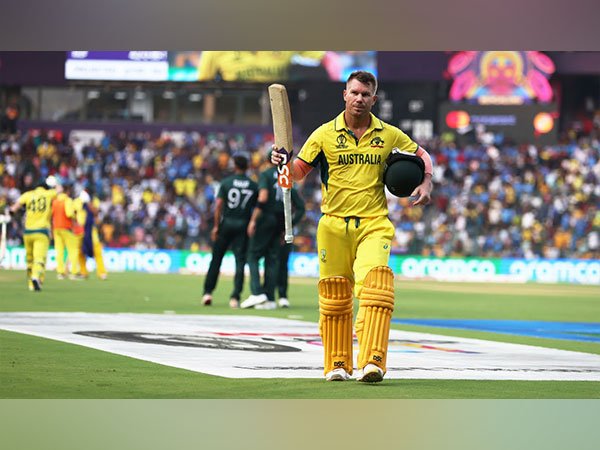
Karachi [Pakistan], March 24 (ANI): David Warner, formerly an opening batsman for Australia, will now lead the Karachi Kings as their captain in PSL Season 10, taking over from Shan Masood.
Led by the captain of the Pakistan Test team, the Karachi Kings concluded the season in fifth place, accumulating eight points and suffering six losses. Under new management, the franchise aims to revive its ambitions and compete for the championship.
“Giant energy. Even bigger actions. CAPTAIN WARNER IS POISED. DAVID WARNER steps up and prepared to lead the #KingsSquad in #HBLPSLX,” the Karachi Kings captioned the post on Instagram.
The ODI and T20 World Cup winner is considered to be one of the high-class openers across all formats. Over the past decade, he has led various teams across different leagues.
Earlier this year, Warner joined the PSL Draft after failing to be selected in the massive IPL auction held in Jeddah back in November.
During the PSL 10 PlayerDraft, which took place at the historical Hazoori Bagh in Lahore, Karachi Kings selected Warner as their first choice in the Platinum category.
The experienced left-handed batsman has an outstanding record in T20 cricket, accumulating 12,913 runs across 399 games with an average of 37.00 and a remarkable strike rate of 140.23.
Karachi Kings’ owner, Salman Iqbal, welcomed Warner, and said as quoted from Geo News, “We warmly welcome David Warner to the Karachi Kings family as our captain. His leadership and match-winning performances align perfectly with our team’s vision.”
” simultaneously, we genuinely value Shan Masood’s outstanding leadership from the previous season. His contributions have laid a solid groundwork for the Karachi Kings, and we are pleased that he continues to be a crucial member of our squad,” Iqbal stated additionally.
The Karachi Kings team lineup for PSL 10 includes: David Warner as captain (platinum category alongside Abbas Afridi and Adam Milne), James Vince, Hasan Ali, and Khushdil Shah also fall under the platinum/diamond categories respectively. Gold category consists of Shan Masood, Muhammad Irfan Khan, and Aamir Jamal. The brand ambassador role is held by Arafat Minhas. Players listed in the silver category include Tim Seifert, Zahid Mahmood, Litton Das, and Mir Hamza. Emerging players consist of Fawad Ali and Riazullah, whereas those designated as supplementary members comprise Omair Bin Yousuf, Kane Williamson, Mohammad Nabi, and Mirza Mamoon. (ANI)
Provided by Syndigate Media Inc. (
Syndigate.info
).


