Lecturer arrested for facilitating BLA, terror bid foiled
Published on, Aug. 19 — August 19, 2025 6:25 AM
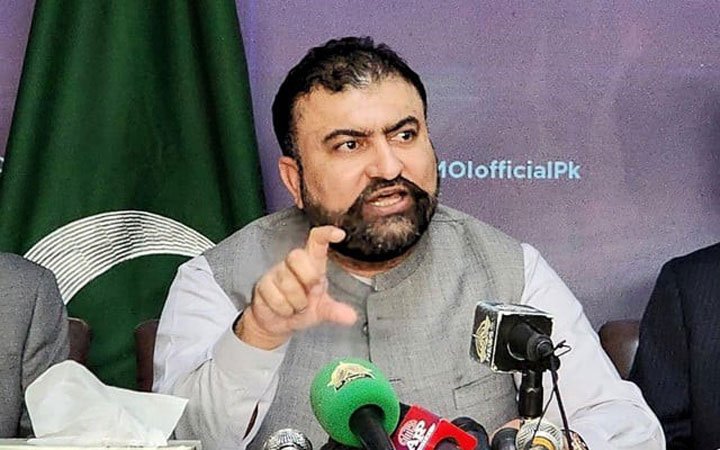
The leader of Balochistan, Mir Sarfraz Bugti, disclosed that a major terror plan targeting the Independence Day festivities on August 14 was effectively stopped by intelligence services.
At a press conference on Monday, Chief Minister Mir Sarfaraz Bugti announced the arrest of Dr Muhammad Usman Qazi, a Grade-18 lecturer at BUITEMS University, accused of being a key facilitator for the banned Baloch Liberation Army (BLA).
“Should a professor turn into a terrorist, you can’t honor him with a garland,” stated Bugti during a press briefing conducted here, accompanied by high-ranking officials such as Additional Chief Secretary for Home Affairs Hamza Shafqaat, Acting Inspector General of Police Saeed Wazir, and spokesperson for the provincial government Shahid Rind.
CM Bugti warned that those aiding terrorist elements, regardless of their social or professional status, would be held accountable.
Bugti acknowledged the intelligence services for preventing the scheduled attack on August 14, describing it as proof of the government’s strong determination to combat groups opposing the state.
The Chief Minister stated that the public announcement of Dr Qazi’s detention aimed to deliver a clear warning against terrorism and those who support it. “The state is facing well-backed groups associated with banned organizations.”
He emphasized that the insurgency is not rooted in deprivation but is driven by a purely anti-state agenda. Expressing concern over the involvement of educated individuals in terrorism, Sarfraz Bugti revealed that Dr Qazi had provided a pistol to a female facilitator for targeted killings and had also played a role in facilitating a suicide attack at Quetta railway station.
The Chief Minister voiced alarm over the increasing use of women in terrorist networks and announced the formation of a special cell within the Home Department to counter extremism in educational institutions. He added that 2,000 public sector employees have been screened, with those under suspicion being placed on the Fourth Schedule.
CM urged parents to monitor their children and report any suspicious activity, and called on parliamentarians to lead efforts against those who misguide youth under the guise of “Balochiyat.”
He reaffirmed the government’s commitment to peace but warned that violence and murder will not be tolerated. To promote positive engagement, the government is allocating Rs1 billion in scholarships for Balochistan students at Punjab University.
During the press conference, a video confession by Dr Qazi was shown to the media. In the video, he admitted to knowingly facilitating terrorist activities despite receiving respect and benefits as a government employee.
Having obtained his Ph.D from Peshawar University, Qazi stated that he joined the BLA at the behest of Dr. Haibatan, known as “Kalk,” and worked under the pseudonym “Ameer.” He kept in touch with BLA leader Bashir Zeb through Telegram.
Dr Qazi confessed to three major acts of facilitation including providing medical treatment to a regional commander known as “Sher Dil”, harboring two terrorists in his home, one of whom later carried out the Quetta railway station suicide attack and purchasing and supplying a pistol to a female facilitator for targeted killings
He further confessed to providing refuge to another extremist, Noman known as “Peerak,” for a period of eight days. Peerak intended to carry out a self-destructive assault during an event on August 14 but was apprehended prior to carrying out his scheme.
Dr. Qazi ended his statement by admitting his intentional participation in actions against the state and his position as an enabler for the BLA.