oleh admin | Apr 3, 2025 | asia, commerce, economics, international economics, international trade
The significant exporters of Asia, such as China, Japan, and Vietnam, are likely to suffer more from the broad array of new tariffs announced by the U.S. President.
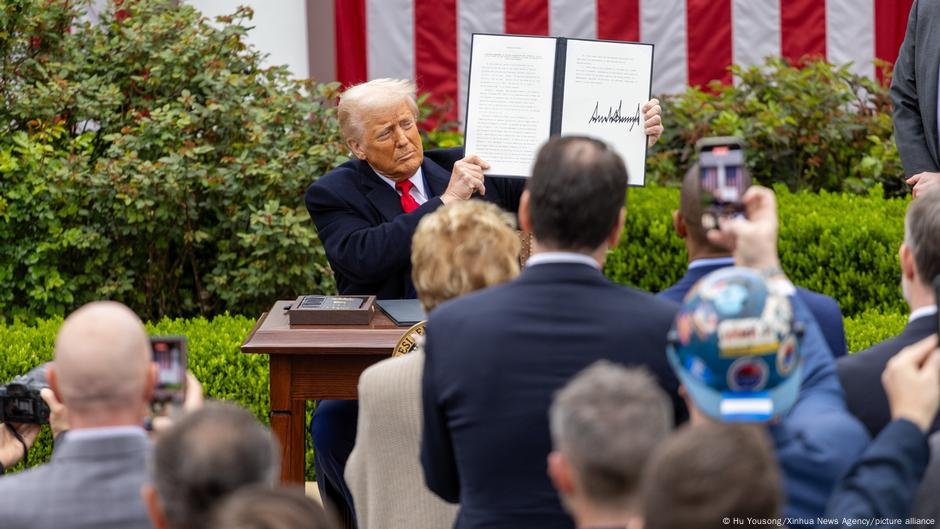
President Donald Trump presented a flurry of
sweeping reciprocal tariffs
On Wednesday, regarding U.S. trade partners, he presented it as the beginning of a new “Golden Age,” during which industrial and manufacturing roles would flood back into the nation.
This shift is viewed as a dramatic deviation from the long-standing agreement on the advantages of unrestricted trade and globalization that has existed for many years.
It could prompt
Other nations to declare counter-measures
And establish trade barriers, possibly sparking a fresh wave of trade protectionism.
Asia’s export powerhouses, including
China, Japan, South Korea
and Vietnam have faced some of the highest tariffs as well.
Is it likely to develop into an all-out trade war?
Trump is hitting imports from China with a 34% tariff, on top of the 20% levies, he had already imposed since returning to the White House in January.
This indicates that the overall tariff rate on imports from China will increase to 54% next week, once the new tariffs come into play on April 9. These changes pose a threat to the roughly $582.4 billion (€524 billion) in bilateral trade recorded last year, during which the U.S. shipped products valued at $143.5 billion to China, whereas Chinese exports to America amounted to $438.9 billion.
Beijing strongly criticized the decision and
vowed retaliation
.
A cycle of reciprocal tariffs might deepen the conflict between the world’s leading economic powers and disrupt international supply networks.
This might also make it more challenging for Beijing to achieve their aim of fostering economic growth, which they have set around 5% for 2025.
“We believe these tariffs might spark protectionist tendencies and deal a significant setback to the global economy,” stated Fang Dongkui, the secretary general of the China Chamber of Commerce to the EU, urging for dialogue rather than conflict between the U.S. and its trade allies to address their differences.
Fang emphasized the importance of enhancing collaboration between China and the EU to uphold the multilateral trading system.
“Both China and the EU have export-driven economies. It’s crucial for us to enhance our collaboration at this moment. An unpredictable world desperately requires greater stability,” Fang stated to SANGGRALOKA.
Japan expresses disappointment yet remains wary of potential reprisals.
Trump is imposing a 24% tariff on China’s neighbor Japan, the world’s fourth largest economy,
despite Japanese diplomatic efforts
To obtain an exception from the new tariffs.
Trump has also claimed Japan imposes a 700% tariff on US rice imports. Japanese Agriculture Minister Taku Eto said the figure was “illogical.”
Prime Minister Shigeru Ishiba stated that Tokyo was “deeply displeased” with the US tariff announcement and vowed to assist local industries in coping with the consequences.
As planned, a 25% duty was imposed on all imported vehicles starting Thursday in the United States, raising significant worries within the Japanese automotive sector. This industry contributes approximately 3% to Japan’s GDP and has direct and indirect ties to around 8% of employment across the country.
However, Tokyo seems hesitant when it comes to retaliatory measures. As reported by Reuters, Trade Minister Yoji Muto stated, “It is essential we determine the course of action that serves Japan’s interests best and proves most efficacious through a process that is both prudent yet decisive and swift.”
What about ‘ tariff king’ India?
As he unveiled the tariffs at the White House on Wednesday, Trump stated that India’s Prime Minister, Narendra Modi, was responsible for the situation.
Modi was a “close companion”
but that he hadn’t been “behaving properly toward us.”
Trump had previously
criticized India’s trade policies
, referring to the country as a “chief tariff setter,” a “major violator” of trade relations, and “a nation with extremely high tariffs.”
Starting April 9, the United States will impose tariffs of around 27% on imports coming from the South Asian country.
These tariffs dealt a significant setback to New Delhi, as India is simultaneously engaged in discussions with the Trump administration aimed at reaching a bilateral trade agreement.
India’s biggest trading partner is the United States, where their yearly commerce in goods totals $129.2 billion as of 2024, as reported by the US Trade Representative Office.
Despite selling more than $87 billion worth of goods to the United States, India’s imports from America totaled only $41.8 billion, resulting in a trade surplus of $45.7 billion for New Delhi.
After Trump’s declaration, India adopted a more amicable stance, stating it was assessing the effects of the tariffs on its imports and affirming its commitment to continuing discussions aimed at finalizing a trade deal before the end of the year.
Lekha Chakraborty, who teaches at the National Institute of Public Finance and Policy in New Delhi, opined that although there might be short-term fluctuations, bilateral talks have the potential to mitigate lasting harm.
She informed SANGGRALOKA that textiles, engineering products, electronics, gemstones, and jewelry exports immediately confront competitiveness issues because of increased US duties.
She highlighted several compromises made by the Modi administration recently, encompassing reductions in tariffs for items like premium motorcycles and whisky, along with commitments to increase purchases of American energy resources and weaponry.
Chakraborty stated that India’s recent moves, which include reducing duties on 8,500 products and increasing imports of U.S. energy and defense goods, are intended to decrease the $46 billion trade gap and finalize a mutual trade deal.
![]()
Do tariffs disrupt Southeast Asia’s ‘China+1’ strategy?
Southeast Asia has also come under Trump’s focus.
, where six of the area’s economies are subject to duties ranging from 32% to 49%.
In recent years, countries such as Vietnam and Thailand have become significant suppliers to the U.S., with numerous international companies relocating their manufacturing operations to these locations as part of their strategic shifts.
“China+1” strategies
to expand their supplier networks.
For example, Vietnam has become a key manufacturing hub for international giants such as Apple, Samsung, and Nike. Last year, it shipped products valued at $142 billion to the United States, representing approximately 30% of its overall economic production.
Meanwhile, Washington’s trade deficit with Vietnam ranks as the third-largest for any nation, following China and Mexico.
Trump now announced a 46% tariff rate on US imports from the country, putting in jeopardy Vietnam’s attractiveness.
Khac Giang Nguyen, a visiting fellow at the ISEAS Yusof Ishak Institute, informed SANGGRALOKA that Trump’s punitive tariffs have minimal connection to the realities of bilateral trade operations.
Although the tariffs “are likely meant as a bargaining strategy, they are so vastly different that there isn’t much basis for mutual agreement,” Khac pointed out.
The Vietnamese Prime Minister declared the formation of a “swift reaction squad” to address the consequences following the tariff announcement.
The Deputy Prime Minister Ho Duc Phoc is also scheduled to travel to Washington next week.
Nonetheless, the prevailing sentiment suggests reversing the tariffs will be challenging because Vietnam would have to amend more than just its import duties on goods from the United States, which it has recently begun adjusting. It must also overhaul numerous additional laws affecting various facets of commerce with each nation around the world.
Vietnam’s trade-driven economy is poised for significant disruption, with consequences extending beyond national boundaries,” Khac stated. “This aggressive action threatens to dismantle years of careful work aimed at restoring US-Vietnam trust following decades of conflict. This kind of erosion can’t be quickly mended once it occurs.
Prioritizing negotiation over retaliation
A neighboring country in Southeast Asia, Indonesia, will encounter a 32% tariff rate, potentially leading to an economic downturn, according to Bhima Yudhistira, who serves as the executive director at the Center for Economic and Law Studies (Celios).
He is equally concerned about an increase in beggar-thy-neighbor policies as nations search for alternate markets to make up for the decrease in US demand for their goods.
“If textile and apparel companies face increased tariffs, they will decrease their orders from Indonesian factories. At the same time, locally, we’ll see an influx of goods from Vietnam, Cambodia, and China as these countries aim for new market opportunities,” he explained.
Meanwhile, Singapore complained about being affected by Trump’s 10% baseline tariff on imports, even though the US had a $2.8 billion trade surplus with the wealthy city-state last year.
Cambodia — which suffered greatly from the previous 49% tariff increase — stated that Trump’s new duties are “unreasonable.”
Taiwan, boasting a substantial $73.9 billion trade surplus with the United States, argued against the proposed 32% tariffs from Washington as unjustified. It’s worth noting that these new U.S. duties will not affect semiconductors, one of Taiwan’s key exports.
Even though tariffs cause distress, governments in Southeast Asia seem more willing to engage in talks with US officials rather than respond symmetrically.
“We have to negotiate and get into details,” said Thai Prime Minister Paetongtarn Shinawatra, Reuters reported. “We can’t let it get to where we miss our GDP target.”
Cui Mu from SANGGRALOKAChinese,
Murali Krishnan from New Delhi, Julian Ryall from Tokyo,
Yusuf Pamuncak from SANGGRALOKAdonesia
and David Hutt
contributed to this report.
Edited by: Wesley Rahn
Author: Srinivas Mazumdaru
oleh admin | Apr 3, 2025 | business, commerce, economics, economy of china, news
Slow expansion of the Chinese Meetings, Incentives, Conventions, and Exhibitions (MICE) sector is anticipated during the initial quarter; however, the recent earthquake likely won’t cause significant disruption to this market.
Chiruit Isarangkun Na Ayuthaya, who leads the Thailand Convention and Exhibition Bureau (TCEB), stated that the Chinese market experienced a slowdown in growth during the initial three months of this year following an improvement in the preceding quarter.
Mr. Chiruit stated that the sluggish Chinese economy and Beijing’s strategy to promote local spending resulted in a decrease of business travelers from China coming to Thailand, particularly within the meetings and incentive travel segment.
He mentioned that more Chinese tourist groups chose alternative locations like Japan, Vietnam, and the Philippines instead.
In 2019, China topped the list as the biggest source of international MICE travelers to Thailand, accounting for over 247,660 out of a total of 1.27 million MICE visitors from abroad.
Travel safety worries likewise hindered the Chinese Mice market; however, these issues were not as pronounced as those affecting leisure travel, according to Mr. Chiruit.
The TCEB endeavored to revitalize this market through roadshow events conducted in Beijing and Shenzhen on April 1-2. Additionally, they promoted various initiatives aimed at attracting Chinese travelers interested in sectors like cuisine, lifestyle, energy, and pharmaceuticals.
As stated by UFI, which is known as the global hub for the exhibition industry’s association, Asia is currently attracting an increasing number of exhibition events due to projected growth in trade within the region, according to Mr. Chiruit.
These tendencies could encourage exhibition attendees from China along with other nearby markets to attend.
At the same time, it is aiming at various other markets to replace the Chinese market, including India, Europe, Australia, and the Middle East.
The TCEB is keeping an eye on the effects of the trade tariffs proposed by US President Donald Trump.
Mr. Chirirut mentioned that international firms might reduce expenses related to MICE spending, whereas Thailand’s export industry could encounter certain difficulties.
As stated by TCEB, in the last quarter of 2024—marking the beginning of their 2025 financial year—the total count of international MICE travelers reached 275,837, showing an increase of 7.4% compared to the same period the previous year.
Domestic Mouse travelers dropped by 5.7% compared to the previous year, totaling 7.33 million, indicating ongoing economic worries at home that could continue throughout this year.
After last week’s earthquake, TCEB will additionally send an official communication to foreign partners and delegates, detailing information to keep them updated about the current circumstances and future strategies.
He said the incident should not significantly impact the Mice market, as most events continued as usual last week, such as the book fair at Queen Sirikit National Convention Center.
Nonetheless, it will take some time to assess the effect on major forthcoming events such as the IDF World Diabetes Congress scheduled for April 7-10, 2025, where more than 10,000 attendees are anticipated.
Recently, TCEB introduced the MICE Data Platform, which gathers, examines, and delivers information to parties involved in the MICE sector.
Mr. Chirruit mentioned that mice operators can gain insights into visitor counts and various events, along with associated behavioral patterns, which they might utilize to adjust and improve their own business strategies.
Provided by Syndigate Media Inc. (
Syndigate.info
).

oleh admin | Apr 3, 2025 | cities and towns, commerce, culture, europe, travel destinations
Situated at the southernmost edge of mainland Europe, Tarifa stands as the most southerly town in Spain. It is nestled within the province of Cádiz, which is part of the region of Andalusia.
A city where history converges
Tarifa, the most southerly city in Spain, derives its name from Tarif ibn Malik, a Berber military leader who conducted an assault on the area in 710—just one year prior to the Muslim invasion of the Iberian Peninsula. Previously, during Roman times, this place was known as Julia Traducta. Over many years, Tarifa has served as a crucial location for commerce, conflict, and intercultural interactions linking Europe with Africa.
The city stands at the point where the Mediterranean Sea converges with the Atlantic Ocean, serving as a meeting place for both continents—Europe and Africa. It lies just 14 kilometers away.
Morocco
Tarifa boasts a unique geographic location, endowing it with significant natural, cultural, and strategic importance.
The ancient town is a labyrinthine network of cobblestone alleys and white-washed buildings, reflecting the enduring impact of Arab, Christian, and Jewish cultures on Andalusian heritage. Dominating the skyline above, there stands an iconic structure overlooking the city.
th
The 15th-century Castillo de Guzmán El Bueno continues to be an impressive landmark. This emblematic structure, representing steadfastness and courage, serves as a testament to Tarifa’s strategic importance during conflicts with foreign adversaries.
Interested in discovering Spain? These articles can assist you in selecting your upcoming travel spot:
-
Disregard Barcelona or Madrid; this is the culinary hub of Spain (it boasts the highest number of Michelin stars per person globally!).
-
8 locations to discover in Madrid, the lively heart of Spain
-
This picturesque Spanish town was constructed directly on top of the cliff (and it’s absolutely stunning).
An amazing natural scenery located between two oceans
The natural surroundings of Tarifa are equally impressive as its geographic position. The El Estrecho Natural Park preserves the distinctive ecosystem of this shoreline region. On sunny days, the Rif Mountains in Morocco become visible from the coast, offering an awe-inspiring feeling of expanse across two landmasses.
The beaches of Tarifa, such as Playa de los Lanches, Playa Chica, and Bolonia, are celebrated for their untamed allure. Featuring extensive sandy expanses bordered by dunes and exposed to strong winds, these locations draw visitors looking for peace as well as adrenaline junkies engaged in sports activities.
The European capital of winds
Tarifa is renowned globally due to its powerful winds—the Levante (easterly) and the Poniente (westerly)—which make it an ideal location for water activities. Consequently, it stands as the premier choice for such pursuits.
for kitesurfing
, windsurfing, and wing foiling. This city is the site of various international events and houses many schools that cater to adrenaline seekers and water sports aficionados.
In addition to water sports, Tarifa is well-known for both birdwatching and whale-watching. The Strait of Gibraltar acts as a natural migratory pathway, essentially a biological superhighway for creatures moving from the Mediterranean to the Atlantic Ocean.
A dynamic local culture and atmosphere
Even though Tarifa is compact, it boasts a robust cultural identity. The town buzzes with craft fairs, musical performances, and various arts events such as the well-known Tarifa African Film Festival. This festival honors African cinema and enhances connections between Europe and Africa.
When it comes to gastronomy, the regional dishes focus primarily on seafood, highlighting specialties such as red tuna, shellfish, and grilled fish. In Tarifa, you can enjoy a variety of establishments including numerous tapas bars, beachside eateries known as chiringuitos, charming cafes, and an energetic nightlife scene.
oleh admin | Apr 3, 2025 | agriculture, commerce, commodity markets, economics, farming
Jhapa, April 3 -– In Mechinagar Municipality, Dipesh Dangal cultivates approximately 300 crates (each weighing 25 kilograms) of tomatoes every week on one and a half bighas of land. He carries out this process two times per week.
Since the 1990s, he has been involved in farming, earning recognition from his neighbors and peers for his success as a cultivator. However, behind this achievement lie various undisclosed narratives. When factoring in expenses such as labor and transport, his profit amounts to just Rs5 per kilogram of tomatoes after covering all costs.
What’s the point of cultivating tomatoes? They have no market demand and hold little worth,” stated Dangal. “I doubt I’ll recoup my costs this time around.
To finance the labor for harvesting and moving tomatoes, he takes out a loan. Hoping to solidify his position in farming, he secured a bank loan to initiate his tomato cultivation venture.
Growing tomatoes on one-and-a-half acres set him back approximately Rs 600,000. Nevertheless, after starting production, he couldn’t sell the tomatoes. The bank from which he borrowed the funds is now urging him for repayment.
“He continually gets reminders from the bank about the loan, and he worries that his property could be sold at an auction,” he said additionally.
The collected tomatoes should be transported either to the agricultural market in Charali or Birtamod. Transporting them incurs a fee of Rs50 per crate. Furthermore, unloading fees amount to Rs10 per crate, and the market takes a 10% commission from all sales. Separately, labor costs for picking the tomatoes come into play; approximately 20 workers are required weekly, with each worker earning Rs500 daily.
Even with such high expenses, tomatoes are priced at merely Rs 200-250 per crate.
He asked how we can repay our loans and wages for the workers when we only receive Rs5 per kilogram at the wholesale market after covering all expenses.
Although tomatoes are sold for Rs 25 per kg in retail markets, farmers receive only Rs 10 per kg.
The issue at hand is not exclusive to Dangal. Many tomato growers in Mechinagar, Buddhashanti, and surrounding regions face similar challenges. Particularly in northern Mechinagar, numerous farmers have ventured into large-scale tomato cultivation.
Bimala Bhujel has formally registered the Pathibhara Agricultural and Vegetable Farm and planted tomatoes across two bighas, with an investment of approximately Rs 800,000.
Bhujel mentioned that they needed to apply pesticides, employ laborers to stake the plants, and purchase fertilizers and seeds. However, when their harvest fails to find buyers, they are pushed away from farming.
While visiting the field, four women were observed harvesting tomatoes, with others carrying them away. Meanwhile, some laborers were securing fallen plants to stakes for additional support.
The plants sag due to the burden of abundant fruits. While this yield is impressive, contemplating the marketplace fills me with dread,” Bhujel remarked. “It would be immensely comforting if the government could secure a market for us.
She thinks that the surge in imported Indian tomatoes hinders the sale of locally grown produce. She argues that restricting these imports would significantly help the farmers.
“Our investments are already gone. We may now be forced to sell our land to settle these debts,” she sighed. In the north of Mechinagar, specifically in the Bahundangi region, farmers grapple with aggressive elephant invasions. These farmers continually battle to safeguard their harvests.
“We fret over elephants consuming our crops. Despite surmounting many obstacles to cultivate tomatoes, we discover no buyers. Will anyone heed the farmers’ concerns?” Bhujel asked.
In this area, farmers additionally cultivate betel nut trees around the perimeters of their tomato fields, beautifying the scenery.
Purna Bahadur Khadka from Boudha Mode, Mechinagar, invested Rs400,000 in growing tomatoes on an area of one bigha. With over two decades of experience in commercial farming starting from 2000, he is currently contemplating shifting away from agriculture as a profession.
Today, if you mention wanting to travel overseas, people are willing to lend you funds. However, if you express interest in farming, they decline. Society has lost all hope for the agricultural sector,” he sighed while harvesting tomatoes.
After putting in so much effort, there seems to be no market. Who has control over this market?” As he explains, once all costs are accounted for, farmers make only about Rs 5 per kilogram.
“Disregard the expenditure on seeds, pesticides, and stakes. The total expense for each plant from sowing to harvest comes out to be Rs35. On average, one plant yields between 3 to 4 kilograms of tomatoes. However, once you subtract costs such as those for harvesting, transporting, paying market commissions, and covering unloading charges, we find ourselves needing to take loans just to cover labor wages,” he explained.
The Buddhasanti Rural Municipality stands out as a frontrunner in commercial vegetable cultivation, engaging numerous farmers in this activity. At the Shantinagar Agricultural Cooperative, tomato production takes place across three bighas of land, with majority membership focusing on growing tomatoes. Nonetheless, these efforts fail to generate profits for the cooperative.
The cooperative’s president, Dilnath Kafle, mentioned that over 80 bighas dedicated to tomato cultivation can be found in wards 5 and 6 of Buddhashanti. The main trading hubs for these tomatoes are Birtamod and Charali. Nonetheless, many growers frequently end up returning home with leftover stock because they transported them using hired transport.
“Tomatoes from India are abundant in the market, leaving no space for our own crops. The Indian government offers various subsidies to their farmers, which makes their tomatoes more affordable. However, local farmers do not get this kind of assistance. As a result, our farmers struggle to compete with these imported tomatoes. Restricting imports could provide an opportunity for our farmers to thrive,” stated Kafle.
For the last three years, farmers have had to sell their crops at a loss during the prime harvest time, making it extremely difficult for them to recoup their investment. The Agriculture Knowledge Center reports that tomato cultivation spans 1,100 hectares in Jhapa, yielding approximately 22 tons per hectare on average.
Chet Raj Bhandari, an information officer at the center, stated that due to the peak tomato season and abundant production, local markets find it difficult to accommodate the surplus.
Nevertheless, he proposed that prices could increase when the rainy season starts. In the meantime, even though there isn’t much demand for local tomatoes, substantial amounts keep being brought in from India.
As reported by the Mechi Customs Office located at Nepal’s eastern frontier, the nation had imported goods valued at Rs 42.7 million in tomatoes from India by the conclusion of February.

oleh admin | Apr 3, 2025 | business, commerce, community, lifestyle, local news
Approximately 3,000 residents of the Kitenden community in Amboseli are set to benefit from their investment in a WorldLife conservation camp.

On Thursday, April 3, Tourism Cabinet Secretary (CS) Rebecca Miano presided over the ground-breaking ceremony for a highly luxurious and select upscale tourism complex in the region.
“Today, we welcome a pace-setting development as we witness the groundbreaking of the construction of an ultra-luxurious and exclusive high-end tourist facility in the Kitenden area of Amboseli,” said Miano in a press statement seen by
SANGGRALOKA.co.ke
.
In what manner did the local community consent to construct the lodge?
The CS mentioned that the Amboseli Kitenden Lodge stands out as a pioneer in its category and distinguishes itself with numerous unique aspects.
The upscale 9-bedroom lodge financed by Conservation Equity Ltd is scheduled to be located within the 50,000-acre Kitenden conservancy, which is jointly owned by around 3,000 local residents.
The local residents have had their property titles completely documented thanks to the developer, who incurred a expense of KSh 90 million for this process. The CS highlighted that it is especially satisfying that the collaboration between the Kitenden community and the lodge developers of Amboseli Kitenden began with mutual agreement from the very start.
Miano disclosed that the agreement between the Kitenden Conservancy and the developers of the Amboseli Kitenden Lodge includes specific terms of engagement designed to nurture a positive relationship throughout the 25-year duration of the contract.
What advantages do local people gain from staying at Kitenden Lodge?
Initially, the lodge management committed to payinglocals an annual dividend of $400,000 (more than KSh 50 million). They also planned to increase this sum by 5 percent each following year throughout the duration of thecontract.
The funds will be distributed directly to each of the 3,000 people within the Kitenden Conservancy community.
As she mentioned, the compensation provided by the Amboseli Kitenden Lodge exceeds threefold compared to typical standards.
The construction of the lodge will begin with 100 local unskilled men and women working on-site.
The creators of the Amboseli Kitenden Lodge pledged to hire 200 local residents as staff members during the initial five-year period of their operations.
It is anticipated that the lodge will draw wealthy tourists looking for exclusivity, sustainability, and genuine cultural experiences. Conservation Equity Ltd. thinks this approach could establish a new standard for upcoming projects within Kenya’s travel sector.
“This pact goes beyond being merely a contract; it’s a pledge to guarantee that local communities reap the rewards of their rich natural legacy,” stated a spokesperson for the firm.

oleh admin | Apr 2, 2025 | banking, business, commerce, loyalty programs, money
PNN
Mumbai (Maharashtra), India, April 2: Customer Capital, a firm that focuses on proprietary commerce loyalty solutions,
Bank of Maharashtra
declared a collaboration to launch a special travel platform along with loyalty incentives for
Bank of Maharashtra
cardholders. This partnership between Customer Capital and
Bank of Maharashtra
aiming to improve the value offering
Bank of Maharashtra
Cardholders can enjoy a smooth and rewarding travel booking experience directly via the BANK OF MAHARASHTRA card website and app.
Customer Capital has developed a white-label travel platform called ‘
Tripstacc
This feature permits banks to tailor customer experiences and obtain detailed insights into travel and expenses (T&E), information that cannot be derived from conventional partnership programs. Such capabilities will empower
Bank of Maharashtra
Cardholders can reserve hotels and tickets through a reliable travel website available via the
Bank of Maharashtra
card website and app.
As per a recent study, the loyalty market in India is expected to expand further and could potentially reach $7.92 billion by 2028. Recognizing this significant opportunity, Customer Capital aims to utilize their platform for better understanding and serving Indian consumers. This partnership puts them in an advantageous position to do so.
Bank of Maharashtra
to utilize Customer Capital’s advanced technologies and innovations such as
Tripstacc
, to further boost its operational abilities and gain a competitive advantage.
Govind Sandhu, CEO & Co-Founder of Customer Capital, stated, “We are delighted to announce
Tripstacc
, our captive commerce travel platform for Bank of Maharashtra. This collaboration introduces a distinctive approach that provides numerous advantages to the bank by offering a tailored solution and proposition for its clients. The model will enable
Bank of Maharashtra
deliver greater value to customers, boost involvement and activation, and improve comprehension of travel spending habits thus increasing their proportion of expenditure on travels”
Govind Sandhu also mentioned, “The landscape of India’s loyalty programs is experiencing substantial change, propelled by advancements in technology, artificial intelligence, changing customer preferences, and updated regulatory frameworks. Our aim is to address gaps within the loyalty sector by concentrating on personalized commercial services and have consequently invested in an array of proprietary e-commerce platforms. These can be provided as white-label options for companies aiming to present these directly to their customers. We believe this approach will prove beneficial.”
Bank of Maharashtra
a favored financial ally for its clients.
About Customer Capital:
Customer Capital is an enterprise dedicated to revolutionizing loyalty practices and establishing Loyalty 2.0 through integrated commerce, advanced artificial intelligence technologies, and insights from industry experts. Established in 2022, this firm has developed a range of services designed to turn loyalty initiatives into significant income sources. They specialize in crafting, implementing, and expanding inventive loyalty strategies enhanced by beneficial partnerships. Operating as a comprehensive provider of loyalty management solutions, Customer Capital provides specialized knowledge across various domains such as ecosystem development, accelerator deployment, and technological advancements—this includes their proprietary AI-powered Loyalty Platform along with their Staccs (captive commerce accelerators), which cater specifically to sectors like online travel and e-commerce.
In tandem with targeted advisory support aimed at ensuring these programs resonate deeply with consumers while remaining financially rewarding, Customer Capital utilizes analytics-driven tools and state-of-the-art tech to generate quantifiable benefits for both stakeholders and end-users alike.
(ADVERTORIAL DISCLOSURE: The aforementioned press release has been supplied by
PNN
ANI shall not bear any responsibility for the content thereof.
Provided by Syndigate Media Inc. (
Syndigate.info
).
Halaman 2 dari 10«12345...10...»Akhir »


