oleh admin | Agu 19, 2025 | banking, economic policy, economics, monetary policy, politics and government
Published on, Aug. 19 — August 19, 2025 11:54 AM
The International Monetary Fund (IMF) has asked Pakistan to remove the finance secretary from the State Bank of Pakistan (SBP) board and immediately fill two vacant deputy governor positions to strengthen institutional independence.
The lender has also recommended amending the Banking Companies Ordinance of 1962 to remove the federal government’s authority to instruct SBP to inspect commercial banks, further reducing state influence over financial regulation.
In its Governance and Corruption Diagnosis Mission report, the IMF stressed that these reforms would ensure stronger autonomy at the central bank, even though the government remains the sole shareholder of SBP.
Earlier, in 2022, Pakistan revised the SBP Act due to pressure from the IMF, granting complete independence to the central bank and removing the finance secretary’s vote on the SBP board.
Currently, the SBP board includes the governor and eight non-executive directors, one from each province. However, two of the three sanctioned deputy governor posts remain vacant, with only Saleem Ullah serving in finance, inclusion, and innovation.
In the meantime, Finance Minister Muhammad Aurangzeb stated that the government does not intervene in establishing interest rates or exchange rates, which are set by the State Bank of Pakistan. He further mentioned that an IMF evaluation team will arrive in Pakistan during September to discuss a $1 billion loan installment.
oleh admin | Apr 2, 2025 | consumer price index, cost of living, economic policy, economics, inflation
In March, South Korea experienced a 2.1% rise in consumer prices compared to the previous year, which marks the third consecutive month that inflation has surpassed the central bank’s 2% target. This uptick was primarily due to increasing food prices, as significant food corporations raised their prices in response to elevated global raw material expenses and internal political instability.
Statistics Korea reported on April 2 that the consumer price index (CPI) was recorded at 116.29 in March, marking an increase of 2.1% compared to the previous year. Following four consecutive months where inflation stayed within the 1% range—from September through December 2024—inflation picked up speed again, reaching 2.2% in January and slightly decreasing to 2.0% in February.
Oil prices, which were a significant contributor to inflation earlier in the year, increased by 2.8% in March. This rise was relatively small due to reduced international oil costs, influenced by an uptick in U.S. crude output, slowly impacting local markets. In terms of monthly changes, gasoline and diesel prices decreased by 2.1% and 2.2% respectively.
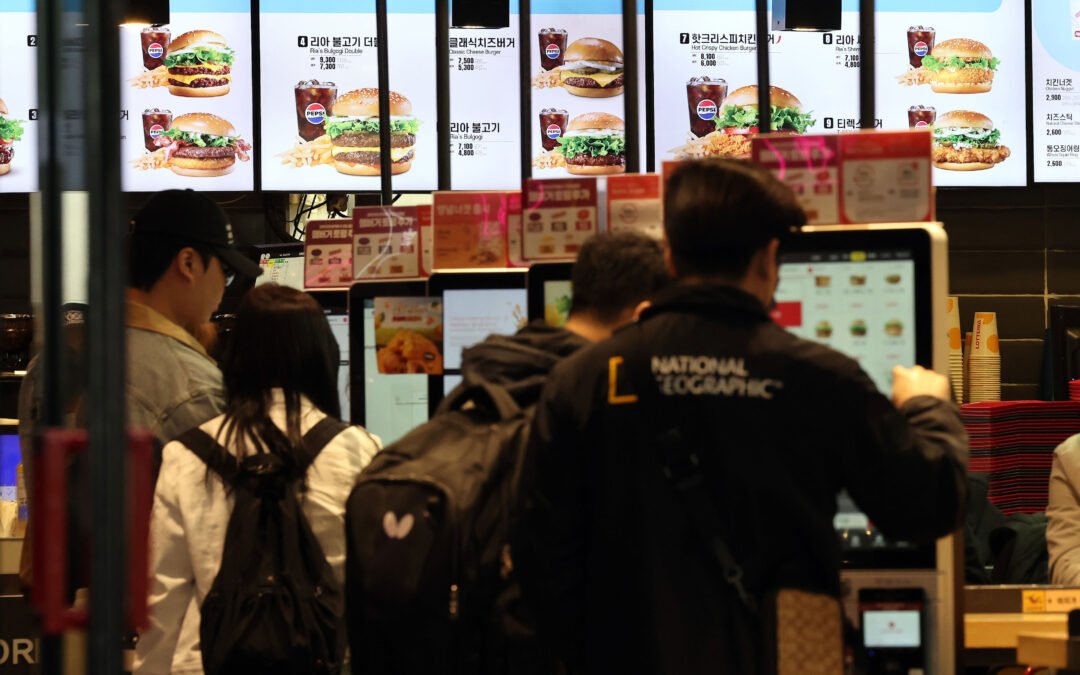
Nonetheless, the expenses for processed foods and dining out rose significantly, maintaining inflation rates higher than the central bank’s objectives. The cost of processed foods escalated by 3.6% in March compared to the previous year, marking the most substantial rise since January 2024. Notably, products like coffee (up 8.3%) and bread (increased by 6.3%) experienced sharp jumps primarily because of escalating input costs. Experts observed that certain food producers exploited the prevailing political unrest to implement price surges that exceeded justifiable levels based solely on increased production costs.
Rising food expenses resulted in higher restaurant charges, with dining inflation climbing by 3.0% for the consecutive second month. Dishes like sashimi (5.4%) and fried chicken (5.3%) experienced notable cost increases, exacerbating customer dissatisfaction regarding escalating meal prices.
Outside of fluctuating food and energy costs, core inflation increased by 1.9% compared to the previous year in March, continuing an upward trend over the last six months with gains mostly within the 1% range. Additionally, the cost-of-living index, measuring 144 commonly bought items and services, went up by 2.4%, surpassing general inflation rates for five consecutive months now.
oleh admin | Apr 1, 2025 | economic policy, economics, international economics, politics, politics of mexico

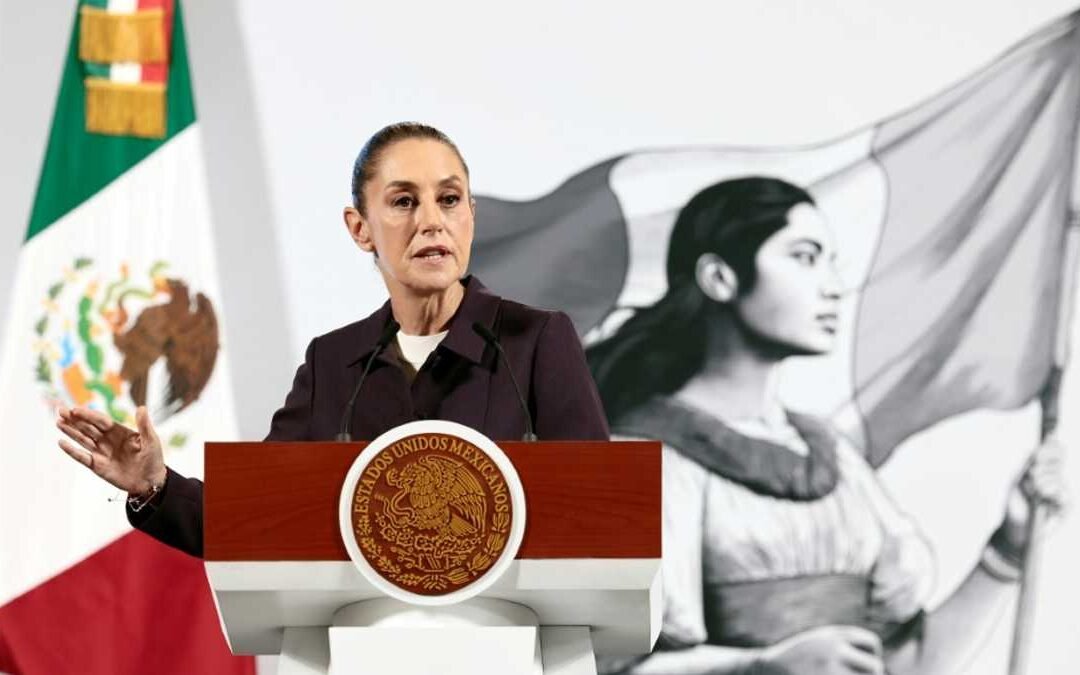
The Mexican president, Claudia Sheinbaum, stated on Tuesday that Mexico will not adopt a retaliatory stance as the nation prepares for fresh U.S. import duties set to take effect later this week.
The head of the largest trade ally to the United States addressed the media ahead of President Donald Trump’s anticipated declaration of “reciprocal” tariffs, which would include 25 percent duties on imported automobiles and automotive components.
Mexico has previously committed to a “holistic response” to Trump’s tariffs, maintaining a approach that emphasizes negotiation as a priority.
However, Sheinbaum stated on Tuesday, “We do not subscribe to the concept of tit-for-tat, as it invariably results in a negative outcome.”
She emphasized that “naturally, actions are implemented (in Mexico) since actions are also carried out elsewhere, yet ongoing communication remains essential.”
Trump has said he will unveil a raft of so-called “reciprocal tariffs” Wednesday, on what he has dubbed America’s “Liberation Day.”
He insists the duties are necessary to combat trade imbalances with other countries.
Mexico’s economy is seen as highly susceptible to Trump’s tariffs because of its strong trading ties with the United States.
This South American country hosts numerous automobile assembly facilities owned by international firms such as Ford, General Motors, BMW, Volkswagen, and Toyota.
Over 80 percent of Mexico’s exports are destined for the United States, which includes approximately three million vehicles annually.
Sheinbaum stated that her administration would await the specifics of Trump’s announcement on Wednesday before formulating an appropriate response.
She stated during her daily press briefing, ‘We are uncertain, as no nation globally has precise knowledge of what will be unveiled on April 2.’
Regarding immigration issues, Sheinbaum emphasized that although this presented another area of disagreement with America, her administration was ready to “work together” with the U.S., yet not be “subordinated” to its approach.
“The president answers to one authority only, and that is the people of Mexico,” she said.
Last Friday, Sheinbaum received a visit from U.S. Homeland Security Secretary Kristi Noem, who mentioned that she presented President Biden with a list of requirements aimed at reducing immigration. This included requests for enhanced oversight of Mexico’s border with Guatemala.
Guatemala is a transit country for many migrants trying to reach the United States from South America.

oleh admin | Mar 31, 2025 | economic policy, economics, finance news, interest rates, news
-
The Reserve Bank expected to keep interest rates unchanged on April 1
-
U.S. tariffs cited as reason for the decision
-
The increasing impact of social media on politics and the Democrats’ ‘highly ineffective’ attempts to engage Generation Z. Tune into Welcome to MAGAland wherever you find your podcasts.
Anthony Albanese
is destined to be deprived of an
election
push for lowering interest rates as Donald Trump’s import tariffs hinder assistance for homeowners.
The Reserve Bank of Australia’s upcoming decision on Tuesday aligns with April Fool’s Day as well.
However, economists widely anticipate that the RBA cash rate will remain unchanged at 4.1 percent on April 1, after the conclusion of the central bank’s two-day meeting this week.
This would deny the typical borrower $100 in repayment assistance, which could be used for grocery expenses during the current cost-of-living crisis.
Compare the Market’s chief economist
David Koch
said
Donald Trump
New 25 percent tariffs on Australian agricultural and pharmaceutical products, set to begin on April 2, could prevent the Reserve Bank of Australia from offering assistance to borrowers.
“Keep in mind, financial markets and central bankers dislike uncertainty, and currently, there is a significant amount of it in the United States,” he stated.
Almost every day we find out that Trump has imposed new tariffs or sanctions upon waking up.
The Reserve Bank will proceed with caution since tariffs lead to higher prices, which subsequently influences inflation.
inflation
.’
The tariff policy implemented broadly by the Trump Administration, offering no exceptions, has the potential to increase consumer prices. This situation arises as several countries enter into a trade conflict with the United States.
U.S.-produced items might see higher prices if taxes were imposed on the incoming parts utilized in production.
The headline inflation rate currently stands at 2.4 percent, placing it within the Reserve Bank of Australia’s targeted range of 2 to 3 percent. This stability can be attributed to the extension of the federal government’s $75 seasonal electricity rebate, set to continue through December 2025.
Prior to the Budget statement, the Reserve Bank anticipated thatheadline inflation, or the consumer price index, would rise to 3.7 percent.
As the rebates will now expire on December 31 rather than June 30, the Treasury anticipates that the CPI will increase to three percent by June 2026.
According to a Finder survey involving 34 economists, 32 or approximately 94 percent of them anticipate that interest rates will remain unchanged on Tuesday.
A more detailed assessment for the March quarter won’t be available until April 30, indicating that a potential interest rate reduction is more probable on May 20.
Cutting interest rates by a quarter of a percent in May would reduce the official cash rate to 3.85%, marking the lowest level in nearly two years for the Reserve Bank of Australia.

An individual with a typical mortgage of $600,000 could expect their monthly payments to decrease by $97 since the interest rates for mortgages with a 20 percent down payment have dropped below six percent.
Before the next reduction, Mr. Koch mentioned that borrowers might be able to secure a more favorable agreement with their bank through negotiation.
“We can’t depend on the Reserve Bank to provide mortgage assistance. This implies that we must remain more watchful ourselves to ensure we secure a favorable deal,” stated Mr. Koch.
Homeowners who have maintained their relationship with the same lender over several years should ensure their current interest rates align with those offered to new clients.
‘Shop around and compare the offers from other lenders to get an idea of the current options available. If your lender doesn’t offer competitive market-leading rates, you may want to consider switching.’
The futures market anticipates three additional interest rate reductions over the next year, bringing down the RBA cash rate accordingly.
This would cause it to drop to 3.35 percent for the first time since March 2023.
In the most recent election period, the Reserve Bank raised interest rates in May 2022 for the first time since 2010.
When former Prime Minister Scott Morrison scheduled the election three years prior, the Reserve Bank of Australia’s cash rate was at an all-time low of 0.1 percent, with inflation climbing to 6.1 percent due to increased fuel costs following Russia’s invasion of Ukraine.
Read more
oleh admin | Mar 28, 2025 | economic policy, economics, inflation, macroeconomics policy, politics
WASHINGTON, D.C. — A top Federal Reserve official stated on Thursday that it appears “unavoidable” that Donald Trump’s tariff proposals will lead to higher near-term inflation, though this rise might not last long.
After coming back to the White House, Trump has issued threats about imposing tariffs on major trade allies — such as China, Canada, and Mexico — but then partially rescinded these measures, leading to uncertainty among both investors and political figures.
He has levied a 25 percent duty on steel and aluminum imports, declared a 25 percent tariff on incoming cards, and intends to implement additional tariffs the following week.
“Tariffs appear certain to drive up inflation in the short term,” said Boston Fed President Susan Collins at an event held in Boston.
“If an uptick in pricing levels filters through to inflation rather swiftly,” stated Collins, who holds a voting position on the Federal Reserve’s interest-rate setting panel this year. “Subsequently, fundamental inflationary pressures will start playing out.”
“So my basic perspective is shaped within that framework,” she went on, noting that should further tariff rounds occur or become wider-ranging, the resulting inflationary effects might likely “linger longer.”
Collins’ remarks mirror those of her fellow Federal Reserve member and St. Louis Fed President Alberto Musalem, who similarly holds a voting position on the U.S. central bank’s interest-rate committee this year.
On Wednesday, Musalem contended that tariffs might cause a probable immediate and short-term rise in prices, along with an additional indirect effect that could exert a more enduring influence on inflation.
The team at the St. Louis Fed calculated that the overall impact on inflation might be as high as 1.2 percentage points — a considerable rise considering that inflation continues to stay above the Federal Reserve’s longstanding objective of 2%.
The Federal Reserve has a two-part mission to address both inflation and unemployment, mainly through adjusting its primary interest rate up or down.
If inflation remains stuck above the Fed’s target and the labor market remains relatively healthy, the Fed could be forced to pause rate cuts for longer, which would keep the cost of borrowing for both consumers and businesses elevated.
Surveys measuring consumer confidence have indicated a significant drop following President Trump’s return to office, as participants expressed worries regarding the impact of tariffs on the economy and voiced concerns over increasing inflation rates.
Earlier this month, Fed officials penciled in two rate cuts this year, while raising their inflation outlook and cutting their forecast for economic growth.

oleh admin | Mar 25, 2025 | business, economic policy, economics, politics, politics and government
-
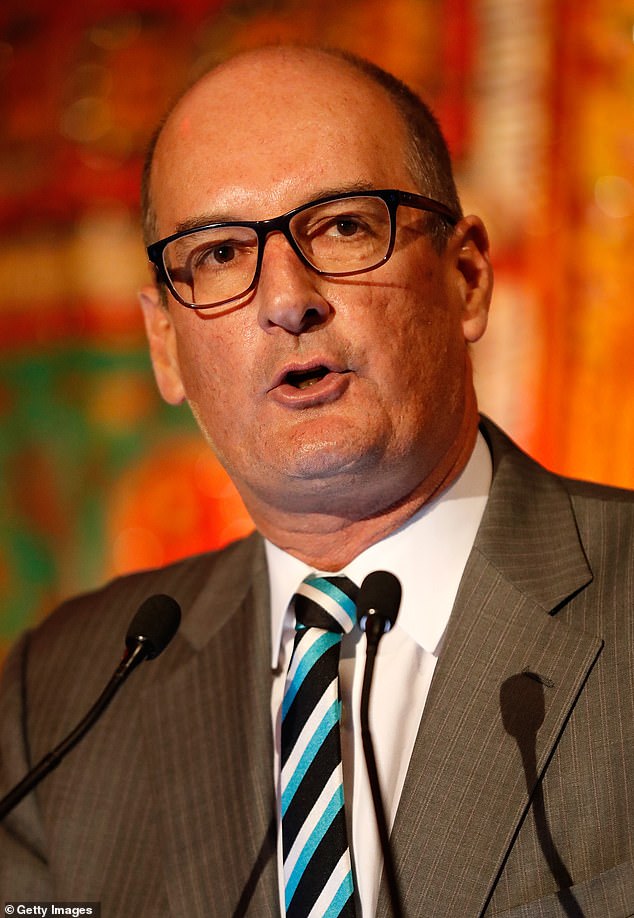
David Koch states that energy bill subsidies ought to be subject to income testing.
-
EXPLORE FURTHER: Key insights into reducing your energy costs
David Koch
has criticized Labor’s proposal to provide energy bill rebates to all Australian households, insisting that these benefits should be limited to those who are most vulnerable.
Prime Minister
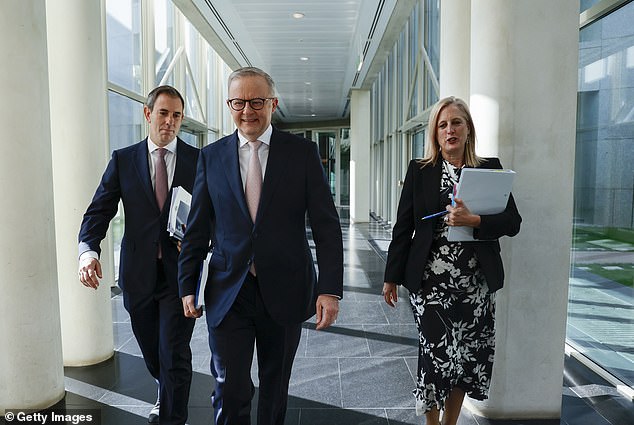
Anthony Albanese
He has justified extending the $150 energy bill rebate to even the wealthiest families and approximately one million small enterprises instead of implementing a means test.
Mr. Albanese revealed the decision on Sunday following an estimate from the Australian Energy Regulator that suggested household electricity costs were set to soar dramatically.
up to nine percent for inhabitants in New South Wales, Queensland, and Victoria starting in July
.
Compare the Market economic director and former Sunrise host David Koch said limiting the rebates to battlers would see them receive bigger rebates, while reducing the $1.8billion that taxpayers are being slugged to fund it.
“For certain individuals, $150 might just be spending money for a vacation, whereas for others, it could provide groceries for the entire week and ensure their family has sufficient food,” he explained.
Through implementing a means test, the government could allocate an even greater share of that $1.8 billion directly to those who require it most urgently.
I don’t require an energy rebate, but I would greatly appreciate seeing those funds allocated to someone who truly needs them.
Starting from July 1, both households and eligible enterprises will receive an automatic deduction of $150 on their quarterly utility bills. The government plans to transfer the total sum directly to electric power providers as reimbursement for this reduction.
The rebate is not as substantial as its $300 antecedent which was applicable starting midway through 2024.
The Australian Bureau of Statistics suggested that the earlier subsidy had decreased what power consumers paid by approximately 25 percent.
On Tuesday, Mr. Albanese supported the rebate, stating that making it means-tested would limit eligibility solely to welfare recipients.
“We have two choices due to how the rebate system functions,” he stated to ABC Radio National on Tuesday.
‘You could distribute these exclusively to those receiving welfare benefits, or alternatively, offer them to every Australian.’
‘We aim to ensure that these benefits reach working Australians facing financial strain due to rising living costs. It’s much more effective to distribute aid in a manner ensuring each Australian household gets this assistance, as they truly deserve it.’
Mr. Koch dismissed that claim, stating that working individuals receive child care subsidies, and similar assistance for electricity costs could function in the same manner.
‘Subsidies for childcare are based on income levels. I fail to understand why we can’t use the same household-income criteria in this case,” he stated.
The amount of childcare support one receives is determined by calculating a percentage based on their household income.
Families earning less than $83,280 qualify for 90 percent of the eligible child care subsidies, with this percentage decreasing by one point for each extra $5,000 earned until reaching an income of $533,280.
Various other subsidies are accessible to individuals who do not receive welfare benefits in Australia, such asrebates forprivatehealthinsurance.
Alison Reeve, the Deputy Program Director for Energy and Climate Change at the Grattan Institute, informed Daily Mail Australia that neither of the proposals offered a win-win solution.
‘David Koch is correct that $150 means more to people on lower incomes than on higher incomes,’ she said.
We are aware that individuals with lower incomes dedicate a larger portion of their budget to energy costs compared to higher-income families, as they lack additional funds to invest in options that could reduce expenses over time (such as solar panels and batteries, or transitioning from gas to electric systems).
However, the Prime Minister is right in pointing out that not all individuals with a low income are getting financial assistance from the government.
‘To put it differently, if your aim is to assist low-income families, you must choose between accepting that some will not receive support at all (following Kochie’s method) or acknowledging that some may end up receiving more than they should (as per the PM’s strategy).’
Independent Senator Jacquie Lambie additionally advocated for more focused energy rebates.
‘I wonder what I need $150 for? Such a waste of cash,’ she said to Sky News.
“Why am I receiving that money, mate? Well, honestly speaking, I’d prefer for my $150 to grow to $300 when passed on to the next person who’s struggling even more,” she said to Sky News on Monday.
Not subjecting programs to means testing and just spending taxpayer dollars as though they were a pack of candies is utterly disgraceful.
With an election looming, the Coalition said it ‘won’t stand in the way’ of another round of rebates.
However it said handing over public money to electricity retailers was an unsustainable short-term measure that did nothing to address the root cause of why Australia has very expensive power despite vast supplies of coal, oil and gas.
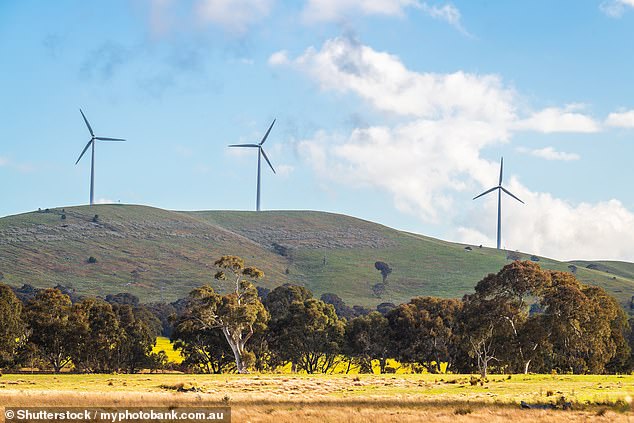
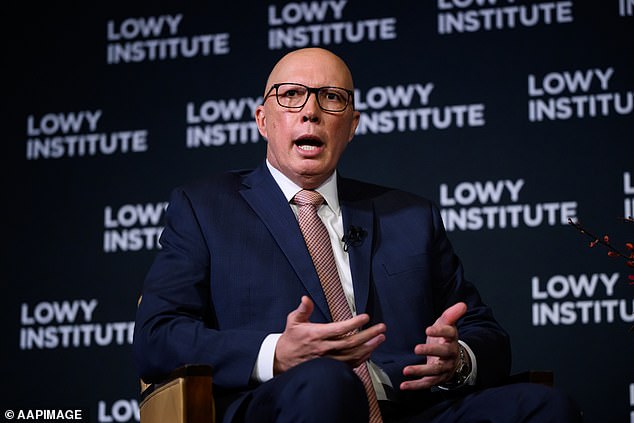
In the long run, Mr. Dutton has pledged to reinstate the previous Prime Minister Scott Morrison’s ‘gas-powered revival’ strategy and plans to invest in two nuclear power stations by 2037 and seven by 2050.
The labor party plans to keep investing in renewable energy sources and encourage private investments through its Future Made in Australia initiative.
Following three years of energy bill assistance payments, Ms. Reeve stated that the rationale for continuing them had become invalid.
‘The policy might have been justifiable during the initial year as it allowed for rapid implementation in reaction to an abrupt surge in prices,’ she stated.
However, both the government and the opposition have been granted an extra two years to develop solutions that would protect customers from unexpected billing surprises—such as assisting households in upgrading their appliances, adding ceiling insulation, moving away from natural gas usage, or installing rooftop solar panels.
If they had invested that money in assisting those who need it most—namely low-income families and tenants—we might not require future assistance with bills. However, it appears that both parties are trapped in a pattern of continuous financial giveaways.
The discussion about energy represents the most recent frontline in the continuous maneuvering before the budget announcement, as Treasurer Jim Chalmers gears up.
To present Tuesday’s federal budget, where the Albanese government is expected to enter a deficit for the first time.
Even though they have returned to operating at a loss, Dr. Chalmers continues to stress the government’s commitment to ‘fiscally responsible governance.’
Australia’s total gross national debt has reached an all-time high of $940 billion for the fiscal year 2024/25. However, this figure is $177 billion lower than what was predicted back in 2022.
“We are reducing the debt accumulated under the Liberals, and the budget will demonstrate that this is saving taxpayers tens of billions of dollars,” Dr. Chalmers stated.
‘In monetary terms, Labor’s fiscally responsible leadership has resulted in the largest budget improvement within a parliamentary term ever recorded.’
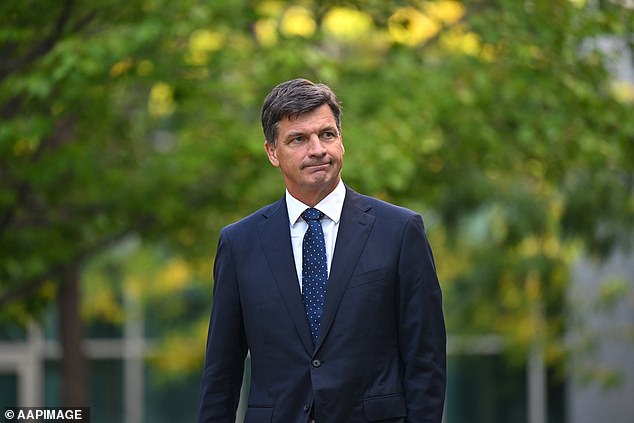
Before the Budget announcement, Angus Taylor, the opposition’s treasury spokesperson, criticized the government for alleged inefficient expenditure and described their actions as an attempt to increase taxes.
Meanwhile, Mr. Taylor warned that escalating living costs and growing debts could lead to a ‘decade of lost opportunities for Australian families.’
“At present, according to the latest budget or rather the previous one, our aim was not to return to the earlier standard of living experienced during our time in office with the Coalition government until 2030 or even later,” he stated.
This will mark a lost decade for households in Australia.
‘Thus, the initial challenge for this budget is to swiftly reinstate our standard of living and return to the path of prosperity for Australians that we have traditionally experienced in this nation.’
Read more


