oleh admin | Apr 3, 2025 | asia, economics, international relations, politics, sustainability
Bangkok, April 3 — Professor Muhammad Yunus, the Chief Advisor, will participate in the 6th BIMSTEC Summit on Friday as Bangladesh takes over the leadership role of the organization for the coming two years.
The Bay of Bengal Initiative for Multi-Sectoral Technical and Economic Cooperation (BIMSTEC) includes seven nations from the Bay of Bengal area — Bangladesh, Bhutan, India, Myanmar, Nepal, Sri Lanka, and Thailand.
Officials stated that the leadership of BIMSTEC, recognized as a vital platform for advancing regional growth, infrastructure links, and economic advancement in the Bay of Bengal area, shifts based on the alphabetical sequence of the English names of its member countries.
During the Summit, the transition of leadership occurs as the country currently heading BIMSTEC, which acts as the host for the Summit, passes on the chairmanship to the following member state in alphabetical order.
The theme for the 6th summit, which is taking place three years following the fifth summit (held virtually in Colombo on March 30, 2022), is “Prosperous, Resilient, and Open BIMSTEC.”
At the start of the 6th BIMSTEC Summit, attendees will gather for a group photograph. This will be succeeded by welcoming remarks from the BIMSTEC Chairperson and Thai Prime Minister. A moment of silence will then be held to honor those affected by the recent earthquakes.
Following the endorsement of the agenda, the heads of BIMSTEC states will deliver their addresses.
Following the transfer of BIMSTEC leadership, the incoming chairperson will address the gathering, with concluding comments provided by the Thai prime minister, as informed by an official to UNB.
According to the BIMSTEC Secretariat, the summit seeks to promote cooperation amongst member nations to tackle common security and development issues. It will inject fresh momentum into ongoing initiatives aimed at achieving a thriving, robust, and open BIMSTEC region.
The Foreign Secretary, Md Jashim Uddin, stated that the summit will enhance and intensify the ties between Bangladesh and other BIMSTEC nations. He also emphasized its crucial role in promoting regional stability and progress.
“There’s no doubt that this sixth BIMSTEC Summit marks a significant move forward for the new Bangladesh within the regional landscape via BIMSTEC,” he stated, expressing his hope for the summit’s success.
Summit Agenda
The summit, according to the BIMSTEC headquarters, features an extensive agenda – including the endorsement of the declaration from the 6th BIMSTEC Summit, capturing the vision of the leaders along with their resolutions and instructions; also encompassing the approval of the Bangkok Vision 2030.
This initial vision document will be endorsed by the Leaders. It offers a detailed and actionable guide for enhancing collaboration among the BIMSTEC member states moving forward.
The signing of the agreement for Maritime Transport Collaboration seeks to boost marine transportation within the Bay of Bengal. This initiative intends to improve the movement of goods and individuals among member states, facilitating increased commerce and travel between them.
In the meantime, the endorsement of memorandums of understanding (MOUs) between BIMSTEC and the Indian Ocean Rim Association (IORA), along with those between BIMSTEC and the United Nations Office on Drugs and Crime (UNODC), forms part of the plan. These agreements aim to usher in a fresh chapter of collaborative development efforts involving BIMSTEC and these entities.
The approval of the Rules of Procedure for the BIMSTEC Mechanisms, along with the Charter, will establish the basic structure for regional collaboration within BIMSTEC. Additionally, the endorsement of the Report from the Eminent Persons Group regarding the future path of BIMSTEC is also part of the discussion points.
In 2024, the team convened six times. Following consultations with pertinent stakeholders, they completed their report through thorough discussions and finalized it in September 2024.
The report includes several recommendations, and the member states have begun taking actions intended to implement the findings of the report.
Amidst the swiftly changing and unpredictable global political and economic landscape, the 6th BIMSTEC Summit aims to strengthen even more the crucial function of BIMSTEC—the sole regional body in the Bay of Bengal—in promoting collaboration among nations. This initiative seeks to empower member states to address common security concerns and foster sustainable growth effectively.
Since BIMSTEC was established in June 1997, five summits have taken place in Bangkok (2004), New Delhi (2008), Nay Pyi Taw (2014), Kathmandu (2018), and Colombo (2022).
It focuses on regional collaboration across seven key areas: Agriculture & Food Security; Connectivity; Environmental Protection & Climate Change; Cultural Exchanges & Interactions; Scientific Research, Technological Advancement & Innovation; Security Matters; and Commerce, Investments & Economic Growth.
The collaboration encompasses eight sectors: Blue Economy, Mountain Economy, Energy, Disaster Management, Fisheries & Livestock, Poverty Alleviation, Health, and Human Resource Development.
oleh admin | Apr 3, 2025 | agriculture, commerce, commodity markets, economics, farming
Jhapa, April 3 -– In Mechinagar Municipality, Dipesh Dangal cultivates approximately 300 crates (each weighing 25 kilograms) of tomatoes every week on one and a half bighas of land. He carries out this process two times per week.
Since the 1990s, he has been involved in farming, earning recognition from his neighbors and peers for his success as a cultivator. However, behind this achievement lie various undisclosed narratives. When factoring in expenses such as labor and transport, his profit amounts to just Rs5 per kilogram of tomatoes after covering all costs.
What’s the point of cultivating tomatoes? They have no market demand and hold little worth,” stated Dangal. “I doubt I’ll recoup my costs this time around.
To finance the labor for harvesting and moving tomatoes, he takes out a loan. Hoping to solidify his position in farming, he secured a bank loan to initiate his tomato cultivation venture.
Growing tomatoes on one-and-a-half acres set him back approximately Rs 600,000. Nevertheless, after starting production, he couldn’t sell the tomatoes. The bank from which he borrowed the funds is now urging him for repayment.
“He continually gets reminders from the bank about the loan, and he worries that his property could be sold at an auction,” he said additionally.
The collected tomatoes should be transported either to the agricultural market in Charali or Birtamod. Transporting them incurs a fee of Rs50 per crate. Furthermore, unloading fees amount to Rs10 per crate, and the market takes a 10% commission from all sales. Separately, labor costs for picking the tomatoes come into play; approximately 20 workers are required weekly, with each worker earning Rs500 daily.
Even with such high expenses, tomatoes are priced at merely Rs 200-250 per crate.
He asked how we can repay our loans and wages for the workers when we only receive Rs5 per kilogram at the wholesale market after covering all expenses.
Although tomatoes are sold for Rs 25 per kg in retail markets, farmers receive only Rs 10 per kg.
The issue at hand is not exclusive to Dangal. Many tomato growers in Mechinagar, Buddhashanti, and surrounding regions face similar challenges. Particularly in northern Mechinagar, numerous farmers have ventured into large-scale tomato cultivation.
Bimala Bhujel has formally registered the Pathibhara Agricultural and Vegetable Farm and planted tomatoes across two bighas, with an investment of approximately Rs 800,000.
Bhujel mentioned that they needed to apply pesticides, employ laborers to stake the plants, and purchase fertilizers and seeds. However, when their harvest fails to find buyers, they are pushed away from farming.
While visiting the field, four women were observed harvesting tomatoes, with others carrying them away. Meanwhile, some laborers were securing fallen plants to stakes for additional support.
The plants sag due to the burden of abundant fruits. While this yield is impressive, contemplating the marketplace fills me with dread,” Bhujel remarked. “It would be immensely comforting if the government could secure a market for us.
She thinks that the surge in imported Indian tomatoes hinders the sale of locally grown produce. She argues that restricting these imports would significantly help the farmers.
“Our investments are already gone. We may now be forced to sell our land to settle these debts,” she sighed. In the north of Mechinagar, specifically in the Bahundangi region, farmers grapple with aggressive elephant invasions. These farmers continually battle to safeguard their harvests.
“We fret over elephants consuming our crops. Despite surmounting many obstacles to cultivate tomatoes, we discover no buyers. Will anyone heed the farmers’ concerns?” Bhujel asked.
In this area, farmers additionally cultivate betel nut trees around the perimeters of their tomato fields, beautifying the scenery.
Purna Bahadur Khadka from Boudha Mode, Mechinagar, invested Rs400,000 in growing tomatoes on an area of one bigha. With over two decades of experience in commercial farming starting from 2000, he is currently contemplating shifting away from agriculture as a profession.
Today, if you mention wanting to travel overseas, people are willing to lend you funds. However, if you express interest in farming, they decline. Society has lost all hope for the agricultural sector,” he sighed while harvesting tomatoes.
After putting in so much effort, there seems to be no market. Who has control over this market?” As he explains, once all costs are accounted for, farmers make only about Rs 5 per kilogram.
“Disregard the expenditure on seeds, pesticides, and stakes. The total expense for each plant from sowing to harvest comes out to be Rs35. On average, one plant yields between 3 to 4 kilograms of tomatoes. However, once you subtract costs such as those for harvesting, transporting, paying market commissions, and covering unloading charges, we find ourselves needing to take loans just to cover labor wages,” he explained.
The Buddhasanti Rural Municipality stands out as a frontrunner in commercial vegetable cultivation, engaging numerous farmers in this activity. At the Shantinagar Agricultural Cooperative, tomato production takes place across three bighas of land, with majority membership focusing on growing tomatoes. Nonetheless, these efforts fail to generate profits for the cooperative.
The cooperative’s president, Dilnath Kafle, mentioned that over 80 bighas dedicated to tomato cultivation can be found in wards 5 and 6 of Buddhashanti. The main trading hubs for these tomatoes are Birtamod and Charali. Nonetheless, many growers frequently end up returning home with leftover stock because they transported them using hired transport.
“Tomatoes from India are abundant in the market, leaving no space for our own crops. The Indian government offers various subsidies to their farmers, which makes their tomatoes more affordable. However, local farmers do not get this kind of assistance. As a result, our farmers struggle to compete with these imported tomatoes. Restricting imports could provide an opportunity for our farmers to thrive,” stated Kafle.
For the last three years, farmers have had to sell their crops at a loss during the prime harvest time, making it extremely difficult for them to recoup their investment. The Agriculture Knowledge Center reports that tomato cultivation spans 1,100 hectares in Jhapa, yielding approximately 22 tons per hectare on average.
Chet Raj Bhandari, an information officer at the center, stated that due to the peak tomato season and abundant production, local markets find it difficult to accommodate the surplus.
Nevertheless, he proposed that prices could increase when the rainy season starts. In the meantime, even though there isn’t much demand for local tomatoes, substantial amounts keep being brought in from India.
As reported by the Mechi Customs Office located at Nepal’s eastern frontier, the nation had imported goods valued at Rs 42.7 million in tomatoes from India by the conclusion of February.
oleh admin | Apr 2, 2025 | consumer price index, cost of living, economic policy, economics, inflation
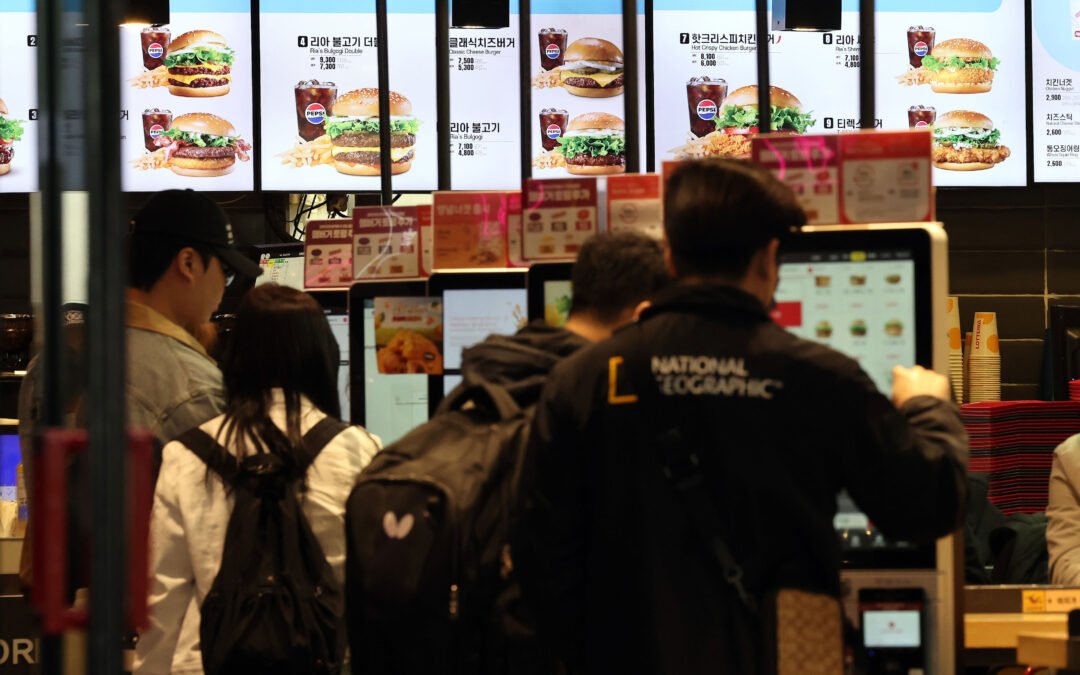
In March, South Korea experienced a 2.1% rise in consumer prices compared to the previous year, which marks the third consecutive month that inflation has surpassed the central bank’s 2% target. This uptick was primarily due to increasing food prices, as significant food corporations raised their prices in response to elevated global raw material expenses and internal political instability.
Statistics Korea reported on April 2 that the consumer price index (CPI) was recorded at 116.29 in March, marking an increase of 2.1% compared to the previous year. Following four consecutive months where inflation stayed within the 1% range—from September through December 2024—inflation picked up speed again, reaching 2.2% in January and slightly decreasing to 2.0% in February.
Oil prices, which were a significant contributor to inflation earlier in the year, increased by 2.8% in March. This rise was relatively small due to reduced international oil costs, influenced by an uptick in U.S. crude output, slowly impacting local markets. In terms of monthly changes, gasoline and diesel prices decreased by 2.1% and 2.2% respectively.
Nonetheless, the expenses for processed foods and dining out rose significantly, maintaining inflation rates higher than the central bank’s objectives. The cost of processed foods escalated by 3.6% in March compared to the previous year, marking the most substantial rise since January 2024. Notably, products like coffee (up 8.3%) and bread (increased by 6.3%) experienced sharp jumps primarily because of escalating input costs. Experts observed that certain food producers exploited the prevailing political unrest to implement price surges that exceeded justifiable levels based solely on increased production costs.
Rising food expenses resulted in higher restaurant charges, with dining inflation climbing by 3.0% for the consecutive second month. Dishes like sashimi (5.4%) and fried chicken (5.3%) experienced notable cost increases, exacerbating customer dissatisfaction regarding escalating meal prices.
Outside of fluctuating food and energy costs, core inflation increased by 1.9% compared to the previous year in March, continuing an upward trend over the last six months with gains mostly within the 1% range. Additionally, the cost-of-living index, measuring 144 commonly bought items and services, went up by 2.4%, surpassing general inflation rates for five consecutive months now.
oleh admin | Apr 1, 2025 | banking, business, controversies, economics, money
Well-known Nigerian entertainer and movie producer Ayo Makun, widely recognized as AY, has voiced his worries about the high service fees charged by commercial banks in Nigeria.
On his X account (previously known as Twitter), AY raised doubts about how banks can consistently report trillions of Naira in quarterly profits amidst Nigeria’s faltering economy.
He contended that certain fees levied on customers are specific to Nigeria and ought to be contested.
He questioned, “How do banks manage to report trillions in profits each quarter despite a struggling economy? We should challenge the minor charges and deductions from our accounts. These fees often have a specific presence in Nigeria. What explains this?”
Provided by Syndigate Media Inc. (
Syndigate.info
).

oleh admin | Apr 1, 2025 | economics, finance news, government, news, politics
New Delhi [India], April 1 (ANI):
Finance Minister
Nirmala Sitharaman
highlighted on Tuesday that the fiscal affairs of both the nation and its states should transcend political influence.
Speaking at the launch of the ‘
NITI NCAER State Economies Forum
‘
portal
In New Delhi, Sitharaman emphasized the well-balanced strategy adopted by the government.
GST Council
, where treasury officials from different countries collaborate to boost income without excessively burdening residents.
Sitharaman said at the event, which unveiled the new data repository created collaboratively by NITI Aayog and NCAER, that concerning the nation’s financial matters—whether those of the central government or state governments—it should not be influenced by political considerations.
The
Finance Minister
stressed that increasing revenue is essential for significant developmental initiatives but should be carefully managed alongside responsible debt practices.
She stated, ‘Your objective is to acquire funds and boost revenue. You aim to secure a superior position so that you can consider implementing more significant developmental initiatives.’
Sitharaman warned of escalating global debt worries, emphasizing that even though India is leading as the quickest-expanding economy, managing debts continues to pose a substantial difficulty.
“Across the globe, wherever there is an effort to develop into a more rapidly expanding economy, there is also a significant challenge in managing debt levels. Nations have grown increasingly burdened with obligations,” she cautioned.
The minister praised the
GST Council
His methodology entails reaching collective decisions grounded in data analysis rather than political factors.
“Through the
GST Council
We can demonstrate that the tough appearance is indeed the realistic one,” she stated, noting that when finance ministers with varying political perspectives review the data collectively, “those distinctions disappear entirely.
That is why some people believe we are merely preaching to ourselves.
GST Council
But I’m pleased about this since ultimately, people are examining the realities in front of them and making a decision, a shared decision, because it’s one nation with one set of facts,” Sitharaman commented.
The event was also highlighted by Suman K Bery, Vice Chairman of NITI Aayog; BVR Subrahmanyam, Chief Executive Officer of NITI Aayog; and Poonam Gupta, Director General of NCAER.
The newly launched
portal
acts as an extensive database containing information over roughly three decades (from 1990–91 to 2022–23). This resource encompasses various aspects such as social, economic, and fiscal indicators, alongside research studies, articles, and insights from experts regarding state finances. Its purpose is to enhance comprehension of broad patterns including macroeconomic, fiscal, demographic, and socio-economic shifts in an accessible manner. Additionally, it addresses the requirement for centralized access to detailed sector-specific data.
The
portal
Will facilitate comparative analysis between individual state data and other states as well as national statistics, offering a crucial forum for policymakers, researchers, and other interested parties to participate in knowledgeable dialogues and deliberations. (ANI)
Provided by Syndigate Media Inc. (
Syndigate.info
).

oleh admin | Apr 1, 2025 | economic policy, economics, international economics, politics, politics of mexico

The Mexican president, Claudia Sheinbaum, stated on Tuesday that Mexico will not adopt a retaliatory stance as the nation prepares for fresh U.S. import duties set to take effect later this week.
The head of the largest trade ally to the United States addressed the media ahead of President Donald Trump’s anticipated declaration of “reciprocal” tariffs, which would include 25 percent duties on imported automobiles and automotive components.
Mexico has previously committed to a “holistic response” to Trump’s tariffs, maintaining a approach that emphasizes negotiation as a priority.
However, Sheinbaum stated on Tuesday, “We do not subscribe to the concept of tit-for-tat, as it invariably results in a negative outcome.”
She emphasized that “naturally, actions are implemented (in Mexico) since actions are also carried out elsewhere, yet ongoing communication remains essential.”
Trump has said he will unveil a raft of so-called “reciprocal tariffs” Wednesday, on what he has dubbed America’s “Liberation Day.”
He insists the duties are necessary to combat trade imbalances with other countries.
Mexico’s economy is seen as highly susceptible to Trump’s tariffs because of its strong trading ties with the United States.
This South American country hosts numerous automobile assembly facilities owned by international firms such as Ford, General Motors, BMW, Volkswagen, and Toyota.
Over 80 percent of Mexico’s exports are destined for the United States, which includes approximately three million vehicles annually.
Sheinbaum stated that her administration would await the specifics of Trump’s announcement on Wednesday before formulating an appropriate response.
She stated during her daily press briefing, ‘We are uncertain, as no nation globally has precise knowledge of what will be unveiled on April 2.’
Regarding immigration issues, Sheinbaum emphasized that although this presented another area of disagreement with America, her administration was ready to “work together” with the U.S., yet not be “subordinated” to its approach.
“The president answers to one authority only, and that is the people of Mexico,” she said.
Last Friday, Sheinbaum received a visit from U.S. Homeland Security Secretary Kristi Noem, who mentioned that she presented President Biden with a list of requirements aimed at reducing immigration. This included requests for enhanced oversight of Mexico’s border with Guatemala.
Guatemala is a transit country for many migrants trying to reach the United States from South America.
Halaman 3 dari 11«12345...10...»Akhir »


