oleh admin | Agu 22, 2025 | celebrations, culture, events and festivals, festivals, social issues
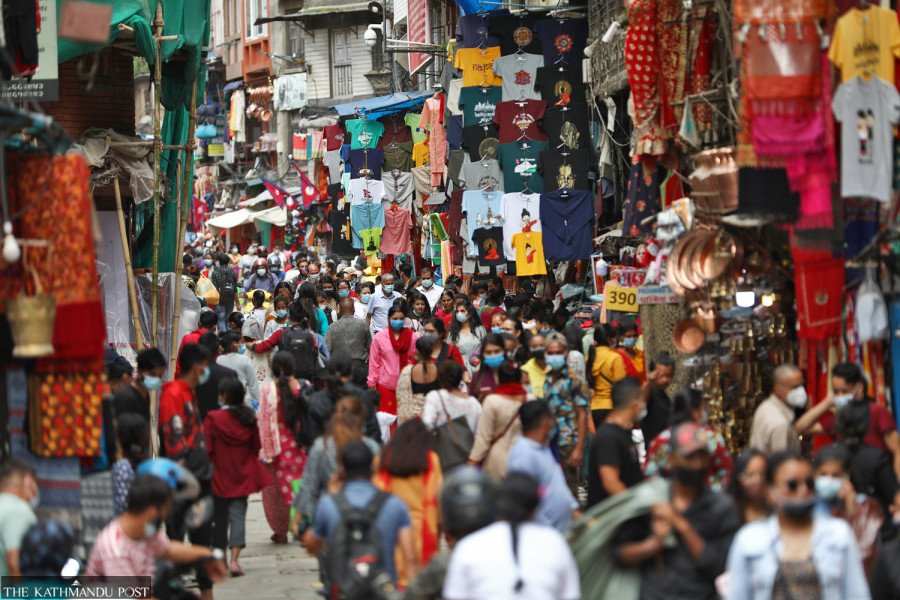
August 19, Nepal – In 2018, Rishikesh Pandey released a compelling study in Quest titled “Religion, Rainfall and Rice: A Social and Ecological Analysis of Festivals in the Kathmandu Valley, Nepal.” Among his key discoveries was that the Newar community in Kathmandu faces challenges maintaining their age-old traditions because of factors such as “transformations in the agricultural ecosystem.” How can they perform prayers and offerings in their rice paddies anymore, with these areas now replaced by sprawling urban structures? I think it’s time for us to reconsider how we celebrate major national events like Dashain. My view is that although our festivals should remain intact, their observances and customs require updating—due to both financial and societal considerations.
Excitement under the clouds
The monsoon is still in full swing. Many people continue to live in the mortal fear of terrible landslides and flash floods. And yet, the festive season has begun in earnest.
Most of our festivities fall in autumn. They are much more enjoyable once the monsoon rains have stopped, seasonal flowers blossom and the paddy fields turn golden with the ripening crop. This year’s Dashain, which is about a month and half away, is going to be wet and muddy.
Notwithstanding, everyone is looking forward to the start of the great festivals. Many people living and working abroad are already planning to return to their country for Dashain. Town residents are planning to visit their ancestral homes, which are rapidly emptying. No doubt, festivals are a great source of personal happiness and social connection. Yet they are also a source of angst for many.
Too costly
Our celebrations are impressive in various aspects, yet they often become excessively costly. Many expenditures arise due to the frequent occurrence of numerous festivals. Next week marks Teej, and certain women may try their best to purchase new saris, ideally accompanied by pricey golden jewelry.
Dashain presents an even greater concern, featuring numerous days filled with lavish meals, travel, new clothing, and jewelry. Likewise, many individuals offer goats and chickens as sacrifices to well-known gods. How can those who earn a modest salary through honest labor afford these costs?
The festival of Tihar follows Dashain almost immediately, which tends to be quite expensive too. A similar situation exists in Tarai, with Chhath right after Dashain. The Newars too have many festivals of their own, each involving lots of expenses.
Drain on foreign income
I think these successive festivals around the harvest season were crucial to bring agrarian communities together in the past. Almost every house grew its own crop and livestock hence, the expenses weren’t such an issue. They probably didn’t think about buying expensive jewellery and foreign clothes at the time.
Continuing the practice of long feasts and social events, along with displaying wealth through gold, silver, clothing, or even costly vehicles and residences, appears difficult. This is particularly true in modern capitalist societies, where farming communities are quickly diminishing, leaving large areas of farmland unused and many rural populations declining.
These traditional types of festive celebrations in an era of market economy have been a huge drain on the remittance economy. Our economy is surviving because hundreds of thousands of our young men and women toil in Malaysia, Arab countries, Korea, Japan and send money home. Much of that money remitted from abroad goes into family expenses, mainly in celebrating increasingly expensive festivals.
What this has done is prevent the productive use of the remittance. It would be much better for the concerned families, to the local and national economy, if much of the remittance was invested in small businesses, in innovative projects. That would also provide employment opportunities and, in the longer term, increase the rate of pay within our own country-requiring less citizens to go for unskilled labour overseas.
Promoting social inequality
Our religious festivals seem out of place or outdated in the performance of at least some of their rituals and customs. As a result, the festivals have not only hurt the national economy, but also social harmony. Isn’t it time to rethink the rituals that openly promote social inequality?
I ponder why we continue to observe Janai Purnima, for example. It definitely does not warrant being a public holiday. This is because it is a highly polarizing celebration. The so-called higher or purer castes replace their sacred thread—janai—on this day. Meanwhile, the rest of us, including Dalits, indigenous communities, and women, are denied the opportunity to partake in the same thread or ceremony.
The concept of sacred thread has been used since the Puranic period to distinguish the higher castes from the lower ones. So, it deserves to be either wiped off our annual calendar for good-or reformed massively.
Numerous other celebrations, such as the Grand Dashain, clearly reinforce and support the traditional concept of ceremonial cleanliness and impurity. The spiritual idea of ritual purity and contamination (thoroughly examined by Luis Dumont in his renowned work “Homohierarchicus”) serves as the fundamental belief system underlying social stratification and prejudice. We have permitted places of worship to engage in this practice without restraint.
During the nine-day period of pre-Tika pujas, Damai drummers perform their musical rituals at nearly every temple dedicated to goddesses and old fortresses. However, they are not allowed inside the temple to offer prayers like other worshippers, and instead receive tika placed on a leaf. Even more distressing, they face additional humiliation by being given the leftover parts of sacrificial animals such as goats and bulls.
The same thing happens in state-sponsored and historic temples such as Gorakh Kali and Nuwakot Bhagawati and Palanchowk Bhagawati. Why are we allowing such practices to continue even in a secular republic? We’ve dumped Hindu monarchy for good-it’s also time to dump old and divisive rituals and customs.
To conclude, rain or shine-let’s celebrate our festivals. One doesn’t even need to be a Hindu to enjoy them, to have fun, to reconnect with our social circles. However, let’s also start a serious debate about reforming the ancient methods of celebrating our festivals-keeping in mind economic and social concerns. So that festivals bring more fun and less angst amongst the masses.
oleh admin | Agu 15, 2025 | culture, design, events and festivals, festivals, thailand
Prepare yourself to feel the artistic pulse of southern Thailand with the return of Pakk Taii Design Week 2025 (PTDW2025), now in its third year, taking place from August 28 to September 7 in the historic town center of Songkhla and the Hat Yai area within Songkhla Province.
Hosted by the Creative Economy Agency, this year’s gathering is centered around the theme “South Paradise: Come To The South And Recharge To Heaven.” Crafted as a sanctuary for peace, artistic expression, and genuine interaction, the festival unites artists from 14 southern regions in an impactful tribute to local heritage and progress.
The PTDW2025 initiative seeks to present southern Thailand not only as a tourist spot but also as a hub for culture and creativity, offering a peaceful retreat where individuals can discover tranquility, motivation, and fresh viewpoints.
Amidst the current era defined by unpredictability, financial turbulence, environmental issues, and evolving international regulations, the yearning for a more deliberate and significant way of living has reached an all-time high. In response to this deep-seated wish, the festival offers an extensive, multifaceted lineup that highlights the transformative potential of artistic expression in fostering recovery and development.
Spanning Southern food, modern handicrafts, design, clothing, buildings, and melodies, guests will experience a dynamic mix of regional creativity through displays, shows, discussions, hands-on sessions, escorted visits, and an energetic artisan marketplace.
The event this year strongly highlights cooperation among the public and private sectors, local communities, and artists.
By offering engaging programs centered around four main experiences — Times of Peace, The Practice of Unwinding, Spaces That Revitalize, and Areas Free from Anxiety — the gathering encourages participants to consider how architecture and cultural elements contribute to individual health and long-term economic development.
The historical district of Songkla Old Town will act as an essential location for this journey, where ancient alleys are turned into areas reflecting the region’s rich diversity and progressive future.
A key attraction at PTDW2025 is the South Destress Main Pavilion, an open area designed to help guests reconnect with happiness via hands-on displays and presentations highlighting local enterprises and community assets.
In the meantime, the 14 City Potential Space will showcase the finest offerings from every province using the perspectives of traditional skills, gourmet cuisine, creative design, and sustainability awareness. At the South Market, visitors can discover distinctive items and innovations from both new and experienced business owners, while exclusive joint initiatives will highlight groundbreaking collaborations among regional artists, academic organizations, and international connections.
Supplied by SyndiGate Media Inc.
Syndigate.info
).
oleh admin | Apr 3, 2025 | celebrations, culture, events and festivals, festivals, tourist attractions
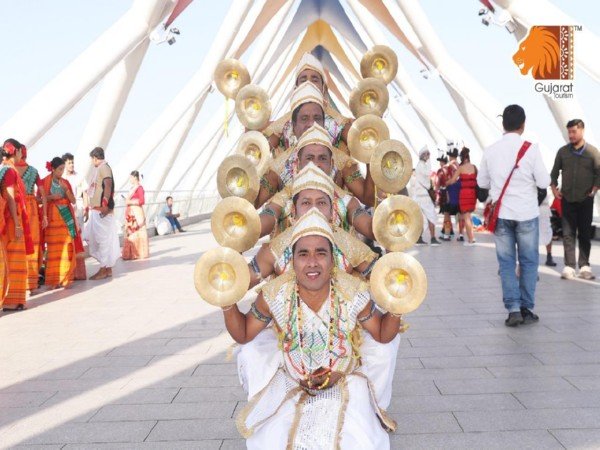
Madhavpur, a charming village located in the historically rich city of Porbandar in Gujarat, serves as the host for the lively festivities. This event takes place in Gandhinagar, Gujarat (India), on April 3 according to ANI.
Madhavpur Fair
This traditional festival begins every year on the auspicious day of Ram Navami and lasts for five days.
The Madhavpur Ghed Fair aptly represents
Prime Minister Narendra Modi
‘s ‘
Ek Bharat
,
Shrestha Bharat
The initiative acts as a cultural bridge uniting the rich traditions of Northeast and Western India, an official statement noted on Thursday.
Notably, the Madhavpur Ghed Fair celebrates the sacred marriage of Shri Krishna and Rukshmini, which is said to have occurred in Madhavpur village. This colorful event provides an exclusive chance for guests to delve into the profound cultural legacy and deeply ingrained spiritual customs of Gujarat.
The
Madhavpur Fair
shares a profound bond with Arunachal Pradesh’s Mishmi tribe. As per legend, the Mishmi people trace their ancestry to the revered King Bhishmak, the father of Rukshmani ji and father-in-law of Shri Krishna. This grand festival beautifully celebrates the sacred union of Rukshmani ji and Shri Krishna.
The Madhavpur Mela, celebrating the sacred marriage of Rukshmani ji (from Arunachal Pradesh) and Dwarkadhish Shri Krishna (of coastal western India) serves as a vibrant confluence of Northeastern and Western Indian cultures. The festivities feature an array of musical, dance, and theatrical performances by artists from both regions. Northeastern performers showcase their rich musical heritage using instruments like the dhol, pepa, and flute, while Gujarati artists captivate audiences with traditional folk dances such as Garba, Dandiya, and Raas. Adding to the cultural grandeur, the fair also highlights exquisite handicrafts and authentic cuisines from both regions, transforming the five-day celebration into a true fusion of traditions. This fair celebrates the divine union of Shri Krishna and Rukshmani ji while also nurturing a spirit of unity and brotherhood, uniting people from various regions of India.
Constructed during the 15th century, the Madhavrai Temple in Madhavpur bears significant historical and cultural importance due to its association with the legendary wedding of Lord Krishna and Rukshmana ji. Legend has it that Lord Krishna escorted Rukshmana ji to Madhavpur village for their celestial nuptials. In honor of this occasion, the temple known as Madhavraya was erected, and every year, an extravagant five-day festival takes place to celebrate their marriage.
In addition to celebrating the marriage of Lord Krishna and Rukshmana Ji, residents of Madhavpur and surrounding areas engage enthusiastically in numerous spiritual customs. A particularly venerated occasion is the ‘Phuleka Yatra,’ an important parade that moves from the Madhavrai Temple to Brahmakund. Commemorations kick off on the second day with a magnificent ceremonial march starting at the Madhavrayji Temple and proceeding towards the mock wedding venue, where lively revelry carries on well past midnight.
The annual Madhavpur Ghed Fair takes place every year in the Chaitra month (March-April) and showcases an extraordinary dramatic portrayal of Lord Sri Krishna’s celestial marriage with Rukshmana Ji. This enchanting event comes alive through the talented performances of adept artists.
Notable attendees at the event include Union Ministers from the Ministries of Culture and Tourism, along with the Governor and Chief Minister of Gujarat. Other participants are ministers from the Gujarat Tourism Department and high-ranking officials within the state government. Additionally, representatives like governors and chief ministers from northeastern states join these festivities.
Past the lively cultural celebrations of the
Madhavpur Fair
Visitors have the opportunity to fully engage with the stunning natural landscapes of this area. Located within Gujarat’s Porbandar district, Madhavpur stands out due to its picturesque shoreline and significant historical legacy. Those who come during the festival can additionally discover various points of interest around both Porbandar and Gir Somnath.
The
Madhavpur Fair
invites guests of every age to delve into the lively cultural fabric of Gujarat. Featuring enchanting customs, holy ceremonies, and various events, the fair provides an exclusive chance to explore the state’s deep-rooted legacy, cementing its status as an essential stop for travelers. (ANI)
Provided by Syndigate Media Inc. (
Syndigate.info
).
oleh admin | Apr 3, 2025 | culture, entertainment, events and festivals, festivals, politics
The Walled City of Lahore Authority (WCLA) along with the Punjab government plans to organize the lively ‘Mela Baharan’ event along the historical Royal Trail from April 4 to 6, taking place each day from 6 PM to 11 PM.
The press release stated that this complimentary, family-friendly festival would convert the Royal Trail into an animated springtime tribute to Lahore’s heritage, starting at Delhi Gate and ending at Masjid Wazir Khan Chowk.
One of the main attractions of the event is the Shahi Guzargah Moasam-e-Bahar Parade, which will take place at 6:00 PM on both Friday and Saturday.
Participants will have the opportunity to enjoy a variety of features such as the impressively refurbished Khucha Hussain Shah, the vibrant Gali Surjan Singh featuring traditional music, the lively Sabeel Wali Gali displaying regional handicrafts and acts, along with the busy Wazir Khan Square hosting its Mena Bazaar.
The festival will include an array of performances, workshops, and exhibits, showcasing Punjabi Boliyan, Putli Tamasha, live music, and Dastangoi, as well as other forms of cultural expression. According to Kamran Lashari, the Director General of the Walled City of Lahore Authority, their objective is to restore Lahore’s historic legacy and the vanished tradition of fairs, alongside offering entertainment options for the community.
Provided by Syndigate Media Inc. (
Syndigate.info
).

oleh admin | Apr 1, 2025 | events and festivals, festivals, flowers, tourist attractions
The Rokko Island Tulip Festival offers an ideal setting to revel in the splendor of spring. Now celebrating its 24th edition, this festival showcases approximately 30,000 tulips across 30 distinct types, transforming Kobe’s Rokko Island into a breathtaking floral paradise. Just a short 40-minute journey from Osaka Station, it serves as a convenient and picturesque attraction for both flower enthusiasts and photography aficionados seeking an unforgettable experience.
Rokko Island Tulip Festival

The festival comprises five sizable flowerbeds, designated as A through E, situated alongside the River Mall—a bustling retail district adjacent to a main canal. These beds provide distinct experiences, highlighting an array of tulip varieties and striking hues. Certain beds exhibit elaborate floral artwork, with this year’s creations anticipated to outshine those from prior years. During evening hours, the tulips glow under lights, casting a enchanting ambiance. As a bonus for attendees, anyone donating ¥1,000 toward the tulips can obtain either one potted tulip or a bunch of five cut tulip blooms (subject to availability).
Festival Highlights
The festival provides numerous entertaining activities suitable for every age group. A few of these are exclusively accessible during the weekend, hence you should review the timetable. Engage through your mobile device or join right at the floral areas. Every participant will be granted a distinctive Rokko Island Tulip Festival postcard crafted by members of the Rokko Island High School Art Club.

oleh admin | Mar 31, 2025 | culture, entertainment, events and festivals, festivals, politics
Gandhinagar (Gujarat), India, March 31 (ANI): As part of a collaborative effort between the Tourism Department and other entities,
Gujarat Government
as well as the Department of Sports, Youth, and Cultural Affairs,
Madhavpur Ghed Fair
The event will take place in the Porbandar district of Gujarat over a period of five days beginning on April 6, 2025, aligning with the revered festival of Ram Navami, as stated by an official.
This five-day
Madhavpur Ghed Fair
, running from April 6 to April 10, will witness participation from Gujarat as well as all eight northeastern states of India. These northeastern states include Arunachal Pradesh, Assam, Manipur, Mizoram, Meghalaya, Sikkim, Tripura, and Nagaland.
On April 6th at 18:00 hours, the Chief Minister of Gujarat
Bhupendra Patel
The inauguration will take place in the presence of Gujarat’s Tourism Minister Mulubhai Bera and Minister of State for Sports, Youth, and Cultural Activities Harsh Sanghavi, alongside other esteemed guests, as per the statement.
Throughout this five-day exhibition, cultural presentations will be showcased by Gujarat along with the northeast states. It will highlight the biggest ensemble of performers from the northeast participating in Gujarat.
This year, the Tourism Department has organized an impressive event called “Arena,” which features a stadium-like configuration at Madhavpur Ghed. In this magnificent environment, a combined total of 1,600 performers hailing from both Gujarat and the northeast regions will present captivating cultural displays, as stated in the announcement.
It will mark the biggest collaborative cultural showcase to date, uniting artists from two different cultural origins on one stage.
The
Madhavpur Ghed Fair
encompasses the idea of United India, Superior India, as conceptualized by Prime Minister Narendra Modi. This program aims to encourage the sentiment of national cohesion by establishing robust and organized relationships among all Indian states and union territories.
The primary objective of the Ek Bharat, Shreshtha Bharat initiative is to enhance nationwide solidarity and cohesion.
Aside from Madhavpur, significant cultural festivities will take place in Ahmedabad, Surat, Vadodara, and Somnath as well.
This year, the
Madhavpur Ghed Fair
The festivities will span throughout Gujarat. Besides Porbandar, cultural events have been arranged in Ahmedabad, Vadodara, Surat, and Somnath as part of these celebrations.
The cultural events of the fair will start on April 1, 2025. On this date, they will take place at the Indoor Stadium in Surat. The following day, April 2, the events shift to Akota Stadium in Vadodara, then move to TransStadia in Ahmedabad on April 3, before concluding at Somnath Temple on April 5.
Furthermore, this year, the
Madhavpur Ghed Fair
Will include a variety of sporting events. At Madhavpur Beach, you can participate in beach sports like beach volleyball, beach football, a 100-meter sprint on sand, a coconut toss competition, and beach handball.
In addition to Gujarat, the fair has also seen the establishment of booths displaying handicrafts alongside stalls featuring different cuisines from the northeast region.
This year, the Mandap Aarohan ceremony is scheduled for April 6. Afterward, a ‘Fuleku Yatra’ will commence from the Madhav Raiji Temple to Brahma Kund on April 6, 7, and 8.
The marriage ceremonies will take place on April 9. The following day, April 10, the wedding parade will start from the Rukmini Temple, accompanied by the bride, and is expected to reach the Madhav Raiji Temple around 4:00 PM. This day will feature an elaborate reception for both Rukminiji and Lord Krishna upon their arrival in Dwarka. (ANI)
Provided by Syndigate Media Inc. (
Syndigate.info
).


