oleh admin | Apr 3, 2025 | culture, heritage, history, indian national news, religion
Bangkok [Thailand], April 3 (ANI): While visiting Thailand, Prime Minister Narendra Modi attended a display of ‘Ramakien,’ a version of the Ramayana shaped by Thai culture. Ramakien serves as the national epic of Thailand and holds significant importance within their literary traditions.
No matter where Prime Minister Modi travels, he brings with him an exhibition of India’s spiritual legacy. Each international trip made by Mr. Modi serves as a platform to highlight India’s profound cultural practices.
Following a posting on X, Prime Minister Modi stated, “An unparalleled cultural connection! I had the privilege of watching an enthralling rendition of the Thai version of Ramayana, known as Ramakien. This event provided a deeply enlightening experience that vividly highlighted the common cultural and civilizational bonds linking India with Thailand. The enduring legacy of Ramayana indeed persists in bridging emotions and customs throughout numerous regions of Asia.”
While visiting Mauritius in March 2025, Prime Minister Modi went to Ganga Talao, where he presented sacred water from the Triveni Sangam, symbolizing the spiritual bond between India and Mauritius.
As a symbol of cultural and spiritual bond, Prime Minister Narendra Modi on March 12 combined the holy water from the Ganges, sourced from the Prayagraj Mahakumbh, with the waters of the Ganga Talao (Grand Bassin) located in Port Louis, Mauritius.
During his trip to Kuwait in December, Prime Minister Modi met with two Kuwaiti individuals known for their work in translating and releasing Arabic editions of the Mahabharata and Ramayana.
While visiting Brazil in November 2024, Prime Minister Modi was greeted with the recitation of mantras upon his arrival.
During his visit, he also had the chance to watch a performance of the Ramayana in Rio de Janeiro.
In November 2024, when PM Modi was visiting Guyana, he had the opportunity to experience heartfelt Ram Bhajans along with Vedic chants performed by children.
Last October in Russia, Prime Minister Modi experienced Russian citizens performing Krishna bhajans during his welcome ceremony in Kazan.
Last year in Laos, Prime Minister Modi was greeted by local residents reciting the Gayatri Mantra.
On the same occasion, he had the chance to see an captivating Laotian interpretation of the Ramayana.
While visiting Italy in 2021, community members in Rome recited the Shiva Mantra when the Prime Minister was present. (ANI)
Provided by SyndiGate Media Inc.
Syndigate.info
).
oleh admin | Apr 3, 2025 | culture, government, heritage, politics, politics and government
ABUJA
– The federal government plans to initiate the “Renewed Hope Cultural Project,” a countrywide program aimed at safeguarding Nigeria’s cultural legacy, boosting tourism, and driving economic development.
This initiative supports President Bola Ahmed Tinubu’s Renewed Hope Agenda and seeks to protect Nigeria’s extensive cultural heritage while fostering economic growth by developing Renewed Hope Cultural Villages throughout the country.
Recently, speaking with reporters in Ilorin via telephone, Barr. Abiola Abdulkareem Jagunlabi, who serves as the Special Assistant to the Minister of Arts, Culture, Tourism, and Creative Economy, and is also the project coordinator, detailed the goals of this new initiative.
He emphasized strategies for rehabilitating and protecting historical locations, landmarks, royal residences, and treasures, along with boosting cultural instruction and strengthening skills within nearby artisan communities.
Jagunlabi highlighted that this program aims to bolster rural areas by delivering vocational education, furnishing local craftsmen with business acumen, and presenting alternate professional routes for young Nigerians.
“The plan involves investing in historic sites, landmarks, and natural attractions, providing vocational skill development for women and young people in rural regions, and hosting lively cultural festivals and tourism events to showcase Nigeria’s rich diversity,” he said.
He additionally emphasized that the project’s success hinges on working together with state governments, local communities, and various stakeholders.
“Through collaboration, Nigeria has the potential to utilize the transformative impact of its arts, culture, tourism, and creative sectors for sustainable growth and social unity,” Jagunlabi emphasized.
The Minister of Art, Culture, Tourism, and Creative Economy, Hajia Hannatu Musa Musawa, is leading initiatives aimed at fostering economic development via cutting-edge programs and policies.
She is proactively building alliances to foster growth within the creative sector, thereby opening up job prospects for young Nigerians.
The art and cultural industry in Nigeria holds substantial promise for enhancing tourism and fostering economic development.
The World Travel & Tourism Council (WTWC) reports that Nigeria’s tourism industry accounted for around $7.2 billion, which represents roughly 2.8% of the country’s GDP in 2019.
By strategically investing in cultural tourism, this number could rise substantially, leading to increased employment opportunities and higher foreign exchange revenues.
Nations like France and Italy, which boast robust cultural tourism sectors, earn billions each year from their historical sites and events.
Through harnessing its rich tapestry of cultural elements—which includes more than 250 distinct ethnic groups, numerous traditional celebrations, and iconic historic sites—Nigeria has the potential to draw greater numbers of global visitors and boost domestic tourism income.
Statistics from the National Bureau of Statistics (NBS) show that more than 4.2 million Nigerians are now employed in the creative sector, suggesting substantial room for growth should adequate support be provided.
Jagunlabi further disclosed that the National Economic Council (NEC) has provided complete support for the initiative, acknowledging the essential part played by state governments in guaranteeing its successful implementation.
Provided by Syndigate Media Inc. (
Syndigate.info
).
oleh admin | Apr 3, 2025 | community, culture, heritage, indian national news, politics
New York [
US
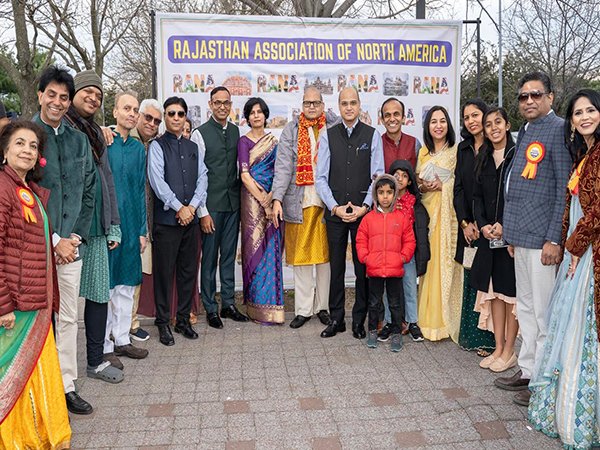
On April 3 (ANI), a significant Indian community organization in New York utilized its 75th-anniversary celebration as an opportunity to emphasize the continuing absence of constitutional acknowledgment for the Rajasthani language.
The
North American Rajasthan Association
(
RANA
They celebrated the milestone with a cruise event along the Hudson River, which was attended by over 400 guests, utilizing the occasion to express their concerns regarding what they see as an ongoing injustice.
RANA
President Prem Bhandari voiced his “stern disapproval” over the omission of Rajasthani from the 8th Schedule of India’s Constitution, where recognized languages are listed.
“Bhandari informed the audience that despite a unified resolution adopted by the Rajasthan State Assembly in 2003 advocating for its incorporation, the central government hasn’t taken action on it yet,” he explained.
He observed that the resolution was achieved subsequently
RANA
‘ s initial International Convention along with ongoing efforts alongside former Chief Minister Ashok Gehlot, yet cited “a lack of political will” as the reason for the stagnation.
Bhandari, who additionally heads the organization behind Jaipur Foot
US
A announced intentions to host a significant prosthetic limb fitting event at the Golden Temple in Amritsar.
The project, created in partnership with the American Punjab Society, concluded following talks with Dr. Mehta, recipient of the Padma Bhushan award and the founder of the Jaipur Foot group. Additionally, plans are underway for a significant new clinic in Trinidad and Tobago, where India’s High Commission has obtained necessary permissions and is handling logistical arrangements. Notably, Dr. Mehta, who at 90 years old founded this organization, will make an appearance at the event having traveled all the way from India.
“India’s Prime Minister Modi has emerged as the foremost advocate of the ancient Sanskrit principle “Vasudhaiva Kutumbakam” – meaning “the world is one family,” Bhandari told ANI. Under Modi’s leadership, the External Affairs Ministry has funded 32 international Jaipur Foot camps through its “India for Humanity” programme.
These facilities, managed by the Bhagwan Mahaveer Viklang Sahayata Samiti, have offered complimentary artificial limbs to numerous individuals with disabilities throughout Asia, Africa, and Latin America.
The occasion also marked a farewell ceremony for Varun Jeph, the departing Deputy Consul General of India, who concluded his term which was noted as the longest in this capacity lasting more than three years and eight months.
Bhandari commended Jeph for his “constant accessibility” and “consistent backing” to the Indian community spanning the 10 states under the purview of the Indian Consulate in New York.
The newly appointed Deputy Consul General, Vishal Harsh, was greeted along with Indian Foreign Service officials Surender Adhana and Eldos Mathew Punnoose.
The festivities included cultural acts such as poetry readings by Abhinav Shukla, with organizers emphasizing strong involvement from young people of Rajasthan originating from various regions within the tristate area. (ANI)
Provided by Syndigate Media Inc. (
Syndigate.info
).

oleh admin | Mar 31, 2025 | agriculture, events and festivals, food culture, heritage, parks
Situated among the Senboku Hills of
Sakai City
, merely about 50 minutes away from downtown
Osaka
Harvest Hill stands as an expansive, welcoming venue packed with seasonally themed entertainment, adventures, and delicious food options. The park features dining spots, exciting attractions, and the well-known Sylvanian Families Park.
Harvest Hill

Frequently eclipsed by the glaring spotlight
Osaka
or the ancient temples of
Kyoto
Harvest Hill stands out as a lesser-known treasure cherished by both residents and visitors looking for an ideal getaway. This place provides numerous activities including zip-lining, Go-Kart racing, and Kansai’s longest grass slide. For those seeking something less intense, horseback riding or picking fresh seasonal fruit could be delightful alternatives. Additionally, the park features various self-made goods like artisanal sausages, smoked poultry, handcrafted beers, and delectable treats such as Baumkuchen and cheesecakes. These items can either be savored at one of their eateries or purchased directly from The Harvest Shop. With multiple food choices available—from light bites to full meals—there’s plenty to suit every appetite. Those with a particular fondness for sweets should not miss visiting the Baumkuchen Factory.
Seasonal Flowers

The floral displays at Harvest Hill shift according to the seasons. During springtime, visitors can enjoy tulips and golden rape blooms alongside cherry blossoms. By June, hydrangeas take center stage, followed by an array of sunflowers and vivid orange cosmos throughout the summertime. As autumn arrives, marigolds add their color to match the changing leaves.
Sylvanian Families Theme Park
The Sylvanian Families Theme Park stands out as a major draw. Discover full-size residences and vehicles, join the trivia scavenger hunt for a chance to earn a special figurine, and watch character performances. Should you visit during wet weather, each doll comes with a complimentary rain jacket. Don’t miss the opportunity to browse at the Forest Market where you can find one-of-a-kind Sylvanian products, such as rare newborn dolls. For dining, head over to the Sylvanian Families Aozora Food Court which serves up specially-themed snacks and dishes.
25th Anniversary Event
In April 2025, Harvest Hill will mark its 50-year milestone with a small fireworks display on both April 12 and 13 at 7:30 p.m. Then, on April 14—the day of the park’s official anniversary—each of the initial 300 guests through the gates will be presented with a commemorative 25th-anniversary towel.

oleh admin | Mar 27, 2025 | archaeology, british monarchy, culture, heritage, history
-
READ MORE: Were the individuals buried at Sutton Hoo actually royalty?
For nearly a hundred years, the Sutton Hoo burial site has provided an intriguing look into Britain’s early past.
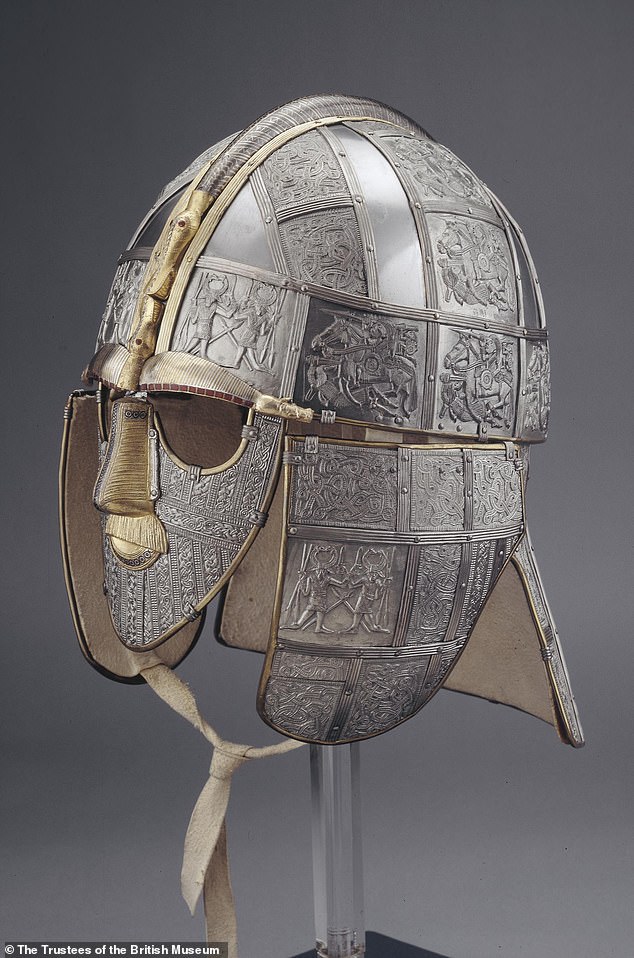
Among the astounding treasures discovered at the site, the most remarkable item is undoubtedly the Sutton Hoo helmet.
regarded as one of the most valuable jewels of the Anglo-Saxon era
.
Up until this point, archaeologists thought that the helmet had arrived in Britain from
Sweden
As a diplomatic present or family treasure.
However, a recent finding by an amateur metal detectorist has raised questions about the helmet’s provenance — potentially altering our understanding of early European history.
Among the numerous adornments on the damaged helmet, dating back to the 7th century, are two petite panels depicting soldiers mounted on horses.
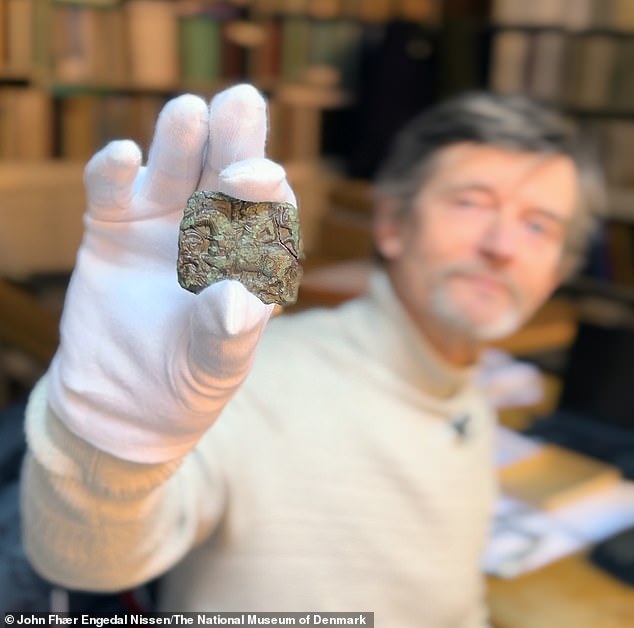
Based on an examination conducted by the National Museum of Denmark, these panels closely resemble a tiny metallic stamp discovered on the Danish island of Taasinge.
This opens up the intriguing prospect that it originated in Denmark rather than Sweden.
Peter Pentz, a curator at the National Museum of Denmark, stated to the Ritzau news agency: “Given the striking similarity, this might indicate that not only were these items produced in the same location, but they may have been crafted by the very same artisans.”
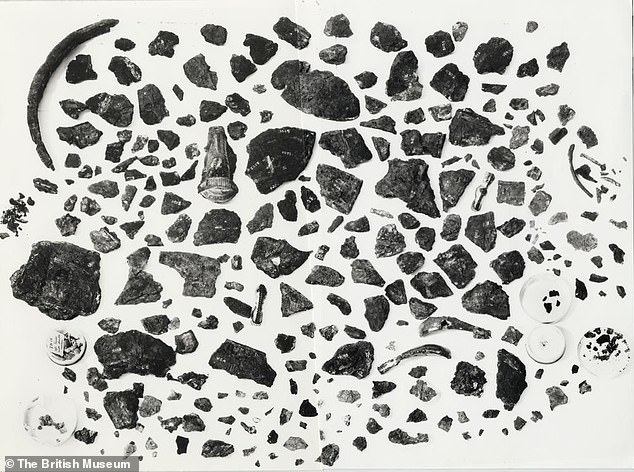
The renowned helmet found at Sutton Hoo had disintegrated into numerous fragments; however, archaeologists managed to reconstruct it, uncovering elaborate designs and embellishments.
This includes an image of a mounted warrior charging over a fallen man.
So far, archaeologists thought this design was inspired by previous Roman styles and might have originated from Uppland in eastern Sweden, a region known for comparable warrior designs on helmets.
Nevertheless, experts from the National Museum claim they have found an artifact that casts doubt on that narrative.
Local archaeologist Jan Hjort was scouring the fields of Taasinge in 2023 when he discovered a small, flat metal object just four centimetres by five centimetres.
Following the submission of the artifact to the nearby museum, it was identified as a form of stamp or mold referred to as a ‘patress’.
Metal sheets could be positioned above the form and hammered to transfer the pattern onto them.
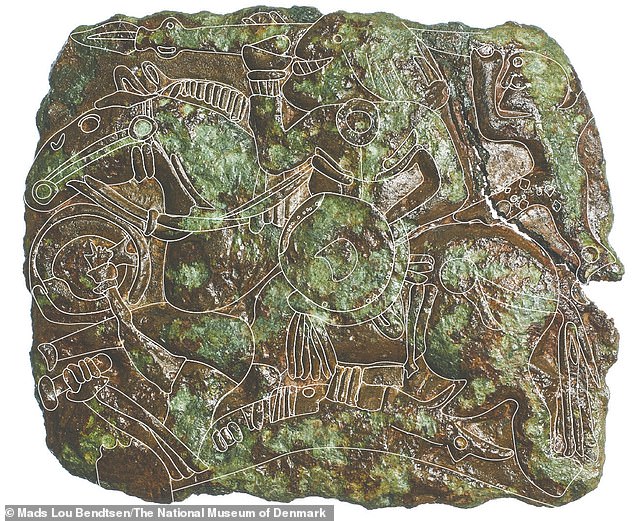
In this particular instance, the design features a man atop a horse trampling a fallen figure. Experts suggest that this depiction bears an even stronger resemblance to the Sutton Hoo design compared to the various Swedish interpretations.
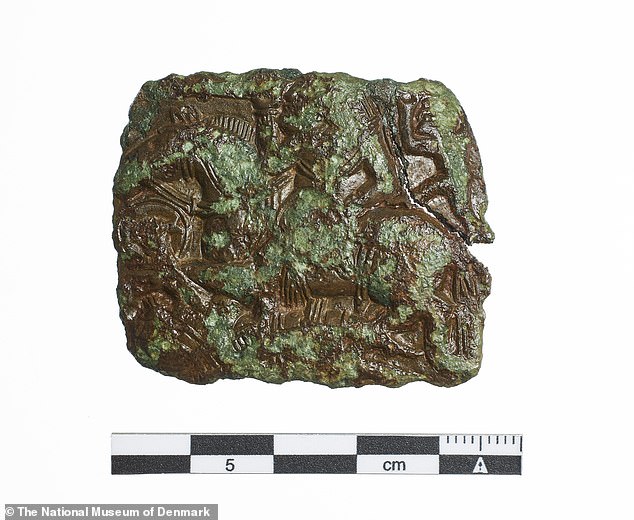
The researchers highlight features such as the lines under the horseman’s foot and those along the edge of the prone man’s foot, noting these elements appear identical in both the Patti and Sutton Hoo helmet remnants.
Although Mr. Pentz recognizes that the themes might have been influenced by each other, he contends that such a high degree of resemblance cannot simply be written off as mere copying.
A number of historians think that the island of Taasinge might have housed a metalworking site in the seventh century. Thin metallic plates unearthed in this region suggest they may have been utilized for producing stamped foils.
“That might offer compelling proof that the Sutton Hoo helmet was indeed crafted in Taasinge, making this discovery truly remarkable,” states Mr. Penz.
Nevertheless, there are multiple problems hindering this theory—primarily due to the fragmentation of the Sutton Hoo helmet and its considerably worn condition.
Moreover, the Taasinge seal tag is made from such a tiny piece of metal that it might have been readily transported from another location.
However, if the Sutton Hoo helmet actually originated from Denmark instead of Sweden, it would challenge historians’ understanding of the power dynamics in seventh-century Europe.
The study indicates that Sweden and England might have served as outlying areas under the influence of a Danish center of power, with the helmet highlighting a significant link to Denmark as the dominant force in the area.
Mr. Pentz states: “It remains premature to reach any definitive conclusions, yet it suggests that Denmark held a more significant position during this era than initially believed.”
We frequently credit the unification of the kingdom to Harald Bluetooth during the 10th century; however, Denmark might have achieved relative unity and strength as far back as 600 CE. This discovery challenges earlier beliefs and such revelations are inherently intriguing.
However, skepticism remains among some who do not believe this discovery is as groundbreaking as claimed by the National Museum of Denmark.
Professor Helen Gittos, a specialist in medieval history at the University of Oxford, informed MailOnline that the seal impression was “an intriguing discovery,” though she noted that the design was not particularly rare.
Dr. Gittos states: “The images align with comparable instances discovered in Valsgarde, Sweden, along with locations in southern Germany and other areas.”
It’s especially useful to uncover evidence of metalwork activities, as it reinforces the idea of how closely linked the military elite groups were during this time in northwestern Europe.
The burial at Sutton Hoo took place roughly between AD 610 and AD 635, during which time the location was part of the Anglo-Saxon kingdom known as East Anglia.
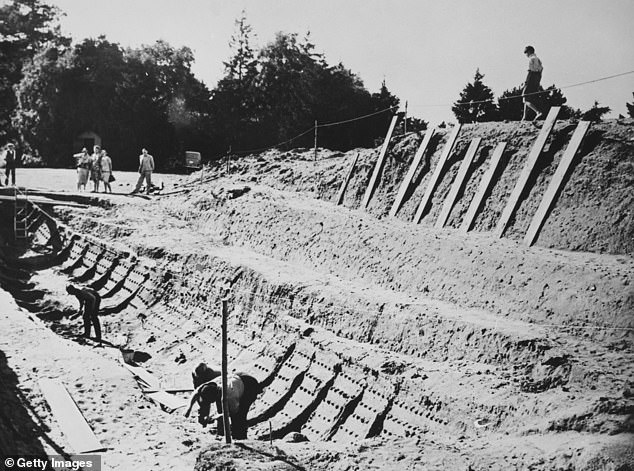
Back in 1939, amateur archaeologist Basil Brown uncovered the site after being asked by local resident Edith Pretty to clear away the Suffolk earth.
He discovered proof of a massive funeral structure — an 88.6-foot-long vessel containing a chamber filled with lavish items.
Over 1,300 years, the acidic ground caused the ship’s wood to decay completely, leaving behind just a spectral outline.
Subsequent examination revealed the presence of phosphates in the soil — a sign that a human body had previously been buried there.
The alkaline environment has eroded the human bones, indicating that identifying the person buried there will probably be impossible.
Those interred here did not leave behind any written accounts, making it impossible to determine their precise identities. However, historians have maintained that Sutton Hoo served as the burial ground for the ruling family of East Anglia—the Wuffingas dynasty.
Some believe that a prominent ruler or hero from East Anglia was buried with his riches, potentially King Rædwald, as stated by the National Trust.
The individual’s regal standing is evident from the extensive assembly of over 260 artifacts discovered interred with them.
These consist of items such as a shield and drinking horns that have ties to Scandinavia, along with the renowned Sutton Hoo helmet.
Read more

oleh admin | Mar 25, 2025 | ancient history, archaeologists, archaeology, heritage, history
![]()
It started, much like many significant breakthroughs, with a
metal detectorist
Along with a fortunate chime. In December 2021, Peter Heads came across what was destined to become one of the biggest and most consequential findings.
Iron Age
discoveries ever made in Britain: the Melsonby Hoard.
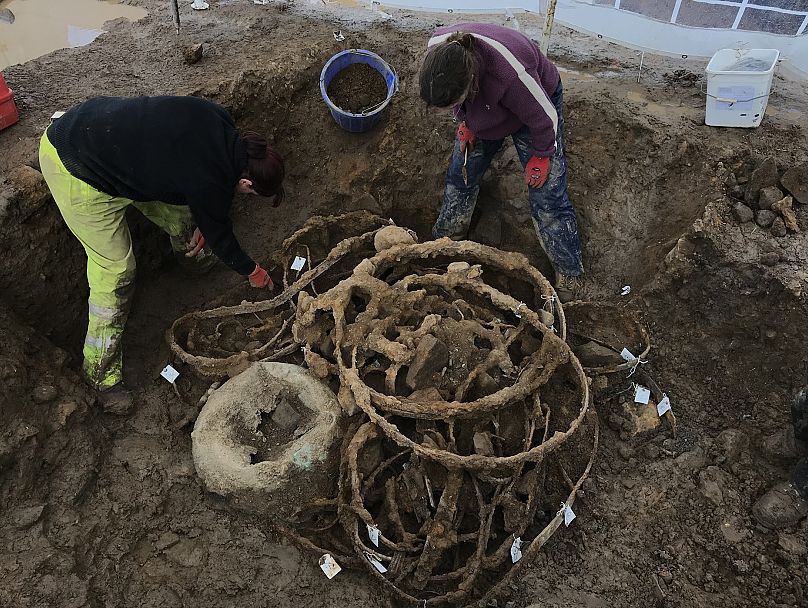
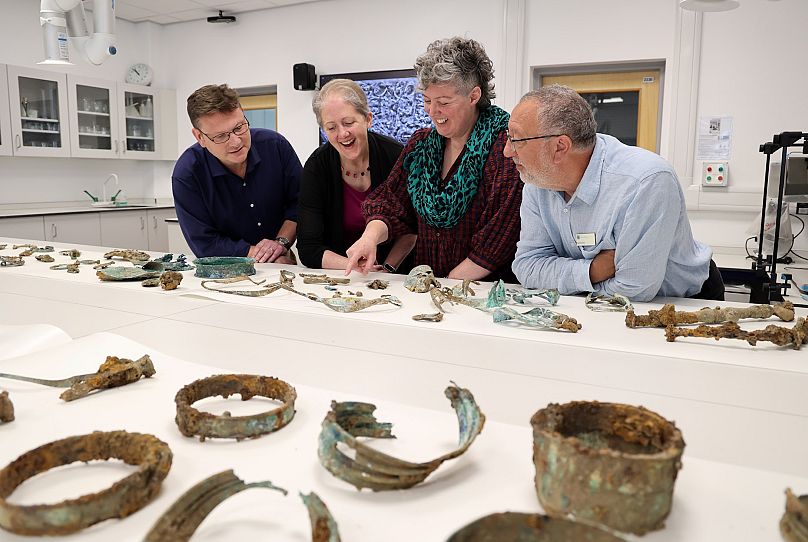
Currently, following detailed excavations and studies, archaeologists have revealed over 800 artifacts discovered by Heads close to the village of Melsonby in North Yorkshire, England. The precise site remains undisclosed.
“Simply put, this discovery represents one of the most significant and thrilling finds from the Iron Age in the UK. It offers fresh insights into life during the Iron Age in northern regions and Britain as a whole, while also highlighting links to continental Europe,” states Duncan Wilson, CEO of Historic England.
Characterized by specialists as an “archaeological time capsule,” the collection is believed to have been interred during the first century AD, corresponding to the period mentioned.
Roman conquest
of southern Britain.
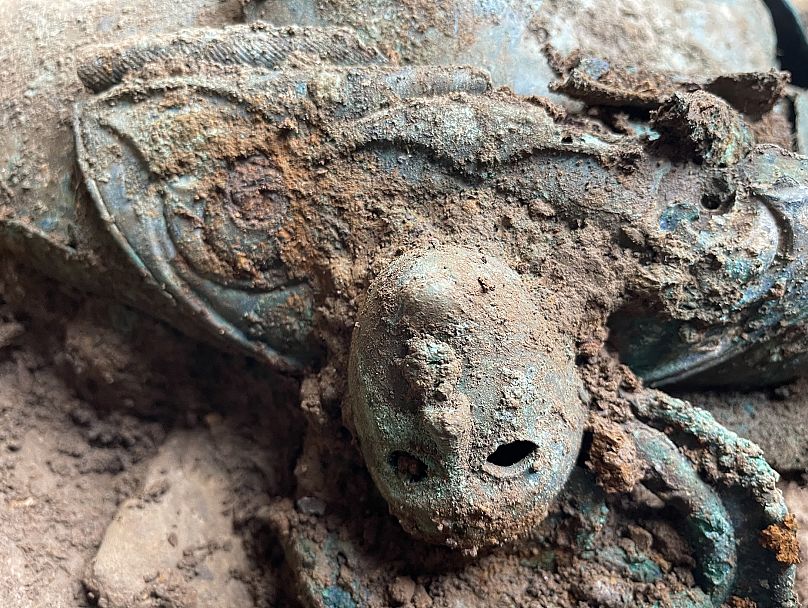
Included among these discoveries are fragments from at least seven four-wheeled carts and two wheeled chariots, which is quite uncommon for Iron Age Britain. The horse gear found includes several sets fully adorned with Mediterranean coral along with colored glass pieces, indicating an upper-class society that flaunted their affluence and rank via luxurious conveyances and intricate ceremonies.
As stated by Dr. Sophia Adams, a curator at the British Museum, “This represents the biggest collection of horse harnesses and vehicle components ever unearthed in Britain. Its importance lies not only in the sheer number of artifacts interred approximately 2,000 years ago but also in their superior craftsmanship and variety.”
The discovery also included three ritualistic spears that were bundled together meticulously. Additionally found were 28 iron rims along with two decorative cauldrons or containers. Among them, one covered container was presumably utilized for mixing wine and had been intentionally placed at the base of a substantial trench. Other artifacts comprised cast copper-alloy bridles, linchpins, and rein rings.
However, it’s not merely the quantity of artifacts that has stunned scholars; it’s also their state of preservation. Numerous items appear to have been intentionally damaged or scorched prior to being interred.
ritual
That sparks fascinating inquiries into Iron Age society. Could this have been a grand show of authority? Perhaps a burial ritual? Or maybe a sacrifice to deities?
This discovery has once again sparked discussions about Britain’s links with mainland Europe prior to the Roman invasion. Although certain artifacts resemble items found earlier within Britain, several others show strong similarities with those from across the continent, suggesting robust trading routes and common technological practices.
Worth £254,000 (€304,000), the Melsonby Hoard is now central to a fresh fundraising initiative launched by the Yorkshire Museum in York with the aim of making it accessible for public display.