oleh admin | Apr 3, 2025 | culture, heritage, history, indian national news, religion
Bangkok [Thailand], April 3 (ANI): While visiting Thailand, Prime Minister Narendra Modi attended a display of ‘Ramakien,’ a version of the Ramayana shaped by Thai culture. Ramakien serves as the national epic of Thailand and holds significant importance within their literary traditions.
No matter where Prime Minister Modi travels, he brings with him an exhibition of India’s spiritual legacy. Each international trip made by Mr. Modi serves as a platform to highlight India’s profound cultural practices.
Following a posting on X, Prime Minister Modi stated, “An unparalleled cultural connection! I had the privilege of watching an enthralling rendition of the Thai version of Ramayana, known as Ramakien. This event provided a deeply enlightening experience that vividly highlighted the common cultural and civilizational bonds linking India with Thailand. The enduring legacy of Ramayana indeed persists in bridging emotions and customs throughout numerous regions of Asia.”
While visiting Mauritius in March 2025, Prime Minister Modi went to Ganga Talao, where he presented sacred water from the Triveni Sangam, symbolizing the spiritual bond between India and Mauritius.
As a symbol of cultural and spiritual bond, Prime Minister Narendra Modi on March 12 combined the holy water from the Ganges, sourced from the Prayagraj Mahakumbh, with the waters of the Ganga Talao (Grand Bassin) located in Port Louis, Mauritius.
During his trip to Kuwait in December, Prime Minister Modi met with two Kuwaiti individuals known for their work in translating and releasing Arabic editions of the Mahabharata and Ramayana.
While visiting Brazil in November 2024, Prime Minister Modi was greeted with the recitation of mantras upon his arrival.
During his visit, he also had the chance to watch a performance of the Ramayana in Rio de Janeiro.
In November 2024, when PM Modi was visiting Guyana, he had the opportunity to experience heartfelt Ram Bhajans along with Vedic chants performed by children.
Last October in Russia, Prime Minister Modi experienced Russian citizens performing Krishna bhajans during his welcome ceremony in Kazan.
Last year in Laos, Prime Minister Modi was greeted by local residents reciting the Gayatri Mantra.
On the same occasion, he had the chance to see an captivating Laotian interpretation of the Ramayana.
While visiting Italy in 2021, community members in Rome recited the Shiva Mantra when the Prime Minister was present. (ANI)
Provided by SyndiGate Media Inc.
Syndigate.info
).
oleh admin | Mar 30, 2025 | government, history, politics, public policy, youth
The Minister of Youth and Arts, Abdallah Utumatwishima, encouraged Rwandan youth to study the nation’s history and adhere to the nine commitments of the RPF-Inkotanyi party. Given that more than 65% of the populace is below 30, numerous Rwandans were born post-Genocide, underscoring the necessity for younger generations to comprehend the historical struggles faced by the country. These challenges include the RPF-Inkotayni’s battle to free Rwanda and halt the 1994 Genocide targeting the Tutsis.
This appeal came during “Rubyiruko Menya Amateka Yawe,” an initiative organized on March 28th at the National Ubutore Development Centre (NUDC) located in Nkumba, Burera District. Approximately 1,000 youths participated from different regions including Northern provinces such as Burera, Gicumbi, Gakenke, Musanze, and Rulindo, along with Nyabihu in the West. Organized jointly by MINUBUMWE and MoYA, this campaign educates young Rwandans about the tragic events surrounding the 1994 Genocide against the Tutsi and equips them with tools to combat genocide denial.
Founded in December 1987 by exiles reacting to discriminatory policies fueled by Belgian rule starting in 1959, the RPF-Inkotanya advocates several principles designed to foster unity and resilience. Among these responsibilities are restoring communal bonds amongst Rwandans—a critical factor following centuries of division—and establishing a fairer governmental system.
Addressing issues like defense strategy and foreign policy, Minister Utumatwishima emphasized the significance of protecting Rwanda’s autonomy amid external threats posed by groups like the FDLR operating out of neighboring Democratic Republic of Congo. Additionally, promoting democracy involves granting every citizen a stake in governing decisions, fostering inclusive participation rather than exclusivity.
Economic advancement represents yet another cornerstone commitment where enhancing domestic productivity stands paramount alongside curbing pervasive graft affecting societal stability. Furthermore, improving living conditions hinges upon robust investments in sectors like healthcare and schooling, reflecting broader aspirations towards greater equality and opportunity nationwide.
Ultimately, addressing root causes behind past displacements forms part of ongoing reforms aiming toward sustainable reconciliation. By advocating strong ties internationally grounded in mutual understanding, RPF-Inkotanya strives to secure beneficial alliances conducive to collective betterment. Meanwhile, vigilantly guarding against residual extremist ideologies serves dual purposes: deterring potential recurrences domestically whilst challenging revisionist narratives abroad.
Provided by Syndigate Media Inc. (
Syndigate.info
).

oleh admin | Mar 27, 2025 | archaeology, british monarchy, culture, heritage, history
-
READ MORE: Were the individuals buried at Sutton Hoo actually royalty?
For nearly a hundred years, the Sutton Hoo burial site has provided an intriguing look into Britain’s early past.
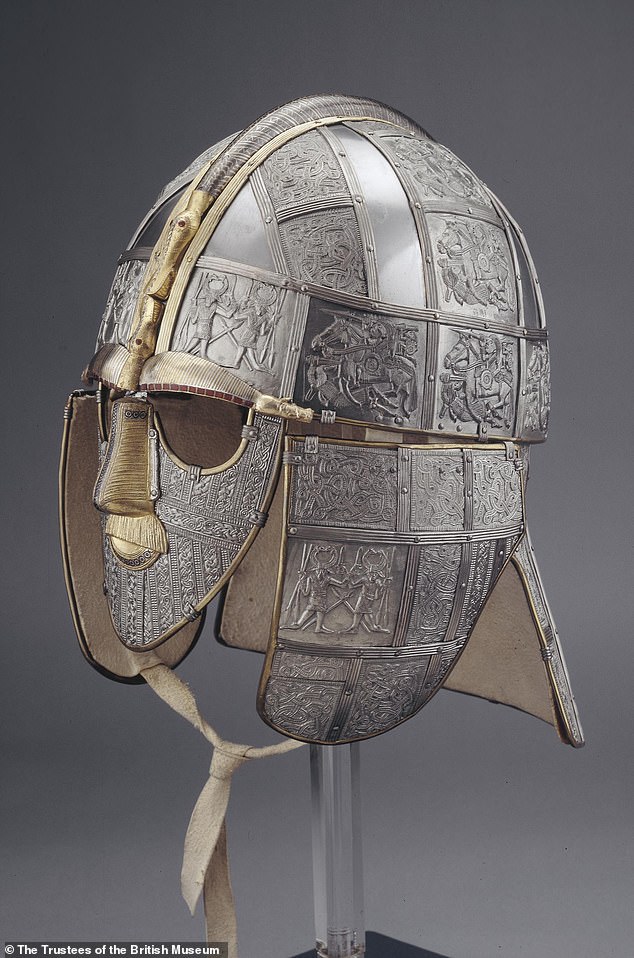
Among the astounding treasures discovered at the site, the most remarkable item is undoubtedly the Sutton Hoo helmet.
regarded as one of the most valuable jewels of the Anglo-Saxon era
.
Up until this point, archaeologists thought that the helmet had arrived in Britain from
Sweden
As a diplomatic present or family treasure.
However, a recent finding by an amateur metal detectorist has raised questions about the helmet’s provenance — potentially altering our understanding of early European history.
Among the numerous adornments on the damaged helmet, dating back to the 7th century, are two petite panels depicting soldiers mounted on horses.
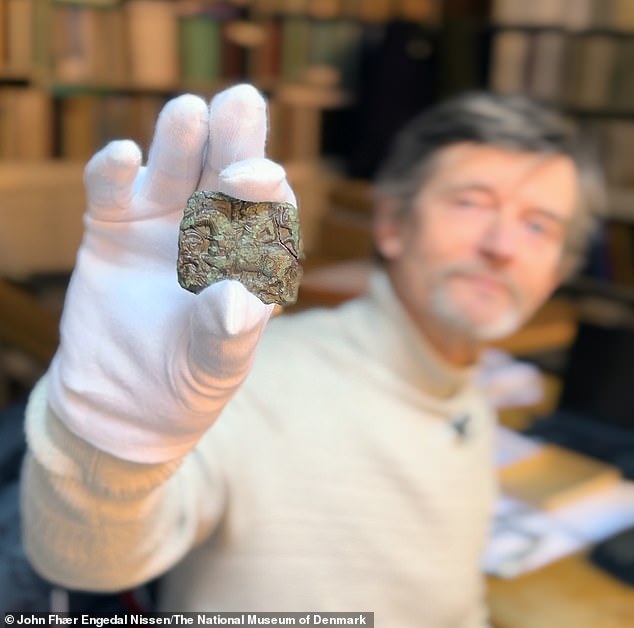
Based on an examination conducted by the National Museum of Denmark, these panels closely resemble a tiny metallic stamp discovered on the Danish island of Taasinge.
This opens up the intriguing prospect that it originated in Denmark rather than Sweden.
Peter Pentz, a curator at the National Museum of Denmark, stated to the Ritzau news agency: “Given the striking similarity, this might indicate that not only were these items produced in the same location, but they may have been crafted by the very same artisans.”
The renowned helmet found at Sutton Hoo had disintegrated into numerous fragments; however, archaeologists managed to reconstruct it, uncovering elaborate designs and embellishments.
This includes an image of a mounted warrior charging over a fallen man.
So far, archaeologists thought this design was inspired by previous Roman styles and might have originated from Uppland in eastern Sweden, a region known for comparable warrior designs on helmets.
Nevertheless, experts from the National Museum claim they have found an artifact that casts doubt on that narrative.
Local archaeologist Jan Hjort was scouring the fields of Taasinge in 2023 when he discovered a small, flat metal object just four centimetres by five centimetres.
Following the submission of the artifact to the nearby museum, it was identified as a form of stamp or mold referred to as a ‘patress’.
Metal sheets could be positioned above the form and hammered to transfer the pattern onto them.
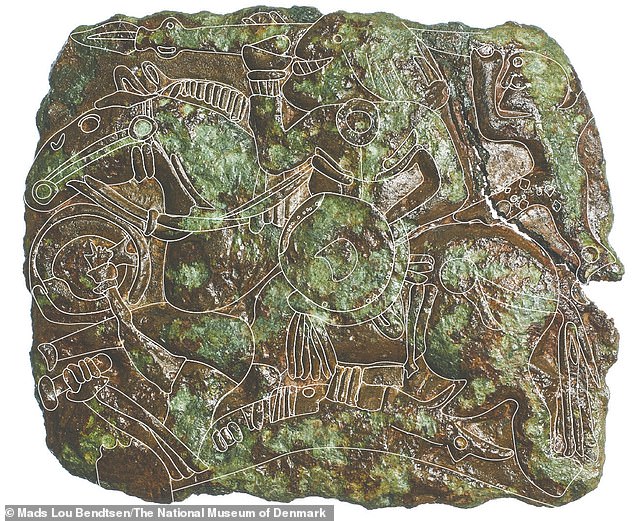
In this particular instance, the design features a man atop a horse trampling a fallen figure. Experts suggest that this depiction bears an even stronger resemblance to the Sutton Hoo design compared to the various Swedish interpretations.
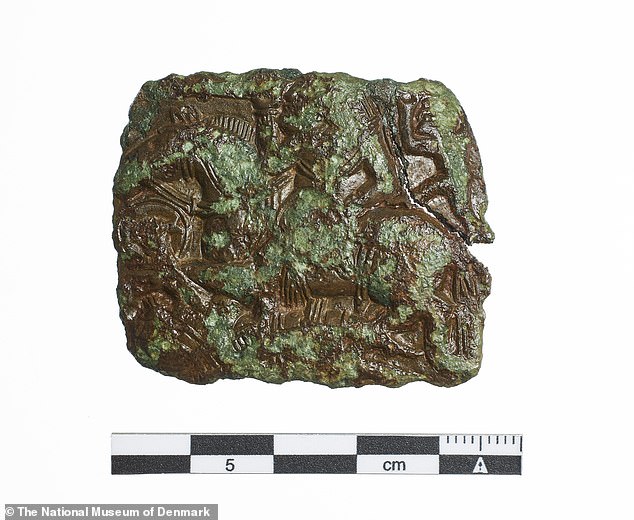
The researchers highlight features such as the lines under the horseman’s foot and those along the edge of the prone man’s foot, noting these elements appear identical in both the Patti and Sutton Hoo helmet remnants.
Although Mr. Pentz recognizes that the themes might have been influenced by each other, he contends that such a high degree of resemblance cannot simply be written off as mere copying.
A number of historians think that the island of Taasinge might have housed a metalworking site in the seventh century. Thin metallic plates unearthed in this region suggest they may have been utilized for producing stamped foils.
“That might offer compelling proof that the Sutton Hoo helmet was indeed crafted in Taasinge, making this discovery truly remarkable,” states Mr. Penz.
Nevertheless, there are multiple problems hindering this theory—primarily due to the fragmentation of the Sutton Hoo helmet and its considerably worn condition.
Moreover, the Taasinge seal tag is made from such a tiny piece of metal that it might have been readily transported from another location.
However, if the Sutton Hoo helmet actually originated from Denmark instead of Sweden, it would challenge historians’ understanding of the power dynamics in seventh-century Europe.
The study indicates that Sweden and England might have served as outlying areas under the influence of a Danish center of power, with the helmet highlighting a significant link to Denmark as the dominant force in the area.
Mr. Pentz states: “It remains premature to reach any definitive conclusions, yet it suggests that Denmark held a more significant position during this era than initially believed.”
We frequently credit the unification of the kingdom to Harald Bluetooth during the 10th century; however, Denmark might have achieved relative unity and strength as far back as 600 CE. This discovery challenges earlier beliefs and such revelations are inherently intriguing.
However, skepticism remains among some who do not believe this discovery is as groundbreaking as claimed by the National Museum of Denmark.
Professor Helen Gittos, a specialist in medieval history at the University of Oxford, informed MailOnline that the seal impression was “an intriguing discovery,” though she noted that the design was not particularly rare.
Dr. Gittos states: “The images align with comparable instances discovered in Valsgarde, Sweden, along with locations in southern Germany and other areas.”
It’s especially useful to uncover evidence of metalwork activities, as it reinforces the idea of how closely linked the military elite groups were during this time in northwestern Europe.
The burial at Sutton Hoo took place roughly between AD 610 and AD 635, during which time the location was part of the Anglo-Saxon kingdom known as East Anglia.
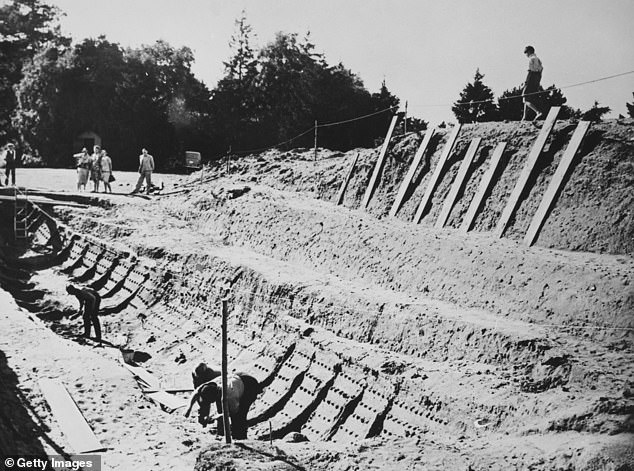
Back in 1939, amateur archaeologist Basil Brown uncovered the site after being asked by local resident Edith Pretty to clear away the Suffolk earth.
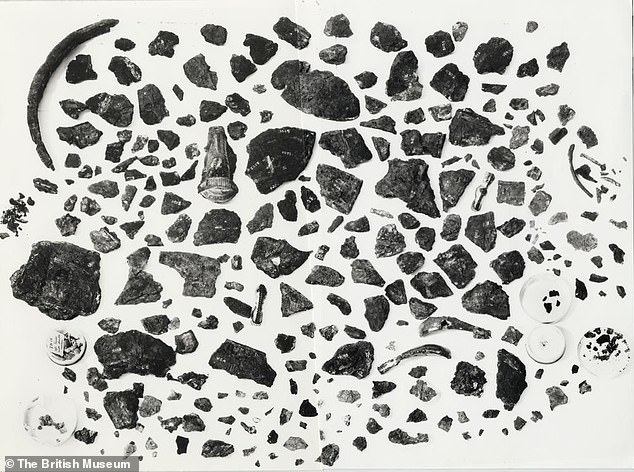
He discovered proof of a massive funeral structure — an 88.6-foot-long vessel containing a chamber filled with lavish items.
Over 1,300 years, the acidic ground caused the ship’s wood to decay completely, leaving behind just a spectral outline.
Subsequent examination revealed the presence of phosphates in the soil — a sign that a human body had previously been buried there.
The alkaline environment has eroded the human bones, indicating that identifying the person buried there will probably be impossible.
Those interred here did not leave behind any written accounts, making it impossible to determine their precise identities. However, historians have maintained that Sutton Hoo served as the burial ground for the ruling family of East Anglia—the Wuffingas dynasty.
Some believe that a prominent ruler or hero from East Anglia was buried with his riches, potentially King Rædwald, as stated by the National Trust.
The individual’s regal standing is evident from the extensive assembly of over 260 artifacts discovered interred with them.
These consist of items such as a shield and drinking horns that have ties to Scandinavia, along with the renowned Sutton Hoo helmet.
Read more

oleh admin | Mar 25, 2025 | ancient history, archaeologists, archaeology, heritage, history
![]()
It started, much like many significant breakthroughs, with a
metal detectorist
Along with a fortunate chime. In December 2021, Peter Heads came across what was destined to become one of the biggest and most consequential findings.
Iron Age
discoveries ever made in Britain: the Melsonby Hoard.
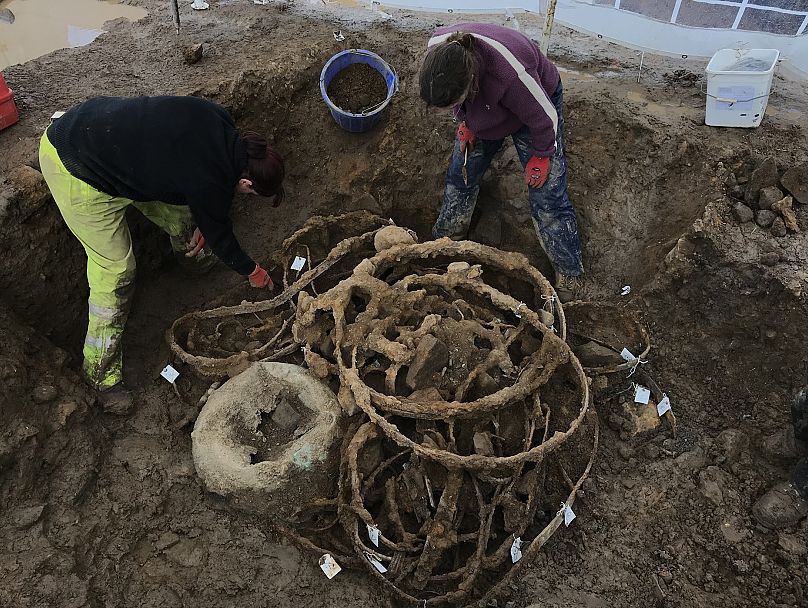
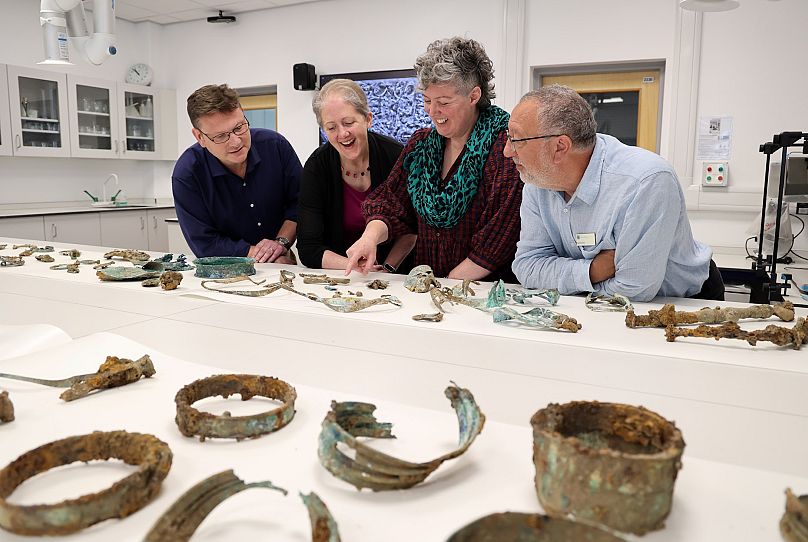
Currently, following detailed excavations and studies, archaeologists have revealed over 800 artifacts discovered by Heads close to the village of Melsonby in North Yorkshire, England. The precise site remains undisclosed.
“Simply put, this discovery represents one of the most significant and thrilling finds from the Iron Age in the UK. It offers fresh insights into life during the Iron Age in northern regions and Britain as a whole, while also highlighting links to continental Europe,” states Duncan Wilson, CEO of Historic England.
Characterized by specialists as an “archaeological time capsule,” the collection is believed to have been interred during the first century AD, corresponding to the period mentioned.
Roman conquest
of southern Britain.
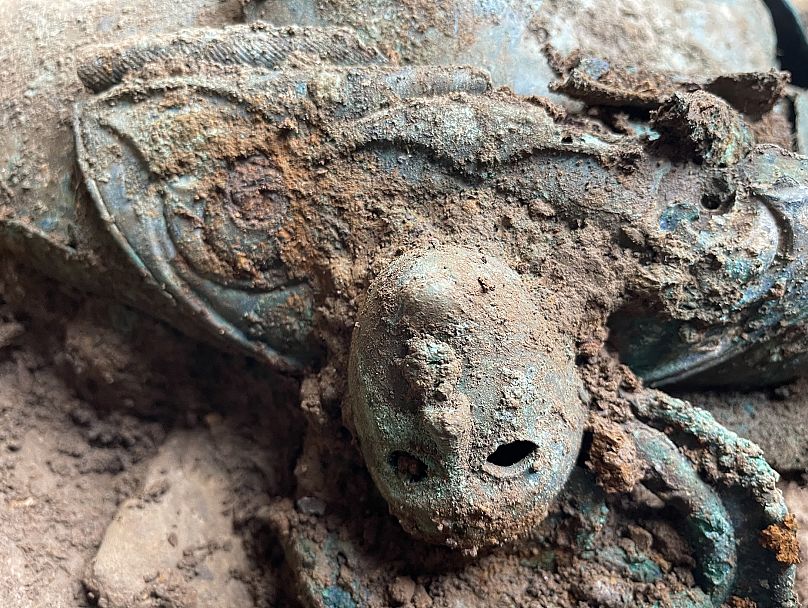
Included among these discoveries are fragments from at least seven four-wheeled carts and two wheeled chariots, which is quite uncommon for Iron Age Britain. The horse gear found includes several sets fully adorned with Mediterranean coral along with colored glass pieces, indicating an upper-class society that flaunted their affluence and rank via luxurious conveyances and intricate ceremonies.
As stated by Dr. Sophia Adams, a curator at the British Museum, “This represents the biggest collection of horse harnesses and vehicle components ever unearthed in Britain. Its importance lies not only in the sheer number of artifacts interred approximately 2,000 years ago but also in their superior craftsmanship and variety.”
The discovery also included three ritualistic spears that were bundled together meticulously. Additionally found were 28 iron rims along with two decorative cauldrons or containers. Among them, one covered container was presumably utilized for mixing wine and had been intentionally placed at the base of a substantial trench. Other artifacts comprised cast copper-alloy bridles, linchpins, and rein rings.
However, it’s not merely the quantity of artifacts that has stunned scholars; it’s also their state of preservation. Numerous items appear to have been intentionally damaged or scorched prior to being interred.
ritual
That sparks fascinating inquiries into Iron Age society. Could this have been a grand show of authority? Perhaps a burial ritual? Or maybe a sacrifice to deities?
This discovery has once again sparked discussions about Britain’s links with mainland Europe prior to the Roman invasion. Although certain artifacts resemble items found earlier within Britain, several others show strong similarities with those from across the continent, suggesting robust trading routes and common technological practices.
Worth £254,000 (€304,000), the Melsonby Hoard is now central to a fresh fundraising initiative launched by the Yorkshire Museum in York with the aim of making it accessible for public display.
oleh admin | Mar 24, 2025 | africa, culture, history, islam, music
Mr. Dar used the initial three letters from “Tanganyika,” which are TAN, and those from “Zanzibar,” ZAN. To these, he appended an ‘I’ derived from his name, Iqbal, along with an additional ‘A’, symbolizing his affiliation with the Ahmadiyya Muslim community.
Mohammed Iqbal Dar, the man who came up with the name “Tanzania,” has died at the age of 80.
He died in Birmingham, United Kingdom, where he had resided since 1965. For almost a decade, he had been in poor health and could not walk during his last few years.
Mr. Dar came into this world on August 8, 1944, in Tanga, Tanzania. His father, Dr. Tufail Ahmad Dar, was an eminent physician with experience across various regions of the nation.
Mr Dar went to school in Tanzania, studying at The Aga Khan School and later at Mzumbe Secondary School.
In 1964, when he was still a student, he noticed an ad in a newspaper requesting individuals to propose a name for the recently established federation between Tanganyika and Zanzibar.
He opted to participate and submitted his proposal. His recommendation of “Tanzania” was selected as the victorious title.
He received a prize of KES 200 (approximately USD 280 in 1964) along with a medal from Sheikh Idris Abdul-Wakil, who was the Minister for Information at that time.
He subsequently shared the story behind how he came up with the name.
As per his statement, he chose the initial three letters from “Tanganyika” (TAN) and “Zanzibar” (ZAN). Next, he incorporated an “I” derived from his name, Iqbal, along with an additional “A” to symbolize his affiliation with the Ahmadiyya Muslim community.
This gave rise to the name “Tanzania.”
Despite relocating to the UK, Mr Dar maintained strong ties with Tanzania. He frequently returned to the country and backed various charitable initiatives, assisting individuals of every walk of life.
He frequently participated in religious gatherings in Tanzania as well.
Agencies/Global South World
Provided by SyndiGate Media Inc.
Syndigate.info
).
oleh admin | Mar 23, 2025 | breaking news, history, news, sports, world
Lifehack My ID
,
Jakarta
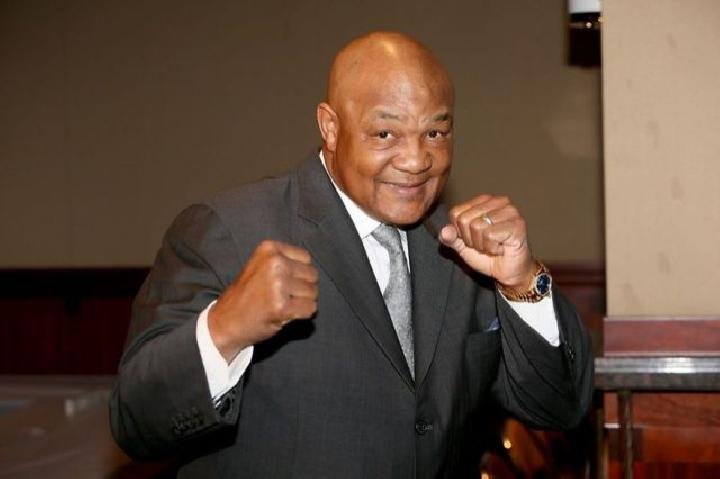
– Mantan petinju kelas berat yang pernah menjadi juara dunia, George Edward Foreman atau
George Foreman
Diberitakan telah meninggalnya orang tersebut di Houston, Texas, AS pada hari Jumat, 21 Maret 2025 sesuai dengan waktu lokal. Berita duka itu disampaikan oleh keluarga melalui unggahan di Instagram pada akun resmi si juara tinju terkenal @biggeorgeforeman.
Hatinya patah,” demikian tertulis dalam postingan itu, memperlihatkan Foreman di tengah-tengah beberapa generasi keluarganya. “Dengan perasaan sangat sedih, kami menyampaikan kabar meninggalnya orang yang begitu kita cintai, George Edward Foreman Sr., yang kembali dengan tenang pada tanggal 21 Maret 2025, sambil dililit kasih sayang dari mereka yang ada di sisinya.
Sebelum dikenal sebagai juara dunia tinju, George Foreman pada awalnya adalah seorang remaja bermasalah yang sempat keluar dari bangku sekolah. Tetapi hidupnya berbalik haluan saat dia ikut dalam program President Lyndon Johnson’s Jobs Corps. Di sana, sang calon legenda tersebut mengekspresikan potensi tersembunyinya dalam cabang olahraga tinju.
Big George, sebutan yang kemudian dipakainya oleh para pecinta tinju di seluruh penjuru dunia, memperoleh ketenaran pertamanya pada Olimpiade di Kota Meksiko tahun 1968. Nama belaka belum memiliki makna dalam kancah olahraga ini. Kehebatan pukulannya serta cara bertandingnya yang menguasai lawan membawanya menuju gelar juara emas kelas berat dengan kejutan besar, sehingga nama Foreman pun mulai mendapat tempat.
Tanpa goyah oleh popularitas yang meroket di negerinya sendiri, sang petinju muda yang lahir pada tanggal 10 Januari 1949 di Marshall, Texas, melanjutkan karier profesionalnya dan memasuki jalur perburuan gelar juara dunia kelas berat. Pada titik tertinggi karirnya, tepatnya pada 22 Januari 1973 ketika masih berusia 24 tahun, dia sukses mengalahkan Joe Frazier sehingga resmi menjadi pemegang gelar juara dunia tanpa saingan dalam kategori tersebut.
Pertarungan spektakuler “The Rumble in the Jungle” yang diiklankan dengan gencar melawan saingannya sekaligus mantan juara Olimpiade dan ikon tinju, Muhammad Ali, semakin memperkenalkan dirinya kepada publik. Namun, kegagalannya pada pertarungan tersebut memberi dampak besar pada karir juara kelas berat-nya. Meskipun dia terus mencoba mengembalikan posisinya di puncak, dia akhirnya dikalahkan lagi oleh Ali dalam pertempuran ulangan ini.
Kedua kekalahan tersebut menghadirkan pemikiran ulang terhadap arah hidupnya dan akhirnya ia memilih untuk pensiun dari dunia tinju selama sepuluh tahun. Namun, Foreman membuktikan ketidaktersediaan dirinya kepada publik dengan comeback-nya saat berusia 38 tahun. Tanpa perlu banyak waktu, Big George langsung menyatakan dominasinya lagi di dalam ring.
Perlahan-lahan dia menuju ke arah gelar kelas berat sekali lagi, mencapainya dengan menghadapi Evander Holyfield pada tanggal 19 April 1991. Keterampilannya yang mampu bertahan dalam laga di usia 42 tahun telah menjadi prestasi tersendiri baginya, bahkan jika menurut penilaian awal ia diperkirakan akan kalah. Meski demikian, pencapaian tersebut belum bisa menyamai kesuksesan besar ketika dia bersaing melawan Michael Moorer.
Setelah memenangkan kembali gelar juara dunia kelas berat tanpa cela untuk kali kedua dalam hidupnya, Foreman membuktikan bahwa dia adalah salah satu dari para petinju paling hebat di segala zaman. Dia tetap aktif di ring tinju hingga beberapa tahun kemudian sampai akhirnya gantung sarung pada umur 48 tahun di tahun 1997, dengan mencatatkan total 76 kemenangan (di antaranya 68 melalui knockout) serta cuma lima kekalahannya saja sepanjang perjalanannya sebagai pejuang profesi.
Setelah pensiun, orang yang dijuluki Big George kemudian bertransformasi menjadi seorang wirausahawan yang berhasil. Dia pernah membuat pakaian casual bagi pria dengan ukuran ekstra besar dan mengenakan merek Big and Tall. Tetapi bisnis yang tetap bertahan hingga akhirnya adalah grill panggang bernama “George Foreman Grill”. Selain itu, ia juga menjalankan sebuah perusahaan dagang daging.
Dalam kegiatan bisnisnya yang padat, Foreman, ayah dari 12 orang anak, juga aktif dalam pelayanan gerejanya. Dia mendirikan Pusat Pembinaan Remaja, bernama George Foreman Youth and Community Center, pada tahun 1984. Sejak awal tahun 1980-an dia pun telah membangun sebuah gereja di Houston, Texas. Tempat ini menjadi tempat baginya untuk memberikan khotbah secara teratur dengan frekuensi tiga kali seminggu: sabtu malam, minggu pagi, dan minggu petang.
“Usaha saya adalah untuk mengekspresikan isi Alkitab yang tidak mereka kenali,” demikian kutipan dari Foreman.
The Sun
Saya paham bahwa orang-orang mencari hal yang bisa menolong mereka bertahan sepanjang minggu.
Dia menyatakan bahwa dirinya tidak pernah kekurangan inspirasi dalam memberikan ceramah atau membahas beragam subjek, mulai dari kemacetan lalu lintas, obat-obatan, sampai status Pluto sebagai planet serta sifat rahmat dan kemurkaan Tuhan. Dalam kapasitasnya sebagai seorang Kristen, dia mengakui telah dilahirkan kembali usai pertandingannya yang kalah melawan petinju dunia Jimmy Young tahun 1977. Pada saat itu, dia bahkan sempat pingsan dan hampir meninggal. Kemudian, dia merasa “tangan raksasa” tersebut memulihkannya, sehingga kesadaran pulih di atas meja ruang ganti dengan para teman dan staf di sisinya.
Di kamar mandi gantunganku aku bolak-balik mencoba meredakan kecemasan. Kemudian, dalam sekejap, aku bertarung demi kelangsungan hidup,” katanya. “Dari momen tersebutlah aku menyadari bahwa Yesus tinggal di dalamku.
Kisah perjuangan
George Foreman
Yang luar biasa di dunia tinju pun menjadi inspirasi untuk pembuatan film biografinya berjudul “Big George Foreman: Kisah Ajaib Sang Juara Berat Dunia”, yang diluncurkan pada tanggal 28 April 2023.