
oleh admin | Mar 28, 2025 | economics, government, international trade, politics, politics and government
MANILA, Philippines – Trade Secretary Ma. Cristina Roque plans to meet with her American peer to address the possible negative effects on the economy due to President Trump’s suggested reciprocal tariffs, which have unsettled financial markets and heightened anxiety among traders and investors.
“I have scheduled a meeting with my peer. Therefore, I am merely awaiting the details of the appointment,” Roque stated to journalists during his break at the Asia CEO Forum on Thursday when questioned regarding the matter.
Roque mentioned that things will continue “as normal” for the moment, dismissing worries regarding the impact of the tariffs set to begin next week.
READ:
Surge of Trump tariffs expected to impact family finances
“So, let’s keep doing what we’re doing, focus on the bright side, and continue to develop and truly elevate ourselves. We should also seek out opportunities to genuinely become experts in our field,” Roque stated.
Trump just announced a 25-percent tariff on imported vehicles and automotive parts, effective April 3.
The automotive sector in the United States has raised worries that such actions could result in increased vehicle costs along with decreased availability, causing shares of leading companies like General Motors and Ford to decline after the news was released.
Trump defended the tariffs as a step to safeguard American manufacturing positions and suggested the possibility of imposing additional duties on various sectors.
In the case of the Philippines, these duties might bring about considerable economic impacts.
As the United States is a key market for Philippine exports, notably in the automotive industry.
In 2024, the Philippines shipped around $1.89 billion worth of machinery and electric goods to the United States, as stated in a CPBRD document. The CPBRD serves as the research wing of the House of Representatives.
The Philippines is cautious about the new U.S. tariff policy since the country exports significantly more than it imports from the United States, leading to a trade surplus of $4.9 billion in 2024, which marks a 21.8 percent rise compared to the prior year.
This excess might attract unwelcome notice from the Trump administration, viewing trade surpluses as evidence of imbalanced trading tactics.

oleh admin | Mar 28, 2025 | economics, exports, finance news, international trade, philippines economy
MANILA — The trade gap in the Philippines narrowed to its smallest size in almost four years during February, driven by continued growth in exports albeit at a reduced rate along with a decline in imports, according to initial government statistics released on Friday.
According to the Philippine Statistics Authority, the trade shortfall decreased to $3.15 billion in February, marking the lowest level since June 2021. The deficit for January underwent a slight revision upwards to $5.12 billion from an initially stated figure of $5.08 billion.
In February, exports climbed by 3.9%, amounting to $6.2 billion, which was a deceleration from January’s increase of 6.3%. On the other hand, imports dropped by 1.8% year-over-year to reach $9.4 billion, contrasting with the prior month’s expansion of 11.2%.
The economy grew at an annual rate of 5.2% during the last quarter of 2024, maintaining the same speed as in the prior period yet falling short of what analysts had anticipated. The administration plans to publish the first-quarter growth data on May 8.
— Reported by Karen Lema; Edited by John Mair

oleh admin | Mar 28, 2025 | business, customs, economics, international economics, international trade
New Delhi [India], March 28 (ANI):
Finance Minister
Nirmala Sitharaman
On Thursday, they stated that the continuous process of streamlining
customs duties
And removing the 6 percent equalization levy, which started in 2023, is unrelated to any worldwide occurrences and will proceed as planned.
Sitharaman stated that reducing custom duties is a component of India’s larger aim to reinforce its position as a leading manufacturing center and enhance capabilities in batteries and advanced chemical processes.
In response to a discussion about the Finance Bill 2025 in the Rajya Sabha, Sitharaman stated, “Budget by budget, we continue to decrease tariffs with the aim of supporting India’s ambition to become a leading manufacturing center. This also aids in developing capabilities for battery production and advanced chemical processes. It is part of our ongoing efforts.”
“I’ve noticed several members mention, ‘Oh, the
tariff
conflict has begun, thus as a reaction to the
tariff
Announcements made by President Trump, this initiative has been underway since 2023. We’ve continued to make steady progress each year. New products are continually introduced with consideration for both Atmanirbhar Bharat and the needs of Viksit Bharat, along with streamlining custom duties and easing compliance procedures,” stated Sitharaman.
“Therefore, this is a continuous process. It is not related to the current worldwide circumstances but is something that will persist into the future,” she noted.
India lowered customs tariffs on numerous goods and abolished them.
equalisation levy
of 6 per cent
From the Oval Office, the president made a substantial policy announcement
Donald Trump
has announced a 25 percent
tariff
On every vehicle brought into the U.S., a step he referred to as “highly thrilling” for local production.
The
tariff
Starting on April 2, this regulation will affect almost fifty percent of all vehicles sold in the United States, encompassing even those from domestic brands manufactured abroad. This comprehensive policy seeks to encourage automotive companies to build additional manufacturing plants inside U.S. territory.
Industry insiders caution that the
tariff
This outcome might have extensive repercussions. Autos Drive America, an advocacy body for global automobile producers active in the U.S., voiced significant reservations regarding the possible aftermath.
“The
tariff
As a result, this could increase the cost of manufacturing cars,” the statement read, “which might lead to higher prices for customers, decreased variety in options available, and possible upheavals in employment sectors.
The statement has the potential to heighten trade disputes with major car-producing countries such as those in Europe, Japan, and South Korea. These nations ship significant volumes of automobiles to the U.S. market and could perceive this move unfavorably.
tariff
As a direct challenge to their car manufacturing sectors.
Economists predict the
tariff
This could raise vehicle costs by thousands of dollars, putting additional pressure on consumers who are already struggling with ongoing inflation. Such action would mark a significant intrusion into the auto industry, possibly altering worldwide car production tactics.
President Trump stayed optimistic regarding the policy, saying, “Anyone with operations in the United States will benefit from this.”
As the automotive sector and international markets adjust to this major policy shift, other companies, particularly those based in India, are preparing for even larger transformations.
Earlier, US President
Donald Trump
targeted India’s auto import
tariff
As stated during his address to Congress, he said, “We face auto tariffs imposed by India.”
tariff
“exceeding 100%,” he declared, adding that a retaliatory tariff would be implemented on April 2. He stated that the US has suffered unfair treatment at the hands of almost every nation globally for many years and pledged not to allow this to continue. (ANI)
Provided by Syndigate Media Inc. (
Syndigate.info
).
oleh admin | Mar 27, 2025 | automotive industry, cars, commerce, international economics, international trade

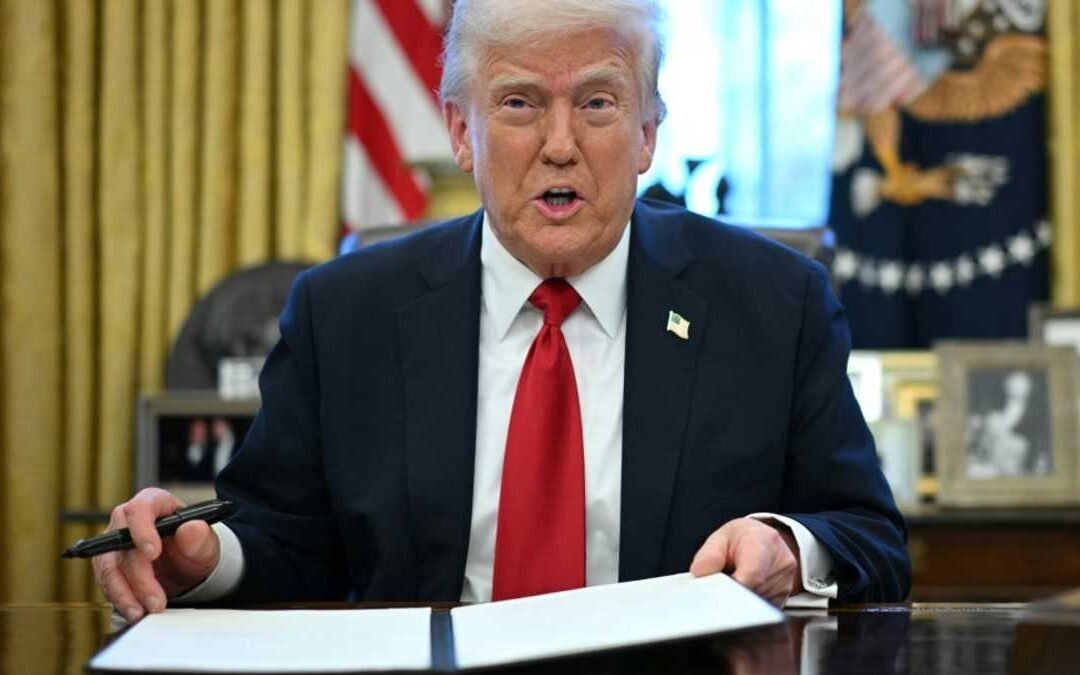
On Thursday, major global powers condemned U.S. President Donald Trump’s significant tariffs imposed on imported cars and auto components, threatening countermeasures as trade disputes escalate and potential price increases loom ahead.
Germany, a major car exporter, called for strong action from the European Union, whereas Japan stated it will “examine every possible option.”
On Thursday, Canadian Prime Minister Mark Carney stated that the traditional partnership characterized by strong economic, defense, and military connections with Washington has ended. He also mentioned anticipating conversations with Trump within the coming days.
The 25 percent tariffs imposed by the U.S., set to begin on April 3 at 12:01 am (0401 GMT), will affect imported automobiles, light trucks, and car components.
Specialists caution about increased expenses for vehicles, with the Italian automotive company Ferrari announcing price hikes of up to 10 percent on numerous models sold in the U.S., effective next week.
The global stock market experienced a significant downturn, with major car manufacturers such as Toyota, Hyundai, and Mercedes leading the decline. On Wall Street, General Motors’ stocks dropped sharply, followed by declines in both Ford and Stellantis shares.
The French Finance Minister Eric Lombard stated that the sole solution for the European Union is to “impose higher duties on goods coming from America as a countermeasure.”
Carney, who previously described the tariffs as a “direct assault” on his nation, stated that he organized a gathering to explore various trade possibilities. Meanwhile, Mexico’s Economy Minister Marcelo Ebrard mentioned that he aimed to secure “special consideration” for his country.
Trump intensified his warnings overnight, stating on social media that Canada and the EU might encounter “much higher” tariffs if they collaborated “to inflict economic damage upon the USA.”
Price surge
According to JPMorgan analysts, the tariffs imposed on vehicles and components might lead to an uptick in average car prices ranging from $4,000 to $5,300.
Approximately 82 percent of Ford’s U.S. sales come from vehicles made domestically, compared to Stellantis with 71 percent and General Motors with 53 percent.

The American Automotive Policy Council, which represents the major three car manufacturers, cautioned that tariffs should be imposed in a manner that “does not increase costs for customers” and maintains the sector’s competitive edge.
Brian Kingston, the president of the Canadian Vehicle Manufacturers’ Association, stated that these measures would result in increased expenses for both manufacturers and consumers, along with “an industry that is less competitive.”
Although Trump utilized emergency economic measures for previous tariffs, his automobile duties expanded upon an investigation concluded in 2019.
‘Cheaters’
Approximately fifty percent of vehicles purchased in the United States are domestically produced. When it comes to imported cars, roughly half originate from Mexico and Canada, while Japan, South Korea, and Germany remain key exporters as well.
The White House suggests that for American-manufactured vehicles, the typical domestic content probably hovers around 40 percent.
On Wednesday, top trade advisor Peter Navarro criticized “foreign trade cheats,” accusing them of transforming America’s manufacturing industry into a “low-wage assembly line for imported components.”
He targeted Germany and Japan for keeping the production of more valuable components within their own borders.
After reassuming the presidency in January, Trump has levied tariffs on goods imported from key trade allies such as Canada, Mexico, and China, along with a 25 percent tax on steel and aluminum products.
The newest tariffs build upon those previously imposed on vehicles.
However, the White House also noted that cars coming into the United States as part of the US-Mexico-Canada Agreement (USMCA) could be eligible for a reduced tariff based on the percentage of American-made components they contain.
USMCA-compatible automotive components will stay exempt from tariffs as authorities set up a method to address their non-US origin materials.
The Mexican President, Claudia Sheinbaum, stated that imposing tariffs went against the North American trade agreement. However, she mentioned that Mexico would hold off on taking action until early April.
‘Devastating impact’

Ambiguity surrounding Trump’s trade strategies and concerns that these might prompt an economic decline have unsettled financial markets, coinciding with a drop in consumer confidence.
Trump has supported tariffs as a means to increase governmental income and rejuvenate American manufacturing.
Aiming at imported vehicles might put pressure on relationships with Washington’s partners, though.
“Wendy Cutler, who serves as the vice president at the Asia Society Policy Institute and previously worked as a US trade negotiator, stated that levying 25 percent duties on imported vehicles would severely affect numerous key trading allies of ours,” she explained.
In addition to cars, Trump is mulling over specific industry tariffs, which could include those on medicines, chips, and wood.
He has pledged a “Freedom Day” for April 2nd, during which he plans to introduce proportional tariffs aimed at various trade counterparts, designed to counteract what are considered unjust practices.
oleh admin | Mar 25, 2025 | business, commerce, government regulations, international economics, international trade
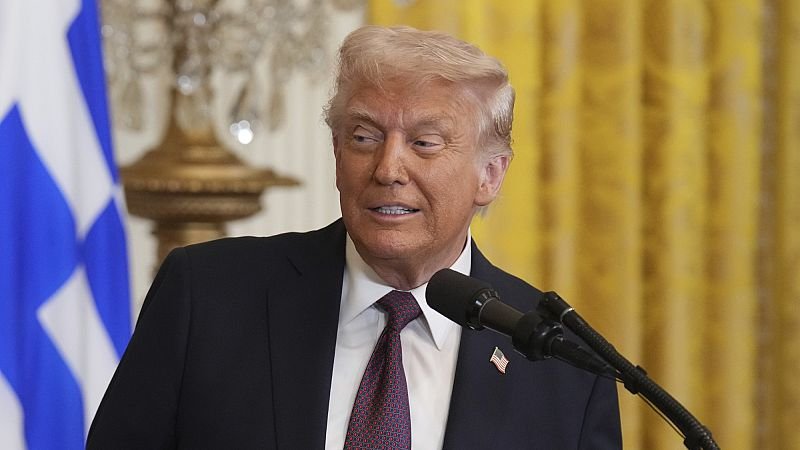
US President Donald Trump stated on Monday that he will be announcing auto tariffs within the next few days, possibly including exceptions for specific nations regarding mutual trade levies. Additionally, he suggested that tariff decisions on items such as vehicles, timber, semiconductor chips, and medicines will be made shortly.
Last month, Trump declared his intention to enforce 25% duties on imported automobiles, medications, and semiconductors starting from 2nd April. Additionally, he issued an executive directive to scrutinize trade dealings with plans for implementing extensive retaliatory tariffs anticipated to commence on the mentioned date. Following this announcement, he provided a temporary reprieve of thirty days regarding car taxes within the framework of the United States-Mexico-Canada Agreement (USMCA), effective since 3rd March.
His remarks intensified the bewilderment surrounding the continuously inconsistent tariff policies, prompting other countries to hasten discussions with the White House aiming for exceptions. “I might grant many countries some leeway,” stated Trump.
U.S. stock markets experience a strong recovery as Tesla jumps 13%.
Trump’s remarks on potential tariff exemptions came at a time when investors were seeking bargains in the US stock markets after a four-week selloff. Dip-buys in big tech stocks buoyed Wall Street, with the Nasdaq jumping more than 2% on Monday. All the Magnificent Seven stocks finished higher, with Tesla leading gains, surging 12%. However, the electric vehicle maker’s shares are still down 31% year-to-date, as CEO Elon Musk’s political intervention continues to spark backlash.
The US dollar experienced a recovery for the fourth successive trading session after the previous week’s Federal Open Market Committee (FOMC) gathering. Chairman of the Federal Reserve, Jerome Powell, minimized the effect of President Trump’s tariffs on the economy, stating that the upward push on inflation would likely be “temporary.” The anticipation of a less stringent approach from Trump regarding tariffs coupled with the Fed’s support has aided in boosting both US stock markets and the value of the dollar.
European shares and the euro decline
By contrast, the rally in the US stock markets may have caused profit-taking moments in European equities, with both the Euro Stoxx 600 index and the DAX declining for the third consecutive trading day. Notably, the record-setting rally in Germany’s stock markets lost steam after the European Union leaders failed to secure a €5 billion Ukraine funding package last week. Europe’s defence sector retreated sharply, leading to broad losses.
Furthermore, Trump’s tariff threats could result in countermeasures from the EU, scheduled to be implemented next month. On March 12th, the European Commission declared that they plan to impose tariffs on $30 billion worth of U.S. products starting in April. This escalation in the trade conflict might spark additional sell-offs within the local markets.
The euro continued to lose strength against the dollar for the fourth consecutive day, with the EUR/USD pairing dropping below 1.08 during Tuesday’s trading in Asia—the lowest level since early March. This downturn was fueled by differing trends in government bond yields between the U.S. and Europe. Specifically, the U.S. 10-year Treasury yield surged by 8 basis points amid enhanced optimism about economic expansion, whereas Germany’s equivalent yield increased just slightly by 1 basis point.
oleh admin | Mar 25, 2025 | economics, international economics, international trade, venezuela, world
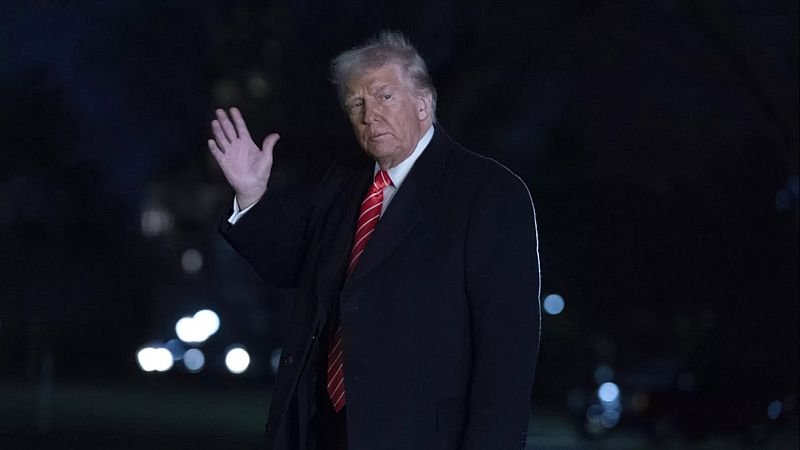
President Donald Trump stated on Monday that Venezuela has shown “extreme hostility” towards the United States, and as of April 2nd, nations buying oil from it will have to pay tariffs on all their imports into the U.S.
These duties would probably increase the taxation burden for China, which accounted for 68% of Venezuela’s oil exports in 2023, as per a 2024 report from the U.S. Energy Information Administration.
The report indicates that Spain, India, Russia, Singapore, and Vietnam are some of the nations also getting oil from Venezuela.
However, even the United States—despite imposing sanctions on Venezuela—continues to purchase oil from the nation. According to data from the Census Bureau, the U.S. imported approximately 8.6 million barrels of oil from Venezuela in January, which constituted part of the total imports for that month at around 202 million barrels.
On Monday, the Treasury Department granted an extension to US-based Chevron Corp., permitting them to extract and export Venezuelan oil until May 27. This extension, referred to as a general license, provides relief from economic sanctions and enables the continuation of their oil production activities.
In February, Trump declared an end to the business ties between Chevron and Venezuela, which had served as a crucial financial support for the South American nation.
The Venezuelan President, Nicolás Maduro, retaliated by stating that the U.S. had breached global commerce regulations through what he termed as an “unjustified, unlawful, and desperate action.” This move was aimed at impeding the progress of the South American country.
The government stated that for many years, the rejected far-right faction in Venezuela has advocated for economic sanctions, aiming to cripple the country.
Their failure stems from Venezuela being a sovereign nation where its people have stood firm with pride, and due to the global refusal of any economic tyranny.
The US president contends that tariffs will revive manufacturing jobs instead of exacerbating inflationary pressures and impeding economic growth, contrary to warnings from economists. He recently cited an informal example when Hyundai declared at the White House plans to construct a $5.8 billion (€5.4 billion) steel facility in Louisiana.
This investment clearly shows that tariffs are highly effective,” stated Trump, adding that the new facility being built by the South Korean carmaker will generate 1,400 employment opportunities.
The executive chairman of Hyundai Motor Group, Euisun Chung, conveyed to the president: “We feel truly honored to be alongside you and delighted to construct the future together.”
In 2024, Maduro was inaugurated for a third presidential term in Venezuela; however, both the country’s opposition groups and the European Union dismissed this swearing-in ceremony as invalid due to claims of rigged voting processes.
The former US President Joe Biden’s administration similarly condemned the “fraudulent” election and enacted fresh sanctions on Caracas. Notably, they raised the bounty to $25 million (€23.9m) for details resulting in the apprehension of the Venezuelan leader.
During Maduro’s long tenure as ruler, millions of Venezuelans have fled their homeland due to political instability, economic downturn, and severe shortages of essential supplies like food, medication, and power.
A more daring action against China?
Trump’s recent tariff threats indicate that his administration might be prepared to adopt more aggressive actions against China as part of their push to reshape the rules governing the worldwide economic system.
The Trump administration has already imposed blanket 20% tariffs on goods coming from China in an attempt to combat illegal fentanyl trafficking. However, adding yet another 25% duty on these imports might heighten the strain between the globe’s two biggest economic powers.
Trump said Venezuela will face a “secondary” tariff because it is the home to the gang Tren de Aragua. The Trump administration is deporting immigrants that it claims are members of that gang who illegally crossed into the United States.
Trump has labelled 2 April as “Liberation Day” based on his still unclear plans to roll out import taxes to match the rates charged by other countries, as well as fully levy 25% tariffs against Mexico and Canada, the two largest US trading partners.
The US President has furthermore raised the 2018 duties on steel and aluminum to 25% for every imported product and has pledged to impose extra taxes on vehicles, medical products, timber, semiconductor chips, and copper.
On Monday, the US stock market was rising as investors anticipated that the tariffs would be more precisely aimed rather than being widespread. Nevertheless, the S&P 500 index has declined year-to-date due to worries that a trade conflict might impede economic expansion and boost inflationary pressures.
However, Trump has been rather carefully guarding his intentions regarding tariffs, stating on Monday that although he aims to impose “reciprocal” charges, they “might end up being even more lenient than expected.”


