oleh admin | Mar 31, 2025 | hotels, islam, saudi arabia, tourists, Travel
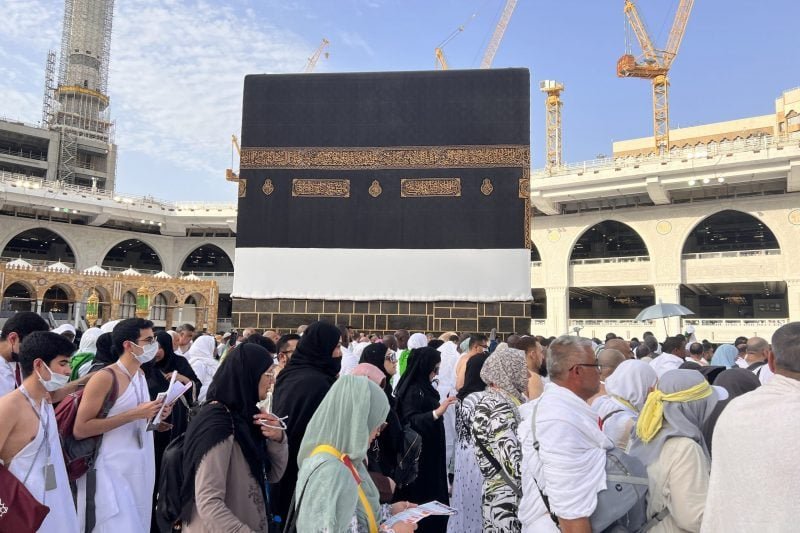
The Saudi Arabian Ministry of Hajj and Umrah reported that 18.5 million individuals completed the pilgrimages of Hajj and Umrah in 2024. This achievement was facilitated by enhancements such as expanding lodging options, modernizing airports, refining transport systems, and implementing tech-driven services.
The efficient management of these pilgrim periods, commended by global organizations like the World Health Organization (WHO), underscores the robust functioning of the tourism industry.
The Ministry of Tourism reports that the hotel sector in Mecca expanded by 80% in 2024, with over 1,000 authorized hotels and apartment complexes. By year-end 2024, Mecca had surpassed 1,150 hotels and provided 260,000 rooms, whereas Medina ended up with 347 hotels along with 1,500 furnished apartments.
This expansion coincides with Saudi Arabia’s Vision 2030, aiming to elevate the pilgrimage experience. Initiated in 2016, the “Doyof Al Rahman” initiative focuses on upgrading facilities and enhancing services for those undertaking Hajj and Umrah.
The post
Saudi Arabia hosts 18.5 million pilgrims in 2024 as part of an expanding hospitality sector.
appeared first on
SANGGRALOKAEnglish – Morocco News
.
oleh admin | Mar 30, 2025 | celebrations, culture, events and festivals, islam, jewish holidays
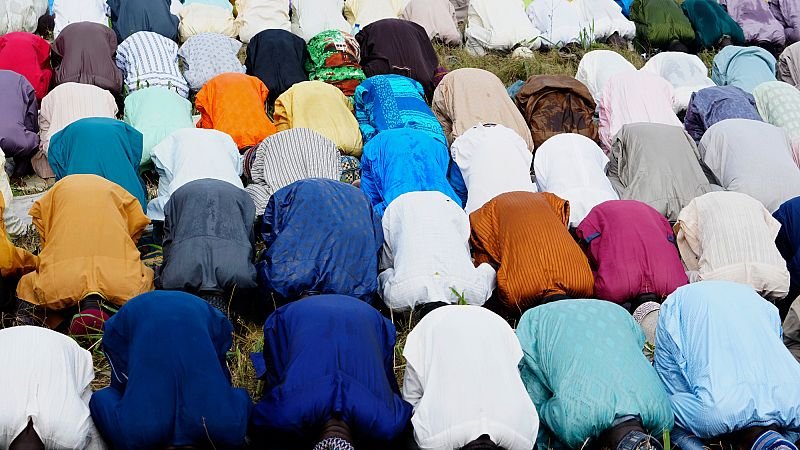
People across the globe said goodbye to the sacred month of Ramadan and marked the celebration of Eid al-Fitr on Sunday.
Each year, Eid arrives with joy and enthusiasm as Muslims celebrate through communal prayers followed by various activities such as visiting family members, attending gatherings, and wearing new outfits.
![]()
On Sunday, thousands of Palestinians convened at the al-Aqsa Mosque complex within the Old City of Jerusalem for Eid al-Fitr prayers.
In Serbia, the Islamic community conducted its main Eid celebration at the Arab Mosque in Novi Pazar, including collective prayer sessions to mark the event.
In Lisbon, the capital of Portugal, Muslims came together for prayers in open-air areas. Families dressed up in their new outfits and paid visits to relatives, merging customs with contemporary celebrations.
At the same time, in Islam’s most sacred city of Mecca, countless pilgrims and residents gathered for collective prayers at the Grand Mosque, highlighting the deeply religious essence of the festivities.
In other parts of the Middle East, Syrians mark their first Eid al-Fitr celebration since ending over five decades under the rule of the Assad dynasty.
Similar to Ramadan and other Islamic traditions, the scheduling of Muslim months and celebrations typically relies on the lunar calendar, particularly the appearance of the Crescent Moon after the New Moon phase.
Across numerous regions globally, specialized groups of observers meticulously examine the heavens using telescopes and binoculars, striving to get a sight of the faint crescent moon.
The celebration of Eid al-Fitr has been marred by conflict.
For many Muslims, this year’s Eid did not bring joy due to their communities being devastated by conflict.
The residents of the Gaza Strip are marking their second Eid al-Fitr celebration since the onset of the conflict between Israel and Hamas.
On Sunday, they found little reason to rejoice, observing the usual joyous occasion amid increasingly scarce food reserves and with no resolution to the ongoing strife in view.
Overnight attacks carried out by Israel on Sunday resulted in the deaths of at least 19 individuals, primarily women and children, as reported by officials from the health ministry controlled by Hamas in Gaza.
This month, Israel abruptly ended its truce with Hamas, leading to numerous airstrikes that resulted in hundreds of casualties within the Gaza Strip. Concurrently, deliveries of essential items such as food, fuel, and medical supplies have ceased.
It is an Eid filled with sorrow,” remarked Adel al-Shaer following his participation in open-air prayers at the town of Deir al-Balah. “Our dear ones, our offspring, our very existence, and hopes for tomorrow have been taken from us. Our students, educational facilities, and establishments—all these we’ve lost.
oleh admin | Mar 30, 2025 | civil rights, human rights, immigrants, islam, politics
As Nigerian Muslims celebrate the conclusion of the 2025 Ramadan with millions around the globe, the Islamic human rights group MURIC (Muslim Rights Concern) has called for an end to the persecution faced by Nigerian Muslims.
The organization asserts that Nigerian Muslims continue to live under occupation until they receive all their civic rights, which should encompass, among other things, declaring the first day of the Islamic calendar (1st Muharram) a national holiday similar to how 1st January is observed annually.
The statement was made in an Eid al-Fitr message issued on Sunday, March 30, 2025, by the organization’s Executive Director, Professor Ishaq Akintola.
The statement reads:
As Nigerian Muslims celebrate alongside millions across the globe marking the conclusion of the 2025 Ramadan season, our warmest wishes go to President Bola Ahmed Tinubu, Vice President Kashim Shettima, and the Sultan of Sokoto, who also serves as the President General of the Nigerian Supreme Council for Islamic Affairs (NSCIA), Alhaji Muhammad Sa’ad Abubakar.
As Ramadan is thought to begin with forgiveness, flourish in the middle with blessings, and conclude with liberation, we urge an end to all forms of oppression against Nigerian Muslims.
We argue that Nigerian Muslims have faced continuous subjugation from the time of the British invasion of the Sokoto Caliphate through Sultan Attahiru’s final battle in 1903. Based on current circumstances, this domination may persist unless these individuals receive full civil rights, which should encompass, among other measures, recognizing the first day of the Islamic calendar (1st Muharram) as an official public holiday akin to how 1st January is observed annually.
We would like to highlight to the Federal Government that its role has significantly contributed to the ongoing oppression of Muslims in this nation due to its neglect in designating the first day of the Islamic calendar (1st Muharram) as an official public holiday, similar to how 1st January is observed annually.
We insist on equality. The Hijrah holiday is an integral part of our God-given basic human rights. It’s disappointing that only some states have recognized the Hijrah holiday, while the federal government remains indecisive. How can the federal government grant a national holiday for Christians on January 1st but fail to do so for the Islamic holiday of 1st Muharram in most regions? Shouldn’t fairness apply universally? Is Nigeria solely considered a Christian nation?
Nigerian Muslims feel they are being regarded as a subjugated populace. It seems reminiscent of events from 1903, which serve as a stark reminder of past conquests. They perceive themselves as being treated as inferior citizens.
We call for equality and fairness. January 1 holds the same significance as the first day of Muharram when promoting interfaith harmony. Now is the perfect moment to address this issue. Given that over eight states have acknowledged the importance of the first day of Muharram and designated it as a public holiday, this strengthens our argument even at the federal level. Consequently, there’s no logical reason for a Muslim-Muslim ticket to hold back from freeing Nigerian Muslims who have endured prolonged religious discrimination.
FG might grasp MURIC’s perspective once it recognizes the prolonged nature of the challenge they face. In earlier times within this nation, Muslims were unable to attend ‘Id (Salah) prayers since the colonial administration didn’t recognize it as a holiday. As a result, Muslims had no choice but to go to work or school instead of observing their holy day.
There was a period when Maulud Nabi (Prophet Muhammad’s birth anniversary) was not acknowledged, while the celebration of Jesus’ (Peace Be Upon Him) birthday had been recognized since the 1914 consolidation. Is this fair?
We have consistently had to fight for liberty step by step. We fought individually first for Id al-Kabir, then for Id al-Fitr, and subsequently for Maulid! Even now, we continue to struggle for 1st Muharram. When will freedom come? When?
Even though the British Christian colonial authorities who stripped the ‘subjugated’ Muslim population of all their civic freedoms departed in 1960 and 1963, subsequent Nigerian administrations have not managed to liberate the Muslims.
“We have reached our limit. We refuse to live under subjugation. The present government needs to grant freedom to the Muslim community. We insist that the upcoming 1st Muharram, 1447—corresponding to Friday, June 27, 2025—be declared a nationwide public holiday.”
Provided by SyndiGate Media Inc.
Syndigate.info
).

oleh admin | Mar 25, 2025 | humanitarianism, islam, leadership, news, politics
KUALA LUMPUR – The Muslim community is experiencing growing divisions, which is particularly noticeable in Malaysia.
Amidst escalating political battles and self-serving agendas, Datuk Hussamuddin Yaacub, the founder of Warisan Ummah Ikhlas Foundation (WUIF), has urged leaders to set aside their pride and focus on fostering unity instead.
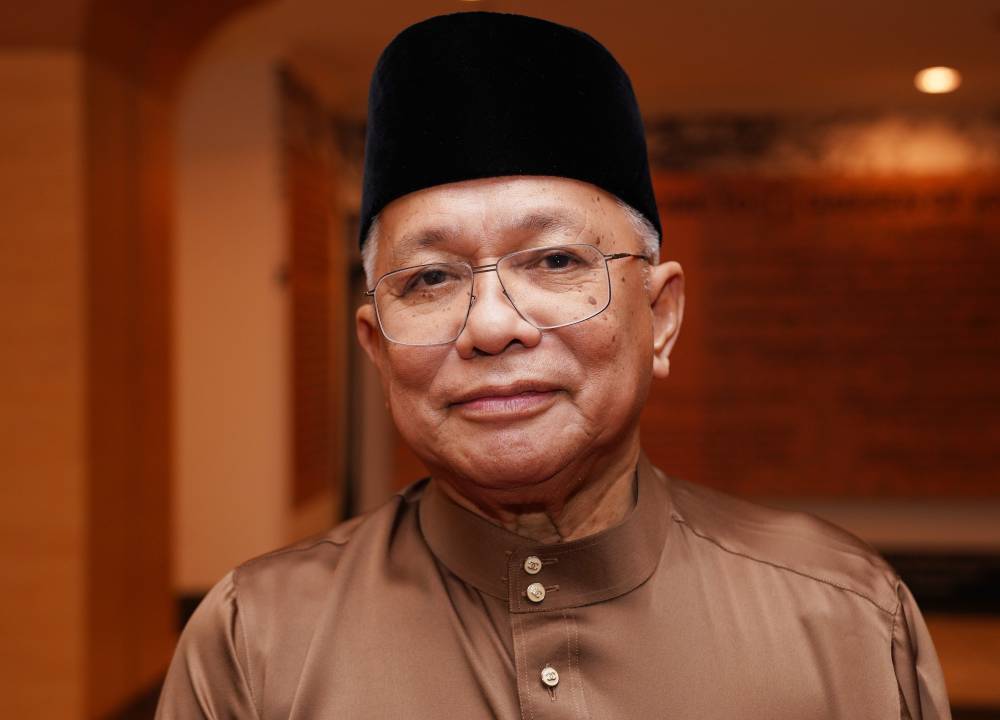
Addressing the 10th anniversary of the World #QuranHour 2025 event today, he encouraged leaders to contemplate the messages from the Quran and collaborate for the collective well-being.
Alhamdulillah, today signifies ten years since the inception of World #QuranHour. Our aim is to elevate this endeavor, extending its influence onto a global stage.
“While engagement has expanded beyond Malaysia’s borders, it continues to predominantly be a national movement. It would be ideal if this idea achieves wider international acknowledgment,” he stated when approached following the event, today.
Even with its achievements, only a few nations like Indonesia, Brunei, Singapore, and India have embraced this initiative.
Hussamuddin emphasized that the main objective was to bring together all segments of the Muslim world.
“We observe fellow Muslims involved in disputes, hurling insults at each other and circulating malicious gossip. By reciting and contemplating (tadabbur) Surah As-Saff, we are prompted to remember the critical importance of scholars and the broader Muslim community joining forces in harmony,” he further stated.
He appealed to Malay Islamic leaders in Malaysia to set aside their individual aspirations and political differences, encouraging them to focus instead on the collective well-being of the ummah.
He mentioned it was crucial to discover a method for cooperation, to step back from conflicts of power, and to gather around the same table for substantial conversations.
More than just arranging an yearly gathering, World #QuranHour is a movement crafted to ignite a greater understanding and appreciation of the Quran amongst Muslims globally.
The movement’s ultimate aim is to engage two billion Muslims, thereby laying the groundwork for the resurgence and empowerment of Islamic countries.
The event hosted at the Sultan Haji Ahmad Shah Mosque located within the International Islamic University Malaysia (IIUM) campus in Gombak today, witnessed the attendance of Tengku Ampuan Pahang Tunku Azizah Aminah Maimunah Iskandariah Almarhum Sultan Iskandar.
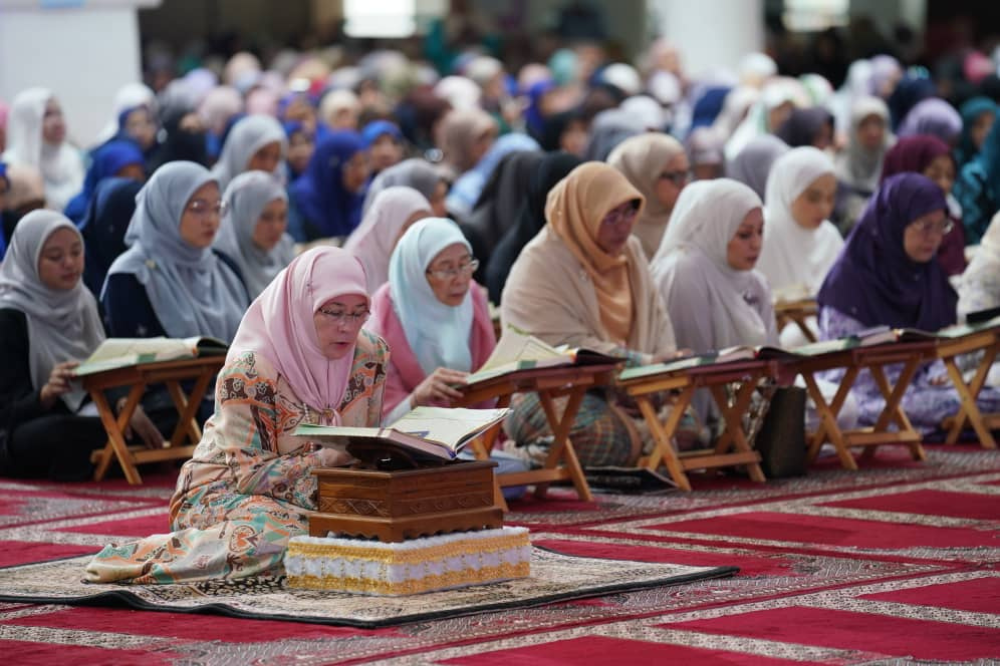
At 11:55 am, Her Majesty reached the mosque premises alongside Bandar Tun Razak MP and the Prime Minister’s spouse, Datuk Seri Dr Wan Azizah Wan Ismail. Other notable figures joining them included the Minister in the Prime Minister’s Department for Religious Affairs, Datuk Dr Mohd Na’im Mokhtar, among others of similar stature.
Hussamuddin mentioned that the organization has managed to maintain this effort for ten years despite being a modest NGO, yet he emphasized that for the movement to really thrive, it needed backing from the government.
He mentioned that if the authorities got involved, the initiative could expand even more.
He pointed out that by working together with the IIUM, which boasts more than 100 alumni chapters across the globe, along with utilizing governmental connections via institutions such as Wisma Putra, the Ministry of Education, the Ministry of Higher Education, and the Ministry of Religious Affairs, this initiative could genuinely make a worldwide difference.
He mentioned that Malaysia could potentially be acknowledged as the originator of this movement.
He similarly called upon the Prime Minister and pertinent ministries to earnestly back this initiative.
We encourage them to examine the program, grasp its intent, and acknowledge our progress up to this point.
“If the administration supplies the crucial ‘thrust’ for this campaign and IIUM serves as the launching pad, we can elevate this effort to extraordinary heights,” he stated.
After dedicating many years to this initiative, Hussamuddin realized that his tenure as leader could be coming to an end soon. That’s why he wished for genuine governmental backing of the movement.
“The backing we get at present is minimal, even though this is an international effort brimming with vast potential. The moment has come to bring World Quran Hour onto the world platform,” he further stated.
This year, World #QuranHour 2025 was themed around ‘Preserving the Ummah,’ highlighting the significance of solidarity in maintaining the faith of Allah SWT.
The 10th iteration of the World #QuranHour 2025 event gathered numerous attendees via their presence at the primary location, live TV transmissions, and online streaming.
Moreover, this year’s event saw registrations from 1,370 sites within the nation and 25 additional sites located in 19 different foreign countries.
oleh admin | Mar 24, 2025 | isis, islam, islamic state of iraq and syria, military, politics
The Islamic State in Somalia is part of the global extremist organization known as ISIS, which operates internationally.
Located in the semiautonomous region of Puntland within northern Somalia, this terrorist organization became the focus of the inaugural international military action undertaken by the Trump administration in February 2017.
Earlier, the organization had connections to intended terrorist acts against the Vatican and the Israeli embassy in Stockholm.
Stig Jarle Hansen, who has written multiple books on African extremism, explores its roots, growth, and most recent military setbacks in the Puntland mountain region.
Read: Puntland offensive delivers setback to Islamic State in Somalia. Prior to the emergence of the Islamic State in Somalia in 2015, the Somali extremist organization Al-Shabaab was dominant in the northern region.
The limited team maintained far-reaching ties to smuggling rings.
Later, it divided into two factions, with Sheikh Abdulqader Muumin, who would go on to lead the Islamic State in Somalia, arising from one of these offshoots.
In Somalia, clans dictate the relationships among individuals and various entities within the society. The affiliations of this new group with the Ali Suleiman sub-clan allowed it to benefit from the clan’s ties to illicit trafficking networks and pirate organizations operating at sea.
Puntland serves as the central point for communication and maritime commerce connecting Somalia with Yemen and the broader Middle East. Illicit activities have been prevalent in this area for many years. Its rough landscape provides an advantageous setting for acts of piracy, unauthorized smuggling, and insurgent operations.
For over thirty years, Puntland has maintained a largely independent status within Somalia, with minimal interference from the central Somali government in recent times. As for the leader of Al-Shabaab’s affiliate in Somalia, Muumin resided in Sweden during the 1990s and early 2000s before relocating to the United Kingdom.
In Somalia, he became affiliated with Al-Shabaab and emerged as a notable presence in the organization’s radical video content. These videos serve to uphold certain values, draw in fresh members, and generate support for the group.
In 2015, Muumin deserted to head the Islamic State in Somalia. His deputy was an additional member from the Ali Suleiman clan named Mahad Moalim. The following year, in 2016, the group’s initial video began circulating via Islamic State propaganda channels.
A significant event occurred after the group’s suicide attack at the Juba Hotel in Bosaso, which serves as Puntland’s main commercial hub and port, in 2017.
This allowed the Islamic State in Somalia to coerce businesses based in Bossasso into paying them protection fees, which became their primary source of revenue. It is estimated that between 2017 and 2018, the organization was likely responsible for up to 50 targeted killings in central Somalia.
Murders served as a coercive means to extort protection money.
Read: Al-Shabaab Turns 18: Why Has It Refused to Disband?
On July 27, 2018, the Somali group became an official provincial branch of the Islamic State, commonly referred to as ISIS. This designation occurred when the Maktab al-Karrar regional office, located within the smaller Puntland chapter, assumed international duties.
The Somali faction was assigned responsibility for the Central African and Mozambique regions under the Islamic State’s purview. Funds were transferred to this group by the Islamic State, along with proceeds from extortions in Bossaso and various other towns across northern Puntland; however, such inflows from Mogadishu occurred less frequently.
During the initial six months of 2022, the US Treasury asserted that the organization garnered $2.3 million through ransom demands, associated imports, farming, and animal husbandry activities.
The regional office along with Muumin became prominent financial entities across East Africa and beyond, operating primarily from Buur Dexhtaal in Bari Puntland. In fact, according to claims by unidentified U.S. officials in 2023, Muumim was appointed as the international head of the Islamic State.3 Overstating Influence: The influence of the Islamic State within Somalia tends to be exaggerated. They have not managed to seize or maintain extensive regions. By 2024, estimates suggested their membership ranged between 600 and 1,600 individuals. This figure is significantly smaller when compared to Al-Shabaab’s presence in southern Somalia.
The connections to an alleged assault on the Israeli embassy in Stockholm scheduled for 2024 were likely tenuous and did not withstand scrutiny in legal proceedings. Additionally, the individual associated with plans for an attack in the Vatican during 2018 appears to have departed from the Islamic State before the plot was developed.
It is equally uncertain that Muumin leads the global Islamic State, as asserted by certain individuals. This skepticism stems primarily from two factors. Firstly, a leader of the Islamic State must come from a clan associated with the Prophet (the Quraysh tribe).
Muumin does not qualify. Additionally, the Islamic State in Somalia is the least extensive among the Islamic State’s African provinces. It is probable that a leader from a more powerful region would be positioned higher.
Despite the revenue-generation capabilities of the group based in Puntland enhancing its profile in Islamic State propaganda, the Islamic State in Somalia doesn’t outrank the Islamic State in the Sahara or Mozambique.
For Somali media outlets, fear often masquerades as legislation. Despite setbacks, they remain resilient. In January 2025, the Puntland administration spearheaded an effective counter-assault against the Islamic State, supported by aerial assistance from both the U.S. and the United Arab Emirates.
In January and February, Puntland emerged victorious in significant skirmishes, one of which resulted in the death of 70 Islamic State militants.
By the end of February, the spirits of the Islamic State combatants appeared to wane. When their primary stronghold at Buur Dexhtaal was seized in March, most of the significant recognized outposts had been overrun. Numerous escaping foreign fighters ended up being apprehended.
However, the Islamic State has not been vanquished. The landscape allowed certain combatants to remain concealed. Both Muumin, who is in his 70s, and his deputy, Abdirahman Fahiye, have reportedly survived unharmed. At minimum, a few hundred fighters still remain active.
Should the Islamic State continue to extract funds from the business sector in the north, it might enlist members among the substantial population of Oromo Ethiopian refugees residing in and around Bosasso, along with local individuals seeking employment.
Written by Stig Jarle Hansen – Professor of International Relations at the Norwegian University of Life Sciences Supplied by SyndiGate Media Inc.
Syndigate.info
).
oleh admin | Mar 24, 2025 | africa, culture, history, islam, music
Mr. Dar used the initial three letters from “Tanganyika,” which are TAN, and those from “Zanzibar,” ZAN. To these, he appended an ‘I’ derived from his name, Iqbal, along with an additional ‘A’, symbolizing his affiliation with the Ahmadiyya Muslim community.
Mohammed Iqbal Dar, the man who came up with the name “Tanzania,” has died at the age of 80.
He died in Birmingham, United Kingdom, where he had resided since 1965. For almost a decade, he had been in poor health and could not walk during his last few years.
Mr. Dar came into this world on August 8, 1944, in Tanga, Tanzania. His father, Dr. Tufail Ahmad Dar, was an eminent physician with experience across various regions of the nation.
Mr Dar went to school in Tanzania, studying at The Aga Khan School and later at Mzumbe Secondary School.
In 1964, when he was still a student, he noticed an ad in a newspaper requesting individuals to propose a name for the recently established federation between Tanganyika and Zanzibar.
He opted to participate and submitted his proposal. His recommendation of “Tanzania” was selected as the victorious title.
He received a prize of KES 200 (approximately USD 280 in 1964) along with a medal from Sheikh Idris Abdul-Wakil, who was the Minister for Information at that time.
He subsequently shared the story behind how he came up with the name.
As per his statement, he chose the initial three letters from “Tanganyika” (TAN) and “Zanzibar” (ZAN). Next, he incorporated an “I” derived from his name, Iqbal, along with an additional “A” to symbolize his affiliation with the Ahmadiyya Muslim community.
This gave rise to the name “Tanzania.”
Despite relocating to the UK, Mr Dar maintained strong ties with Tanzania. He frequently returned to the country and backed various charitable initiatives, assisting individuals of every walk of life.
He frequently participated in religious gatherings in Tanzania as well.
Agencies/Global South World
Provided by SyndiGate Media Inc.
Syndigate.info
).


