oleh admin | Mar 30, 2025 | business, commerce, manufacturing, technology, transportation
Easytech Integrated Services Limited, a company from Nigeria, has joined forces with Guangzhou Dayun Motorcycle Company Limited, a prominent producer of motorcycles and tricycles based in China, to manufacture affordable yet superior quality tricycles designed specifically for improving the transport of farm products in countryside regions.
A press release provided to reporters in Lokoja by Oyigu Elijah outlined that the collaboration intends to manufacture tricycles tailored for effective cargo and baggage transport.
During a joint meeting with its partners, the Managing Director and CEO of Easytech Integrated Services Limited, Alhaji Abdulsalam Iyaji—a retired Assistant Inspector General of Police from Kogi State—highlighted the significant impact that transportation has on Nigeria’s socioeconomic growth.
“Our mission is to tackle issues, and our objective here is to resolve the transportation difficulties affecting the everyday routines and economic endeavors of our community members, with special emphasis on those residing in rural regions,” Iyaji noted.
“We decided to collaborate with Dayun due to their established success and stellar standing in the market for crafting robust and effective items,” he noted.
Edo government collaborates with LAPO to address issues affecting women and girls; Okun Development Association organizes security conference; Abia government plans to work with NASS on renewable energy projects
Alhaji Iyaji emphasized the advantages of the newly introduced pickup tricycles. These vehicles are well-suited for carrying merchandise and farm products. He pointed out their efficient fuel usage, robust construction, and ability to handle demanding tasks effectively.
“These tricycles are specifically designed for transporting goods and baggage. They are robust, dependable, and boast great fuel efficiency, which makes them an ideal choice for small enterprises and personal use,” he clarified.
The partnership is set to launch cutting-edge tricycle designs powered by alternative energy sources. Iyaji shared intentions to produce electric and compressed natural gas (CNG) tricycles aimed at decreasing dependence on fuel-driven versions and adhering to international environmental objectives.
“We are currently investigating methods to manufacture electric tricycles and Compressed Natural Gas (CNG) compliant versions. Our objective is to reduce the difficulties related to transport, thereby simplifying and lowering costs for people in Nigeria,” he stated additionally.
Ms. Heidi, the Sales Manager at Guangzhou Dayun Motorcycle Co. Ltd., conveyed her company’s excitement about the collaboration during the event.
“We are delighted to join forces with Easytech Integrated Services Limited, a reliable and forward-thinking firm. This partnership represents a crucial move toward enhancing our reach and influence in Nigeria, which stands as the continent’s most populated nation,” she stated.
The event saw the presence of important delegates from both organizations, featuring Mr. Niu, who holds the position of Technical Officer at Dayun, alongside Mr. Suleiman Iyaji, serving as the Sales Director for Easytech Integrated Services Limited.
FURTHER READING FROM NIGERIAN TRIBUNE
Get real-time news updates from Tribune Online! Follow us on WhatsApp for breaking news, exclusive stories and interviews, and much more. Join our WhatsApp Channel now
Provided by Syndigate Media Inc. (
Syndigate.info
).
oleh admin | Mar 25, 2025 | business, entrepreneurship, manufacturing, startups and entrepreneurship, technology
The founder and editor of Motoring World International, Femi Owoye, has encouraged engineering graduates to explore entrepreneurship, asserting that the future will belong to individuals capable of developing innovative solutions and transforming them into successful ventures.
He emphasized that graduates should be passionate about tackling issues, generating employment opportunities, and fostering national progress.
After receiving recognition from the Federal University of Oye Ekiti during their 2025 graduation ceremony for new engineering graduates and the fifth Prof Chinedu Nebo faculty lecture, which took place recently at the engineering faculty hall, Owoeye offered this advice.
Owoeye received recognition for his contributions to advancing the automotive engineering sector and reporting on the automobile industry in Nigeria via his publication, Motoring World International.
At the event, when delivering his speech, the honored individual emphasized that the time has passed when young people relied solely on governmental positions or conventional job prospects.
He believes that graduate engineers adopting entrepreneurship are crucial for closing the employment gap, promoting technological advancements, enhancing national economic progress, and capitalizing on the digital sector.
He urged the new engineers to undertake essential actions such as cultivating a problem-solving attitude, acquiring knowledge in business and leadership, utilizing technology and innovation, and establishing strategic connections and collaborations, amongst other tasks.
Consequently, he urged the engineers to begin exploring innovative ideas beyond conventional boundaries and pinpoint societal issues that demand engineering-based resolutions.
Owoeye asserted that society has moved past pursuing certifications solely for job opportunities.
For example, within the expanding automotive sector of the country, there are prospects for implementing automation, developing locally-sourced auto components, manufacturing compressed natural gas conversion kits domestically, producing electric vehicle batteries locally, along with exploring alternate energy sources for powering commercial vehicles.
Consider developing an automated solar charging system for a commercial vehicle or tricycle, allowing these vehicles to operate without requiring gasoline, diesel, or even compressed natural gas.
In the agricultural industry, one issue that persists is the damage caused to cropland by roaming cattle. Studies have shown that livestock can be deterred by sounds at higher frequencies or alarms. This presents a potential venture for an inventive engineer looking to develop a gadget featuring a sensor capable of detecting cows or similar creatures from afar and deterring them using a loud, high-frequency warning.
“As such, for every budding engineering entrepreneur, the moment to take action is right now. Nigeria requires your innovation, intellect, and fortitude to construct the future sectors,” stated Owoeye.
Introducing the accolade, the Dean of Engineering at the institution, Professor O. Akinsanmi, praised Owoeyer for his contributions to advancing the domain of automotive engineering and addressing the significant gap in the coverage of Nigeria’s auto sector.
Via Motoring World International, a magazine he established nearly thirty years ago, Owoeyer has not just fostered the expansion of the sector with his writings but has also championed policies designed to expedite the advancement of the automotive industry.
“It is with gratitude for your contributions to the automotive engineering sector through the motoring press that this appreciation award has been bestowed upon you,” Akinsanmi stated additionally.
The annual induction of graduate engineers at FUOYE is organized by the university’s Convocation Ceremony Committee together with the Council for the Regulation of Engineering in Nigeria.
Provided by SyndiGate Media Inc.
Syndigate.info
).

oleh admin | Mar 25, 2025 | business, manufacturing, news, technology, technology industry
The robotics start-up co-founded by former Huawei ‘Genius Youth’ recruits has an ambitious 5,000-unit production target, far exceeding 2024 output
Agibot, a robotics startup based in Shanghai co-founded by a former
Huawei Technologies
“Genius Youth” recruits, is targeting production of up to 5,000 robots this year, according to a senior executive, matching Elon Musk’s Optimus plans.
The company, also known as Zhiyuan Robotics, plans to deliver between 3,000 and 5,000 robots this year, a significant increase from the fewer than 1,000 units shipped last year, according to Yao Maoqing, a partner at Agibot and president of the company’s embodied intelligence unit. The production surge reflects the eagerness among Chinese robotics start-ups for expansion amid a domestic boom in the industry.
In the first two months of the year, industrial robot production in China saw a 27 percent increase compared to the previous year, reaching 91,088 units. Meanwhile, service robot output surged by 36 percent to hit approximately 1.5 million units, as reported by official statistics.
Are you looking for insights into the most significant issues and global trends? Find your answers here.
SCMP Knowledge
Our latest platform offers carefully selected content including explainers, FAQs, analyses, and infographics, all provided by our acclaimed team.
Established in 2023, Agibot has quickly emerged as a prominent figure in Shanghai’s robotics industry, having set up operations in the Lingang New Area. The company intends to launch a new factory in the Pudong district aimed at boosting its monthly output to over 400 robots, Yao stated.
“This year, we aim to deploy new products in industrial scenarios, replacing humans in specific tasks to create tangible customer value,” Yao told the South China Morning Post.
It will probably be about another five years before households widely adopt humanoid robots, he mentioned.
Agibot was co-founded by Peng Zhihui, a former member of Huawei’s high-profile “Genius Youth” programme that recognises top young talent in China. Peng, along with entrepreneurs such as
Xingxing Wang from Unitree Robotics
He is considered pivotal in positioning China as a leading force in the field of robotics.
Yao, a veteran of the autonomous-driving industry with stints at
Google
‘s Waymo and Chinese electric vehicle maker
Nio
, said the country has advantages in humanoid robotics, including a comprehensive hardware supply chain and abundant
artificial intelligence
talent.
The field of human-like robots is still in its early stages, with numerous potential uses yet to be explored, and current manufacturing expenses are quite steep,” Yao stated. He anticipates that these costs will significantly drop as production increases, allowing the expense of essential parts like motors, gearboxes, and modules to be distributed over greater quantities, thus enhancing cost-efficiency through better yield rates.
Yao mentioned that broad acceptance will likely occur when the cost per unit drops to around 50,000 yuan (US$6,900).
Currently, Agibot manages three primary product lines: Yuanzheng, a two-legged human-like robot intended for business applications; Genie, an agile wheeled robot equipped with two arms; and Lingxi, a compact humanoid aimed at both developers and general consumers. Earlier this year, the company celebrated reaching their 1,000-unit production mark, comprising of 269 mobile models and 731 walking bots. Peng has taken charge of advancing the Lingxi line, which just released its newest iteration—the X2 version.
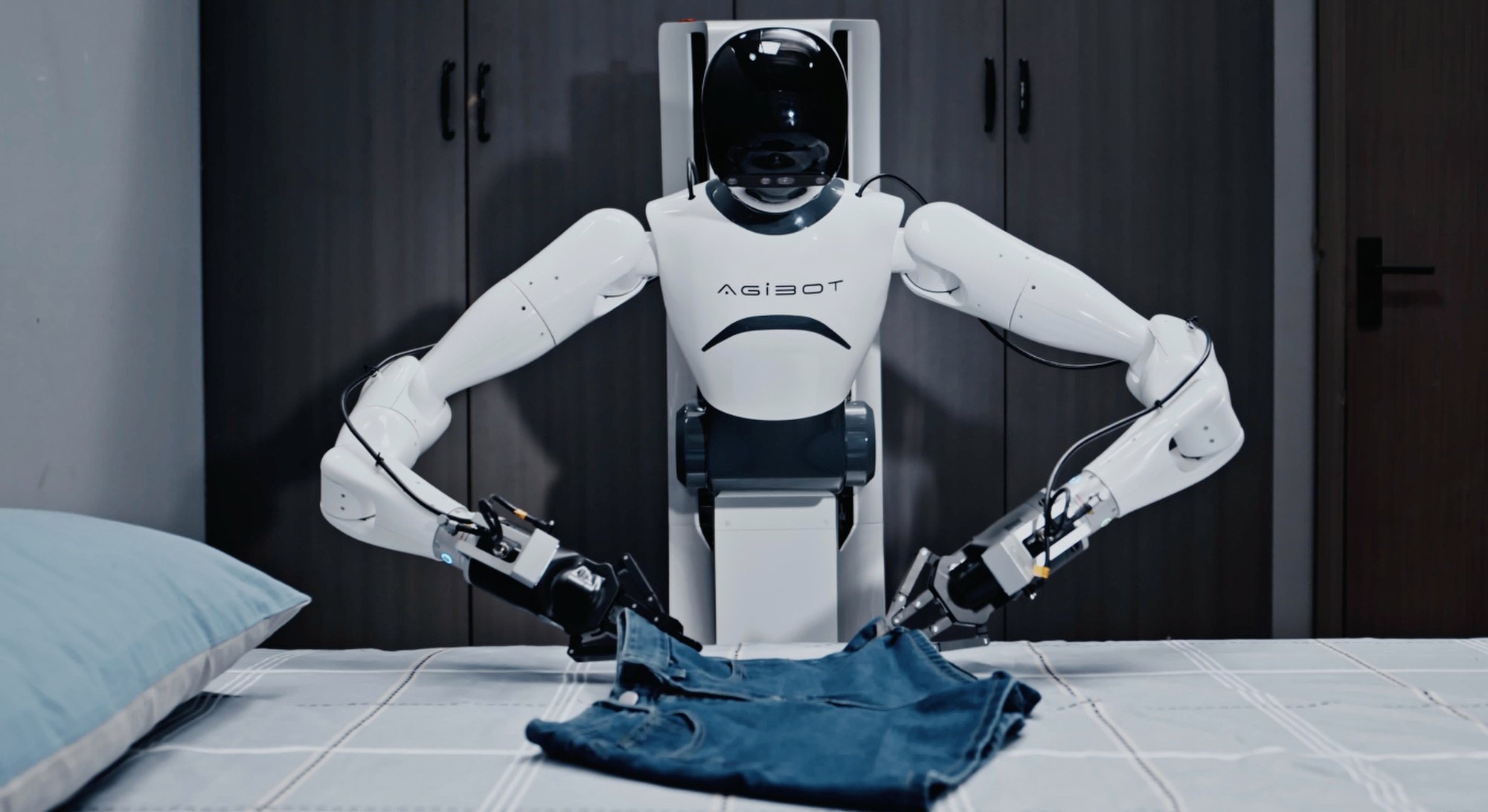
Agibot has successfully concluded at least eight financing rounds, drawing investments from notable venture capital firms including GL Ventures, Lanchi Ventures, HongShan Capital Group, and CAS Star, an entity supported by the Chinese Academy of Sciences. The company also counts several industry leaders among its backers.
BYD
Beijing Automotive Group Company (BAIC) along with city-supported funds like Lingang’s Sci-Tech Fund have also invested, according to Chinese corporate database Tianyancha.
Yao mentioned that the start-up is presently estimated to be worth around 10 billion yuan.
Similar to other robotic companies, Agibot encounters difficulties due to limited data availability. In contrast to the extensive online textual information used for training big language models, robots necessitate multimodal models capable of interpreting their physical environments.
Agibot has established a data collection centre in Shanghai, where around 100 robots generate about 50,000 high-quality motion data records daily within a 2,000-square-metre facility. Each record contains tens of thousands of tokens.
“To attain general intelligence, robots need much larger datasets to confirm scaling laws and anticipate new abilities when data hits billions of tokens,” stated Yao. He highlighted Agibot’s dedication to utilizing open-source datasets, working together with industry colleagues and end-users, as well as generating additional data via simulations.
Earlier this month, Agibot introduced “Genie Operator-1”, a general-purpose embodied foundation model that it claimed can enhance robots’ multitasking abilities.
More Articles from SCMP
China declares shared naval exercises with Thailand close to a South China Sea harbor.
Shares in Hong Kong declined as investors liquidated their positions due to the absence of significant drivers.
‘Duplicity in Diplomacy’: China Pledges Peace Before Pursuing Japan’s Fishing Vessel
Taiwan has ordered three individuals from mainland China to depart after they promoted the idea of a military takeover of the island.
The article initially appeared on the South China Morning Post (www.scmp.com), which is the premier source for news coverage of China and Asia.
Copyright © 2025. South China Morning Post Publishers Ltd. All rights reserved.
oleh admin | Mar 24, 2025 | automotive industry, business, manufacturing, morocco, technology
Huawei Technologies Co., Ltd., the prominent Chinese technology company, has declared its entry into the automotive sector with plans to invest in Morocco together with another Chinese firm, Wan’an Technology, as reported by Chinese media outlets.
This partnership aims at manufacturing and distributing automobile components, backed by an investment totaling €30 million, to establish a production facility in Morocco. It represents a significant move toward enhancing China’s presence in the automotive industry within this kingdom.
Huawei, recognized for its work in IT infrastructure and smart devices, plans to contribute 19.5 million euros (approximately 65% of the shares). In comparison, Wan’an Technology will provide an investment of 10.5 million euros (roughly 35%).
Wan’an focuses on producing and developing automotive braking systems and boasts a significant legacy within China’s automobile sector. The company possesses an auto manufacturing facility and entirely owns approximately eight firms, as well as having stakes in thirteen additional subsidiaries and partnerships.
The objective of this initiative is to enhance the competitive edge of Chinese automotive components producers in the North African and European marketplaces.
The same source highlighted that Huawei’s investment is integral to its plan for enhancing its worldwide footprint and boosting the competitive edge of its overseas activities.
Following the imposition of tariffs by the European Union on imported Moroccan aluminum alloy wheels, this development has occurred. The EU’s action is linked to financial assistance provided by China to one of Morocco’s export-producing companies as part of the Belt and Road Initiative.
The European Commission stated that it had been demonstrated that these imports, which were unfairly subsidized, damaged the European industry producing the same goods.
Nader Rong, a Chinese economist and reporter, stated that “the continuous trade conflict between China and the U.S., coupled with numerous tariffs placed on Chinese goods being shipped to Europe and America, has positioned Morocco as a key hub for various Chinese firms, particularly from the automobile industry, aiming to distribute their items within the Moroccan market.”
He thinks that “Morocco has turned into a center for Chinese automotive investments because of the reciprocal advantages it offers both nations.”
Rong stated that “Products made in China do not face Western tariffs in Morocco, making it an attractive destination for investment from the People’s Republic of China in this industry.”
He highlighted that “Morocco’s extensive expertise in automobile manufacturing, particularly with electric vehicles, along with its abundant reserves of raw materials like metals needed for batteries, makes it a compelling location for investments.”
The Moroccan economist Mehdi Fakir points out that Huawei, similar to other Chinese firms, shifted nearer to their targeted market regions with the aim of decreasing both manufacturing and transportation expenses.
Although tax and customs considerations might have played a role in choosing to invest in Morocco over Europe, the country’s enhanced infrastructure, more favorable business environment, and reduced production expenses—particularly in terms of labor and energy—were significant advantages.
The post
Huawei plans to invest €30 million in Morocco’s automobile sector.
appeared first on
LIFEHACKEnglish – Morocco News
.
oleh admin | Mar 24, 2025 | business, economics, exports, international economics, manufacturing
New Delhi [India], March 24 (ANI): With worries surrounding U.S. President Donald Trump,
Trump
According to a report by Motilal Oswal, India’s tariff policies present an opportunity to bolster its local manufacturing sectors.
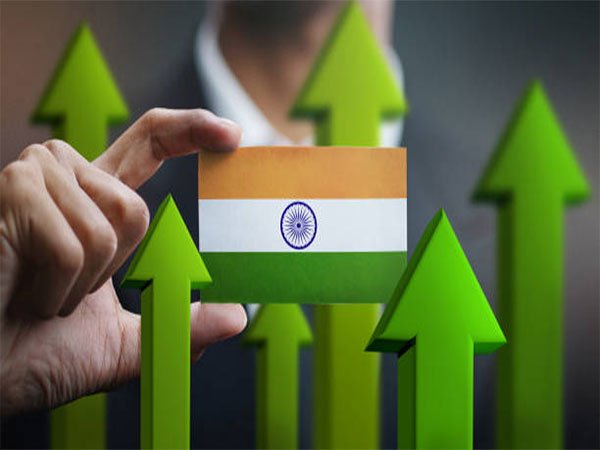
The report stated that although the tariffs present difficulties like increasing expenses, variations in currency values, and possible declines in export revenues, they simultaneously create opportunities for India to emphasize self-sufficiency and enhance domestic manufacturing.
“Despite ongoing worries about rising expenses, fluctuating currency values, and possible effects on exports, India has the opportunity to leverage trade disputes and strengthen its local businesses,” the report stated.
In recent years, the United States has implemented significant tariffs on goods coming from India. Specifically, in 2018, a tariff rate of 25 percent was applied to $761 million worth of steel imports from India, along with a 10 percent duty on $382 million worth of aluminum products.
The increased expenses rendered Indian goods less competitive in the US market, resulting in a 46 percent decrease in steel exports over the course of a year. As American purchasers chose more affordable options, Indian companies experienced financial losses.
A major worry for India is how trade tensions affect its currency. Additionally, the report noted that India imports 87 percent of its crude oil, which requires payment in U.S. dollars.
A depreciating rupee because of capital outflows caused by worldwide trade conflicts would increase the expense of oil imports, exerting pressure on India’s economy. The report cautions that an extended tariff dispute might reduce India’s GDP by 0.3 percent.
Even with these difficulties, India has the potential to transform this scenario into an advantage. Traditionally, India has kept tariffs higher compared to other significant economic powers. Through careful implementation of import taxes and by bolstering local businesses, India could lessen its reliance on products from abroad.
The report indicated that the trade dispute ought to drive India toward achieving manufacturing independence and increasing exports in areas less impacted by tariff measures.
Trump
The country’s strategies strive to strike a balance between protective measures and sustaining American competitiveness in international markets. Despite the resulting uncertainties, according to a report, India could leverage the circumstances by boosting domestic manufacturing, attracting local investment, and enhancing trade deals with other countries. (ANI)
Provided by SyndiGate Media Inc.
Syndigate.info
).


