


Discover the World’s Most Stunning Railway Bridges: Engineering Wonders That Attract Tourists Worldwide
There’s an undeniable allure we have towards magnificent railway bridges. Nothing compares to traversing through valleys and rivers as you revel in the breathtaking scenery revealed beneath your feet.
And they’re not just engineering accomplishments anymore; these structures have become landmarks that bring attention to their locations and serve as visible testaments to the progress of civil engineering.
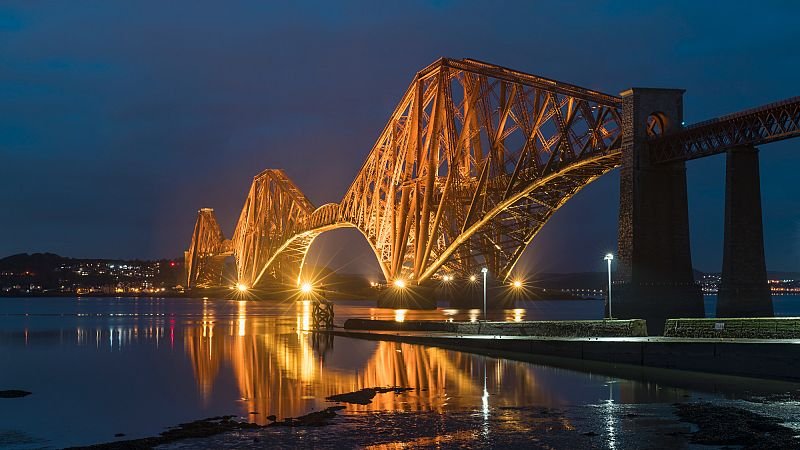
This year, which stands out as particularly significant in Europe, Scotland’s iconic Forth Bridge is commemorating ten years since being awarded UNESCO World Heritage status—a rare distinction for a railway bridge. Additionally, this month marks its 135th anniversary.
This famous cantilever railway bridge spanning the Firth of Forth has become an integral part of Scotland’s pride and cultural legacy, so much so that it even appears on certain Scottish currency notes.
In what ways have railway bridges evolved throughout history?
Similar to how railways have changed, bridges also do not resemble their appearance from a hundred years ago.
“Railway bridges have undergone considerable development over the last century,” explains Professor Luke Prendergast, a specialist in civil engineering with a focus on bridges at the University of Nottingham. “Previously, stone-arch type bridges were widespread,” he notes.
These massive stone constructions were aesthetically pleasing but later made room for steel bridges featuring truss systems.
However, don’t assume that metal bridges cannot also be masterpieces of art.
“Steel enabled the creation of longer spans,” notes Professor Prendergast.
The most recent bridges are typically constructed using reinforced concrete and various composite materials, yet each of these designs can still be quite visually appealing. It ultimately boils down to individual preference when it comes to determining if traditional stone architecture appears more pleasant to the eye!
Do not look down: Where are the planet’s loftiest rail viaducts?
Although the latest skyscrapers tend to be the highest, this rule does not hold true for railway bridges.
Montenegro’s
The Mala Rijeka Viaduct was crowned as the world’s tallest railway bridge upon its inauguration in 1973.
The title has since been claimed by a more recent bridge in Guizhou.
China
.
However, the statistics of the Mala Rijeka Viaduct remain remarkable – at its tallest point, the 499-metre-long bridge soars 200 metres above the river beneath it. As expected for such an enormous construction, robust reinforcement was necessary, with the biggest pier being supported by a foundation as large as a tennis court.

Southern France’s
The Viaur Viaduct may not match the height of the Mala Rijeka Viaduct, yet it remains equally remarkable. This stunning steel construction dates back to 1902.
Renowned for its sophisticated design and impressive arches, this structure boasts the longest span of 220 meters. Architect Paul Bodin crafted its delicate appearance by adopting a novel method called balanced arches. This approach required minimal use of metal and instead utilized a counterbalance technique to ensure stability without additional material.
At its tallest point, towering 116 meters over the Viaur River Valley, this bridge stands as a testament to dedication, crafted from an impressive 3,800 tonnes of metal and secured with 160 tonnes of steel rivets, each needing manual tightening.
Wonders of Masonry in France and England
No bridges can surpass the beauty of the Chamborigaud Viaduct – an impressive structure featuring 29 arches and stretching 384 meters long. This magnificent bridge was constructed in the late 1800s by architect Charles Dombre for the Paris-Lyon-Mediterranean Railway Company.
A brick bridge that was constructed
Cévennes region
— featuring its deep valleys and towering hills — now more accessible, the viaduct was named a historical landmark by the French government in 1984.
Another impressive structure from the world of masonry is the Whalley Viaduct located in Northern England, constructed to support the railway.
Blackburn
To the Clitheroe railway line spanning the River Calder Valley. Introduced in 1850, this structure was constructed using six million bricks and features 48 arches.

This impressive construction has frequently been likened to a cathedral or monastery. This resemblance likely wasn’t accidental. The viaduct stands near Whalley Abbey, established in the 13th century, and Terence Woulfe Flanagan, who designed the bridge, drew inspiration from the abbey’s religious architectural style.
Another splendid example of stonework is the Ouse Valley Viaduct.
Sussex
, England. Upon its construction in the 1840s, it stood out for being quite advanced for its era. This 37-arch railway bridge utilizes design elements called jack arches to minimize the use of bricks.

The slender design of this bridge is regarded as one of England’s most graceful railway structures and is renowned for its changing colors, thanks to its rust-red bricks (exactly 11 million) and cream-colored limestone, which were locally sourced.
Normandy
.
Construct It and They Will Come: Renowned Bridges Transform Into Tourist Destinations
Several of Europe’s loveliest bridges have become attractions in their own regard. A prime example is one such structure.
Scotland’s
Glenfinnan Viaduct, which played a prominent part in the
Harry Potter movies
.

Professor Vasilis Sarhosis, who specializes in masonry bridges within the civil engineering department at the University of Leeds, greatly admires this structure and notes that its appeal goes beyond mere aesthetics.
“
Glenfinnan Viaduct
Constructed over a century ago, this bridge remains one of the biggest in Scotland,” states Professor Sarhosis.
It was built with mass concrete — this indicates that it lacks any steel reinforcement, contrary to many of today’s contemporary railway bridges.
Among the greatest achievements of Victorian-era engineering is this impressive 21-arch bridge, prominently featured on some Scottish currency notes. Stretching over 380 meters, it offers breathtaking vistas, particularly when viewed from the Glenfinnan Visitor Centre. This location serves as the beginning of several walking trails equipped with viewing stations designed for visitors eager to appreciate this remarkable feat of architecture.
Scotland’s aforementioned UNESCO-listed
Forth Rail Bridge
It is another astounding wonder situated just outside Edinburgh. This place has appeared in renowned British films like “The 39 Steps” and “Carry on Regardless,” as well as in a recent episode of “The Simpsons.”
Introduced in 1890, this cantilever-trussed bridge was constructed using 54,000 tonnes of steel and is renowned for its distinctive rust-red color. Currently, its shade is due to a specially formulated red paint designed to mimic the initial reddish-brown appearance of the structure upon its inauguration.

Another attraction for railway bridge enthusiasts is Switzerland’s iconic Landwasser Viaduct, a highlight along the UNESCO-listed Albula Mountain Railway. Constructed in the early 1900s, this impressive structure was built without using scaffolds. The engineers appreciated the straightforward material handling since the stones were sourced directly from the nearby limestone quarry.
Dolomite Mountains
through which the
railway
passes.
Compared to the other railway bridges mentioned here, this structure is quite brief—it has six arches and spans only 142 meters. The sharp bend of the bridge along with how one side seemingly vanishes into a mountainside makes it distinctive. This feature previously posed significant challenges before the bridge was built.

Notably impressive is the Sittertal Valley’s Sitter Viaduct, constructed in 1910 and standing as the tallest standard-gauge structure.
railway bridge
In Switzerland, this structure gained recognition for its distinctive fish-belly central truss design—an unsupported middle part supported solely by curved girders underneath. This pioneering approach showcased advanced building methods and earned international acclaim as a remarkable feat of engineering.

Further proof that
bridges can be attractions
on its own merits stands the Luís I Bridge in
Porto
, Portugal. This bridge stands out as one of the world’s most intricately decorated railway structures, featuring stonework embellished with Portugal’s coat of arms. After dark, lights on the upper level cast a warm golden glow over the entire structure.
The mastermind behind the iconic Eiffel Tower, Gustave Eiffel, nearly took on the role of designing it. However, his proposals were ultimately turned down, and the responsibility fell into the capable hands of German engineer Théophile Seyrig instead.
A cutting-edge link to a vehicular-free ski retreat
Lastly, let’s take a closer look at one of the globe’s most groundbreaking railway bridge designs.
You’ll find the
Swiss Alps’
The Stoos funicular railway bridge links Schwyz to the vehicle-free ski destination of Stoos. This system boasts being the world’s steepest funicular.

Riders aboard this mountain train—where the carriages look like smooth glass spheres—are transported through three tunnels and over two bridges. Among these, the standout structure is the bridge crossing the Muota River. Although it might not appeal to those who prefer classic designs, it remains an essential addition to our list celebrating the world’s most stunning railway bridges.