oleh admin | Agu 28, 2025 | banking, financial services, money, securities, technology
Published on, Aug. 19 — August 19, 2025 7:24 AM
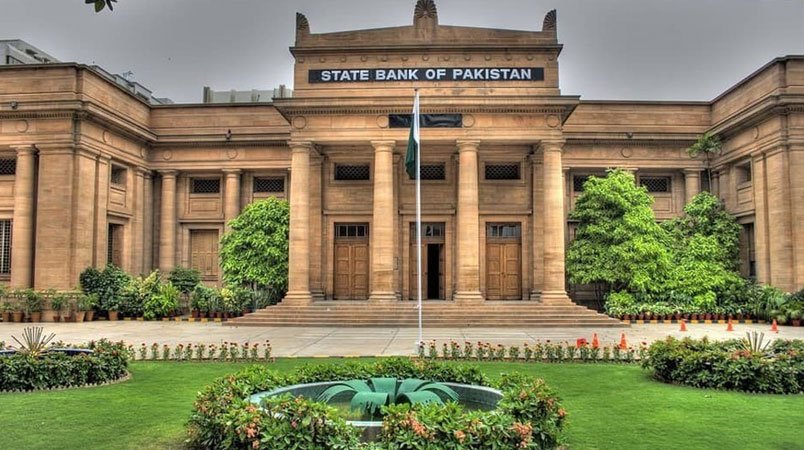
The Central Bank of Pakistan (CBP), known as the State Bank of Pakistan (SBP), plans to introduce its enhanced payment and settlement platform named PRISM+ on Tuesday, August 19, 2025. The ceremony will be presided over by the Governor of the State Bank of Pakistan, Mr. Jameel Ahmad, with participation from high-ranking SBP personnel, delegates from banking entities, and important players within the finance industry. This development represents an essential step forward in the continuous improvement of Pakistan’s financial framework.
This innovative framework marks a significant advancement in updating the way funds and governmental assets circulate within the nation’s monetary network.
PRISM+ is based on the global ISO 20022 messaging standard, which is used in many advanced financial systems around the world. It includes two key components:
An improved Real-Time Gross Settlement (RTGS) system designed for swift processing of major transactions between involved parties
A completely new Central Securities Depository (CSD) responsible for handling government instruments like Treasury Bills, Public Investment Bonds, and additional government-related financial assets
What PRISM+ Provides: A Quicker and More Intelligent Banking System: PRISM+ introduces various innovative tools and functionalities for banks to enhance their everyday management processes:
Immediate transfer of significant transactions among users Choice to plan payments for a later day
Payment handling based on priority (key transactions are processed initially)
Real-time dashboards displaying account balances, outstanding payments, and transaction processing status
Automated computation of charges and bills
Enhanced Management of Sovereign Securities: The CSD within PRISM+ enables banks to purchase, trade, and oversee government bonds with greater ease:
Primary Market Auctions: Financial institutions may place offers and receive outcomes instantly
Trading in the Secondary Market: Financial institutions may send transaction orders, which are promptly paired and finalized.
Risk Administration: Financial institutions have the ability to monitor and assess their collateralized assets, as well as determine the amount that can be utilized.
Monetary Policy Tools: Assists the State Bank of Pakistan in adding or removing funds from the economy and facilitating immediate transaction settlements
Enhanced Visibility and Safety: Each transaction comes with a complete record of activity
Role-based access ensures only authorized users can perform actions
Real-time alerts notify banks about any issues with settlement
Innovative Solutions for Managing Cash Flow and Payments
Liquidity Saving Queues: To reduce delays and manage liquidity better, PRISM+ uses special queues:
High-priority payments are settled right away
Payments with lower priority are placed in distinct queues and processed in groups to prevent overcrowding.
Reserve Earmarking: Banks can set aside funds specifically for systems like Raast, 1Link, NIFT, or NCCPL. This makes sure critical transactions are not delayed due to general liquidity use.
Intraday Liquidity Facility (ILF): Financial institutions have the option to obtain temporary funding by pledging qualifying government bonds. This mechanism helps maintain seamless transactions despite temporary fund shortages.
Other Improvements
Longer operating hours for better access: Payment cancellation and return messages can now be handled in real time
Facility to deposit or withdraw cash at the SBP Karachi branch for specific transactions
The platform was created in accordance with SBP’s Vision 2028, seeking to build a contemporary, accessible, and strong financial environment. Comprehensive involvement of stakeholders during the creation phase has made sure that PRISM+ incorporates global standard approaches while addressing Pakistan’s specific market requirements.
oleh admin | Apr 1, 2025 | information security, investing news, investors, securities, securities law
The recently enacted Investment and Securities Act (ISA 2025) in Nigeria grants the Securities and Exchange Commission (SEC) authority to request customer data from telecommunications and electronic communications firms within the country as part of enforcing this legislation.
Additionally, Section 3(4)(j) of the Act permits the SEC to examine the substance of communications if there is any breach of legal provisions.
The aim of this new clause is to grant the Commission authority to access telephone, internet, and electronic data records, thereby significantly streamlining its investigative and enforcement capabilities.
Emomotimi Agama, the Director-General of the Securities and Exchange Commission, stated that the newly enacted Investment and Securities Act (ISA 2025), which was recently signed by President Bola Ahmed Tinubu, grants the SEC authority to pursue individuals involved in Ponzi schemes. These perpetrators could face a minimum sentence of ten years in prison under this legislation.
Agama stated, “Under the new legislation, they could receive a prison sentence of up to 10 years.” Furthermore, he mentioned that individuals involved in running a Ponzi scheme in Nigeria would also be required to pay a fine of N40 million as per this law.
On Tuesday, during an interview with Arise TV, the SEC DG mentioned that previously, the commission lacked the necessary legal framework to take action against perpetrators of Ponzi schemes. This deficiency made it challenging to hold these individuals accountable. However, he highlighted that the introduction of the new ISA has addressed this issue.
“The SEC will possess the authority to acquire subscriber information kept or managed by Internet service providers, telecommunications companies, and other electronic communications services based in Nigeria. This includes data identifying subscribers, financial transactions, and pertinent details such as the contents of communications related to potential violations or breaches of this legislation or other securities laws, codes, and regulations,” the document specified.
For the first time, Nigeria has enacted new capital market regulations that categorize cryptocurrencies and other digital assets as securities. This move aims to enhance transparency and attract more investment.
President Bola Tinubu has recently approved the new Investments and Securities Act (ISA) 2024, replacing the previous Investments and Securities Act No. 29 from 2007.
The legislation clearly identifies virtual or digital assets and investment contracts as forms of securities, thereby bringing Virtual Asset Service Providers (VASPs), Digital Asset Operators (DAOPs), and Digital Asset Exchanges within the jurisdiction of the SEC for regulation purposes.
This indicates that companies involved in digital assets are required to register with the SEC and adhere to their regulations, which is an essential measure for reducing fraudulent practices within the digital realm and promoting both trust and advancement in blockchain technology.
Provided by Syndigate Media Inc. (
Syndigate.info
).
oleh admin | Mar 28, 2025 | business, economics, finance news, laws and regulations, securities
MANILA, Philippines – The Securities and Exchange Commission (SEC) remains steadfast in enforcing the 20 percent minimum public float rule for firms aiming to list on the domestic stock exchange, though some exceptions can be made.
On Thursday, the regulatory body issued a statement asserting that the current rule “significantly enhances price determination and minimizes chances for price manipulation.”
“The SEC continues to uphold the 20 percent minimum public float requirement for firms seeking an initial public offering (IPO). This stance is particularly strong considering the benefits of increased public ownership towards enhancing market depth and efficiency,” stated the SEC.
READ:
PSE approves 15% share float for companies making their debut
“The float requirement aims to decrease ownership concentration and promote sound corporate governance, thereby bolstering the Filipino capital market,” it further stated.
Following confirmation from Philippine Stock Exchange (PSE) President and CEO Ramon Monzon to reporters, it was revealed that the Securities and Exchange Commission (SEC) has endorsed their plan to lower the required minimum public ownership threshold to 15 percent for firms aiming to secure at least PHP 5 billion through an initial public offering (IPO).
When relaxing the regulations, Monzon stated that businesses should be encouraged to go public, particularly considering the present unstable market circumstances.
Although the CEO stated that the SEC provided general authorization, the commission later specified that this was permissible only when firms requested exemptive relief.
Up until now, the SEC hasn’t received any such applications from companies planning to go public, like the well-known digital wallet service GCash.
According to the SEC regulations, businesses availing of the reduced public float requirement must achieve at least a 20% threshold within two years after listing on the stock exchange. This target can be reached through additional share offerings.
The SEC is dedicated to sustaining an open, fair, and effective capital market,” stated the SEC. “Although the commission encourages new listings, it maintains strict regulatory criteria designed to protect the integrity and long-term stability of both the Philippine capital market and the overall economy.
Previously, analysts cautioned that decreasing the minimum threshold for public shareholding might deter individuals from investing in the Philippine stock market.
oleh admin | Mar 25, 2025 | financial services, investing, investors, securities, securities law
The Securities and Exchange Commission has reaffirmed its commitment to ensuring that only fit and proper individuals operate in Nigeria’s capital market, vowing to clamp down on fraudulent activities and protect investors.
A statement provided to our SEC correspondent on Sunday quoted the Director General of SEC, Emomotimi Agama, as saying that individuals involved in improper conduct within the marketplace will face consequences and won’t escape punishment.
He highlighted that the main focus of the Commission continues to be protecting investors, underlining that starting in 2025, there will be absolutely no leniency for those who do not comply.
It is crucial to emphasize that all investors in Nigeria operate under the protection of the SEC when they engage with the Nigerian capital market. Therefore, 2025 marks a year wherein we declare zero tolerance for activities outside the bounds set forth by the Investments and Securities Act of 2007.
The head of the SEC emphasized that adequate disclosure from publicly traded firms will be a major priority, since openness is crucial for maintaining investors’ trust.
As per his statement, businesses that do not furnish sufficient data to stakeholders will be subject to fines, since concealing important facts goes against SEC rules.
Public disclosures by corporations will be crucial in guaranteeing that investors receive sufficient information to make well-informed choices,” he said. “Failure to provide this information as mandated will be regarded as a breach of both the SEC regulations and the ISA.
It should be evident that there is nowhere left for people or organizations trying to deceive investors in Nigeria’s stock market to hide.
The Investment and Securities Act, which has been approved by the National Assembly, was also mentioned by Agama as an enhancement to the SEC’s regulatory structure. He remains hopeful that upon being enacted by President Bola Ahmed Tinubu, this legislation will grant additional authority for combating deceptive practices and improving overall market fairness.
“We are thrilled that the National Assembly has approved the new Investment and Securities Act, and we eagerly await the President’s endorsement. The legislation is presently going through various administrative procedures prior to being presented to the President for ratification,” he stated.
He noted that one of the provisions of the new Act is stricter penalties for fraudulent schemes, including Ponzi schemes that have exploited unsuspecting investors. The SEC chief warned that perpetrators of such schemes will face severe consequences under the new law.
Ponzi schemes will no longer serve as a means for scammers to dupe investors,” he asserted confidently. “The sanctions outlined in the new ISA are severe enough to discourage these practices, and we are dedicated to enforcing them thoroughly.
The statement indicates that the SEC has initiated significant actions to rectify the marketplace. According to Agama, the recent license cancellations, suspensions of market participants, and efforts against non-registered organizations mark only the start of an extensive enforcement approach.
What you’ve witnessed until now—the cancellation and suspension of licenses along with punitive measures taken against non-registered operators—only scratches the surface,” he said. “In 2025, we plan to escalate our initiatives aimed at safeguarding investors. An empowered investor stems from protection, and we’ll utilize all available regulatory tools to prevent dishonest people from exploiting Nigerian investors.
He encouraged current as well as future marketplace operators to adhere to SEC regulations, stressing that adherence and openness are crucial for establishing a robust and enduring capital market.
Agama informed investors that the SEC is dedicated to maintaining a thoroughly regulated marketplace, fully supported by President Bola Tinubu’s administration. He emphasized that all investors in Nigeria’s capital market receive SEC protection as long as they adhere to legal guidelines.
PUNCH disclosed that the Securities and Exchange Commission intends to publicly expose capital market operators who have been convicted of breaching market rules and regulations.
Provided by SyndiGate Media Inc.
Syndigate.info
).


