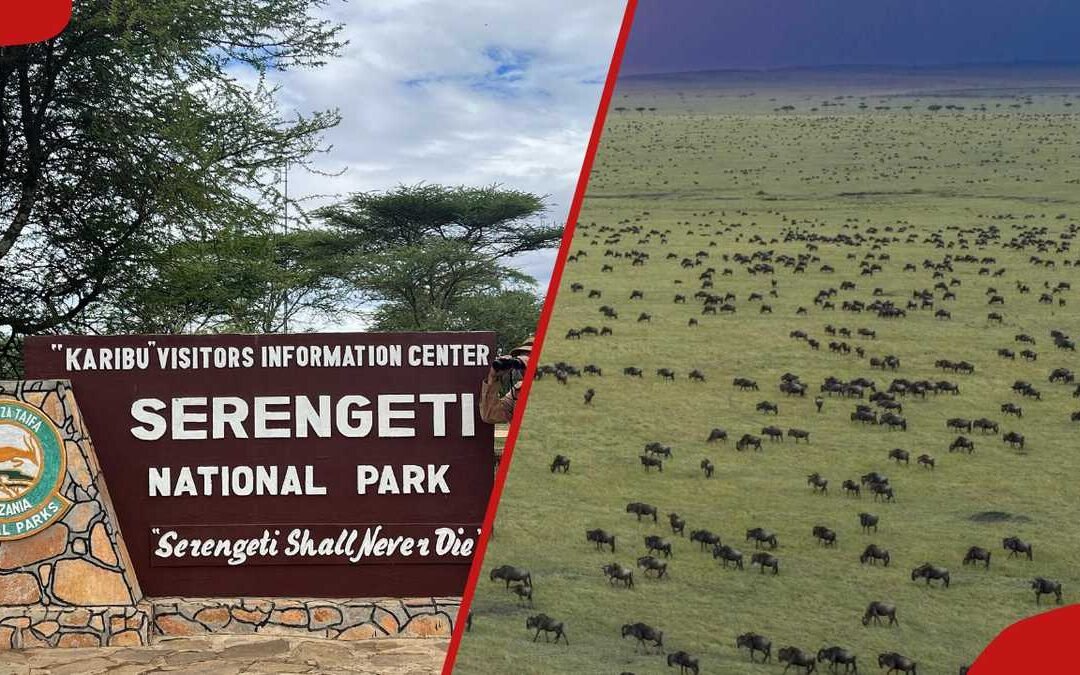
oleh admin | Feb 21, 2025 | Travel, travel advice, travel destinations, travel planning and tips, travel recommendations
The optimal period to explore Serengeti National Park is between
January to February
or
June to October
, providing excellent opportunities for wildlife observation and pleasant weather. Nonetheless, you can explore the Serengeti throughout the year, with every season bringing distinct animal sightings and breathtaking scenery.

Key takeaways
-
The
best time
to visit Serengeti is
January to February
or
June to October
.
-
The significant migration takes place between
January and October
, with different stages.
-
The Serengeti experiences a subtropical climate characterized by two primary seasonal patterns: a dry season and a wet season.
-
The peak touring season runs from July through March, whereas the low season occurs between April and May.
-
The
least favourable time
To visit is during the extended wet season.
from March to May.
When is the optimal period to explore the Serengeti?
Figuring out the optimal period to explore Serengeti
It depends on your desired experience.
For instance, the Great Migration takes place from January to October, whereas the calving season occurs from December to March. Every phase provides distinct opportunities for observing wildlife amidst breathtaking scenery, guaranteeing an unforgettable safari experience.
Safari Bookings suggests
January to February
or
June to October
The ideal times to explore the Serengeti offer opportunities to see the spectacular wildebeest migration along with exciting predator activity, all under favorable climatic conditions.
The following elements should be considered when visiting the Serengeti:
-
Highly recommended:
From January through February and from June till October (discover different areas of the park)
-
Peak season:
From July to March (various regions have peak seasons; for instance, the Seronera area tends to be quite busy).
-
Low season:
April and May (possibly with reduced rates)
-
Optimal weather:
June through October (with minimal precipitation)
-
Least favourable weather:
March and April (the height of the wet season)
Serengeti National Park seasons
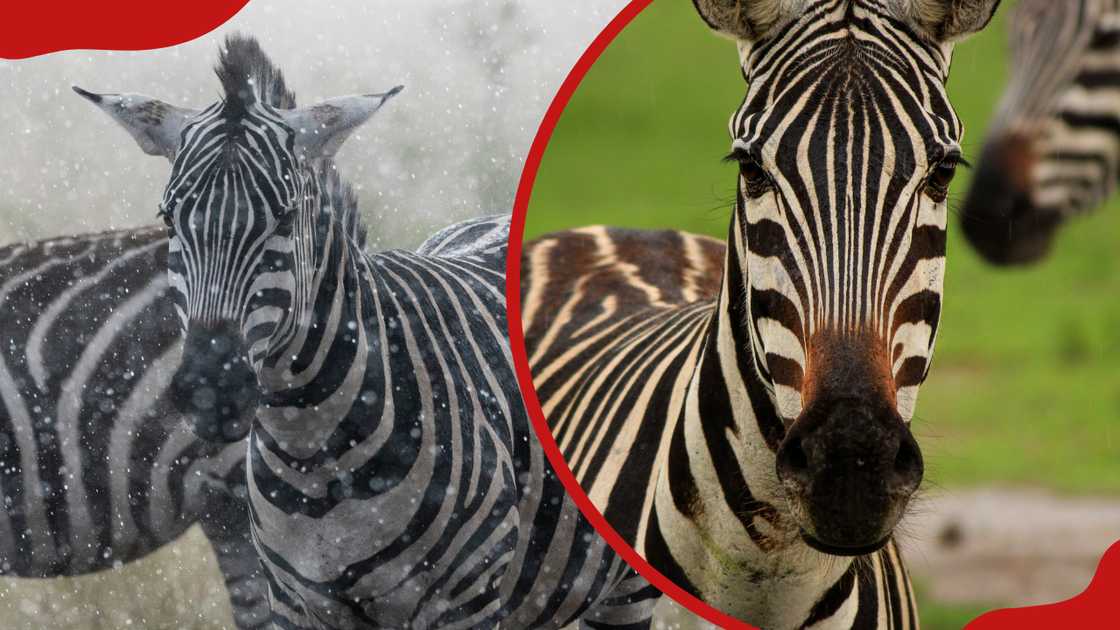
The Serengeti experiences a subtropical climate characterized by two primary seasons:
dry and wet
The dry season usually runs from June through October, providing prime opportunities for observing wildlife as creatures congregate at watering holes.
The rainy season occurs between November and May, bringing vibrant green scenery along with the birthing period. The brief showers happen from November to December, followed by extended rainfall from March through May.
Month-by-month journey guide for exploring the Serengeti
The Serengeti provides distinct experiences all year round. Each month brings its own appeal and chances for observing wildlife. Below is a monthly guide designed to assist with planning your trip:
January to February
In January, the start of the green season arrives at the Serengeti. At this time, the Ndutu plains within the southern part of the park brim with animal life, making it ideal for bird watching. Wildlife gathers here in large groups, and numerous creatures synchronize their breeding seasons with the onset of these verdant months.
March to April
As the green season comes to an end and the off-peak period begins, sporadic thunderstorms might still happen. However, this time brings about a verdant landscape, providing numerous chances for refreshing photo shoots.
May

There is plenty of rainfall, resulting in fewer visitors at camps and lodges, which often provide discounted rates as a result. The landscape turns lush and verdant during this time, though spotting wildlife could be more challenging because of the rain, potentially causing certain trails to become temporarily inaccessible.
June to October
During the dry season, the best wildlife viewing takes place as animals congregate at watering holes, simplifying animal spotting. The ‘Great Migration’ includes river crossings in June and July, with additional crossings at the Mara River occurring between August and September.
The pleasant weather with little rainfall makes for excellent safari opportunities, though it also leads to increased expenses and larger crowds.
November to December
The brief rainy season rejuvenates the arid areas, turning the Serengeti into a verdant haven. Wildlife observation remains excellent as the grasslands flourish. In December, the Serengeti provides a calmer atmosphere with reduced crowds and decreased safari expenses. At this time, the Great Migration makes its way back to Tanzania from Kenya.
Which month is ideal for visiting Serengeti National Park?
To ensure you have an extraordinary experience, plan your visit to Serengeti National Park during either the period from January to February or from June through October. These times offer ideal conditions with pleasant weather and optimal opportunities for observing wildlife.
In which month does the Serengeti migration occur?
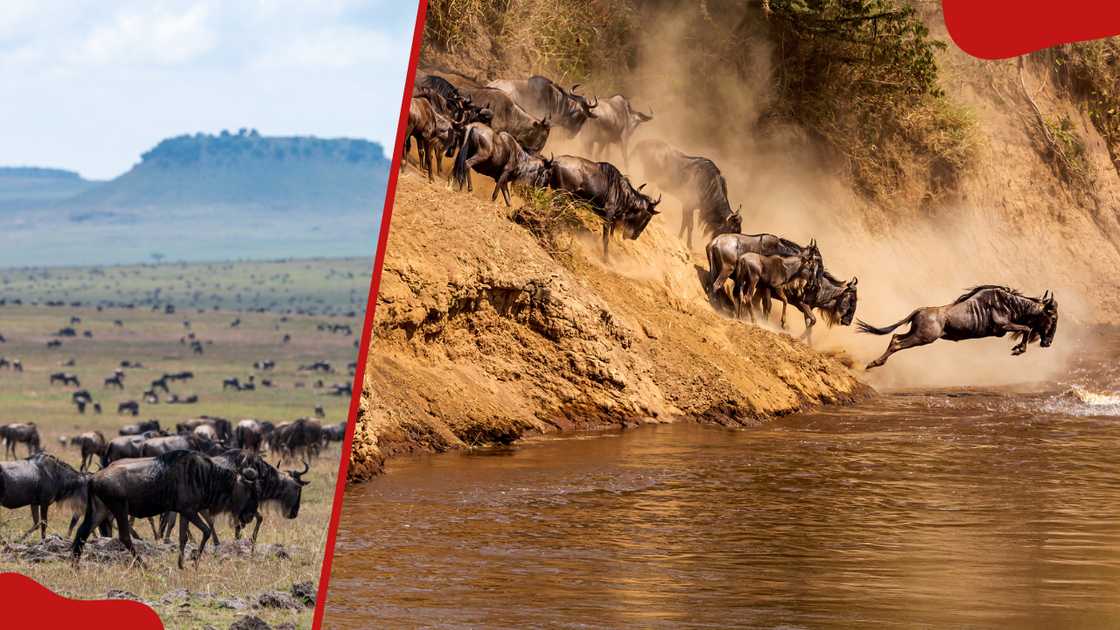
The wildebeest migration isn’t confined to just one month; instead, it unfolds over an extended duration with various phases extending from January through October. It begins in the southern part of the Serengeti during the calving season which lasts from January to March. Subsequently, these herds head northwards, eventually arriving at the Western Corridor typically between May and July where they encounter the Grumeti River crossings.
Between August and September, the migration arrives at the northern Serengeti for crossing the Mara River, then moves southward again in October.
What is the optimal period to witness the Great Migration in Tanzania?
The ideal period to observe the magnificent wildebeest migration in Tanzania spans from July through October. During July, visitors have the opportunity to view the dramatic Grumeti River crossings in the western part of the Serengeti. Then, from August to September, one can witness the famous Mara River crossings in the northern region of the Serengeti.
During which periods should you avoid visiting the Serengeti?
The extended wet season, usually spanning from March to May, poses difficulties when trying to reach particular regions because of the muddy roads and frequent rain showers. This time frame witnesses a more dispersed movement, which makes it challenging to observe sizable groups.
What section of the Serengeti is considered the finest?
The most suitable area within the Serengeti for you will depend on what catches your interest. If spotting leopards is high on your list, then the Central region should be your go-to spot due to its leopard population density. For those keen on observing river crossings during specific times of the year—namely between May and mid-July—the Western Corridor offers some spectacular views with the annual Grumeti River crossing being quite notable.
In the Northern Serengeti, you can witness the Mara River crossings between August and September, whereas the Southern Serengeti is ideal during the calving season from December through March.
What is the cost of a trip to the Serengeti?
Based on information from Safari Bookings, the price of a trip to the Serengeti changes considerably depending on factors like the kind of safari tour chosen, how long you stay, and your desired comfort level. For instance, luxury safaris, such as
7
– Day Journey of the Wildebeest, spanning
$4,210 to $5,720 per individual
, offering stays in lodges and tented camps for accommodation.
Options such as the 5-Day Serengeti National Park Safari fall into the mid-range category and cost
ranging from $2,180 to $2,235 for each individual
Affordable tour packages like the 5-Day Northern Safari Highlights are offered here.
$1,100 to $1,210 per individual
.
Final word
The ideal time to explore Serengeti National Park depends on your interests since numerous events take place annually. If you want to see animals crossing the Grumeti River, plan your trip for either June or November. For witnessing the birth of new calves, aim for the period from December through March. Additionally, the migration leading to crossings over the Mara River happens primarily from July to August. Furthermore, the park’s greenery reaches its peak vibrancy during the wet seasons.
Are you searching for well-known landmarks and attractions in Kenya? LIFEHACK.co.ke has released an insightful piece highlighting notable historical sites and monuments within the country.
Kenya boasts captivating historic locations such as Lamu Old Town, Fort Jesus, Bomas of Kenya, and the Gedi Ruins. These places showcase an extensive cultural legacy and historical importance, offering insights into Kenya’s varied history. To learn about additional sites, check out the article.
oleh admin | Jan 27, 2025 | Travel, travel advice, travel destinations, travel planning and tips, travel recommendations
![]()

-
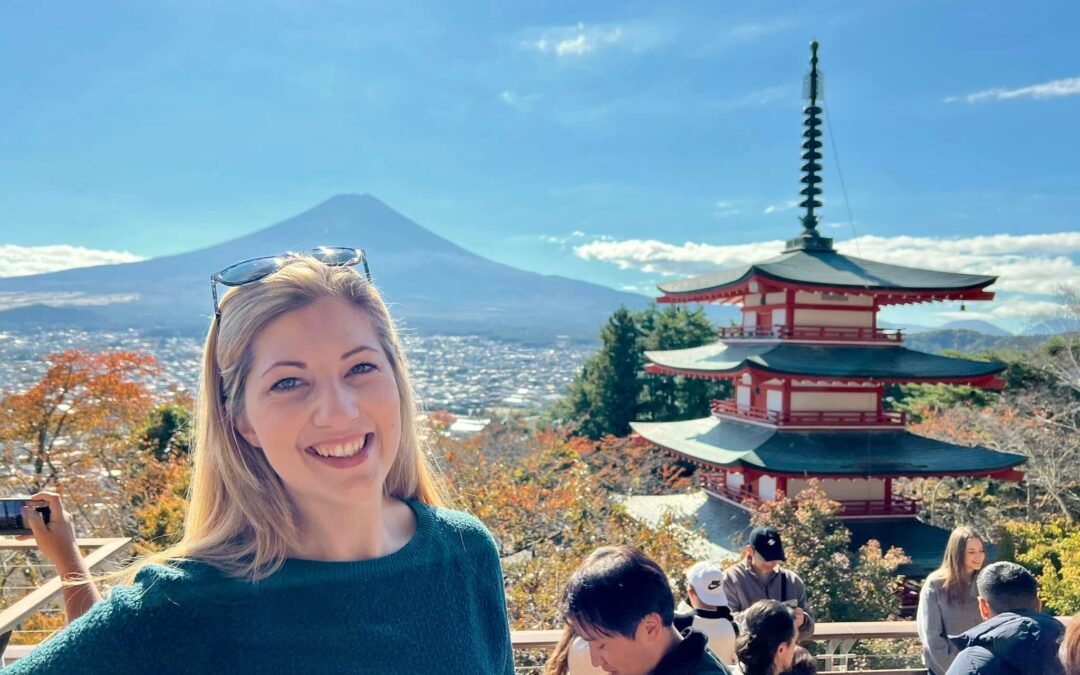
After losing out on a job, Erica Hobbs booked a 24-day trip to Japan.
-
The November vacation was planned last minute, so she ended up traveling solo.
-
Reflecting on her past experience, she wishes she had booked transport ahead of time and chosen to lodge in more hostels instead.
In November, after three months of interviews, I lost out on a job and decided it was time for a travel break. I set out on a 3
½-
week
trip to Japan
.
The timing worked out — the favorable
dollar-to-yen exchange rate
, mild weather, and vibrant autumn foliage made it a great time to visit.
Given the limited time to search for a travel partner, I welcomed the independence of going alone and the flexibility to decide spontaneously. As I had previously journeyed solo, I believed I was capable of handling things as they came.
trip to Japan
proved to be more difficult than expected.
My journey involved visiting the “golden triangle” region.
Tokyo, Kyoto, and Osaka
, including excursions to nearby locations like Nikko, Mount Fuji, Nara, and Himeji. The itinerary also encompassed stops at Hiroshima and Miyajima Island along with a week exploring central Japan.
The trip cost about $3,400, not including the airfare, which I paid for with credit-card points. As a
cost-conscious backpacker
I opted for staying in pod hotels or hostels and usually dined on street food, items from convenience stores, or noodle dishes at ramen shops.
The largest part of my expenses went towards lodging, amounting to over $915 for staying 24 nights. Ground travel also accumulated significantly. Although local trains were quite cheap, train ticket costs still piled up.
Shinkansen bullet train
They were pricey. The journey from Tokyo to Toyama cost me the most at around $100, followed by Hiroshima to Osaka which was approximately $70, and finally Osaka back to Tokyo costing roughly $90.
A few indulgences included attending a kimono tea ceremony, a
Kobe steak
dinner, and visits to a handful of themed cafés.
Although I enjoyed the journey, there are three aspects I would have changed.
1. Increased preparation prior to the journey
I concentrated my preliminary investigation on locations and experiences rather than logistical details. Apart from arranging the initial couple of things, I did not make reservations ahead of time.
days in Tokyo
This resulted in a disorganized and ineffective journey filled with skipped trains, forfeited chances, and avoidable tension.
I had heard that Japan attracts many visitors during autumn, yet it turned out to be even more crowded than I anticipated, making it challenging to secure affordable lodging at short notice. Numerous well-known sites, such as
Tokyo’s Ghibli Museum
Moreover, the Ninja Tokyo restaurant was reserved beforehand. Various locations across the nation, such as Osaka’s Nintendo Museum, were also included.
ryokans
— Traditional Japanese ryokans — were also fully booked soon.
I was fortunate enough during the tea ceremony — an added bonus.
solo traveling
—but I really wished I had booked them in advance since I couldn’t get into some of them.
I too should have made reservations beforehand using platforms that offer free cancellations. That way, I could guarantee my place to stay and still maintain the option to alter my arrangements later.
For travel arrangements, I would have arranged my transport.
IC card
When I reached the airport, I encountered these cards—Suica, Pasmo, and Icoca—which function as prepaid options for seamless transit across various public transport networks within major urban centers. Following a lengthy 13-hour journey, I hurriedly made my way to check into my accommodation. However, obtaining one of those cards turned out to be more challenging post-flight; they could typically only be found in bigger railway hubs and weren’t always readily accessible elsewhere.

2. Chose hostels over capsule hotels
A lot of folks believe that traveling alone means doing everything by yourself. However, what I enjoy most is meeting new individuals during these trips. Hostels typically provide a great environment for socializing, so I expected similar experiences elsewhere.
capsule hotels
Instead, I discovered that the pod hotels—although wonderfully serene and spa-like—were far less sociable. Additionally, many of the guests staying there were local travelers who did not speak English.
However, I quickly became friends with people at the hostels where I stayed.
Hiroshima
, we had an amazing time exploring Miyajima Island as a group of seven throughout the day, even tackling a mountain I probably wouldn’t have gone up solo. If I had begun my journey staying at hostels, I might’ve met traveling companions sooner.

3. Dedicated additional hours to exploring Nikko and Osaka
Approximately 90 miles north of Tokyo,
Nikko
It’s a common day trip destination, yet I felt that allocating two whole days would have been ideal for thoroughly experiencing the town. The area is renowned for its intricate shrines and temples as well as stunning mountain landscapes. During my visit in November, all attractions shut down by 4 p.m., causing darkness to set in soon afterward. This restriction made it challenging to see all of what Nikko has to showcase within the available time frame.
The 126-acre Tokugawa shrine and temple area – designated as a UNESCO World Heritage site in 1999 – lies within ten miles of Lake Chuzenji, marking the starting point for the ascent up Mount Nantai. However, despite their proximity, moving between these locations might require about sixty minutes. The intricate details and grandeur of the place were such that I wished I had spent all day exploring it, particularly the renowned Toshogu Shrine.
I also hope I could have spent an entire day discovering the stunning lake, cascading waterfalls, and numerous trails surrounding the mountain. The one-day visit seemed hurried and only covered the main attractions.

I likewise hope I had devoted
more time in Osaka
Since it gained prominence mainly because of its cuisine, I assumed two days would suffice; however, it turned out that the non-culinary aspects were my highlights and what I wished I could have explored further.
The Dotonbori district was brimming with lights and crowds, exuding an energetic vibe that I really appreciated being immersed in. I had a great time exploring for about half a day.
Osaka Castle
, however, with additional time, I would have explored the Osaka Museum of Housing and Living as well as the Osaka Aquarium Kaiyukan, places that fellow travelers I encountered spoke highly of. Additionally, I would have taken a direct flight back home from Osaka, saving myself both half a day and the $90 cost of a bullet train ticket.
![]()
If you liked this tale, make sure to follow
Business SANGGRALOKA
on Microsoft Start.

oleh admin | Des 19, 2024 | africa, Travel, travel advice, travel planning and tips, travel recommendations
-
Eli Solidum, aged 28, embarked on an impressive journey across 8 African nations during his adventure on the continent.
-
He reveals which nation is considered ‘otherworldly’ and which one boasts the ‘most friendly’ folks.
-
READ MORE:
I sold my home to embark on travels — here are the top countries I love.
‘I have visited more than 70 countries spanning five continents, yet nothing could truly ready me for many of the experiences I had in Africa.’
TikTok
traveler and writer Eli Solidum
@elisolidum
From the Philippines, he is sharing with MailOnline Travel about his incredible four-month adventure across Africa, a trip filled with numerous challenges yet also marked by ‘surreal’ and ‘otherworldly’ moments.
The 28-year-old shares insights into the top African destination for newcomers, describes how encountering local fauna can be overwhelming, and points out typical errors travelers often make when organizing an African adventure.
However, firstly, what were the main challenges he encountered?
Eli journeyed to Kenya, Uganda, Tanzania,
Rwanda
, Zambia, Botswana, Namibia and
South Africa
, and discloses: “In terms of logistics, this could very well be the most challenging journey I’ve undertaken. Due to the sparse and inconsistent public transport, limited affordable lodging choices in some areas, plus outmoded and incorrect maps, along with scant online resources for my intended locations, I found myself having to improvise frequently and adjust spontaneously.”
I did not encounter numerous fellow travelers to share tips and strategies with. Being a foreigner was also intellectually taxing since I stood out regardless of circumstances. It was difficult to remain inconspicuous, and I simply wasn’t accustomed to perpetual scrutiny, despite much of it stemming from innocent curiosity.
The 29-year-old explorer mentions there’s an optimal point when it comes to organizing a journey across Africa. Eli states, “My itinerary wasn’t fixed regarding the specific nations I would visit; therefore, unplanned side trips to Uganda and Rwanda necessitated obtaining visas that took time.”
The delay forced Eli to remain in Kenya for a longer period than initially intended, requiring him to ‘rework’ his visa amidst a ‘ten-day ordeal’ involving extensive running around Nairobi to resolve all the issues.


He shares: “Although you may not enjoy organizing your travels, and I definitely do not, I would suggest investigating each country’s visa prerequisites, verifying the necessary vaccinations and medicines needed or advised, identifying key transport centers and airports, and proceeding accordingly.”
However, on the contrary, Eli cautions that it’s simple to commit the usual error of overscheduling your journey to the continent.
The traveler remarks: “If you meticulously overplan and rigidly book all segments of your journey along with specific flights, that itinerary will likely crumble sooner than later.”
‘Processes tend to be slow around these parts, much like the three-day journey by train from Dar-es-Salaam to Lusaka. About three days into the trip, we came to a halt well before reaching our midpoint. Later on, in Luska, I encountered individuals who intended to take the very same train and arrive at Dar-es-Salaam just in time for an outbound flight scheduled precisely three days after departure. Though I lost contact with them, my hunch says they likely missed their flight.’
Next up are the buses. Typically, they simplify travel between locations; however, there’s always a risk of boarding the incorrect one.
Eli clarifies: “In East Africa, buses and shared minibuses known as matatus were abundant, making travel between locations quite straightforward. However, bus terminals frequently appeared disorganized or intimidating. As a foreign traveler carrying two backpacks slung beside me, I would typically find myself being shuffled around by individuals attempting to direct me onto various buses, sometimes without ensuring they were headed towards my intended destination.”
‘Events are destined to unfold, and a single tile toppling can ruin your whole plan.’
Fortunately, you don’t need any prior planning to appreciate Africa’s amazing wildlife. Eli mentioned he was astonished by how common it was everywhere.


He elaborates: “You don’t necessarily need to embark on safari adventures to spot wild animals. Once, as I cycled down a path, I had to halt so a giraffe could pass by easily. Another time, during a stroll towards lunch, a baboon tore into a garbage bin right before my eyes, while simultaneously, a warthog seized some refuse and dashed off with it. In Botswana, when I caught a lift somewhere, our vehicle came to a standstill on the expressway for about 30 minutes since a large group of zebras and elephants alternately approached a waterhole alongside the road for drinks. This sight was truly breathtaking and remained impressive every single time.”
Botswana is also where Eli had one of ‘the most tranquil encounters’ of his lifetime, even though an intimidating unexpected visitor showed up. He shares this insight: “Paddling along in a mokoro—a slender canoe—across the Okavango Delta’s waters during sunrise was among the calmest moments I have ever experienced. The serenity was palpable; the quiet surface of the water combined with the bird calls created an almost surreal ambiance, as if I were dreaming.”
While you’re floating on this small, vulnerable wooden raft amidst waters teeming with numerous hippos and elephants, danger lurks around every corner. On our return journey to where we started, a charging hippo confronted us, turning moments into hours as tension mounted. Fortunately, it was just a mock charge, yet it sent waves of adrenaline surging through us—a stark shift from the serene tranquility of the early morning. This experience underscored the raw wilderness, unyielding nature, and pristine isolation of the locations I explored during my trip.
Therefore, besides Botswana, what are some must-visit destinations on your list?
Eli suggests visiting Sossusvlei in Namibia, a salt flat encircled by sand dunes, describing it as “the most surreal, otherworldly location I explored.” The ascent up Mount Kenya left an equally impressive impression. According to Eli, “The climb to the peak of Mount Kenya remains etched in my memory due to its difficulty; battling against the high elevation and starting our trek towards the top just after midnight.”
He adds that Mosi-oa-Tunya, the Zambian National Park that’s home to half of the Victoria Falls waterfall, is ‘awe-inspiring, living up to the hype and then some’.
And don’t miss Uganda.
Eli shares: “When I arrived in Kenya, Uganda hadn’t crossed my mind at all. However, I encountered numerous Ugandan people who seemed perpetually cheerful and jovial. This piqued my interest; I wondered what made everyone so incredibly content consistently. Although my stay lasted just ten days, I thoroughly enjoyed it.”
‘This place offers a mix of adventures. You can go gorilla tracking, chimpanzee trekking, visit Murchison Falls, explore the origin of the Nile River, discover crater lakes, and see the snow-capped Rwenzori Mountains with their towering summits – some of the highest in Africa. This country stands out as one of the lushest destinations I have visited; plus, the locals are incredibly friendly and humorous. Its night life is top-notch and likely unrivaled within East Africa.’

For those visiting Africa for the first time, Eli suggests starting with South Africa as an ideal ‘beginner’s gateway’. He elaborates: “In Cape Town and along the Garden Route, you can experience a blend of Western and African cultures which helps ease you in. This way, you get accustomed gradually rather than jumping right into areas that might be more isolated and culturally distinct.”
If I didn’t explore Cape Town half a decade earlier, I believe adjusting to travel across the remaining part of Africa might have been tougher for me. It’s an excellent spot not only for sightseeing but also for connecting with fellow travelers where you could seek their insights or perhaps rendezvous with them during your journey.
Although Africa may not be a popular destination on the typical backpacking trail, this could offer some surprising advantages. Eli shares: “When I visited, there weren’t many fellow backpackers exploring the continent. This meant that sometimes you’d shell out $10 (£7.88) for a bed in a shared dorm at a hostel but end up having the entire room—or occasionally the complete facility—to yourself.”

Eli mentioned that certain luxurious accommodations priced at several hundred dollars per night also provide campsite options for much less money. He would occasionally opt for staying in hotels or apartments whenever he felt like resting post an adventurous day, yet mostly his lodging expenses stayed within a budget of $20 (£15.76) or lower each night.
What advice might Eli offer to someone hesitant about visiting Africa?
He states: “It’s beneficial to experience some hesitation and worry before setting off. This isn’t an ordinary place to visit, and you’ll face various obstacles. African backpacking might not suit everybody, yet if thrill-seeking is what you desire, very few regions worldwide provide the kind of experiences that Africa offers.”
The majority of travelers I’ve encountered have shared similar sentiments. Although challenging, it turns out to be an incredibly enriching adventure—possibly the most satisfying journey I’ve undertaken so far. Should you desire to leave your travels with numerous tales and enduring recollections, Africa offers this abundantly. This continent provides an unparalleled travel experience compared to anything else I’ve experienced previously.
EAGER TO SEE MORE FROM ELI?
Join him on his journeys and pick up some travel advice from
@thepartyingtraveler
(Instagram),
@elisolidum
(TikTok) along with his backpacking blog –
thepartyingtraveler.com
.
Read more

oleh admin | Mei 21, 2024 | insurance, international travel, passports and international travel, Travel, travel planning and tips
ATK
New Delhi [
India
On May 21: It’s important to know that various types of visas correspond to different countries. Similar to how you require an American visa for traveling to the U.S., you would need a Schengen visa if your destination includes any of the nations within the Schengen Zone.
Altogether, 27 nations fall within its jurisdiction and collectively form what is known as the Schengen Area. Consequently, non-EU citizens along with various other international individuals, like
India
Indeed, one must apply for a Schengen visa when entering the region for various reasons.
Nevertheless, when it involves safeguarding your finances prior to traveling, you should not overlook choosing
travel insurance
. Continue reading to discover more about its prerequisites and additional information.
Do You Need Travel Insurance for Applying for a Schengen Visa?
Indeed, travel insurance is an essential prerequisite if you want to apply for a Schengen Visa.
India
It’s worth mentioning that a single Schengen visa allows you to visit multiple countries within the Schengen Area.
Nonetheless, you need to demonstrate your financial reliability to qualify for a Schengen visa. An appropriate travel insurance policy can assist with this requirement. It’s important to have travel insurance that covers medical emergencies as well as additional aspects such as the loss of valuable possessions, baggage, theft of passport, among others.
This is because it serves as financial protection for both you and the travelers with whom you journey.
Hence, if you lack a proper travel insurance policy under your own name, your Schengen visa application will be denied.
What Are the Criteria for Schengen Visa Travel Insurance?
India
n Citizens?
Several conditions need to be met for
travel insurance for a Schengen visa
for
India
Among citizens, this encompasses the following points:
The travel insurance policy you’ve chosen must provide a minimum coverage amount of at least €30,000 or INR 2,664,330.
* Your travel insurance policy should offer medical emergency coverage, including expenses for hospitalization due to accidents.
* Your travel insurance policy needs to remain active for the entire duration of your visit to the Schengen country you are traveling to as well as other nations within the Schengen Zone.
* You need to possess all necessary documents specifying the reason for your trip to a Schengen country, the duration of your stay, and any additional information that may be asked for.
How Do You Purchase Travel Insurance for a Schengen Visa?
India
?
After conducting comprehensive research on the insurance company, you should buy an appropriate travel insurance policy. Ensure to review the provider’s ratings before moving forward.
Once you have determined your preferred insurance plan, you can proceed with these steps to apply for it:
Step 1: Go to the official webpage of the travel insurance company whose policy you want to purchase. If available, you may also opt to download their dedicated mobile app.
Step 2: Choose a basic travel insurance plan or tailor the coverage according to your needs.
Step 3: Offer the travel dates for your entry into the Schengen area through an international gateways.
Step 4: Choose the level of coverage you wish to pursue.
Step 5: Provide the necessary details about yourself and your traveling partners.
Step 6: Complete the necessary payments online to obtain instant coverage. Upon completion, you’ll be sent an SMS or email as confirmation.
Kindly be aware that this travel insurance application procedure is of a general nature. There might be variations depending on particular policy terms or various insurers. Therefore, make sure to ask for details regarding the application process and clear up any uncertainties by reaching out to the insurer ahead of time.
How Does One File a Claim for Travel Insurance as a Schengen Visa Holder?
Here’s a typical procedure for effortlessly filing your insurance claims when needed. Despite variations between different insurers’ processes, follow these steps to get a sense of what to expect:
1. Review your policy documents thoroughly.
2. Contact your insurer promptly after the incident occurs.
3. Fill out the required claim forms accurately.
4. Gather all necessary documentation and evidence.
5. Submit everything as per the instructions provided by your provider.
6. Await their assessment and approval.
7. Receive the compensation once approved.
Keep in mind that specific procedures may vary depending on the insurance company.
Step 1: Reach out to your travel insurance company via email or by phoning their emergency hotline. Ensure you use your registered email address or phone number for this communication.
Step 2: After making successful contact with them, they will promptly supply a list of hospitals where you can receive immediate medical care without needing to pay upfront.
Step 3: Once the travel insurance provider has settled all hospital bills or medical expenses, they will inform you.
The Bottom Line
In summary, the process of applying for a Schengen visa simplifies significantly if you possess suitable travel insurance beforehand. Hence, after understanding what your travel insurance needs should be, gather all necessary documents and select a policy early on that matches your specific requirements ideally.
(ADVERTORIAL DISCLOSURE: The aforementioned press release has been supplied by
ATK
ANI will not bear any responsibility for the content thereof).
Provided by Syndigate Media Inc. (
Syndigate.info
).

oleh admin | Apr 20, 2024 | common mistakes, Travel, travel advice, travel planning and tips, travel recommendations
-
A technology specialist has cautioned against utilizing unknown websites for arranging flight bookings.
-
They likewise advised tourists to verify their smartphone plans prior to placing calls.
-
EXPLORE FURTHER: Maintain your technological edge with professional Kim Komando’s complimentary newsletter; more than 500k individuals subscribe.
Sign up here
Concise travel preparation list: Bring along an additional mobile charger, save your boarding pass to your smartphone, and carry more food items than you anticipate needing.
I wish technical advice could be so straightforward. However, the consequences are far more severe as well.
From reservation to departure, here are five errors that can ruin your trip along with wise tips for a hassle-free journey.

1. Purchasing tickets from an obscure website offering an amazing discount
You look up airplane tickets on the internet or respond to an email. Faced with numerous websites and applications, you opt for the most affordable choice.
The website guarantees an excellent rate, prompting you to purchase the ticket. You reserve what seems like a confirmed seat and subsequently receive an email confirming everything is arranged.
![]()
You go to the airline’s primary website, input your details, and voila — you have your assigned seat booked.
The allocated space expires after two weeks, and consequently, your booking vanishes. Upon discovering this, you seek assistance from the airline. However, typically, they cannot offer much support because merely a reservation had been made.
Thieves excel at developing counterfeit applications and websites designed to deceive you. Luckily, there are indicators to be aware of that can assist in steering clear of such scams.
● Verify through reliable sources: The Better Business Bureau is an excellent resource for assessing whether a company is legitimate. This organization maintains records of genuine businesses; if your potential partner isn’t listed, it’s wise to reconsider.
● Online reviews and ratings: Check out online reviews and ratings on platforms such as TripAdvisor, Yelp, or Google. Be cautious with overwhelmingly positive or negative feedback as these might not be genuine. Look instead for an equilibrium of comments and recurring patterns.
● Accreditation and Licensing: Numerous reputable travel agencies belong to well-known professional groups such as the American Society of Travel Advisors (ASTA) or hold IATA (International Air Transport Association) certification. Look for these qualifications on their website.
● Clear cost disclosure: Reputable websites provide transparent information regarding all expenses involved. Be cautious with platforms that conceal additional charges or fail to explicitly outline the costs.
● Safe payment methods: Trustworthy travel websites provide secure, widely recognized payment choices. Exercise caution with platforms that accept payments solely through bank transfers or money orders.
2. Using a public charger at an airport
When your battery is running low and you have nowhere to charge, a public charging station can feel like a lifesaver. However, these stations are surprisingly vulnerable to tampering.
Using merely a USB cable, a cybercriminal has the ability to install malicious software or extract information from each device that gets connected for charging purposes.
If you urgently need power for your device, you can do so safely using a USB connection… provided you have the correct cable. Bring along a charging-only cable when traveling; they are inexpensive, small, and designed not to enable data transmission.

If your mobile device isn’t too outdated or recent, it might prompt you with an option to ‘trust this device’ or ‘share data’ once connected. It’s best to decline these requests while abroad!
These choices enable data exchange between your device and the charging station, potentially exposing you to malicious software.
Select the ‘charging mode’ instead. If this isn’t an option, continue walking.
3. Keeping AirDrop open for everyone
Keyloggers monitor everything you type, and cybercriminals often use Apple’s AirDrop function to distribute these malicious tools.
Do not accept items from unknown individuals during your journey.
On your iPhone:
● Navigate to Settings > General > AirDrop.
You have the option to configure your device so that it declines all AirDrop requests, accepts them solely from people listed as contacts, or allows them from anyone. (Choosing the latter might not be wise when traveling.)
On a Mac:
● Click on the Control Center in the menu bar (represented by an icon with two sliders).
● Tap on AirDrop. Here, you have the option to enable or disable it and select whom may send content to your device.
4. Giving your mobile device to an unfamiliar person to take a photograph
My buddy Mary was visiting Rome with her 14-year-old daughter.
They paused to snap some selfies when a friendly-looking stranger—a man around 30—offered to photograph them.
Mary entered her PIN code, passed the phone to him, but instead of helping, the person she thought was a good helper took off with the device and fled.
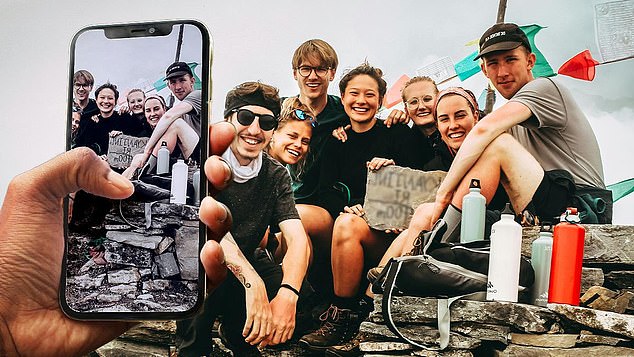
Your mobile device holds far greater value than what one might receive from selling it outright. (Although the resale price can be quite tempting, particularly for recent models.)
About Kim Komando
Sounds like a tech whiz, even if you’re not one yet! The acclaimed popular host Kim Komando can be your secret weapon.
Listen
On over 425 radio stations or download it
podcast
. And become one of the more than 500,000 individuals who follow her for free
5-minute daily email newsletter
.
Consider all the linked accounts: banking and various financial applications, along with your email inbox and confidential texts that may contain sensitive information.
Here are several straightforward methods to safeguard yourself:
● When in public spaces, protect your PIN. If you must unlock your device around others, opt for Face ID or your thumbprint instead.
● Avoid using a simple PIN; definitely avoid four-digit codes. Create one that’s lengthy enough for you to recall easily.
● If you prefer not using Face ID, opt for a passcode that includes both numbers and letters when possible.
5. Overlooking the inspection of data roaming charges/services
Ouch, your sore wallet. Before hitting the road, sea, or sky, visit your mobile carrier’s webpage or contact their customer service to learn about your entitlements while traveling. You might discover that services are restricted to particular countries, time periods, or usage limits.
Be aware of this beforehand; you won’t want to face the unexpected charges later. Based on your findings, opting for a travel SIM or an eSIM might be more advantageous.
Read more


