oleh admin | Apr 13, 2025 | disaster management, disasters, water crises, water management, water supply
The coastal regions of District Sujawal and Thatta have faced severe water shortages over the last several months, with little indication of improvement on the horizon. “Water is essential for life, yet we’ve been denied this basic human right,” remarks Sattar Machi, a local from Union Council Karmalak within Taluka Jati, underscoring the crisis impacting these shores.
As per data shared by officials from the district irrigation department in Sujawal, the primary water sources feeding the coast—including Jati, Ladiyo, Chuhar Jamali, and Shahbunder—are experiencing severe shortages because of depleted water levels further down at Kotri. Given that Sindh faces a total shortfall of 47%, these coastal regions of the province may soon be grappling with drought conditions.
Allah Bux Temro, a local farmer, stated that standing crops like cotton and tomatoes were wilting. The circumstances in these regions have become critical, with both men and women having to cover extensive distances to collect water for drinking and everyday needs.
A local inhabitant named Ali Akbar Thaheem revealed that the groundwater along the coast had become saline, forcing residents to use water likely to cause various health problems.
In these regions, women obtain water from nearby vendors who transport it using donkeys and mules to the town centers within the district. Rasool Bux Bario, one such vendor, mentioned that he charges 150 rupees for a can of water; however, individuals in distant locations often struggle to make payments promptly because of their financial hardships and limited job prospects.
The ongoing scarcity of water has not only deteriorated the quality of life for locals but also endangered the ecological characteristics of the area. Once teeming with life, the riverbed of the Indus is now buried under layers of sand. Consequently, the Indus delta faces severe degradation due to insufficient water flow below the Kotri Barrage.
According to water specialist Naseer Memon, extracting additional water from the Indus River could exacerbate the challenges faced by the coastal area of Sindh. He also stated that the current water shortage has reached levels unseen over the past 25 years in the downstream regions of Sindh, specifically affecting Thatta, Sujawal, Badin, and Tando Muhammad Khan.
Supporting his argument, agricultural scientist and ex-Chief Engineer of the Irrigation Department in Sindh, Obhayo Khan Khushik, called upon the national administration to assess conditions in the downstream regions of Sindh prior to building new channels along the Indus River. He cautioned that insufficient water supply could exacerbate seawater intrusion into these lands, potentially leading to the demise of the Indus Delta.
Provided by SyndiGate Media Inc.
Syndigate.info
).

oleh admin | Mar 27, 2025 | electric power, infrastructure, waste management, water management, water supply
MANILA, Philippines – Manila Water has successfully finished upgrading six key facilities aimed at improving its round-the-clock water supply services for clients in Metro Manila’s East Zone and Rizal. These enhancements were made mainly to address potential increases in usage as well as anticipated power disruptions.
Pumping stations are essential for ensuring continuous water supply to consumers in Metro Manila and Rizal.
Acknowledging this fact, Manila Water has concentrated efforts on fine-tuning these facilities to guarantee their superior performance.
The concessionaire for the Eastern area has enhanced the electricity provision at its Balara Pumping Stations 1 and 2 located in Quezon City.
Installing three intelligent power meters has ensured consistent and non-stop energy supply to these facilities.
These power-saving meters are incorporated into the current Programmable Logic Controller (PLC) along with the Supervisory Control and Data Acquisition (SCADA) system, guaranteeing backup and dependability in electricity distribution.
The enhanced power supply units enable better and quicker management of the pumping systems, cutting down on energy usage and decreasing downtime.
At the Modesta Pumping Station located in San Mateo, Rizal, an investment of P7.6 million has been allocated for the installation of a 300-horsepower horizontally split casing pump along with its accompanying motor.
The upgrade has considerably improved the station’s efficiency, allowing it to more effectively cater to both present and expected needs at the Silangan Reservoir starting from Q4 of 2024.
In an effort to enhance energy reliability, the San Juan Pumping Station 1 located in Quezon City has received a significant P128.6 million update for its main electric systems.
This project encompasses the setup of new 1,750-kilowatt generator units, refurbishment of the genset enclosure, enlargement of the fuel day tanks, and improvements to the automation system.
Moreover, the Cubao Pumping Stations Reliability Project brought about numerous vital improvements.
One major feature of this project involved swapping out the station’s 1.5-megavolt-ampere (MVA) transformer for a sturdier 2-MVA model.
This newly introduced transformer markedly enhances energy efficiency, minimizes power disruptions, and equips the facility to handle upcoming demand, thus guaranteeing a steady and robust water supply for the area.
The effective restoration and upgrade of the Makati Pumping Station have boosted operational efficiency, cut down on carbon emissions, and enhanced water delivery for residents of Makati City.
The upgrade costing Php 92.45 million included swapping out three 300-horsepower electric motors with six smaller horizontal split case pumps, optimizing area usage and guaranteeing consistent water flow.
“These improvements at our pumping stations are being made to accommodate the rising demand as our user community keeps expanding. Our aim is to maintain round-the-clock water supply for all our clients even as we broaden our services,” stated Jeric Sevilla, who leads the Communications Affairs Group at Manila Water.
Apart from enhancing water delivery, Manila Water has also significantly upgraded one of its water treatment facilities.
The firm has improved Balara Treatment Plant 2 through the rehabilitation of its drainage system, replacement of wastewater valves, and restoration of the filtering areas.
Finished in the third quarter of 2024, this ⚡₱37-million⚡ initiative led to a decrease in water loss by 0.20%, which equates to around 0.05 million liters daily.
oleh admin | Mar 27, 2025 | tourists, water, water management, water supply, water treatment
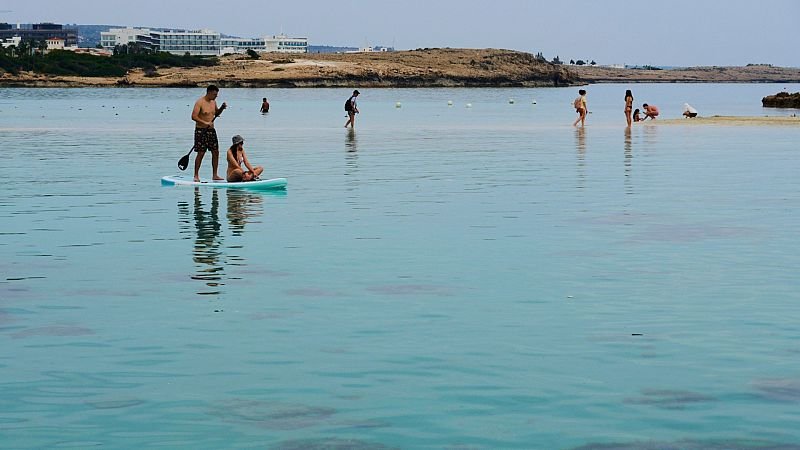
On Wednesday, Cyprus announced its intention to provide subsidies for building private desalination facilities at hotels with the aim of securing sufficient freshwater supplies for this tourist-dependent country during peak summer months.
The needs of millions of visitors create pressure on
significant pressure on limited resources
.
Across the nation’s 108 reservoirs, water levels have plummeted to dangerously low points after experiencing the second-wettest winter in ten years. Consequently, the national water distribution system is under considerable strain because of high demand and extensive leakage issues.
Maria Panayiotou, the nation’s Minister for Agriculture and Environment, announced that the government will allocate €3 million in funding over the coming two years to assist hotels in constructing their own water desalination facilities.
Furthermore, steps will be taken to simplify and expedite the process for crucial industries like agriculture and tourism to develop new projects.
small-scale desalination plants
.
Cyprus plans to invest an additional €8 million in repairing pipeline infrastructure to minimize water leaks and losses, which are believed to be as high as 40 percent, according to Panayiotou.
Cyprus already possesses four permanent desalination facilities.
The government initiatives capitalize on Cyprus’s increasing dependence on desalinated water. Four more portable desalination units are set to start operations in October, capable of generating 30,000 cubic meters of potable water each day.
Cyprus currently operates four permanent desalination facilities, with each facility generating 235,000 cubic meters of potable water per day. However, a fifth plant is not functioning because it was affected by a fire.
Panayiotou stated in December that additional desalination facilities are necessary to boost daily production.
fresh water
production quadrupled over the next ten years.
Cyprus still depends on an extensive dam system with a combined storage capacity of 330 million cubic meters.
According to the minister, Cyprus boasts more dams proportionally to its population than any other European nation. Official data indicates that these dams are presently filled to only 24.6 percent of their capacity, down from 47.2 percent last year.
Tourism makes up 13.5 percent of Cyprus’ gross domestic product. Last year, tourist arrivals surpassed 4 million, establishing a new high mark.


