


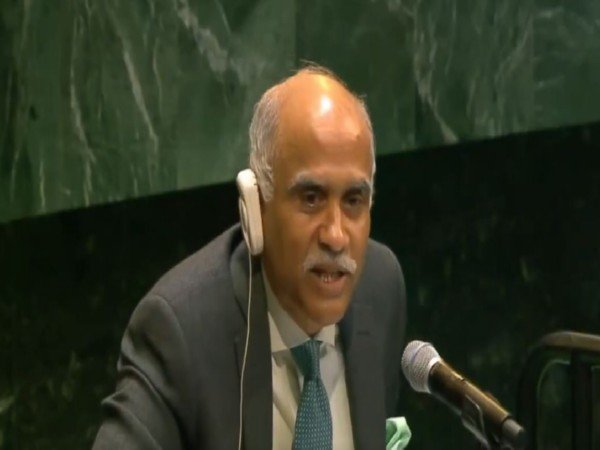
New York
[
US
], March 25 (ANI):
India
has advocated for consensus-based reforms in
UN peacekeeping
, emphasizing the importance of improved financing, advanced technology, and a larger role for
troop-contributing countries
As reported in an official press release,
Speaking at a UN Security Council discussion about adjusting peacekeeping missions to modern challenges,
India
Ambassador Parvathaneni Harish, who serves as India’s Permanent Representative to the United Nations, delineated
India
His plan to update peacekeeping strategies in light of evolving dangers includes addressing the involvement of non-state entities, such as armed factions, terrorist organizations, and international criminal syndicates. Additionally, technological progress has introduced fresh hurdles like misinformation, disinformation, malicious propaganda, contemporary weaponry—such as unmanned aerial vehicles and improvised explosive devices—which represent some of the many novel obstacles confronting peacekeepers nowadays.
He emphasized that reforms should be based on a consensus, involving more actively the countries contributing troops. He stated, “Adjusting peace operations to fit new circumstances is impossible without including those who are on the ground—the countries supplying troops and police—in every phase of the mandate development process.”
Harish cautioned that inadequate funding jeopardizes the efficacy of peacekeeping operations. He emphasized that addressing contemporary threats to peacekeeping requires sufficient financial support and resources aligned with their mandates. The present ambiguity regarding funding and the disparity between available resources and assigned tasks is untenable, unsettling, and unsatisfactory—especially concerning nations from the Global South, which provide the majority of personnel for these efforts.
He further advocated for closing down unnecessary missions that no longer have an operational function. “It’s crucial to streamline peacekeeping operations to ensure effective use of resources. Missions that persist solely due to political reasons rather than practical necessity waste vital funds needed for critical peacekeeping efforts, thereby damaging the United Nations’ reputation.”
India
It reaffirmed its dedication to the Women, Peace and Security (WPS) and Youth, Peace and Security (YPS) initiatives. “We firmly back the WPS and YPS agenda along with increased involvement of the PBC with IFIs to secure funding for peacebuilding efforts.”
Highlighting the importance of women in peacekeeping efforts, Harish emphasized
India
‘ contributions. “Adjusting peacekeeping missions to meet current challenges includes strengthening the essential part played by female peacekeepers, both in terms of quantity and quality. I am delighted to report that earlier this year, in February, we saw progress in this area.”
India
organized the inaugural Conference for Women Peacekeepers from the Global South, assembling delegates from 35 nations contributing troops and police to discuss this crucial topic. The debate has shifted; it’s no longer about whether women are capable of participating in peacekeeping efforts. Instead, the focus is on whether peacekeeping operations can effectively operate without including women.
He emphasized the critical nature of safeguarding peacekeepers’ safety. “Engaging in peacekeeping inherently involves some level of danger. The well-being and protection of peacekeepers should be our top priority. Given today’s intricate conflicts and unconventional dangers, it is essential that we provide sufficient safeguards for those who put their lives on the line for peace. Additionally, it is crucial that individuals responsible for harming peacekeepers face legal consequences.”
Harish promoted incorporating cutting-edge technology into peacekeeping endeavors. He argued that integrating sophisticated monitoring systems, communication devices, and analytical software could enhance understanding of situations and expedite responses during such operations.
India
is prepared to contribute its knowledge as a technological facilitator in this area.”
Concerning the enduring viability of peacekeeping efforts, he stated, “While we discuss modifying peace operations to align with contemporary challenges, it’s crucial to recognize that these missions can’t continue indefinitely. They must develop feasible withdrawal blueprints and exit tactics designed to maintain lasting peace.”
Harish emphasized that peacekeeping efforts require complementary political resolutions. He stated, “It is crucial not to view peacekeeping as the exclusive answer to resolving disputes; true and lasting peace necessitates integrated approaches where political strategies work alongside these missions.” Such cohesive plans can materialize solely through unified action within the UN Security Council. Therefore, he underscored the critical importance of restructuring it.
UNSC
In both sections to ensure it better reflects and represents contemporary geopolitical realities.”
Wrapping up his statement, Harish restated
India
‘s long-standing commitment to
UN peacekeeping
. ”
India
A country strongly dedicated to the ideals of multilateralism and world peace has consistently supported the United Nations in its peacekeeping efforts. To this day, it has contributed approximately 300,000 troops who have participated in over 50 missions.
He likewise honored the fallen peacekeepers. “We honor over 4,000 UN peacekeeping personnel, which includes 182
India
In personnel who have made the supreme sacrifice in the service of peace, we aim to complete the Memorial Wall at the earliest date possible in their honor.”
Harish closed by reaffirming
India
‘s commitment to reforming
UN peacekeeping
As we gaze ahead into the future,
India
reiterates its steadfast dedication to
UN peacekeeping
Moreover, it reaffirms its ongoing commitment to the United Nations as it works toward global peace and security. The proposed reforms emphasize the necessity for a more equitable, comprehensive, and efficient strategy in this endeavor.
UN peacekeeping
For an age marked by scarce resources, geopolitical instability, and turmoil.” (ANI)
Provided by Syndigate Media Inc. (
Syndigate.info
).