


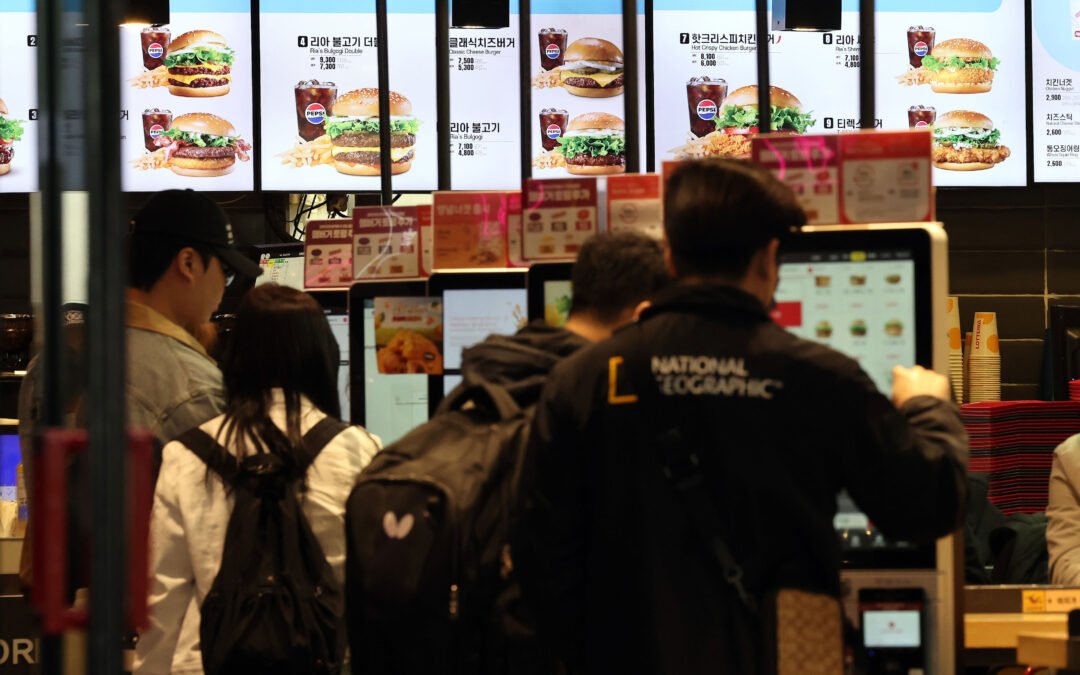
In March, South Korea experienced a 2.1% rise in consumer prices compared to the previous year, which marks the third consecutive month that inflation has surpassed the central bank’s 2% target. This uptick was primarily due to increasing food prices, as significant food corporations raised their prices in response to elevated global raw material expenses and internal political instability.
Statistics Korea reported on April 2 that the consumer price index (CPI) was recorded at 116.29 in March, marking an increase of 2.1% compared to the previous year. Following four consecutive months where inflation stayed within the 1% range—from September through December 2024—inflation picked up speed again, reaching 2.2% in January and slightly decreasing to 2.0% in February.
Oil prices, which were a significant contributor to inflation earlier in the year, increased by 2.8% in March. This rise was relatively small due to reduced international oil costs, influenced by an uptick in U.S. crude output, slowly impacting local markets. In terms of monthly changes, gasoline and diesel prices decreased by 2.1% and 2.2% respectively.
Nonetheless, the expenses for processed foods and dining out rose significantly, maintaining inflation rates higher than the central bank’s objectives. The cost of processed foods escalated by 3.6% in March compared to the previous year, marking the most substantial rise since January 2024. Notably, products like coffee (up 8.3%) and bread (increased by 6.3%) experienced sharp jumps primarily because of escalating input costs. Experts observed that certain food producers exploited the prevailing political unrest to implement price surges that exceeded justifiable levels based solely on increased production costs.
Rising food expenses resulted in higher restaurant charges, with dining inflation climbing by 3.0% for the consecutive second month. Dishes like sashimi (5.4%) and fried chicken (5.3%) experienced notable cost increases, exacerbating customer dissatisfaction regarding escalating meal prices.
Outside of fluctuating food and energy costs, core inflation increased by 1.9% compared to the previous year in March, continuing an upward trend over the last six months with gains mostly within the 1% range. Additionally, the cost-of-living index, measuring 144 commonly bought items and services, went up by 2.4%, surpassing general inflation rates for five consecutive months now.