
by admin | Sep 14, 2024 | cuisine, dining, food and drink, food culture, foodies
Greece is famous for its delectable Mediterranean fare, combining freshness, flavor, and simplicity. Below is a selection of must-try dishes during your upcoming visit.
Greece
Famous for its rich historical background and stunning vistas, this place is also a must-visit spot for gastronomy enthusiasts. Transitioning from the gleaming shores of the Aegean Sea to the quaint white-washed hamlets nestled in the hills, every area presents distinctive gourmet delights infused with regional tastes. The essence of Greece’s cuisine, brimming with genuine flavors and locally sourced ingredients, mirrors thousands of years of tradition and welcoming customs. Delectable meals crafted with zeal and passed through generations can be found at nearly every turn, whether in idyllic taverns or cozy eateries run by families.
Planning a trip to Greece? Learn more about the destination to get ready for your journey:
-
Greece: 30 Essential Phrases to Master in Greek for a Smooth Trip
-
Greece: Most Stunning Islands to Explore Within Each Archipelago
-
Greece: 6 lesser-known spots to explore away from typical tourist attractions
Moussaka
Moussaka is a signature delicacy from Greek cooking. This layered casserole features eggplants, ground mutton, tomatoes, onions, garlic, and various spices, topped with a savory Béchamel sauce and cooked until it turns golden and creamy.

Souvláki
Souvlaki is a cornerstone of Greek street cuisine. Typically made from chunks of meat such as pork, chicken, or lamb that have been seasoned with various spices, then threaded onto skewers and cooked over an open flame. This dish is commonly enjoyed wrapped in pita bread along with crisp veggies like cucumbers, tomatoes, onions, and a dollop of creamy tzatziki sauce.

Tarama
Taramasalata is a delightful appetizer prepared using fish roe (typically from cod), combined with olive oil, lemon juice, onions, and occasionally potatoes. This dish is commonly enjoyed alongside fresh bread.

Horiatiki (Greek salad)
The classic Greek salad known as Horiatiki is a straightforward yet delicious dish. It consists of ripe tomatoes, crunchy cucumbers, red onions, green bell peppers, Kalamata olives, and feta cheese, all complemented by a dressing of olive oil, oregano, and various herbs.

Dolmadakia
Dolmades consist of vine leaves filled with a blend of rice, onions, fragrant herbs, and olive oil. These small delights make for an excellent appetizer or starter.

Gyros
Gyro dishes resemble Souvlaki but feature meat (such as pork, chicken, or lamb) roasted on a vertical spit. After being carefully shaved into thin slices, this meat is wrapped in pita bread along with vegetables and condiments such as tzatziki sauce.

Fried squid
Surrounded by the ocean, Greece naturally features plenty of seafood dishes. One beloved option across the nation is fried calamari, which is enjoyed for its crispiness and typically accompanied by wedges of lemon.

Spanakopita
The dish consists of a spinach and feta tart crafted from sheets of flaky phyllo pastry filled with a blend of freshly chopped spinach, onions, crumbled feta cheese, eggs, and aromatic herbs. It offers a delightful veggie choice.

Baklava
Why not indulge in baklava for dessert? This delightful treat features layers of flaky phyllo dough filled with ground nuts and drizzled with a sweet syrup infused with hints of cinnamon and orange blossom water, resulting in a crisp yet sugary delight.

Loukoumades
Loukoumades are tiny spheres of fried batter akin to doughnut holes. After frying, they’re soaked in honey and dusted with cinnamon. An irresistible dessert you should definitely sample.


by admin | Sep 2, 2024 | earth, earth science, engineering, geology, science
-
Scientists identified a torus-like area at the upper boundary of the outer core.
-
This less dense area aids in agitating the molten metal, thereby producing the magnetic field.
Researchers have discovered an enormous ring-like formation hidden deep below the surface.
Scientists from the Australian National University utilized seismic waves created by
earthquakes
to gaze into the Earth’s enigmatic liquid center.
By following the trajectory of these waves throughout the Earth, scientists discovered a layer approximately hundreds of kilometers deep where their speed decreased by two percent compared to usual.
The doughnut-shaped formation encircles the Earth’s liquid outer core along an equatorial path, potentially playing a key role in generating our planet’s shielding magnetic field.
Professor Hrvoje Tkalčić, who led the research, states: “The magnetic field is an essential component required for sustaining life on Earth’s surface.”
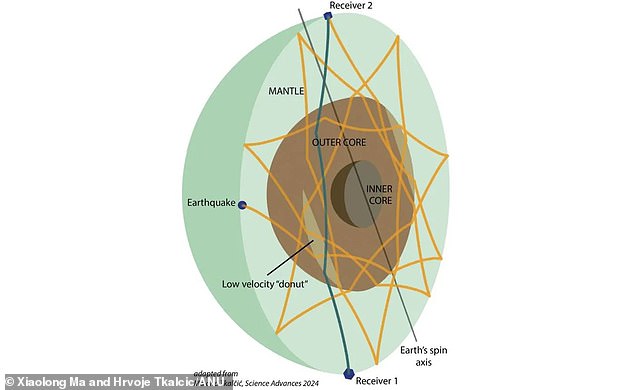
Our planet consists of four primary layers.
the exterior crust, the partly molten mantle, a fluid metallic outer core, and a solid metallic inner core.
![]()
When the movement of tectonic plates in the crust creates earthquakes, these produce vibrations that spread out through all the other layers of the Earth.
Leveraging the global network of seismic monitoring stations,
Scientists can observe how the waves propagate and use this information to forecast the circumstances beneath the water’s surface.
Researchers typically focus on the large, strong wavefronts that circulate globally within the initial hour following an earthquake.
Nevertheless, Professor Tkalčić and his co-author Dr. Xiaolong Ma managed to identify this pattern by examining the subtle remnants of waves that persisted for several hours following the primary shock.
The technique demonstrated that seismic waves propagating close to the poles were traveling at a quicker pace compared to those nearer to the equator.

When they compared their findings with various models of the Earth’s interior, Professor Tkalčić and Dr Ma discovered that these observations were most accurately described by the existence of an extensive subterranean ‘torus’, essentially a doughnut-shaped area.
They forecast that this area is located solely at low latitudes and aligns with the equator close to the upper boundary of the outer core, where the liquid part interfaces with the mantle.
“We aren’t certain about the precise thickness of the doughnut, but we deduced that it extends several hundred kilometers below the core-mantle boundary,” states Professor Tkalčić.
Due to the vital importance of this area, their discovery might also hold significant consequences for understanding life on our planet and beyond.
The Earth’s outer core extends about 2,160 miles (3,480 km), which is somewhat bigger than the size of Mars.
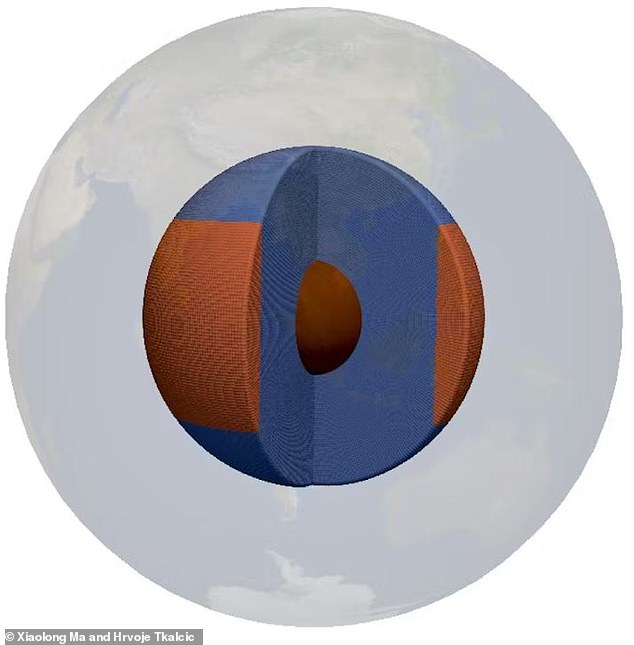

Primarily composed of molten nickel and iron, convection currents combined with the planet’s spin drive the fluid metals in this region into elongated vertical whirls oriented from north to south, similar to colossal water tornadoes.
The rotating flows within these molten materials function akin to a dynamo, generating the Earth’s magnetic field.
As this donut-shaped area has risen to the upper part of the liquid outer core, it implies that it might contain an abundance of lighter elements such as silicon, sulfur, oxygen, hydrogen, or carbon.
Professor Tkalčić states: “Our discoveries are intriguing as this reduced speed within the liquid core suggests a significant presence of lightweight chemical elements in those areas, which would consequently decelerate the seismic waves.”


These lightweight components, along with variations in temperature, assist in agitating the fluid within the outer core.
Without that vigorous movement to power the planet’s internal dynamo, Earth’s magnetic field may not have come into existence.
In the absence of the magnetic field, the planet’s surface would face an unrelenting assault from charged particles.
From the sun, which has the power to damage the genetic material of living organisms.
This ring-like area could thus be an essential clue in understanding how life originated on Earth and what signs we should search for when identifying potentially livable exoplanets.
Dr. Tkalčić concludes: “Our findings might encourage further investigation into the magnetic fields of both our planet and others.”
Read more
by admin | Aug 30, 2024 | beautiful places, islands, korean, tourist attractions, travel destinations
Jeju Island is a crucial component of any visit to South Korea. The island’s breathtaking landscapes and distinctive culture immerse visitors in a captivating environment. Let’s make our way to the most stunning location in South Korea…
Situated along the southern edge of the Korean Peninsula lies Jeju Island, frequently dubbed South Korea’s secret gem. Known as a volcanic haven featuring stunning vistas, historical customs, and serene surroundings, it draws countless tourists annually who seek natural wonders, cultural immersion, and thrilling experiences. No matter whether your heart desires arduous treks, tranquil shores, or insights into indigenous lifestyles, Jeju caters to all preferences. Explore further why many deem this island to be the crown jewel among South Korea’s attractions.
Exploring South Korea? Learn more about it here:
-
South Korea: 6 Stunning Islands to Explore During Your Visit
-
South Korea: 7 Must-Explore Cities in the Land of the Morning Calm
-
The most striking Buddhist temples in South Korea
Uncover South Korea’s loveliest destination
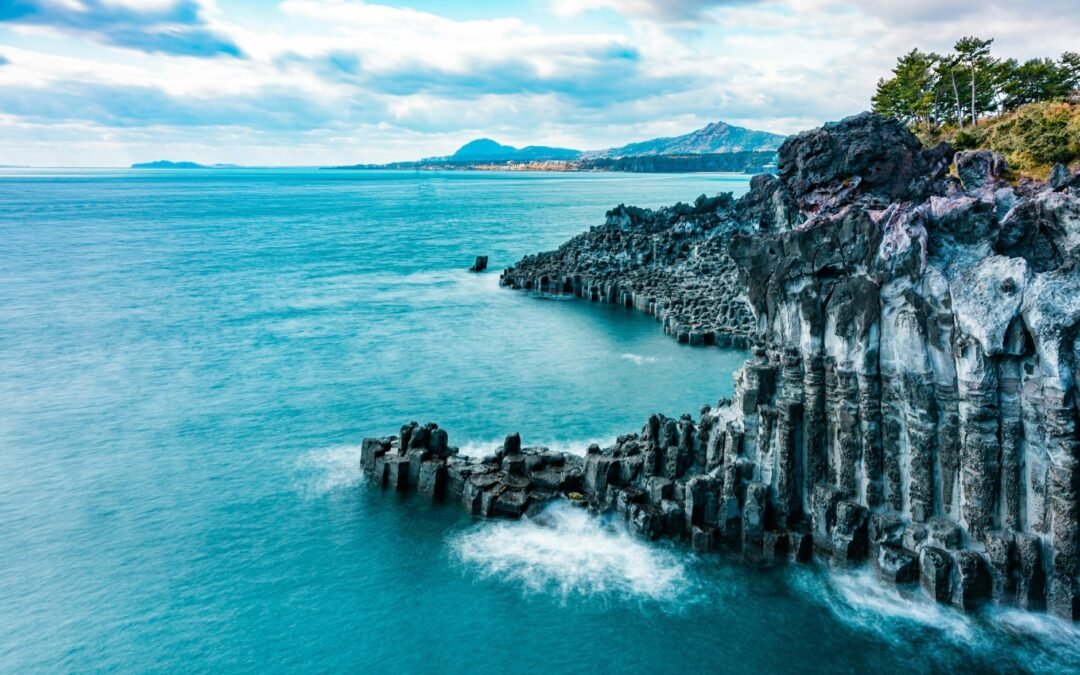
From the “top of South Korea” to lava-formed coastlines, explore the terrains of Jeju.
Mount Hallasan
Hallasan, which looms over the island, is among Jeju’s primary draws. Standing at 1,947 meters tall, it ranks as the tallest mountain in South Korea. Encircled by walking paths that traverse lush forests, volcanic rock formations, and highland grasslands, this peak provides hikers with breathtaking views of the entire island and, weather permitting, expansive ocean vistas. Atop the summit lies a crater known as
Baengnokdam
is home to a lake that becomes full after the rainy season, imbuing this already captivating scenery with an air of mystique.

Jeju is renowned for its numerous waterfalls dispersed across the island, providing distinct experiences. The most well-known include
Cheonjiyeon
and
Jeongbang
:
-
Cheonjiyeon, translating to “the pond where heaven meets earth,” is a serene location enveloped by dense foliage.
-
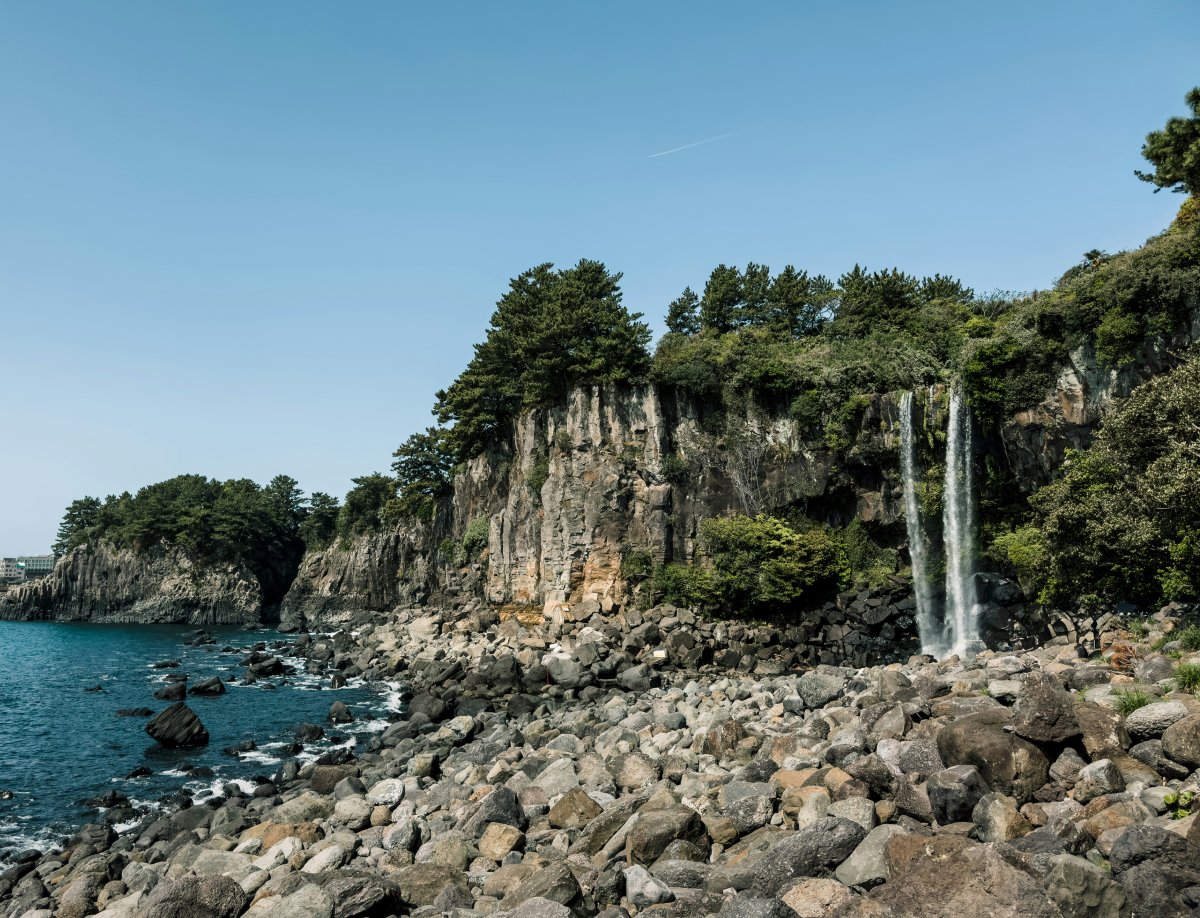
In contrast, the Jeongbang waterfall stands out as it cascades straight into the sea, producing a spectacular natural display.
These waterfalls not only marvel with their natural beauty but are also imbued with local legends that add an extra layer of enchantment for visitors.
The island’s beaches are as diverse as they are beautiful. Among them:
-
Hyeopjae Beach
, featuring pristine white sands and crystal-clear turquoise waters.
-
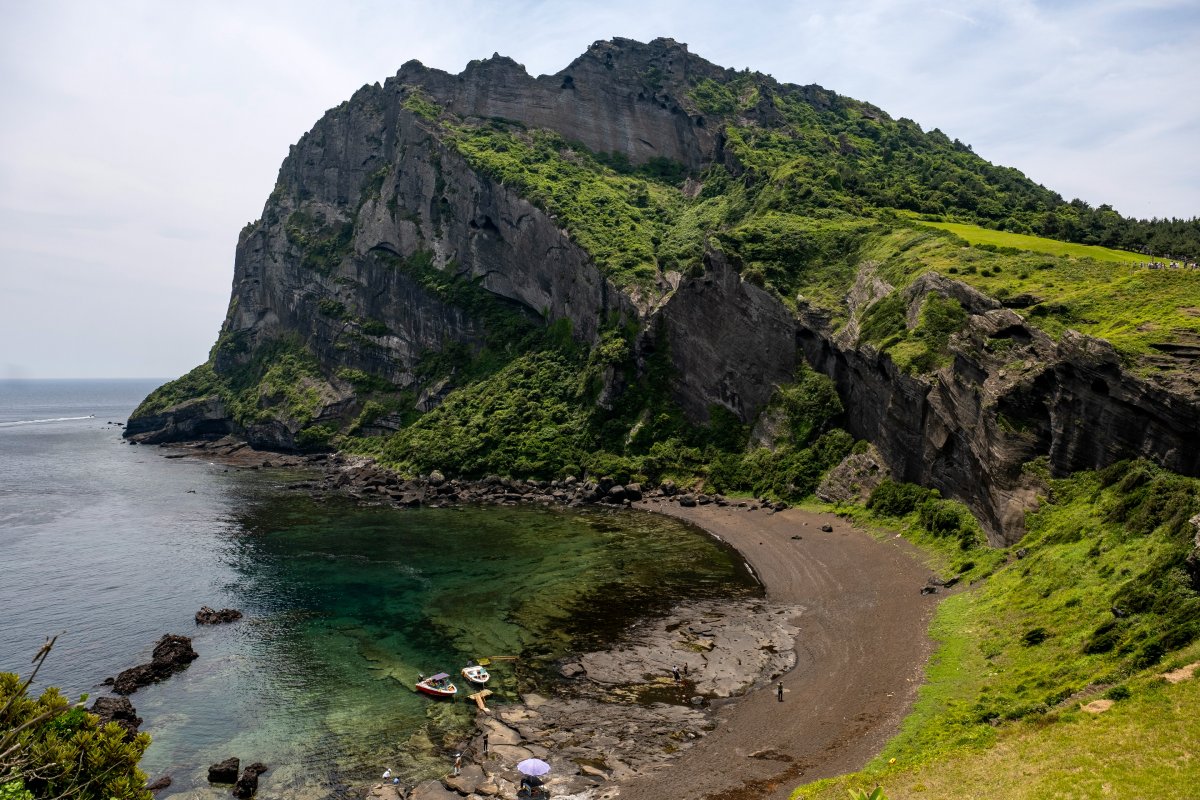
Seongsan Ilchulbong Beach
, featuring its dark volcanic sands, providing a dramatic contrast against the azure ocean waves. The site owes its name to Seongsan Ilchulbong, commonly referred to as “Sunrise Peak,” a majestic coastal volcanic crater towering over the water.
For enthusiasts of geology,
Manjanggul Cave
It stands as one of the most extensive lava caves globally, extending for more than 13 kilometers. This subterranean marvel, featuring remarkable lava structures and vibrant hues, adds another compelling reason to visit Jeju Island.
Jeju Island on foot…
For those who love hiking and walking,
the Olle paths
meander alongside the coastline, weaving past quaint villages and untouched natural scenery of the island. Drawing inspiration from the renowned Camino de Santiago pilgrimage paths, these pathways provide
complete engagement with Jeju’s natural and cultural splendor
Each Olle route is distinct, varying from leisurely walks beside the ocean to strenuous treks over volcanic peaks. As you journey on, you’ll traverse citrus orchards, pine woods, rocky fences, and quaint villages where life appears frozen in time.
Jeju is also a haven os biodiversity, and
the Seogwipo Botanical Garden
This garden serves as a prime illustration of the island’s abundant natural resources. As one of the biggest in Asia, it houses an extensive collection of subtropical flora, themed gardens, and glasshouses. Here, nature reaches its pinnacle of beauty and diversity.
…and through its culture, merging the old with the new.
Jeju is more than just a haven of natural splendor; it is also
a land brimming with culture and heritage
One of the most distinctive customs is that of the
Haenyeo
Free divers, frequently elderly individuals, harvest marine life without relying on oxygen tanks. Recognized by UNESCO as an Intangible Cultural Heritage, this practice stands as a testament to the resilience and self-reliance of Jeju Island’s female population.

The island is equally renowned for its
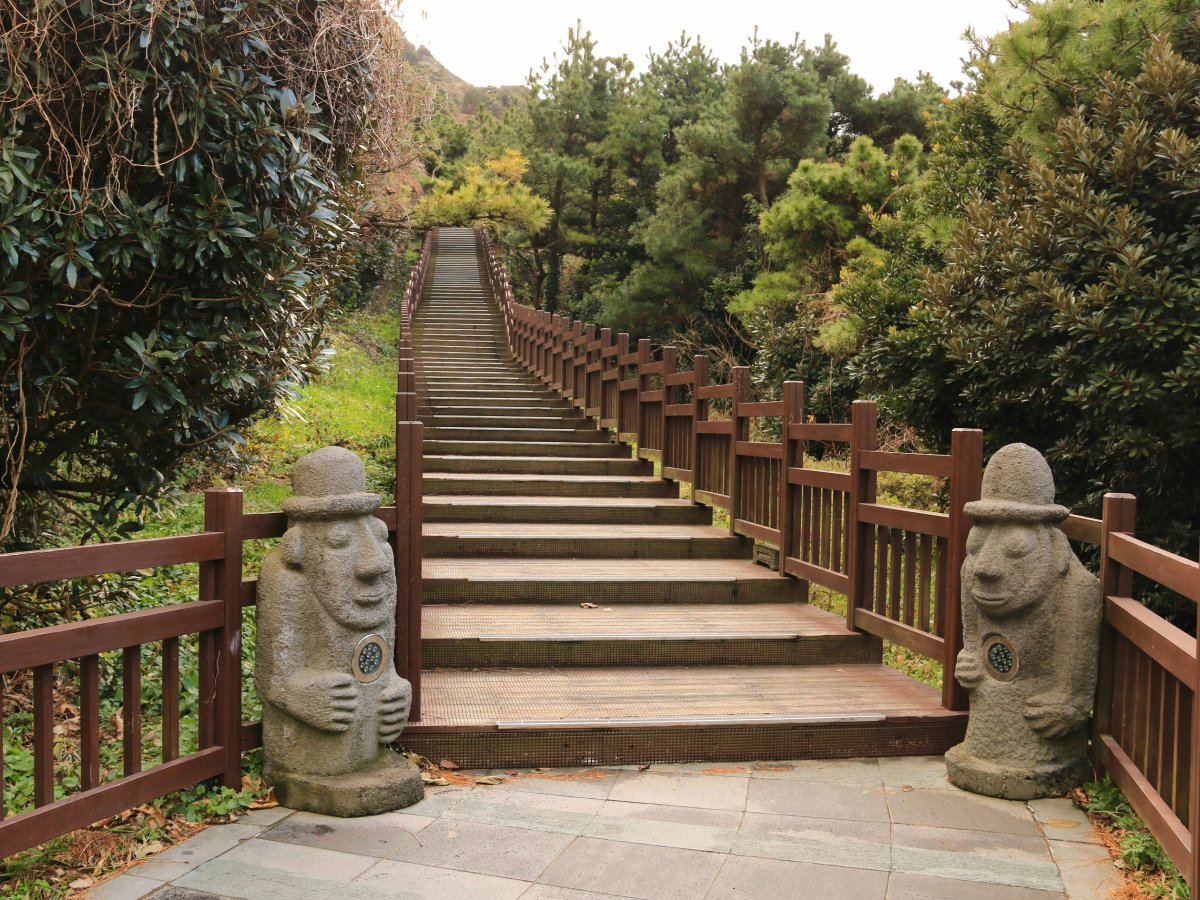
Dolhareubang
, enigmatic stone statues depicting males, commonly called “stone grandfathers.” Dispersed throughout the island, these sculptures are believed to be protectors, safeguarding residents against malevolent spirits.
by admin | Aug 29, 2024 | asia, culture, international news, politics, world
National flags embody much more than just national pride and identity; they symbolize freedom and the unwavering spirit of the people who fight for them. This is why an unspoken competition persists even now over which nations boast the most stunning flags. Explore the lands adorned with these captivating banners today.
Many of us inherently feel a sense of patriotism without realizing it, which makes us quick to consider our national flags as the loveliest ones around, regardless of their actual appearance. This could be due to the colors and emblems incorporated into these banners. Discover what some people deem to be the most attractive flags globally nowadays. Keep in mind that this ranking is subjective since beauty depends on individual perception.
Summary of the Most Stunning Flags Worldwide Today
Ranking
|
Country
|
Continent
|
1
|
Kenya
|
Africa
|
2
|
South Africa
|
Africa
|
3
|
Mozambique
|
Africa
|
4
|
Malaysia
|
Asia
|
5
|
Nepal
|
Asia
|
6
|
Kyrgyzstan
|
Asia
|
7
|
Australia
|
Oceania
|
8
|
Argentina
|
South America
|
9
|
Brazil
|
South America
|
10
|
Cuba
|
North America
|
11
|
Greece
|
Europe
|
12
|
Canada
|
North America
|
13
|
New Zealand
|
Oceania
|
14
|
Bosnia and Herzegovina
|
Europe
|
15
|
United States of America
|
North America
|
16
|
Denmark
|
Europe
|
17
|
Mauritania
|
Africa
|
18
|
Tanzania
|
Africa
|
19
|
Guyana
|
South America
|
20
|
North Macedonia
|
Europe
|
21
|
Seychelles
|
Africa
|
22
|
Bhutan
|
Asia
|
23
|
India
|
Asia
|
24
|
France
|
Europe
|
25
|
Portugal
|
Europe
|
Top 25 Most Stunning Flags Worldwide Today
Across time, countries have altered their flags to represent the strength of spirit among those who relate to the emblem.
These flags act as symbols of national pride, particularly when their citizens find themselves abroad. Although many nations claim to possess the finest-looking banner, we’ve ranked the top 25 countries with the most attractive flags.
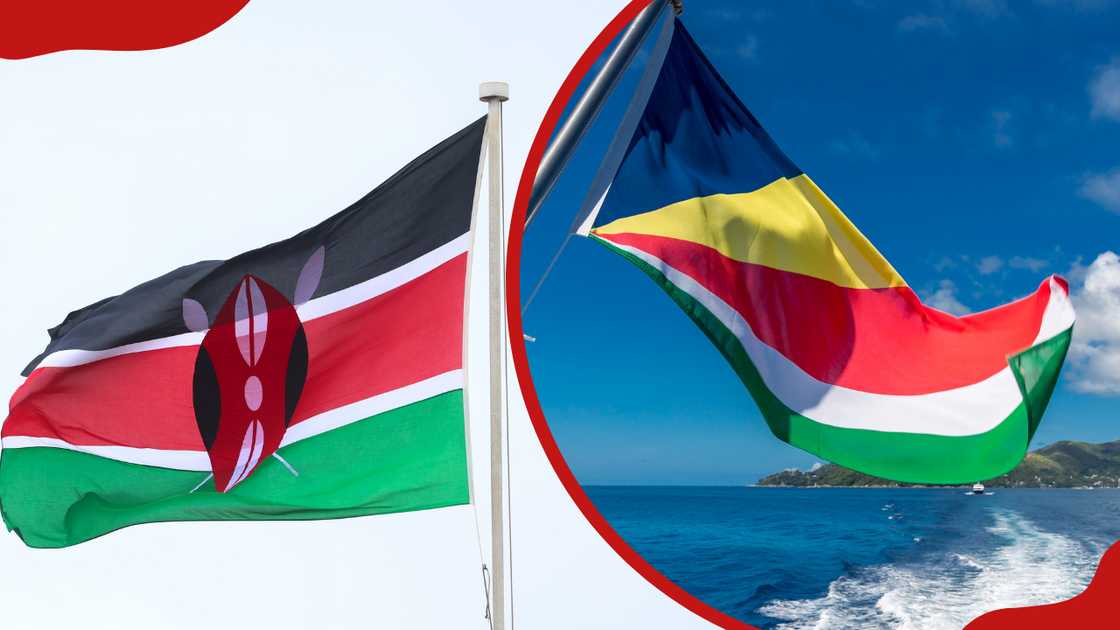
1. Kenya
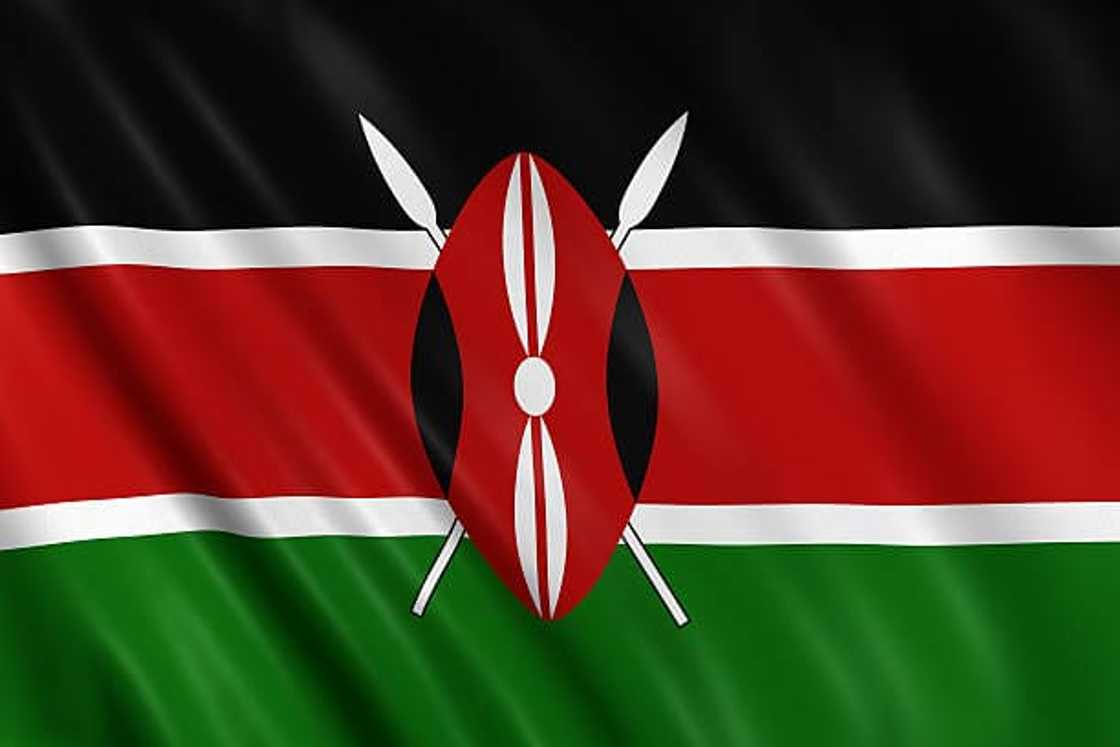
In 2024, the Kenyan flag might be considered one of the most stunning globally. Adopted in 1963, this emblematic banner includes a central shield flanked by two intersecting spears, set against a tri-color band of black, red, and white with green borders. Green symbolizes Kenya’s lush environment and abundant resources.
Black symbolizes the Kenyan population and the broader African continent. The color red stands for the blood shed during the fight for independence. White embodies peace and cohesion, whereas the shield and spears signify Kenya’s protection of these values and others depicted.
2. South Africa

Since its adoption and use beginning in 1994, the South African flag ranks amongst the top five most attractive flags globally. It encapsulates hundreds of years of the nation’s heritage. Despite its elegant design, the official meanings behind the colors of South Africa’s flag have never been formally articulated.
The belief is that the black, green, and yellow hues were adopted from Nelson Mandela’s African National Congress (ANC) emblem. Conversely, the shades of red, white, and blue originated from the Transvaal flag. It’s thought that the Y-shaped arrangement of these colors represents the blending of various cultures into a single nation.
3. Mozambique

The Mozambican flag stands out due to its inclusion of an AK-47, which serves as a reminder of the sacrifices made during their fight for freedom from colonial rule. In 2024, this distinctive banner ranks within the top 10 most aesthetically pleasing national flags globally.
Officially introduced in 1983, this emblem features several symbols on its hoist side: a djembe, an AK-47, a book, and a star. The book signifies the significance of education, while the djembe underscores the role of agriculture as the foundation of the nation’s economy.
The green color symbolizes Mozambique’s abundant natural resources; white stands for peace, black signifies the African continent, yellow indicates the nation’s mineral wealth, and red reflects the sacrifices made through bloodshed during the fight for independence.
4. Malaysia
Malaysia’s flag ranks among the ten most stunning flags in Asia. It is widely referred to as
Jalur Gemilang
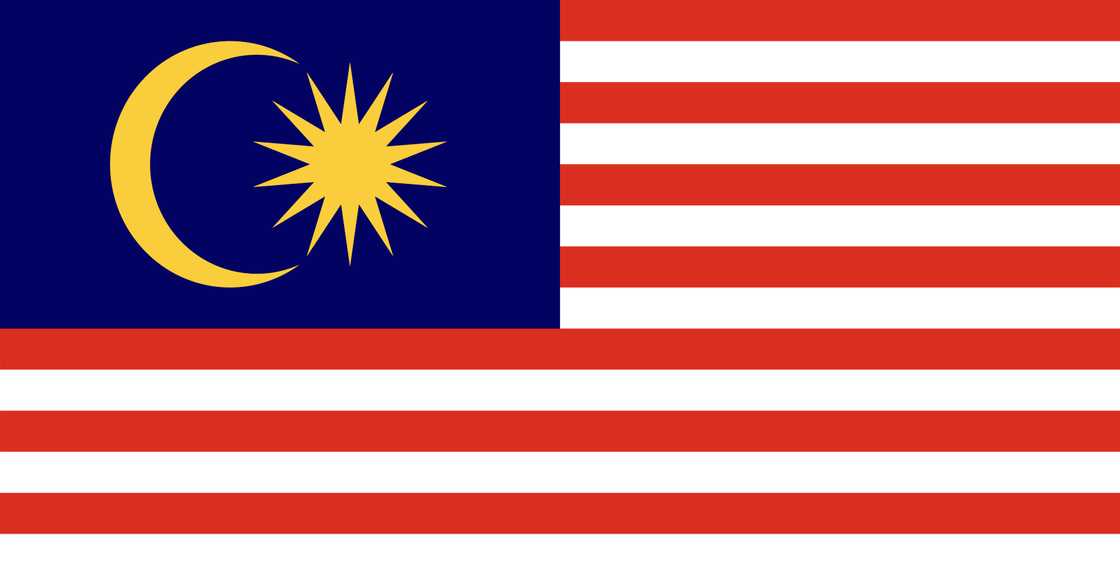
(Marks of Honor) and has been in use since 1963. The Malaysian flag includes 14 alternating stripes of white and red. Additionally, it comprises a blue canton containing a crescent and a fourteen-pointed star known as the Bintang Persekutuan (Federal Star).
The white and red stripes stand for Malaysia’s 13 states along with its federal territories. The 14 rays of the star embody the solidarity among these regions. Meanwhile, the crescent alludes to Islam, which is the nation’s official faith. Finally, yellow denotes the regal color associated with the Malay rulers.
5. Nepal
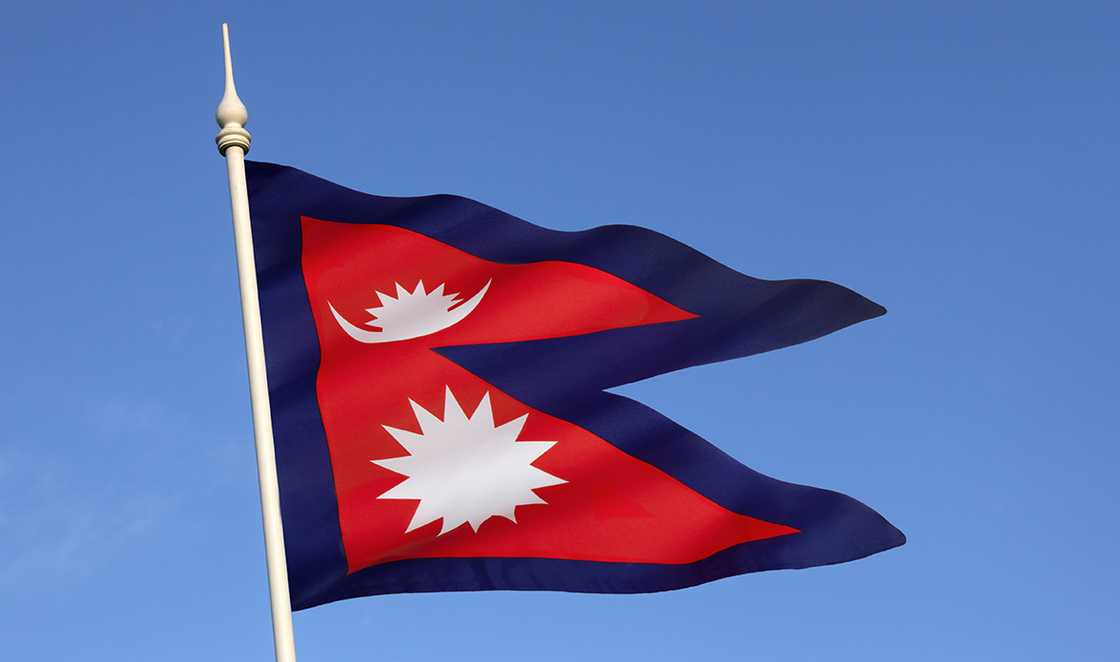
The Nepalese flag ranks among the top ten most attractive flags globally. Its beauty and distinctiveness stem from an unconventional shape; unlike typical banners, it isn’t rectangular. Instead, its inspiration comes directly from the majestic peaks of Mount Everest.
Two themes, the moon and sun, embody serenity and determination. The predominant color is deep crimson red, representing the nation’s emblematic flower—the rhododondron. The borders are adorned with blue, signifying tranquility.
6. Kyrgyzstan
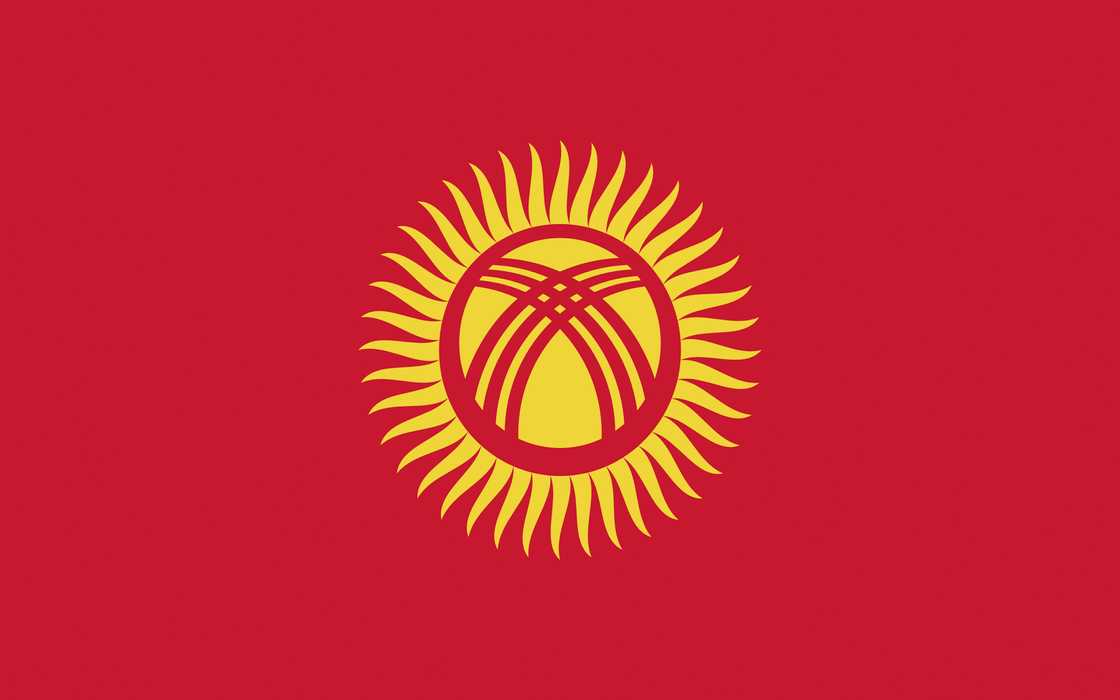
Kyrgyzstan was once part of the Soviet Union prior to its dissolution. The nation did not use its own flag until 1992, half a year following its declaration of independence. The national flag of Kyrgyzstan showcases a vibrant red backdrop symbolizing the courage of its populace.
At the heart of this emblem lies a golden depiction of an intense sun, signifying tranquility and prosperity. Surrounding this solar motif are forty radiant beams, each representing one of the Kyrgyz clans that united to combat the Mongol invasion. Within the sun’s disc, intricate lines mirror a tunduk—the apex of a traditional Kyrgyz yurt, which stands as a metaphor for their familial dwelling.
7. Australia

Australia’s flag is stunning not only aesthetically but also symbolically. It ranks within the top 20 most attractive flags globally. The design prominently includes the Union Jack in the upper left corner, signifying its connection to the Commonwealth.
Beneath the Union Jack, there is a prominent seven-pointed star similar to the one used in the Commonwealth design. To the right side of the Australian flag, five differently sized stars depict the Southern Cross constellation, which is visible from Australia.
8. Argentina
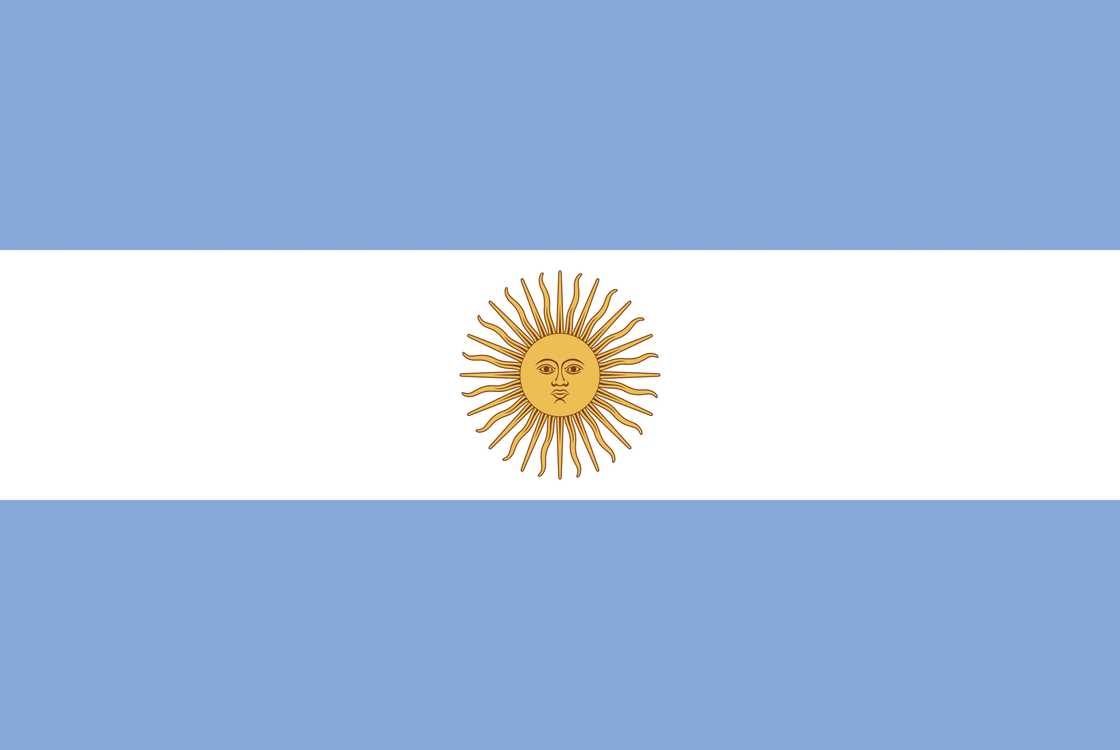
Argentina boasts one of the world’s ten most attractive flags. The nation’s banner features two pale blue stripes at the top and bottom, sandwiching a single white stripe in between. At its center shines an exquisite gold “Sun of May.”
9. Brazil

The Auriverde has served as Brazil’s official flag since 1889 and stands out among national flags due to its rich symbolic elements. The green hue symbolizes the nation’s vast landscapes and woodlands, whereas yellow signifies the abundance of gold within the country.
In the center lies a blue area shaped like a celestial sphere symbolizing the nighttime sky above Rio de Janeiro. Small white stars represent individual Brazilian states within this spherical depiction. The phrase “Ordem e Progresso” (Order and Progress) spans the design, inspired by the positivist slogan of French philosopher Auguste Comte.
10. Cuba
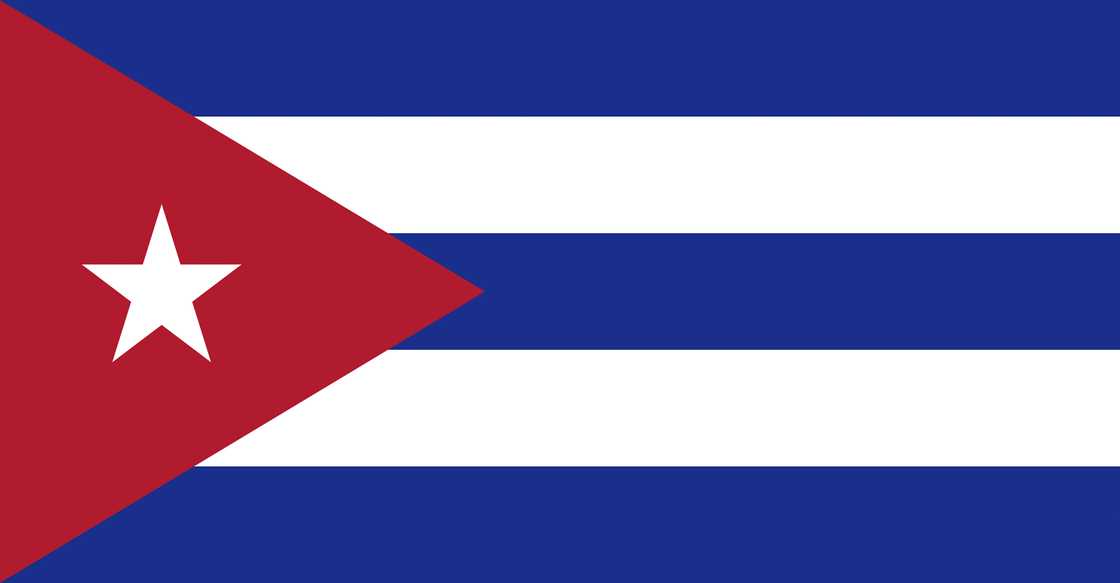
The Cuban flag was conceived well ahead of the nation achieving freedom. The vision of a liberated Cuba shaped its creation. Designed in 1849 by Narciso López, despite him not witnessing it waving above Cuba, his contribution stands as a timeless emblem of the country’s fortitude and fight for autonomy.
The white stripes signify the purity of thoughts, whereas the corresponding blue stripes denote the three governing sections of Cuba. The red section at the edge stands for bravery, with the star within the red triangle representing the sovereignty of the recently established nation.
11. Greece

The Greek flag brings to mind images of the nation’s enchanting azure seas and picturesque shorelines. Despite appearing rather simple, its symbols hold significant meaning. In 2023, it ranks among the world’s most stunning national flags.
The blue color signifies the ocean and the heavens. White stands for the unblemished nature of the fight for freedom, distinct from the famous structures along the coastlines. The sequence of nine alternating blue and white stripes embodies the nation’s slogan.
Eleftheria I Thanatos
, meaning freedom or death.
The cross located in the farthest corner signifies the nation’s official faith, which is Eastern Orthodox Christianity.
12. Canada

Canada boasts one of the most impressive flags globally, distinguished by its iconic red maple leaf at the center. Historically, the British Empire colonized Canada. The country adopted its official flag in 1965 from among three proposed designs; the final choice became the preferred version. This design prominently features two colors: white and red.
The maple leaf serves as a symbol of Canadian identity, embodying values such as bravery, faithfulness, and dignity. This iconic image includes 11 points; ten points stand for the Canadian provinces, with the eleventh point signifying the nation’s three territories.
13. New Zealand
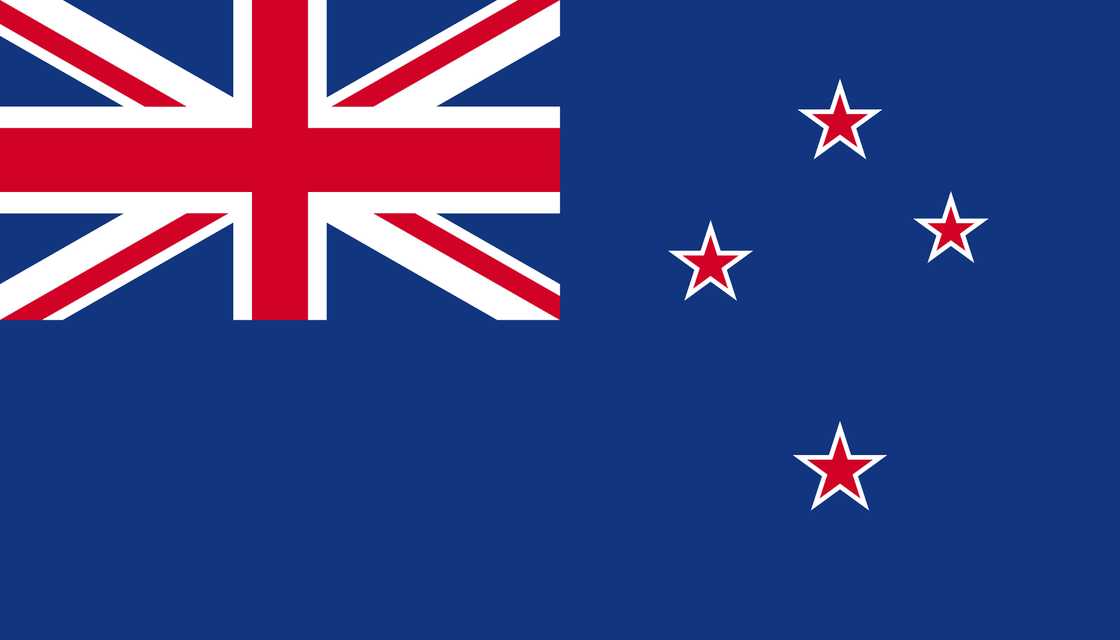
For much of its history, New Zealand flew the Union Jack as its national symbol, serving as both a British colony and dominion. In 1902, however, it adopted its present-day flag. Despite this change, the country’s flag continues to feature the British emblem in the top-left corner.
New Zealand’s flag features three colors: royal blue, red, and white. The shade of blue aligns with the Royal Navy’s Blue Squadron ensign. The red stars represent the nation’s position in the Southern Hemisphere and honor traditional Māori legends.
As recently as 2016, New Zealand citizens could vote between the current flag design and a new one featuring their iconic silver fern – but the original won and remains the national standard to this day.
14. Bosnia and Herzegovina

Although Bosnia and Herzegovina may not be among the top destinations globally, it likely boasts the finest flag worldwide. This striking emblem combines aesthetic appeal with profound symbolic meaning. The colors featured on the flag of Bosnia and Herzegovina are yellow, blue, and white.
The vertices of the yellow triangle symbolize the three principal ethnic communities: the Bosniaks, Croats, and Serbs. The diagonal row of white stars signifies numerous European nations, highlighting Bosnia & Herzegovina’s position as part of an amicable community.
15. The USA

The United States’ flag stands out for its historical significance and widespread recognition. Among global banners, it holds a prominent position. Its design was finalized in 1960 following the admission of Hawaii into the Union as the fiftieth state. This version features 50 stars, each representing one of the present-day American states. Meanwhile, the alternating red and white stripes symbolize the original 13 colonies which declared independence from Britain and later formed the core member-states of the U.S.A.
The American flag could stay unchanged for now, as both Washington D.C. and Puerto Rico express their desire to become U.S. states. Should this happen, the flag’s design would require modification to include additional stars symbolizing these newly admitted states.
16. Denmark
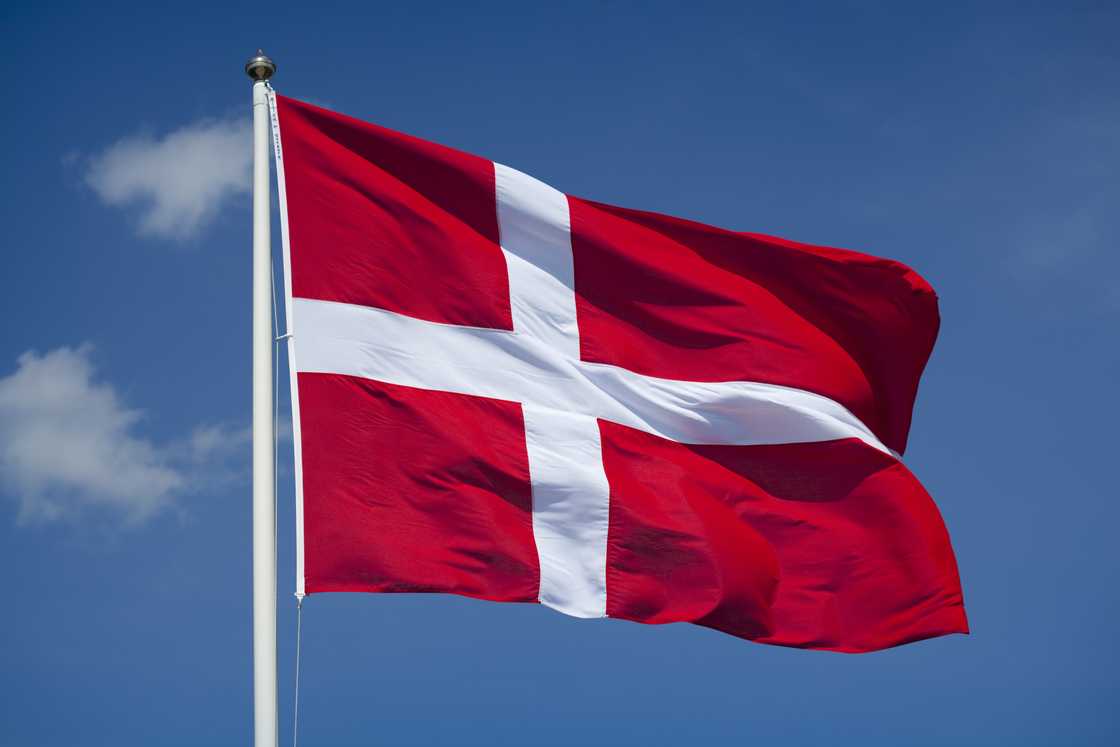
The Danish flag displays a red field adorned with a white Nordic cross extending from edge to edge. This cross embodies the Christian faith shared among Danes, whereas the crimson backdrop signifies the nation’s monarchical past. In use since the 13th century, this banner stands as the world’s oldest continually employed national flag.
17. Mauritania
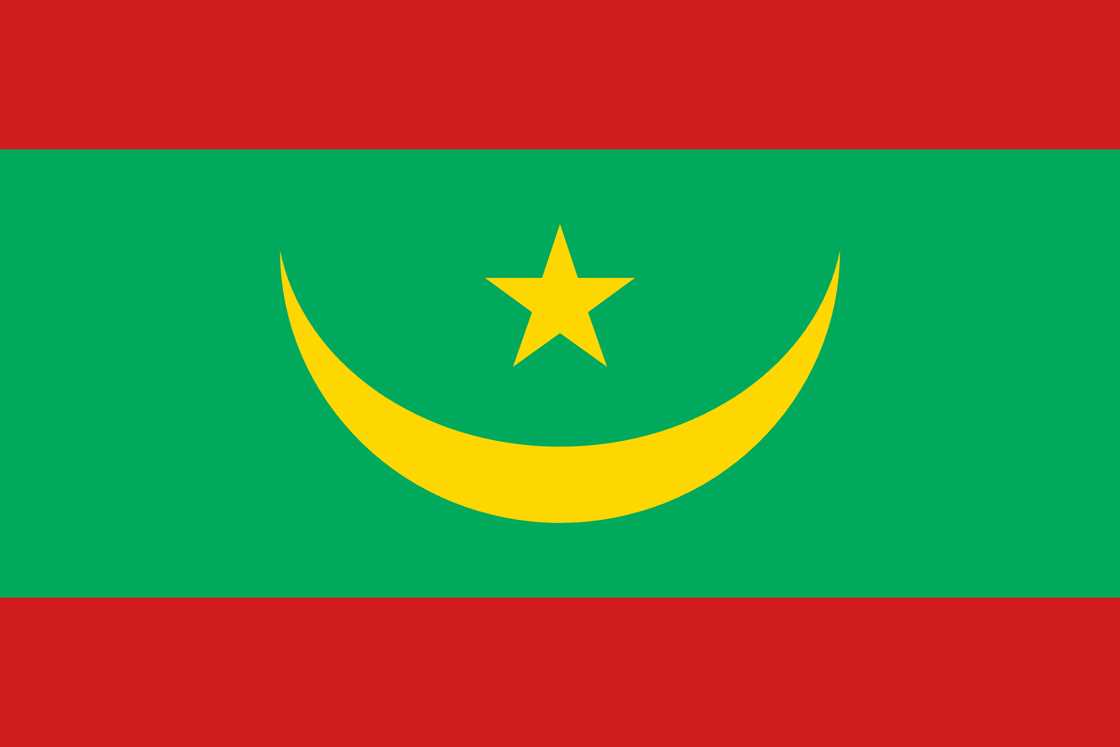
The flag of Mauritania features a green background with a yellow crescent and star at its center. Green represents Islam, whereas the crescent and star stand as emblems of this religion. Additionally, these colors denote the nation’s principal ethnic divisions: the predominantly Black population and the Arab-Berber community. This distinctive emblem was formally accepted in 1959 and serves as an exclusive marker of Mauritanian heritage.
18. Tanzania

The Tanzanian flag features a black diagonal stripe bordered with yellow, dividing the flag into two triangles; the top triangle near the staff is green, and the bottom one is blue. This design was formally accepted on June 30, 1964, following the independence of the Tanganyika territory.
The black stripe with yellow borders signifies the African continent along with the populace of Tanzania. The green section depicts the nation’s abundant flora and fertile farmlands. Meanwhile, the blue segment stands for the Indian Ocean and embodies the country’s ambitions towards advancement.
19. Guyana
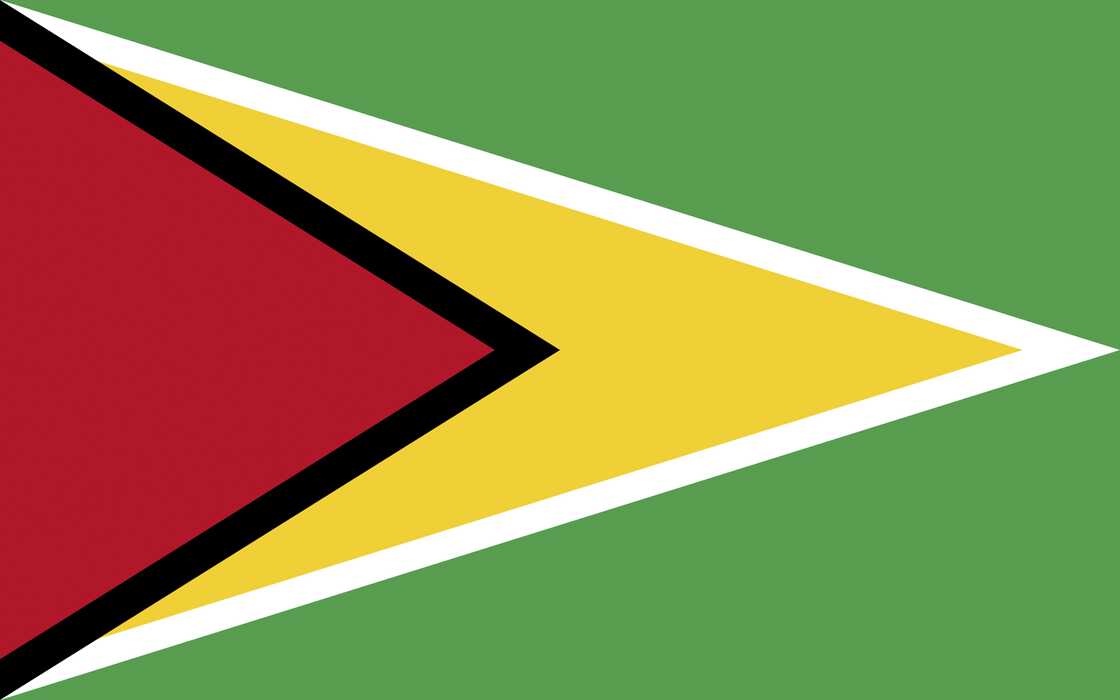
The national flag of Guyana features five colors: green, gold, white, black, and red. The emerald-green band represents the nation’s agriculture and forests, whereas the golden stripe signifies its abundant minerals.
White symbolizes Guyana’s numerous rivers, oceans, and cascading waterfalls, while black embodies resilience and diligent labor. The vibrant red signifies the passion and spirited nature of the country’s inhabitants. Additionally, the flag features the nation’s coat of arms, which includes imagery of a sugar mill reflecting Guyana’s industrial past and an indigenous canoe equipped with a paddle, highlighting the region’s historical connection to agriculture and native culture.
20. North Macedonia
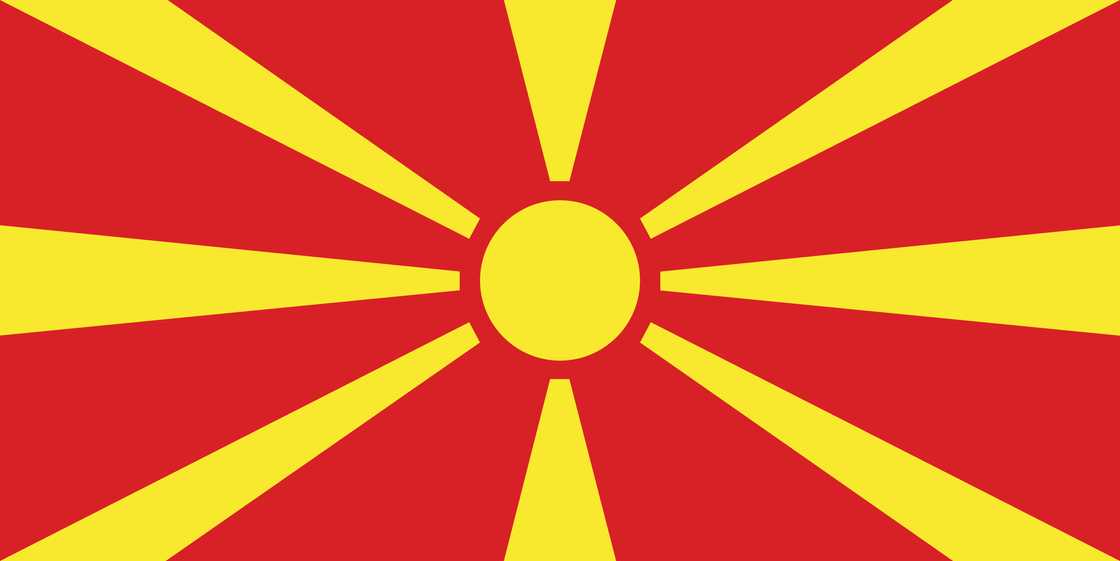
The flag of North Macedonia features a horizontal tricolor with shades of red, yellow, and green. Red signifies courage, yellow denotes the nation’s richness and splendor, while green stands for the country’s natural assets as well as aspirations for economic growth. This official banner was established in 1995 after the dissolution of the previous federation, Yugoslavia.
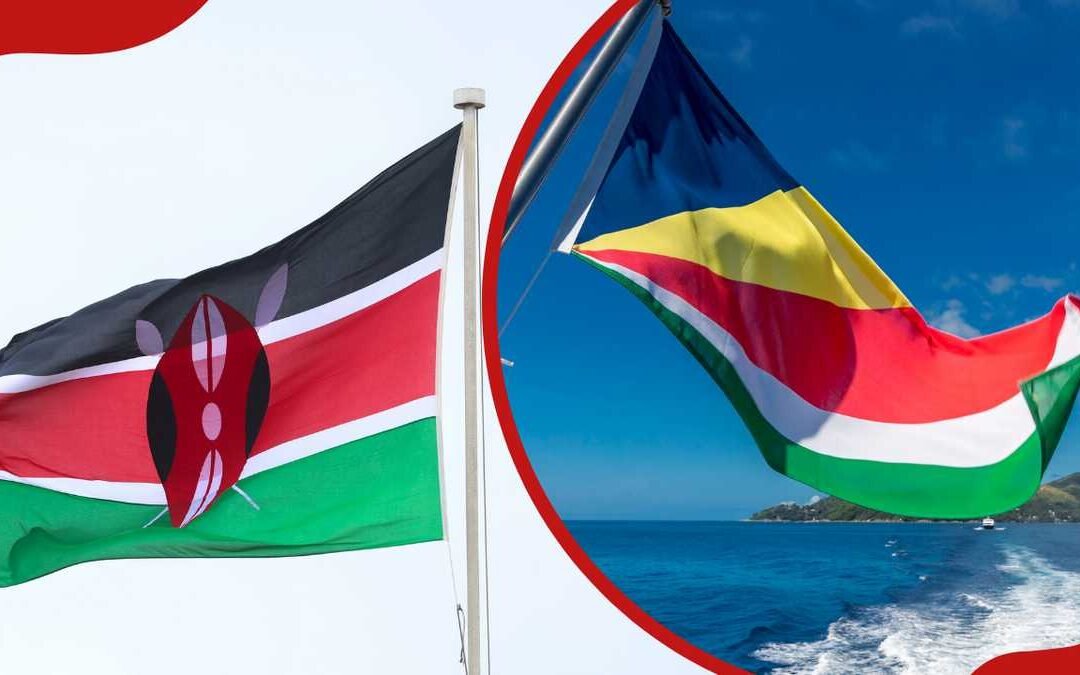
21. Seychelles
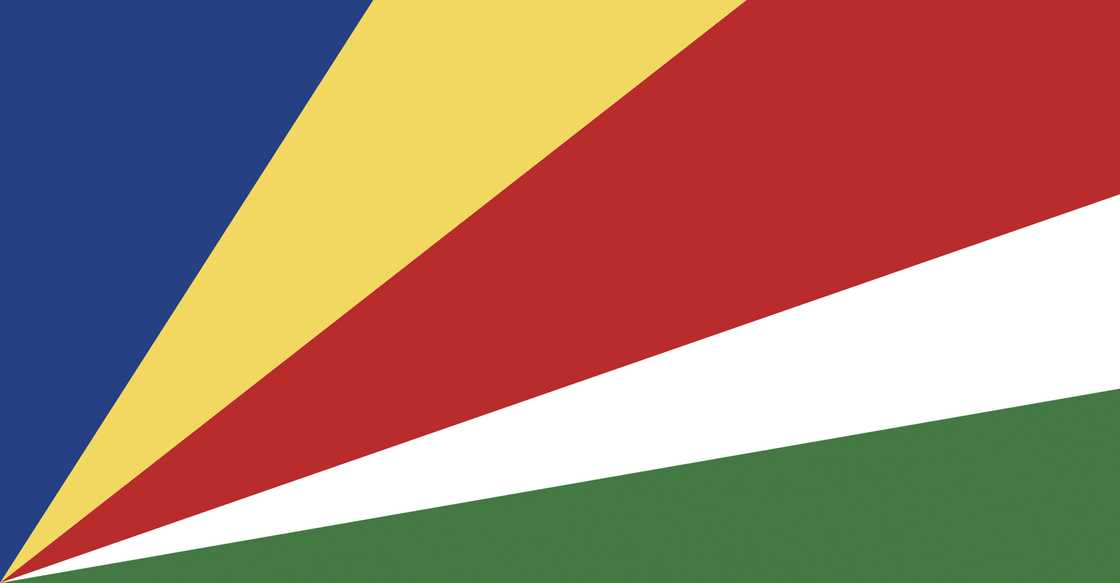
The Seychelles’ flag is both vivid and distinctive, reflecting the nation’s energetic character. This particular design was officially chosen for the national flag on June 18, 1996.
The flag has a rectangular design featuring five diagonal stripes that start from the lower left corner and extend towards the upper right side. The blue stripe in the top-left section symbolizes the sky above and the ocean enveloping the islands.
The color yellow signifies the sun, providing illumination and vitality. Red embodies the populace and their resolve to collectively strive towards a better future with unity and affection. White denotes fairness and concord. Meanwhile, green represents the soil and the natural landscape of Seychelles.
22. Bhutan

The official adoption of Bhutan’s flag took place in 1969. This banner stands out due to its deep symbolic significance, encapsulating elements of the nation’s culture and Buddhist practices. It features a rectangle with diagonal stripes running from the bottom left to the top right side. The yellow hue signifies the temporal power held by the king as well as his leadership over Bhutan.
The color orange embodies the spiritual heritage, notably Buddhism, which is firmly embedded within the nation’s traditions. White-dressed dragons denote purity and clasp gems that stand for national prosperity and stability. The fiercely bared teeth of these dragons illustrate the tenacity with which citizens protect their homeland.
23. India
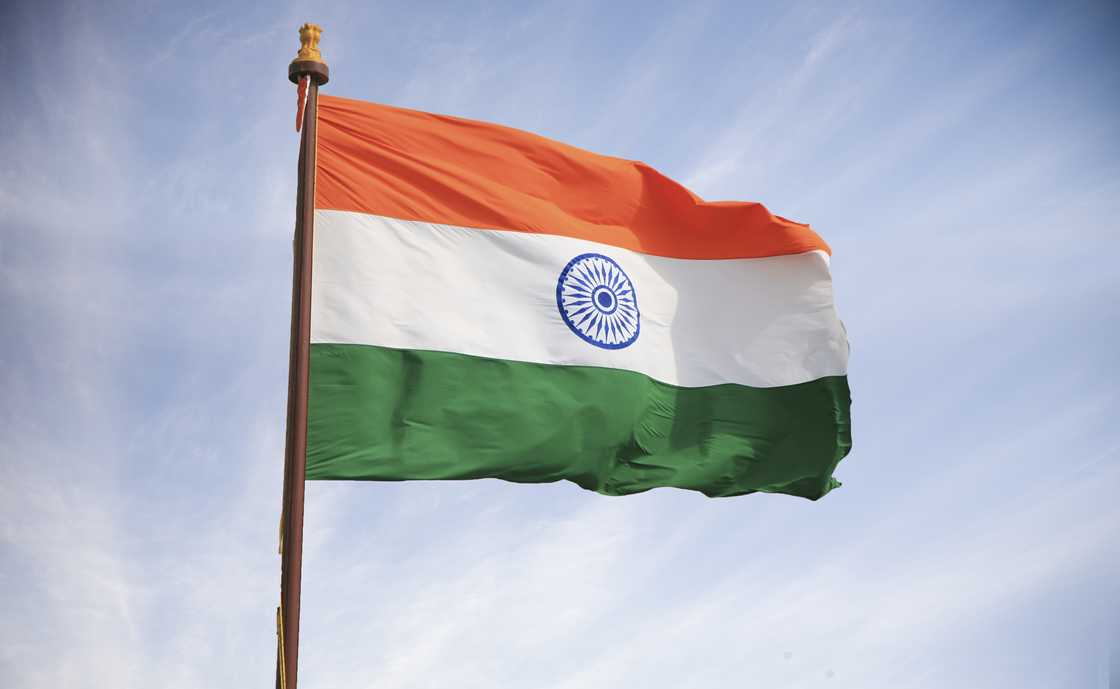
The Indian flag was officially adopted on July 22, 1947, just prior to India’s liberation from British governance. This tricolour flag consists of three horizontal bands in distinct hues.
The color orange signifies bravery, self-sacrifice, and the concept of giving up. White stands for honesty, tranquility, and cleanliness, whereas green embodies belief, fecundity, and the richness of nature. In the middle of the white band lies a dark blue emblem known as the Ashoka Chakra. This insignia features 24 spokes which denote the Dharmachakra.
24. France

The French flag, called the Tricolor, is both simple and instantly recognizable as a national emblem. This rectangular banner consists of three equally wide vertical bands. The blue band on the left embodies freedom, the central white band stands for equality, and the red band on the right denotes brotherhood.
25. Portugal

The flag of Portugal came into use on June 30, 1911, following the formation of the Portuguese Republic. This banner features a rectangle split unevenly down its length into two vertical segments.
On the left side of the flag, approximately two-fifths of its total width, lies a band of green. This color represents hope and marks the Portuguese Revolution of 1640, when Portugal regained its sovereignty from Spanish rule.
On the right side, the color red symbolizes the blood shed and ongoing battles faced by the Portuguese people across their history. At the point where the green and red sections intersect, the flag includes Portugal’s national coat of arms. Additionally, the design incorporates a detailed emblem as part of its decoration.
What is considered the most beautiful flag globally?
Among the most beautiful flags globally, one can find those belonging to Kenya, Tanzania, the United States of America, South Africa, Mozambique, Portugal, India, Nepal, Malaysia, Australia, and Seychelles.
What nation boasts the most distinctive flag?
Nepal boasts the most distinctive flag featuring an intriguing design. It stands out as the sole national banner globally that deviates from a rectangular form. Composed of two triangular pennants, this emblematic flag features a rich blue outline surrounding a vibrant crimson-red background.
What is considered the most vibrant flag globally?
Belize boasts the most vibrant flag globally. This banner features twelve colors, a majority of which compose the intricate coat of arms adorning it.
In which nation’s banner do you think the most appeal lies?
Countries known for their visually appealing flags encompass India, Kenya, Australia, Nepal, South Africa, the United States, Seychelles, New Zealand, Portugal, North Macedonia, and Bhutan.
Flags play a crucial role in uniting citizens and fostering patriotic sentiment within a nation. These emblems represent pride and cohesion, sometimes becoming so significant that nations might even fight wars over them. Among the world’s finest flags, many stand out not only for their visual appeal but also for the profound symbols they convey.
SANGGRALOKA.co.ke has released a compilation of the most hazardous countries in Africa for travelers. The primary factors contributing to the decline in peace across these African nations include terrorist activities and political unrest.
Various uprisings and clashes throughout history have resulted from numerous coups, disputed electoral outcomes, ethnicity-based disagreements, and claims of misconduct. Discover which African nations pose the highest risks for travelers due to these issues.
by admin | Aug 28, 2024 | beautiful places, hiking, hiking trails, mountains, travel destinations
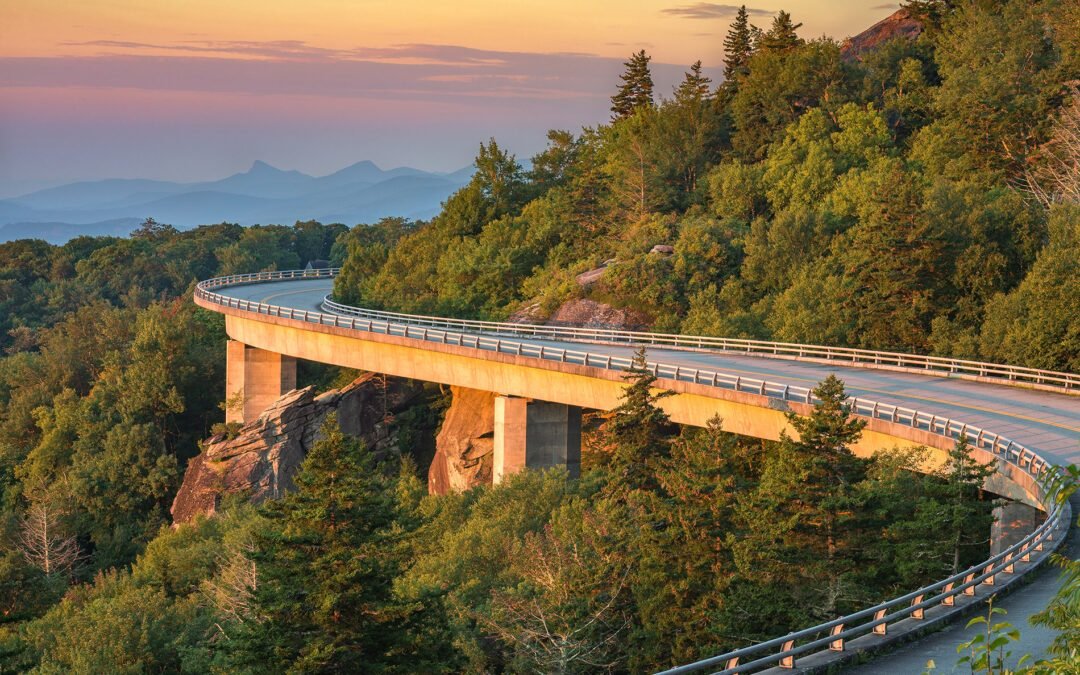
In the depths of the Appalachian Mountains, located in the southeastern part of the United States, lies the Blue Ridge Parkway, which extends over 750 kilometers against the breathtaking backdrop of hills and woods. Join me as we embark on an exploratory adventure!
The Blue Ridge Parkway, a legendary path amidst the heavens, woods, and mountain ranges.
The Blue Ridge Parkway derives its name from the Blue Ridge Mountains that run through it, earning their appellation due to both their blue-hued appearance and the distant greenish tinge of the surrounding forests. Spanning more than 750 kilometers, this scenic drive was crafted with the purpose of providing an immersive experience into nature’s splendor. It connects various attractions including the Great Smoky Mountains National Park situated nearby.
North Carolina
and Tennessee, to Shenandoah National Park in Virginia.
Constructing the roadway spanned nearly fifty years, culminating in an extraordinary feat of environmental engineering. The path winds intricately along cliffsides or soars across streams via majestic bridges, offering breathtaking vistas of rolling hills, dense woodlands, and towering summits at every bend. Its uniqueness lies in how it transforms with each passing season. During winter, frosty blankets and early fog lend a magical allure. Spring breathes life into the slopes through vibrant blooms of wildflowers, azaleas, and rhododendrons. Summer turns the woods into refreshing retreats perfect for leisurely hikes. However, autumn stands out as arguably the parkway’s peak moment; the leaves ignite into vivid hues—reds, oranges, and yellows—that draw countless tourists eager to witness nature’s grand display.
A captivating encounter with the surrounding natural environment, traditions, and past.
The Blue Ridge Parkway offers an idyllic setting for hikers with over 185 miles of trails that vary from easy walks to strenuous hikes. Nestled among mountains and woodlands, this area allows visitors to discover famous landmarks like Mount Mitchell, which stands as the tallest mountain east of the Mississippi River, or Linville Gorge, often referred to as the “Grand Canyon of the East.” Additionally, numerous rivers and lakes provide opportunities for activities such as fishing, canoeing, and kayaking.
However, the Blue Ridge Parkway offers a chance to delve into the area’s deep cultural heritage and historical background. Situated close to the Blue Ridge Parkway,
Asheville, North Carolina
, is an absolute must-visit. Known for its bohemian vibe, this town overflowswith art galleries, artisanal shops, and well-known eateries. Asheville also gained prominence for the
Biltmore Estate
, the largest private home in the United States, which offers fascinating insights into the wealth of the Vanderbilt family in the late 19
th
century.
Another must-see attraction is the Moses H. Cone Memorial Park, which exemplifies Colonial Revival style. This magnificent estate was constructed early in the 20th century.
th
In this century, the property features meticulously maintained gardens and offers, from the mansion’s terrace, stunning vistas of the Blue Ridge Mountains. Additionally, in Virginia stands the Mabry Mill, an impeccably preserved watermill that has become iconic within the area. This location allows visitors to observe demonstrations of corn grinding as well as the creation of traditional implements, providing insight into historical craftsmanship methods.


