by admin | Mar 30, 2025 | education, education reform, investing, leadership, politics
At the weekend, Senator Opeyemi Bamidele, who leads the Senate, urged governments at every level, corporations, and philanthropists to make more significant investments in education with the aim of nurturing future global tycoons and renowned companies.
Bamidele, who represents Ekiti Central, emphasized how both established and developing countries across Asia, Europe, and North America utilized education as a powerful means for social and economic change to achieve their national goals.
Following the conferment of an honorary Doctor of Laws degree upon him during the 29th convocation ceremony of Ekiti State University, which took place over the weekend on the university’s main campus in Ado Ekiti, he proceeded to make those calls.
Yesterday, Bamidele was honored along with the Chairman of the Federal Inland Revenue Service, Dr. Zacch Adedeji, and the Chairperson of the Governing Board at the Bank of Industry, Dr. Mansur Muhtar. This brings the total number of honorary doctorates awarded to him between January 2003 and March 2025 to three.
During his speech at the convocation, Bamidele highlighted the importance of education for the socioeconomic advancement of countries globally. He believes this approach has been utilized to achieve developmental objectives and overcome severe obstacles.
He explicitly stated: “By quality education, I refer to an educational experience that frees the mind; one that significantly reshapes entire generations and provides access to boundless prospects in every field.”
In this light, education serves as an essential instrument that both developed and rising nations across the globe have utilized to reach their current status. We, as a society, also possess this same tool in our quest for national ambitions.
Bamidele pointed out that achieving substantial socio-economic progress in every sector necessitates “not just fostering a conducive atmosphere, but also ensuring a fiercely competitive landscape so our country can remain globally competitive.”
It also requires intentional public investment in our youth, and we must take action immediately. Undoubtedly, this necessitates consistent and strategic backing from various private sector entities that generate global brands and billionaires.
This is the reliable blueprint that gave rise to Elon Musk, CEO of SpaceX and Tesla; Jeff Bezos, founder of Amazon Inc.; Mark Zuckerberg, co-founder of Facebook and Instagram; Larry Page, CEO of Google; Warren Buffett, the esteemed owner of Berkshire Hathaway Inc., and numerous others.
It’s now time for each of us to utilize the power of high-quality education to create our homegrown global billionaires and iconic brands. However, this can’t be left to luck or happenstance; instead, it requires careful strategy and proactive execution of these plans.
“We might fail to reach our goals unless we reassess our national priorities and genuinely invest in individuals. Fundamentally, education that frees the mind is the sole solution to achieving our aspirations. The sooner we begin investing more effectively in our citizens, the better off we will be as a union,” he stated.
As such, Bamidele urged both public and private sectors to revisit their approaches; contemplate this message and pledge anew to invest more substantially in individuals. This sentiment ought to be a crucial aspect of the key lessons we derive from this momentous assembly.
During his speech, University Vice-Chancellor Professor Ayodele Joseph listed several initiatives spearheaded by Bamidele for the institution, including the building of dormitories for medical students—both male and female—as well as a small sports complex and an FM radio station.
Ayodele also highlighted several significant contributions made by university alumni over the past year via targeted connections and interventions. He provided examples of various initiatives that the senate leader helped facilitate for the benefit of the university community.
He expanded Bamidele’s contributions to encompass facilitating the building of separate male and female dormitories for medical students, constructing a small sports complex within the campus, and setting up an FM radio station, all of which were to be gifted by Senator Bamidele.
The vice chancellor further observed that the prosperity of the institution was associated with an increase in the monthly subsidy provided to the university, which had risen from ₦260 million to ₦410 million per month.
Provided by Syndigate Media Inc. (
Syndigate.info
).
by admin | Mar 30, 2025 | colleges and universities, education, higher education, politics, politics and government
“Spending resources on education yields the highest returns.” – Benjamin Franklin, an American diplomat and writer.
For hundreds of years, universities have been esteemed as sanctuaries of learning, nurseries of invention, and promoters of advancement. Apart from molding personal intellects, these institutions significantly influence the societies and countries they support.
Universities are increasingly acknowledged as crucial collaborators in tackling significant global issues and fostering economic development. Through leveraging their academic resources, research potential, and outreach programs, these institutions have the power to act as transformative forces for positive change.
For example, in Nigeria, universities are anticipated to have a crucial part in tackling the nation’s developmental issues and positioning the country on a forward-moving platform.
By means of advanced studies, joint collaborations, and public engagement initiatives, these organizations can address critical concerns like health care, education, and financial independence.
The concepts and principles discussed during this event were presented by Rt. Hon. Benjamin Okezie Kalu, the Deputy Speaker of the House of Representatives, who served as the guest speaker at the 37th commencement ceremony of the University of Calabar in Cross River State on Thursday, March 20, 2025.
Entitled “Our Robe in City and Cyber Realm: Sustainable and People-Focused Education, The Mission of Our Universities from 2025 to 2075,” Kalu presented an insightful convocation address timed with the university’s golden jubilee celebration, envisioning Nigeria’s trajectory via the profound influence of higher education institutions across five decades.
The Deputy Speaker suggested that in a world where change is inevitable, education acts as a guiding light that can pave the way towards advancement and success.
Without a doubt, the influence of education extends widely, affecting both personal trajectories and societal structures. It sharpens intellects, promotes analytical reasoning, and stimulates creativity. At the foundation of societies lies education, molding future leadership and providing essential abilities required to address the continuous changes in our world.
For Kalu, the wisdom gained from the fortresses of education equips individuals to tackle the intricacies of the 21st century.
Surrounded by waves of nostalgia, the Deputy Speaker stood tall in Calabar, soaking up the resounding applause from his former classmates and fellow dignitaries who had assembled collectively to demonstrate their support. A notable alumna with a graduation spanning 27 years since her time at the prestigious law school, class of ’96, she perfectly represented the genuine ethos of the institution.
Kalu expressed his deep emotions as he shared touching insights, noting that education was transforming. His remarks struck a chord with the audience, profoundly motivating the younger generation and evoking precious recollections amongst both his contemporaries and all others gathered at the expansive auditorium of the Calabar International Conference Centre (CICC), where the convocation address was being held.
He stated: “As we commemorate this organization’s half-century history, it’s important to acknowledge that education is changing. The academic attire that used to stroll through towns now needs to adapt to cyberspace. During my time as a student, technology seemed far off. There were just a handful of computers; we scoured library aisles for literature and stumbled upon insights purely by chance. Our handwritten notes were cherished more than anything else. Nowadays, data circulates at lightning pace, wisdom can be accessed with mere clicks, the globe itself acts as an online learning environment, and displays function as lecture halls.”
Despite all these advances, one critical aspect should always stay constant: education needs to remain centered around humans. We must view technology as a tool for us rather than controlling us. As we peer into the coming five decades, particularly from 2025 to 2075, we ought to consider this question: What responsibilities do our universities bear during this period? How can we maintain high-quality learning amid continuous changes? How might we guarantee that technology supports people instead of leading them?
These are the queries we need to address today. With that said, let’s embark on our exploration at the center of this discussion. Essentially, this subject—‘Our Robe in Society and Online: Sustainable and People-Focused Learning, The Role of Higher Ed Institutions from 2025 to 2075’—encourages deep reflection on an uncomplicated but significant concept. Herein, ‘our robe’ stands for the traditional academic garb. By extension, ‘our robe in society,’ embodies our pledge to educational practices that extend beyond school walls and shape community life profoundly.
Our universities were created to drive advancement. Nowadays, though, we encounter issues indicating a gap between academic institutions and daily experiences. These challenges stem not from insufficient intelligence but rather from a mismatch with societal requirements. The focus has predominantly been on scholarly measures such as dissertation lengths, theoretical intricacies, and the grandeur of research, instead of assessing their practical implications.
The task at hand is straightforward: our institutions of higher learning need to shift from theoretical discourse to tangible outcomes, integrating academic expertise more closely with community needs—and today, this also means engaging fully within digital realms where knowledge is put into practice and innovative thinking sparks transformation. As highlighted in his pivotal work, “The School and Society,” John Dewey underscores the importance of aligning educational approaches with evolving social dynamics, warning about obsolete instructional practices that do not equip learners adequately for upcoming hurdles.
The real test of an educational institution lies in its influence on the community. How many university initiatives specifically address local issues such as energy, health care, water accessibility, food security, or transport? Without prioritizing service to their immediate surroundings, universities run the risk that their accomplishments will remain isolated within academic circles.
Our study should provide practical answers, with graduates ready to tackle genuine challenges ranging from improving policies to developing sustainable transport. If the community doesn’t experience the effects of our academic contributions, then our educational mission remains unfulfilled.
Our universities extend far beyond being mere educational institutions; they form the very foundation of both local communities and national societies. The true worth of these establishments isn’t found merely in diplomas but in their tangible influence on society. These entities ought to transcend theoretical discussions and generate studies that actively mold policies instead of simply responding to emergencies. Universities should function as central points for crafting strategies—not only within regional boundaries but also internationally—demonstrating that combining education with creativity leads to effective resolutions.
The Deputy Speaker additionally highlighted how incorporating technology into education has magnified its influence. He stated that the digital transformation has made knowledge more accessible than ever before, allowing students across the planet to interact with top-tier educational materials.
As a result, online platforms, virtual laboratories, and interactive tools have revolutionized the educational experience, rendering it more engaging, efficient, and accessible.
Kalu likewise provides several real-world instances, highlighting the significant influence of education on community growth.
He stated that programs like MIT’s D-Lab, Stanford’s StartX accelerator, and the University of Cape Town’s Water Research Commission illustrate how academic innovations can tackle significant social issues, boost economic development, and enhance quality of life.
Lifelong education is essential. From my personal journey, during my time at school, we possessed just a few computers. Typewriters were our primary tools instead of laptops. Nowadays, I continue to learn and grow constantly. To ensure students are ready for what lies ahead, educators too should remain perpetual learners. As Alvin Toffler insightfully stated, ‘In the 21st century, being illiterate won’t mean lacking reading and writing skills; rather, it’ll signify an inability to adapt through continuous learning, unlearning, and relearning.’
Education goes beyond gaining information; it involves using this information to mold the future. Should our colleges neglect to evolve, we might end up with alumni unequipped for the world they are set to take over.
Global Instances: Education Driving Community Change: This principle isn’t confined to just Nigeria; globally, institutions of higher learning are reshaping their missions by tailoring research efforts towards addressing societal demands. Here are some illustrations:
– **D-Lab at MIT:** The Massachusetts Institute of Technology’s D-Lab project extends across more than three dozen nations, focusing on crafting affordable technological tools aimed at enhancing life in remote areas. Through educating pupils in devising long-lasting answers such as sun-fueled watering mechanisms and budget-friendly health apparatuses, MIT exhibits how top-tier education merges seamlessly with meaningful social contributions.
– **Stanford & Silicon Valley Connection:** Beyond being an epicenter for scholarly breakthroughs, Stanford University plays a pivotal role in fostering economic growth within Silicon Valley via initiatives like StartX—a startup incubator which has propelled upwards of two hundred ventures collectively amassing investment exceeding ten billion dollars from venture capitalists. Such fusion between innovative entrepreneurship and advanced studies has revolutionized regional societies while setting international standards for knowledge exportation.
University of Cape Town (UCT) in South Africa: The university’s Water Research Commission collaborates closely with local municipalities to enhance water management practices. Through their initiatives, they’ve improved access for over one million individuals by devising methods to address water shortages and upgrade sanitation facilities—an example of how targeted, community-focused research can lead to significant societal benefits.
Indian Institutes of Technology (IITs), located across India: These institutions have fostered an environment where approximately 500 start-ups have emerged from their incubation centers, contributing significantly to economic growth through substantial revenues. Additionally, these institutes have boosted regional agriculture efficiency using advanced farming technologies while solidifying India’s role as a key provider of technological know-how and professional services.
Wageningen University: Located in the Netherlands, this institution’s pioneering agricultural studies have significantly enhanced productivity for small-scale farmers around the world, highlighting the impact of focused research in addressing global food security issues.
“These instances illustrate this point: when educational institutions modify their approaches to address the requirements of their communities, innovation thrives, and local issues turn into chances for significant transformation,” he stated.
In short, Kalu’s talk focused on generating graduates capable of tackling practical problems; carrying out impactful research; readying students for a swiftly evolving world; encouraging innovation and enterprise; confronting social issues; adopting digital advancements, and prioritizing continuous education.
By embracing this progressive strategy, universities can enable students to spearhead beneficial change and innovation.
Nwabughioghu serves as the Chief Press Secretary for Rt. Hon. Benjamin Okezie Kalu, who holds the position of Deputy Speaker at the House of Representatives.
Provided by Syndigate Media Inc. (
Syndigate.info
).

by admin | Mar 28, 2025 | education, educational systems, higher education, news, politics and government
Harvard University
Made history during the 2023-24 academic year by launching its inaugural Tagalog course, whereas Yale University plans to introduce its own Tagalog program beginning in September 2025.
Meanwhile, Filipino students at
Princeton University
are also advocating for a Tagalog language course at their school.
Filipino students at Brown University are similarly advocating for increased representation by pushing for the introduction of a Tagalog language course, underscoring the rising interest in Southeast Asian studies among the student body.
In early February, the Filipino Alliance initiated a petition to push for the inclusion of structured Tagalog classes, signaling another attempt after their earlier initiative in 2022 which received minimal interest.
According to a
digital report
From the Brown Daily Herald, the most recent petition has already garnered significant backing, accumulating more than 800 signatures. Among these supporters are approximately 200 people who have expressed their willingness to offer testimonies endorsing the program.
After observing increased enthusiasm during the Ivy League Filipino Conference in November, the alliance restarted the initiative.
The initiative for a Tagalog program is part of wider efforts to increase Filipino presence in higher education. Despite Tagalog being the fourth most widely spoken language in the U.S., it isn’t included among the over 25 languages presently available at Brown University.
Due to the absence of structured lessons, several students have initiated Group Independent Study Projects (GISPs) as an alternative method to explore and connect with Filipino culture and language.
Student leaders think that making a Tagalog program official could be a strong move towards inclusion.
Brown University isn’t alone among Ivy League schools in acknowledging the importance of Tagalog. As more students at Brown join this trend, the increasing request for Tagalog classes underscores a wider plea for enhanced visibility of Filipinos in top-tier universities through better educational opportunities.
This student movement highlights an increasing recognition of the significance of safeguarding and advancing the Filipino language and heritage, particularly within educational environments where Southeast Asian studies have historically been overlooked.
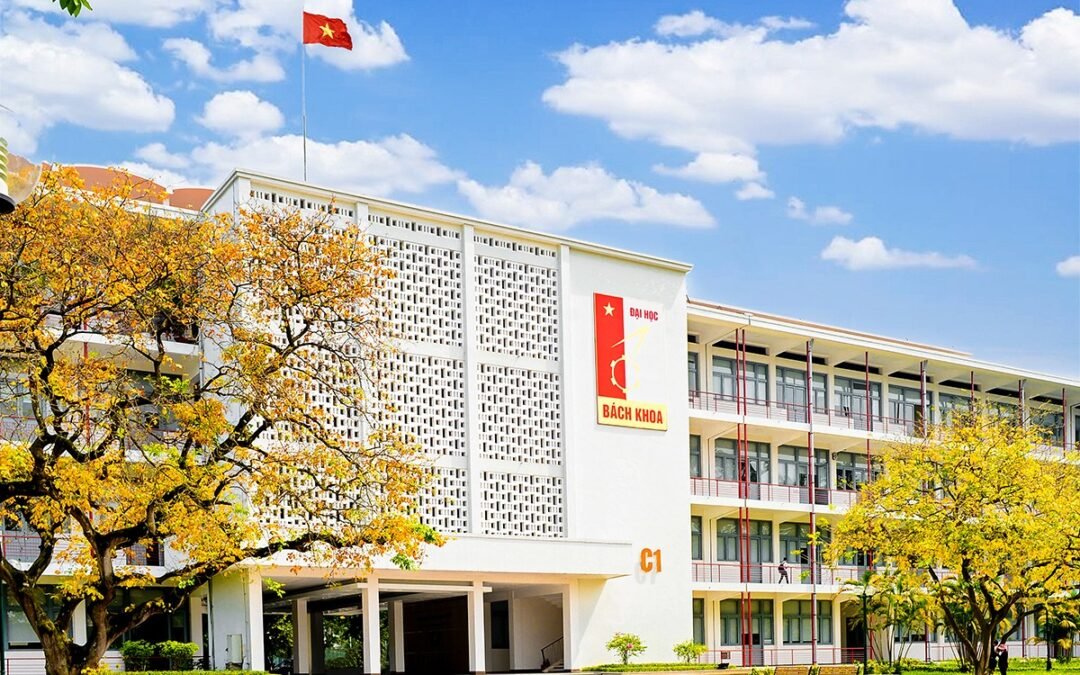
by admin | Mar 28, 2025 | business, education, higher education, news, technology
The Hanoi University of Science and Technology (HUST) aims to be among the top 100 institutions in Asia by 2045, as per a plan that has been endorsed by Deputy Prime Minister Le Thanh Long.
As part of this initiative, HUST will transform into a cutting-edge tertiary educational establishment, positioning itself amongst the foremost institutions across Asia within the domains of engineering and technological studies. Its mission includes serving as a focal point for cultivating expertise through training programs, fostering groundbreaking research activities, and spearheading advancements in Vietnam’s academic landscape—particularly in critical sectors like AI, cyber security, blockchain, electronics, semiconductor manufacturing, digital tech solutions, robotic systems, automation processes, renewable energies, environmental management, bioengineering practices, and sophisticated material sciences. The anticipated impact encompasses significant contributions towards socioeconomic progress not only in Hanoi but also throughout the Red River Delta area and nationwide.
According to the plan, by 2030, 85% of its faculty members should possess doctorates, with 30% holding positions as professors or associate professors and another 10% being distinguished international educators and researchers. Additionally, at least 25% of educational programs must be conducted in English. The initiative seeks to educate a minimum of 8,000 engineers, master’s degree recipients, and Ph.D.s specializing in areas critical for advancing strategic technologies and sectors. Furthermore, they aim for each instructor to produce approximately 1.6 scholarly articles annually published in Web of Science and Scopus databases. They also target securing between 25 to 30 intellectual properties yearly such as patents and utilities, ranking four to six academic programs within the global top 300-500 listings, and ensuring that at least six items resulting from the university’s scientific endeavors achieve successful market integration.
The aim is to incubate at least 10 spin-offs and startups with mobilized capital exceeding $10 million each.
By 2035, the HUST aims to rank within the top 100 to 150 educational institutions in Asia as per respected global ranking systems, with ambitions to advance into the top 100 by 2045.
As part of the recently approved initiative, additional funding will be required to enhance the university’s expansion and bolster its facilities. This includes establishing a new campus in nearby Hung Yen Province as well as modernizing laboratories located in Hanoi.
An innovation center for HUST will be established and cultivated as part of Hanoi’s innovation ecosystem.
In the 2025 QS Asia University Rankings (QS AUR 2025), the Hanoi University of Science and Technology ranks 388th.
The QS rankings rely on an extensive evaluation of 11 metrics such as academic standing, employer feedback, teacher-to-student ratios, citation frequency per publication, and global teaching staff presence. In the 2025 release, which assessed 984 tertiary institutions across Asia, 142 were new entrants. Notably, seventeen higher education institutions from Vietnam appeared in the QS ranking for Asian universities.

by admin | Mar 27, 2025 | education, news, politics, school children, schools
Children who exhibit violent and disruptive behavior should be removed from schools in order to reinstate disciplinary standards, according to Education Secretary Jenny Gilruth.
She stated that poor conduct was the most significant issue for educators—and encouraged principals to expel students who consistently violate regulations and create chaos in the classroom.
The minister likewise admitted that the ‘atmospheric soundtrack’ associated with declining student behavior could be deterring possible applicants from pursuing teaching positions.
Following years of worry that principals were instructed to consider expulsion as a final option—with only one student facing permanent exclusion in the 2022-23 academic year—her intervention has come into play.
Last night Scottish
Tory
Miles Briggs, an education spokesperson, stated: “Jenny Gilruth has finally acknowledged that teachers are dealing with unacceptably bad behavior.”
‘This is something they’ve been raising concerns about for years, however, she fails to mention why, despite being the Education Secretary, she hasn’t taken any steps to address this problem.’
‘The
SNP
has overseen a downturn in our educational institutions and immediate steps need to be taken to turn it around.”
Numerous educators claim that exclusions are not increasing since the punishment has essentially been banned; however, Ms. Gilruth maintains that schools still have the authority to exclude students.


She stated: ‘It is acceptable for you to exclude—clearly, you have the right to exclude.’
‘Clearly, both at the national and local levels, we anticipate that different approaches will be employed; however, inevitably, this leads to exclusion, which is indeed appropriate.’
Ms. Gilruth stated that she wouldn’t mind seeing exclusions increase because this could signify better incident reporting by employees.
She informed TES Scotland, the educational publication: “Encouraging more reports is something we greatly wish for.”
‘Yes, this could lead to an increase in exclusions; however, they serve a purpose as a measure that teachers can use as a consequence.’
‘That’s why we don’t want them to feel discouraged from utilizing it since it’s meant to assist them with their tasks.’
Regarding student behavior and teacher hiring, Ms. Gilruth stated: “We aim to make teaching an appealing profession for individuals. However, I realize that the prevailing attitude towards discipline could be deterring potential teachers. Still, it’s important to recognize that even with these difficulties, most of our students behave appropriately at school.”
When asked about the position of student behavior in her list of priorities, Ms. Gilruth stated, “Regarding challenges, I believe the biggest one is definitely maintaining good conduct.”
The stricter stance of the SNP on behavior comes after alarming statistics revealed escalating violence in educational institutions.
Earlier this month, reports from the Mail indicated that educators requested self-defense courses due to growing worries about an increase in classroom violence within Scottish schools.
Principals at schools in Aberdeenshire and Edinburgh were requested to offer additional instruction aimed at boosting teacher safety as staff expressed feelings of fear.
SNP ministers have been encouraged to adopt a stricter stance on addressing harassment, bullying, and aggression in educational institutions following recent disclosures.
The NASUWT teaching union recently stated that children as young as four are participating in an upsurge of classroom aggression, resulting in almost 40% of educators experiencing assaults involving weapons such as knives, hockey sticks, and chairs.
About 83 percent of employees stated that ‘violent and aggressive’ behavior had escalated, even though the SNP government initiated a ‘national action plan on relationships and behavior’ last year.
Patrick Roach, the general secretary of NASUWT, stated: “The well-being and protection of educators and students must not be left to luck.”
Startling statistics from last July showed that educators face an attack by a student approximately every four minutes, totaling over 16,000 incidents during the preceding school year.
Last year, Ms. Gilruth faced criticism following the release of new guidelines from the Scottish Government, which advised teachers to exhibit ‘warmth’ and ’emotional responsiveness’ towards disruptive students in the classroom.
A ‘course of action’ document released by the Education Secretary acknowledged that school personnel have cautioned about the ‘absence of significant repercussions for unruly behavior’.
However, it demanded ‘great warmth and support, high standards, and significant expectations regarding socially responsible behavior’.
The Scottish Government guidelines instruct educators not to use the term ‘bully’ to prevent causing distress among students. Instead, they should involve law enforcement when children are believed to have committed a hate crime.
In the TES Scotland interview, Ms. Gilruth also expressed worry about the increasing number of students departing from school after their fourth year.
In 2023-24, 14.4 percent of students who left schools were in S4, an increase from 11.6 percent in 2013-14.
Ms. Gilruth mentioned that the feedback she got from principals indicated the cost-of-living crisis is ‘causing young individuals to leave their educational pursuits for entering the workforce’.
This investigation is currently being handled by the Association of Directors of Education in Scotland, which represents local authority education heads.
Yesterday evening, Tory MSP Mr. Briggs stated: “With the SNP in charge, standards have declined, the number of teachers has decreased, and the examining authority has faced multiple setbacks.”
‘Teachers have been forced to deal with inappropriate and sometimes aggressive behavior, disrupting the learning of other students.’
Read more

by admin | Mar 27, 2025 | education, politics and government, public policy, social welfare, welfare
CEBU CITY, Philippines – Around 115,729 households benefiting from the Pantawid Pamilyang Pilipino Program (4Ps), managed by the Department of Social Welfare and Development (DSWD), are set to graduate from the initiative in the Central Visayas region.
Based on a press statement released by DSWD-7 on Thursday, there are 79,205 4Ps households located in Cebu, which encompasses areas within highly urbanized cities, whereas 36,524 families reside in Bohol.
The graduation events for the recipients, known as the Saulog 4Ps Ceremonial Graduation, continue at different times across multiple local government units (LGUs).
Various local government units have already held their graduation ceremonies. In Cebu, this includes events in Consolacion and Liloan on March 14, Lapu-Lapu City on March 17, Asturias on March 19, and Danao City on March 25.
At the same time, in Bohol, the events took place in Talibon on March 18 and in Dauis on March 19.
The graduates who meet this criterion have been recognized as reaching self-reliance according to the most recent Social Welfare Development Indicators provided by the DSWD.
The SWDI aims to evaluate and track the improvement in the quality of life of 4Ps household members and to assist with case management for a lasting escape from poverty.
Based on the DSWD criteria, for individuals to be deemed self-reliant upon exiting the program, they must generate sufficient earnings to cover their expenses, satisfy their day-to-day requirements, and attain at minimum the initial two stages of the SWDI framework—the Survival stage (Stage 1) and the Subsistence phase (Stage 2).
“I extend my congratulations to every single one of you for achieving what you set out to accomplish when you first joined the program. You have devoted countless hours, put in significant effort, and made great sacrifices to meet all the requirements of this program, and today, you stand at the threshold of graduation,” stated DSWD-7 Director Shalaine Marie Lucero during the event held in Lapu-Lapu City.
Lucero likewise motivated the graduates to persist, put in considerable effort, and utilize the knowledge gained from the organization’s bi-monthly Family Development Sessions (FDS) as they endeavor to realize their aspirations.
Bernita Tubio from Dauis, Bohol, one of the graduates, gave her testimonial, highlighting her pride in having three of her offspring complete their college education, including two who are currently employed as seamen.
Starting from January of this year, Tubio has taken up the role of a Barangay Health Worker (BHW) within her neighborhood.
“Tulo na ang among mga bata nga nagtatan-aw ngadto sa pagtapos sa balayosa. Dako ang among pasasalamat alang sa gobyerno ug hiniusab sa programa 4Ps, nga nagtabango kanako aron mabalhin ang among mga gamhanan sa balayosa,” wangsang tubigon ni Tubio. (Now I have three of my children looking forward to finishing their education. Greatly thankful am I to the government and particularly through the 4Ps program, which has supported me in sending my offspring to school.)
Lucero likewise recognized the cooperative work among several national government agencies, local government units, and civic groups in delivering varied assistance programs aimed at enhancing the quality of life for families enrolled in the 4Ps initiative.
Introduced in 2008 and officially established in 2019 via Republic Act No. 11310, the 4Ps initiative offers financial assistance to recognized low-income families. This includes educational support for kids to complete primary and secondary schooling, healthcare benefits, as well as aid for purchasing rice.
RELATED STORIES
DSWD-7: Almost 30,000 4Ps participants in Central Visayas complete their involvement in the program
DSWD: 470 individuals from Carcar City complete 4Ps program
Page 2 of 6«12345...»Last »


