by admin | Aug 25, 2025 | business, exports, international economics, international trade, pakistan
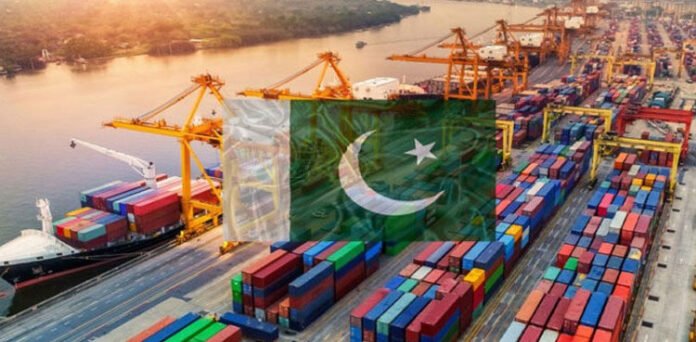
August 10, Pakistan – Exports of services in Pakistan saw notable growth during the financial year 2025, amounting to $8.39 billion, largely driven by robust activity in telecom, computing, and information sectors. This represents an increase of 9.23% compared to the previous year’s figure of $7.68 billion, as reported by the Pakistan Bureau of Statistics (PBS). The rise indicates ongoing revival and development within the service industry, which has experienced continuous improvements since February 2024, with only a short drop of 6.5% recorded in August.
Service exports increased by 7.86% in rupees, amounting to Rs 2.345 trillion as opposed to Rs 2.174 trillion from the prior year. This upward movement remained consistent even amid changes in exchange rates, highlighting strength within the industry. Year-over-year figures for June showed an increase of 12.91%, with service exports totaling $726.68 million versus $643.59 million during June 2024. Much of this growth stems from tech-based services, which still hold a leading position in Pakistan’s export mix.
According to figures released by the State Bank of Pakistan, the telecommunications, computing, and information services sector—the biggest contributor among service exports—increased by 18.18% to reach $3.809 billion, compared to $3.223 billion in the previous year. Additional professional services saw an upward trend as well, with a growth rate of 7.35%, amounting to $1.665 billion. Meanwhile, export earnings from transportation services climbed by 27.86% to $982.0 million due to increased needs related to shipping and freight operations. On the contrary, revenue generated through travel-related services declined by 4.88%, settling at $721.0 million down from $758.0 million.
This expansion follows two years of modest progress, during which service exports increased by just 2.77% in FY2024 and 2.78% in FY2023. For FY2023, export values reached $7.30 billion, up from $7.10 billion in FY2022. The administration has established an aggressive objective of boosting IT exports to $15 billion over the coming five years, seeking to position the digital sector as a major catalyst for upcoming economic development.
On the import front, service imports grew by 2.01% during FY2025, rising to $11.02 billion from $10.79 billion in the previous fiscal year. Nevertheless, in June, imports fell significantly by 24.01% compared to the prior year, amounting to $851.56 million as opposed to $1.122 billion in the same period last year. Transportation fees experienced a minor decrease of 0.68%, totaling $4.645 billion, whereas travel imports went up by 6.17% to reach $2.406 billion, indicating higher levels of domestic tourism and international travel.
Although imports increased, Pakistan’s trade deficit in services decreased by 15.84% during fiscal year 2025, dropping to $2.618 billion from $3.11 billion in the previous year. The decline persisted in June, as the deficit fell by 73.9% compared to the same period last year, reaching $124.89 million versus $478.41 million in June 2024. This progress reflects the beneficial effect of robust exports alongside reduced expenditure on imports.

by admin | Mar 28, 2025 | economics, exports, finance news, international trade, philippines economy
MANILA — The trade gap in the Philippines narrowed to its smallest size in almost four years during February, driven by continued growth in exports albeit at a reduced rate along with a decline in imports, according to initial government statistics released on Friday.
According to the Philippine Statistics Authority, the trade shortfall decreased to $3.15 billion in February, marking the lowest level since June 2021. The deficit for January underwent a slight revision upwards to $5.12 billion from an initially stated figure of $5.08 billion.
In February, exports climbed by 3.9%, amounting to $6.2 billion, which was a deceleration from January’s increase of 6.3%. On the other hand, imports dropped by 1.8% year-over-year to reach $9.4 billion, contrasting with the prior month’s expansion of 11.2%.
The economy grew at an annual rate of 5.2% during the last quarter of 2024, maintaining the same speed as in the prior period yet falling short of what analysts had anticipated. The administration plans to publish the first-quarter growth data on May 8.
— Reported by Karen Lema; Edited by John Mair
by admin | Mar 24, 2025 | computers, economics, exports, government of pakistan, pakistan
During the initial seven-month period of the fiscal year 2024-25, Pakistan generated $2.177 billion from exports of various IT services across multiple nations. This represents an increase of 26.53% over the $1.720 billion recorded for the same stretch in the previous fiscal year 2023-24, according to data released by the Pakistan Bureau of Statistics (PBS). Specifically, within this timeframe, exports related to computer services experienced a rise of 32.72%, jumping from $1.397 billion previously to $1.855 billion between July and January of the ongoing fiscal year.
In the realm of computer services, software consulting saw a significant rise of 35.51%, jumping from $476.017 million to $645.036 million within this year. Similarly, hardware consulting experienced growth of 4.39%, escalating slightly from $3.338 million to $3.485 million over the same period. Additionally, information service exports surged dramatically by 736.66% during these months, expanding from $2.097 million to $17.551 million.
In the realm of information services, the exports from news agencies surged by 1197.51%, jumping from $1.269 million to $16.475 million. Meanwhile, other information service exports climbed by 29.96%—rising from $0.828 million to $1.076 million. However, telecommunications services experienced a decline, with their value dropping by 5.05% from $320.891 million to $304.675 million. Specifically within telecoms, call center services saw an increase of 25.22%, growing from $144.326 million to $180.728 million. Conversely, other types of telecommunications services fell by 29.80%, sliding from $176.565 million to $123.946 million over the period noted in the PBS report.
Provided by Syndigate Media Inc. (
Syndigate.info
).
by admin | Mar 24, 2025 | cargo, commerce, exports, international trade, romania
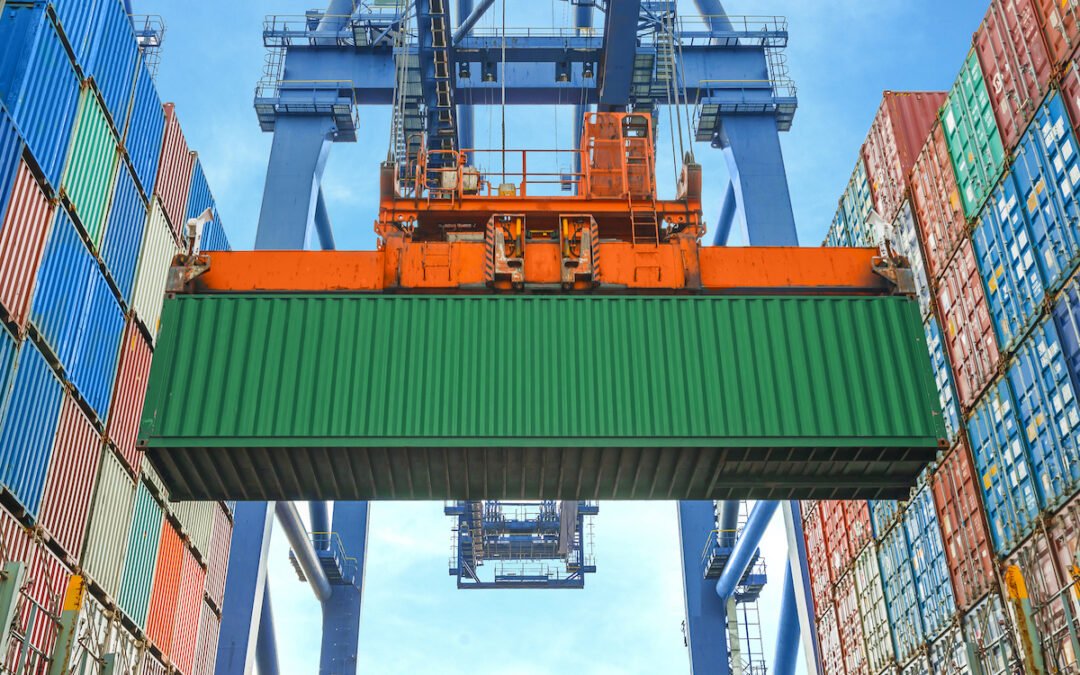
The amount of cargo handled at Romania’s seaports decreased by 14% year-over-year to 59.55 million tons in 2024, as reported by the statistical agency INS and cited by various sources.
Bursa.ro
.
The decrease in total handling volume can be attributed to a 26.3% drop in the amount of loaded cargo, whereas the quantity of unloaded goods saw a rise of 3.8%.
Specifically, the amount of grain loaded saw a decline of 31.6% year-over-year (dropping to 19.9 million tons, which represents one-third of the overall throughput). This drop was mainly due to reduced exports from Ukraine being managed through Romania’s Constanta port, causing volumes to revert nearer to pre-war norms.
The handling of ore (mainly for exports) also decreased considerably, by 39%, totaling 2.5 million tonnes.
On the contrary, the management of petroleum products saw an increase of 12.3% year-over-year to reach 7.4 million tonnes in 2024, with 6.0 million tonnes being offloaded during this period.
iulian@romania-insider.com
(Photo source:
Prasit Rodphan/Dreamstime.com
)

by admin | Mar 24, 2025 | business, economics, exports, international economics, manufacturing
New Delhi [India], March 24 (ANI): With worries surrounding U.S. President Donald Trump,
Trump
According to a report by Motilal Oswal, India’s tariff policies present an opportunity to bolster its local manufacturing sectors.
The report stated that although the tariffs present difficulties like increasing expenses, variations in currency values, and possible declines in export revenues, they simultaneously create opportunities for India to emphasize self-sufficiency and enhance domestic manufacturing.
“Despite ongoing worries about rising expenses, fluctuating currency values, and possible effects on exports, India has the opportunity to leverage trade disputes and strengthen its local businesses,” the report stated.
In recent years, the United States has implemented significant tariffs on goods coming from India. Specifically, in 2018, a tariff rate of 25 percent was applied to $761 million worth of steel imports from India, along with a 10 percent duty on $382 million worth of aluminum products.
The increased expenses rendered Indian goods less competitive in the US market, resulting in a 46 percent decrease in steel exports over the course of a year. As American purchasers chose more affordable options, Indian companies experienced financial losses.
A major worry for India is how trade tensions affect its currency. Additionally, the report noted that India imports 87 percent of its crude oil, which requires payment in U.S. dollars.
A depreciating rupee because of capital outflows caused by worldwide trade conflicts would increase the expense of oil imports, exerting pressure on India’s economy. The report cautions that an extended tariff dispute might reduce India’s GDP by 0.3 percent.
Even with these difficulties, India has the potential to transform this scenario into an advantage. Traditionally, India has kept tariffs higher compared to other significant economic powers. Through careful implementation of import taxes and by bolstering local businesses, India could lessen its reliance on products from abroad.
The report indicated that the trade dispute ought to drive India toward achieving manufacturing independence and increasing exports in areas less impacted by tariff measures.
Trump
The country’s strategies strive to strike a balance between protective measures and sustaining American competitiveness in international markets. Despite the resulting uncertainties, according to a report, India could leverage the circumstances by boosting domestic manufacturing, attracting local investment, and enhancing trade deals with other countries. (ANI)
Provided by SyndiGate Media Inc.
Syndigate.info
).


