
by admin | Sep 29, 2025 | bags, cargo, flying, luggage, Travel
Ordered to remove her bulky baggage, the woman walked around a corner, added more clothing, and placed heavy objects in her pockets.
Having read the article titled “Passenger criticizes airport staff for 0.5 kg of extra hand baggage,” I feel empathy towards the writer. However, numerous readers claimed that an additional 0.5 kg is insignificant and deserves to be ignored, a perspective often held by Vietnamese passengers.
Last week, as I went through security at HCMC for a trip to Da Nang, I saw something that made me feel distressed and prompted doubts about how certain Vietnamese travelers behave towards…
air travel rules
.
A female passenger carried a hand luggage weighing almost 10 kilograms, whereas the airline allowed only up to 7 kilograms. The check-in personnel requested her to either take out certain belongings or cover the cost of checking the bag. Feeling distressed, she took her suitcase to an isolated area where she changed into additional clothing and placed heavy objects into her pocketbook and backpack. Upon returning, although the suitcases weighed more than 7 kilograms, they were permitted.
In the waiting area, she removed the belongings and placed them again into her bag. She managed to avoid several hundreds of thousands of VND in luggage charges, with some suggesting that an additional few kilograms has minimal effect on air travel safety.
The incident made me aware of a specific degree of unfairness within air travel. Travelers who follow rules, pay extra for luggage, and spend more time waiting to retrieve their bags ultimately waste both time and money. Meanwhile, those who bypass the system move effortlessly, leaving the consequences for others.
This kind of conduct may result in a pattern of disregarding rules and undermines the equity essential for aviation. Should each traveler bring a few additional kilograms, aircraft could exceed their designated weight limit by hundreds of kilograms.
Overloaded cabin spaces
may pose safety hazards and complicate the storage of belongings. Carry-on bags are positioned above travelers’ seats, making them significantly distinct from checked luggage kept underneath.
I know everyone aims to save time and expenses. However, politeness during travel isn’t about adding a little more weight; it’s about following the regulations. When traveling overseas, most individuals accept checking an additional bag when they exceed the limit by 0.2 kg. Then why does “flexibility” become the norm in Vietnam?
A bulky suitcase holds not only garments but also reflects an attitude of taking shortcuts, with effects that eventually impact others. Everyone would find traveling smoother if passengers adhered to regulations right from the beginning rather than seeking loopholes. This is true comfort for airline passengers.
by admin | Mar 28, 2025 | business, cargo, commerce, driving, transportation
MANILA, Philippines – Despite entering a field dominated primarily by men, Joy Ann Torres chose driving various sized vehicles as her career. She holds the belief that women make for better and safer drivers than their male counterparts.
Her dad instructed her on driving when she turned 12. By the time she reached 18, she had acquired an official permit enabling her to operate big rigs like buses and semi-trailers. During this period, she also mastered changing tires and diagnosing typical motor issues.
“Frankly, mas madaling ko pong mag-park ng trailer truck,” shares the 40-year-old with a smile.
READ:
Lista, Mober, and Zed make it onto Forbes Asia’s ‘100 to Watch’ list
In 2017, Torres transitioned from being a captain’s steward on a cruise ship to becoming a bus driver. Daily, she would travel the path between Parañaque Integrated Terminal Exchange and Monumento. She expresses that this role held great significance for her, as she felt proud to be among the few women driving public transportation vehicles.
Her 12-year-old daughter frequently boasted to her classmates about how her mom drives a bus for work. “I suppose it made her feel proud knowing that her mommy has a role typically played by dads,” she shares in Filipino.
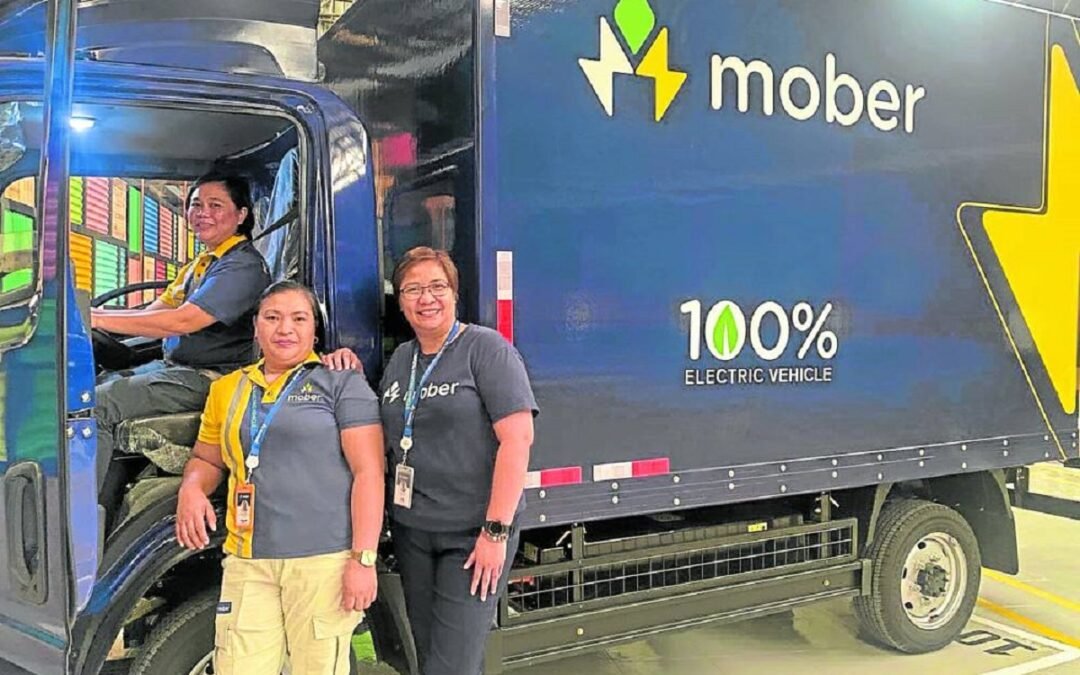
In 2023, Torres saw a job posting for a female driver of electric vehicles (EV). Wanting a change of scenery, she tried her luck. After hurdling the initial screening and safety process, she was hired as the first female truck driver of Mober, a pioneer in green logistics in the Philippines.
Torres, who is now known as a green delivery specialist, operates Mober’s electric vehicle for transporting furnishings within Metro Manila and Cavite. Accompanying her on these routes are an assembler and a helper.
Inclusive and sustainable
She mentions during an interview with SANGGRALOKA that driving an electric vehicle offers great ease and convenience. One of the reasons for this is that she doesn’t have to concern herself with environmental damage.
Mober is at the forefront of shifting towards eco-friendly deliveries in the Philippines. By concentrating on helping companies reduce carbon emissions from their delivery operations, Mober provides smooth solutions that do not require initial investments.
This B2B platform aids deliveries for IKEA Philippines, SM Appliance Center, Nestlé Philippines, Nespresso, Ajinomoto Philippines, and Maersk.
Dennis Ng, the founder and CEO of Mober, aims to dismantle obstacles by promoting careers in logistics for women. He states, “At Mober, we are committed to fostering an inclusive atmosphere where everybody gets a chance.”
Prior to their deployment, the drivers of Mober’s eco-friendly fleet receive training on the proper handling of the electric vehicles. “We advise them to apply gentle braking,” Ng further explains, “since each time you press the brake pedal, it helps recharge the battery.”
Every truck boasts a battery lifespan of up to eight to ten years with adequate upkeep, enabling them to cover distances of around 210 kilometers per full charge.
‘Handywomen’
In addition to drivers, Mober is currently recruiting female furniture assemblers. Known as “handymen,” these women receive training to assemble and install IKEA furnishings.
Nelda Palisoc previously worked as a domestic helper in Kuwait, Norway, and Hong Kong before she joined Mober last year. She was one of the initial employees hired at Mober as a female assembler.
Following her completion of the upskilling and safety training at the “Assembly Academy” held within the company, she acquired knowledge on the correct usage of a drilling machine and identifying useful tools.
Many times, some customers doubt whether she can handle the task, particularly when it involves assembling big, heavy furniture. She simply smiles at them. “In the end, they will be astonished by my abilities,” states this 45-year-old woman in Filipino.
Torres and Palisoc mention that they have never faced discrimination from their male counterparts. In fact, their fellow workers are quite willing to offer assistance and share their technical expertise with them.
Central Charge
Wing Alforque, who leads transportation at Mober, observes a rise in applications from women seeking roles as truck drivers, assemblers, and helpers.
READ:
Mober introduces completely electric truck tractors.
“They would share with me during interviews their enthusiasm about taking on a role typically dominated by men,” she clarifies.
On March 10, Mober revealed the nation’s biggest commercial electric vehicle charging station. Situated in Pasay City, Central Charge spans 3,000 square meters and features 56 stations designed for e-van and e-truck fleets.
Using a well-organized three-shift schedule, this ₱14 million facility has the capacity to recharge as many as 200 electric vehicles (EVs) per day. The station comes equipped with 50 charging points each rated at 7 kilowatts (kW), along with an additional two stations capable of delivering power at 60 kW for rapid charges. This setup allows Mober to optimize their processes and reduce idle time for their fleet significantly.
The inauguration of the new site comes after the debut of the firm’s initial charging station in 2023, covering an area of 800 square meters with 30 charging stations located in Pasay City.
Solar energy
In order to considerably decrease its environmental impact, Mober is considering installing solar photovoltaic panels along with a 500 kWh battery energy storage system at Central Charge.
“Central Charge isn’t merely about investing in infrastructure; it’s a strategic move to address the rising need for environmentally friendly delivery options while upholding our pledge of zero emissions,” Ng states.
Ng points out that Mober’s innovation surpasses just infrastructure with its exclusive battery management system (BMS) and transport management system (TMS). The BMS aids in prolonging the lifespan of electric vehicles’ batteries, whereas the TMS aims at optimizing delivery paths, cutting down energy usage, and boosting overall operational effectiveness.
The logistics firm intends to construct two extra charging stations, which could be located in either Bulacan or Pampanga along with Laguna. Both the Northern Bolt and Southern Spark facilities will cover an area ranging from 6,000 to 10,000 square meters, aiming to improve their logistics network and facilitate growth.
Mober’s objective is to grow its fleet to 500 units by 2026. However, in the short term, they plan to increase their number to 240 electric vehicles by the end of this year, starting from the current count of 110 units.
“Ng mentions that we’re expecting 100 additional units, which means we require 100 drivers.”
And indeed, the firm is giving priority to recruiting additional female employees.
by admin | Mar 24, 2025 | cargo, commerce, exports, international trade, romania
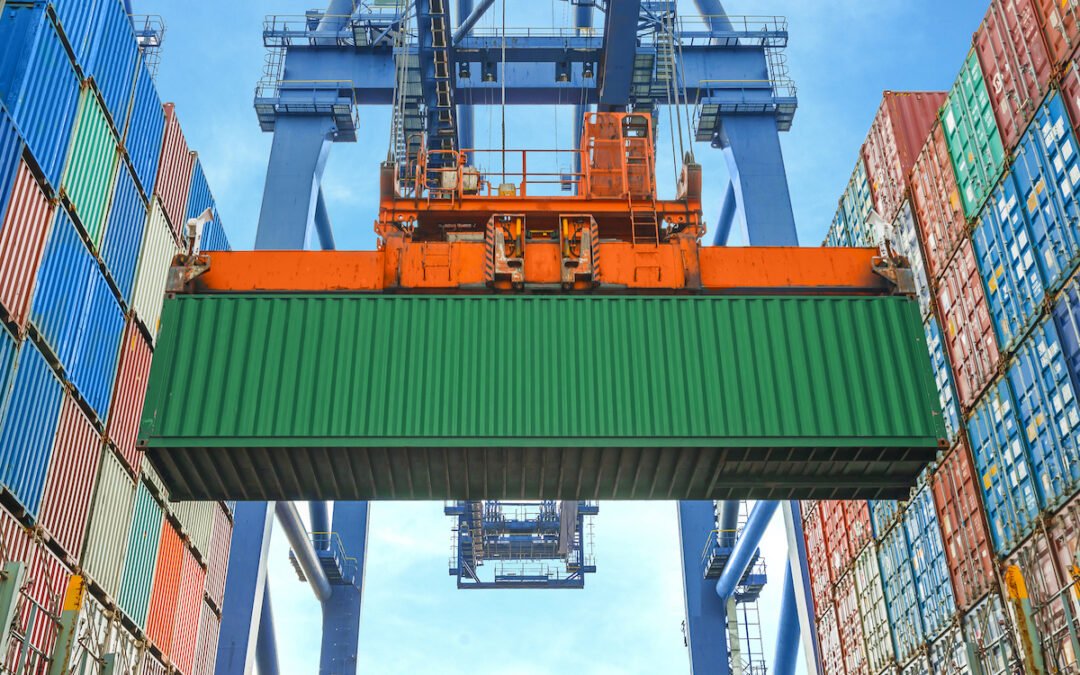
The amount of cargo handled at Romania’s seaports decreased by 14% year-over-year to 59.55 million tons in 2024, as reported by the statistical agency INS and cited by various sources.
Bursa.ro
.
The decrease in total handling volume can be attributed to a 26.3% drop in the amount of loaded cargo, whereas the quantity of unloaded goods saw a rise of 3.8%.
Specifically, the amount of grain loaded saw a decline of 31.6% year-over-year (dropping to 19.9 million tons, which represents one-third of the overall throughput). This drop was mainly due to reduced exports from Ukraine being managed through Romania’s Constanta port, causing volumes to revert nearer to pre-war norms.
The handling of ore (mainly for exports) also decreased considerably, by 39%, totaling 2.5 million tonnes.
On the contrary, the management of petroleum products saw an increase of 12.3% year-over-year to reach 7.4 million tonnes in 2024, with 6.0 million tonnes being offloaded during this period.
iulian@romania-insider.com
(Photo source:
Prasit Rodphan/Dreamstime.com
)


