
by admin | Mar 24, 2025 | economics, financial markets, investing market news, news, stocks

Stocks largely climbed across Asia on Tuesday, continuing the upward trend from Wall Street amid reduced concerns about President Donald Trump’s proposed tariffs. Meanwhile, investors were anticipating the upcoming release of crucial U.S. inflation figures.
A surge in tech giants including Tesla and Nvidia helped New York markets higher, with sentiment buoyed by indications from the White House that next week’s glut of levies would be less severe than feared.
Trump has dubbed April 2 “Liberation Day” as he pledges to impose reciprocal tariffs on trading partners in an effort to remedy practices that Washington deems unfair.
After returning to power in January, Trump has adopted an aggressive policy stance, targeting both allies and adversaries, which has sent shockwaves through financial markets and heightened concerns over the worldwide economic situation.
Recently, he indicated that certain nations might receive waivers or cuts from the upcoming week’s actions, providing investors with a badly needed boost of hope.
Market-watchers say the final outcome would likely see the tariffs changed after negotiations.
The current surge of pessimistic stories—driven by politically biased consumer confidence reports and an influx of negative opinion pieces—appears more exaggerated than warranted, according to Stephen Innes from SPI Asset Management.
Furthermore, IG Market Analyst Tony Sycamore commented: “It’s anticipated that this process will be better organized and structured compared to earlier efforts. The figures set to be disclosed on April 2nd may potentially see reductions following negotiations.”
Nevertheless, the president gave a shock by threatening nations that imported oil and natural gas from Venezuela with significant tariffs, which might affect China and India as well as other countries.
During early trading, markets in Tokyo, Sydney, Singapore, Taipei, and Wellington increased in value; however, those in Shanghai and Manila declined.
Hong Kong’s index fell over one percent, largely due to a nearly five percent decline in the stock price of major Chinese technology company Xiaomi following its successful raise of $5.5 billion through a substantial share issuance aimed at boosting its electric vehicle endeavors.
Despite a rise of approximately six percent in South Korea’s car manufacturer Hyundai after announcing a $21 billion USD investment, Seoul likewise fell.
Attention is also focused on the release of U.S. personal consumption expenditures data this week, as it serves as the preferred measure of inflation according to the Federal Reserve.
The readings will be carefully observed following warnings that prices may increase due to Trump’s tariffs.
The Atlanta Fed president, Raphael Bostic, indicated that the measures suggest the bank will probably reduce interest rates only one time this year.
“I moved to one mainly because I think we’re going to see inflation be very bumpy and not move dramatically and in a clear way to the (Fed’s) two percent target,” he told Bloomberg Television on Monday.
Since this is getting delayed, I believe the corresponding policy measures will also need to be postponed.
Oil prices maintained their gain from Monday, which was over one percent, following President Trump’s warnings about Venezuelan crude oil.
Prominent individuals at approximately 0230 GMT
Tokyo – Nikkei 225: Increased by 0.7% to reach 37,881.70
Hong Kong – Hang Seng Index: Down 1.7% at 23,502.90
Shanghai – Aggregate: DECREASED BY 0.1% TO 3,367.17
Euro/dollar: DROPPED to $1.0799 from $1.0805 on Monday
Pound/dollar: DECREASED to $1.2917 from $1.2924
Dollar/Yen: Increased to 150.64 yen from 150.58 yen.
Euro/pound: INCREASED to 83.61 pence from 83.58 pence
West Texas Intermediate remains steady at $69.09 per barrel.
Brent North Sea Crude: REMAINS STEADY AT $72.37 PER BARREL
New York – Dow: Increased by 1.4% to close at 42,583.32 points.
London – FTSE 100: Decreased by 0.1 percent to close at 8,638.01.
by admin | Mar 24, 2025 | economic policy, financial markets, macroeconomics policy, monetary policy, news
By Morkporkpor Anku
Accra, March 24, GNA – Dr. Johnson Asiama, Governor of the Bank of Ghana, has suggested implementing strategies to increase transparency regarding the Monetary Policy Committee’s decisions. This could involve releasing details of individual votes or improving the explanatory content within policy announcements.
He mentioned that the committee also had to focus on making the presentation of forecasts easier for both the general public and market participants, ensuring they could more readily grasp the fundamental policy narrative behind them.
At the commencement of the 123rd routine session of the Monetary Policy Committee (MPC) in Accra on Monday, the Governor delivered an address.
He stated that these modifications would enhance reliability and foster greater confidence in the policy structure.
Dr Asiama said the transparency of the MPC decision-making process and the communication of the forward-looking guidance could further be strengthened going forward.
He mentioned that there is an increasing perception in public discussions suggesting the Monetary Policy Committee makes decisions in secrecy, lacking transparent and data-driven rationale.
He praised the outside members of the Committee—Professors Joshua Abor and Ebo Turkson—for their enduring contributions to the group.
He stated that although inflation was declining, it still remained unacceptably high at more than 23 percent, and the advancement had been gradual, especially when measured on a monthly basis.
For example, he stated that the underlying factors driving food price inflation continued to be consistent.
The Governor stated that although the external environment is presently conducive, it is showing signs of growing volatility.
We’ve observed a robust trade surplus along with significant reserves accumulation due to gold exports and inflows from remittances,” he noted further. “However, an intensification of global tariff disputes, increasing geopolitical strains, and diminishing demand from China might alter this scenario rapidly.
He mentioned that these worldwide elements might lead to spill-over impacts on inflation, capital movements, and the steadiness of exchange rates.
Domestically, he mentioned that for the 2024 fiscal year-end results were expansionary, as the deficit surpassed projected goals.
Dr. Asiama stated that there were promising indications of consolidation at the beginning of 2025; however, doubts persisted about whether the present strategies would be sufficient to stabilize expectations and meet the forthcoming IMF program evaluations.
The Governor mentioned that financial circumstances were changing rapidly, noting an increase in liquidity within the system. Commercial banks had expressed reservations regarding the Cash Reserve Ratio framework. It was thus crucial to meticulously evaluate its broader economic impacts, particularly concerning inflation rates, foreign exchange needs, and expansion of credit.
While private sector credit showed recovery in nominal terms, real credit growth stayed moderate; banks continued to be cautious, and concerns persisted over high levels of Non-Performing Loans.
“Meanwhile, the microfinance and rural banking sectors are demonstrating initial indications of stabilization; however, ongoing recapitalization and regulatory reform will be essential to maintain trust,” he further stated.
He recognized that many of today’s issues arose from past mistakes in both monetary and fiscal policies, specifically the loss of effective fiscal strategies during times of economic strain, poor collaboration between monetary and fiscal measures, and procrastination in implementing crucial structural changes.
This led to increased inflation, hindered effectiveness of monetary policies, and a decline in trustworthiness.
He emphasized that the MPC needed to contemplate these matters without aiming to apportion blame, but rather with the objective of fortifying the institutions and preventing the recurrence of previous errors.
“There are also significant underlying problems we cannot afford to ignore, including insufficient investment in farming, ongoing discrepancies in currency values, and the necessity to expand our local financial sectors,” he stated.
These factors fall outside the purview of today’s urgent interest rate decision; however, they will influence the overall monetary policy environment in the longer term.
He mentioned that they were dealing with a combination of threats: persistent inflation, high liquidity, low real interest rates, an unstable fiscal rebound, and increasing external uncertainties.
“We also possess buffer stocks, robust reserves, positive sentiment, and the reliability of our policy framework to steer us forward,” he added.
GNA
CA
Provided by SyndiGate Media Inc.
Syndigate.info
).

by admin | Mar 24, 2025 | financial markets, investing, investing market news, investing news, investors
Trump’s repeated tariff threats have rattled global markets. But in India, the market slump isn’t just about Trump. Millions of small investors are feeling the squeeze — for reasons beyond a potential US trade war.
It was the fear of missing out, or
Fear of Missing Out
That prompted Kanishk K. to begin investing in the stock market.
He informed LIFEHACK that during India’s struggle with the second wave of the COVID-19 lockdown in 2021, he began observing advertisements on Instagram showcasing social media personalities offering advice on earning money.
“I didn’t want to be left behind as others were making profits. This aspect really drew me towards investing in the market,” Kanishk stated.
He detailed how, following his initial foray into mutual funds, he progressively shifted towards stock market trading.
Similar to many novice investors, he lacked knowledge regarding the basics of investing but stayed updated on market trends, particularly through Reddit, the U.S.-based social media platform, as he mentioned.
Initially, “everything was going well.”
Enthusiasm in the stock market amid the COVID-19 pandemic
Saloni Puj* and Ishan Shah had experiences akin to Kanishk’s.
Puj, a media expert hailing from Kolkata, which serves as the capital of West Bengal, along with Shah, who operates a cultural hub imparting knowledge in art and music within the western metropolis of Ahmedabad, both ventured into stock market investments roughly during the period when pandemic-induced lockdowns were implemented.
Shah mentioned that the market was performing exceptionally well, giving the impression that everyone making profits was doing so through trading. He admitted to purchasing arbitrary stocks, often following suggestions from others. Surprisingly, regardless of his actions, he continued to see gains.
Puj adopted a more cautious strategy.
She stated that she was well-aware the market was experiencing an enthusiastic phase, and she recognized the bubble that was forming at the time.
In September 2024, the situation took a turn for the worse as the excitement surrounding their ventures suddenly deflated. Following an extended period of growth, the markets experienced a correction, which was then succeeded by a prolonged downturn.
New retail investors join the marketplace
For many Indians who entered the stock market following the pandemic downturn, the subsequent upturn proved to be an exciting period. This surge mirrored the approximately €250 billion ($275 billion) economic support package that Prime Minister Narendra Modi’s administration introduced in 2020.
Throughout the lockdown period, numerous individuals found themselves with additional free time and resources at their disposal, leading many to be swayed by the notion of earning fast and effortless profits.
“Sagun Agrawal, a derivatives trader in India’s capital markets and an advocate for financial literacy among women, noted that during the pandemic, individuals found themselves with extra money, leading many younger investors to enter the stock market as retail participants. This influx was beneficial for the market, enhancing liquidity and generating investment funds for capital creation,” he explained.
Online trading has gained popularity due to new firms providing minimal transaction costs and straightforward credit accessibility. An example of this is Margin Trading Facility (MTF), enabling investors to purchase stocks by initially paying just a portion of the total price. In this setup, brokers finance the remaining balance as a loan, accompanied by an interest charge.
What caused the market decline?
According to NSE data, from March 2020 to March 2024, the count of registered investors in India nearly tripled, reaching approximately 92 million.
India’s NIFTY 50 stock market index rose from approximately 8,000 points in March 2020 to unprecedented heights above 26,000 points in September 2024. Retail investors, swept up in the excitement, believed that everything was going well — right up until things took a turn for the worse.
In the six months since September last year, Indian equities have lost more than $1.2 trillion in value. In February, the NIFTY 50 benchmark index was down 16% from its peak, and on its longest losing streak since 1996. It was the worst performing global market.
Among those most severely affected were small retail investors.
“A significant number of these retail investors lacked proper information and pursued overly hyped securities, causing a bubbly environment in the market. Over the past six months, as adjustments occurred, these investors experienced substantial financial losses,” stated Agrawal.
Bijoy Peter, a senior partner at Bangalore-based Germinate Investor Services, noted that one factor behind the market adjustment was the gap between the escalating valuations of Indian corporations and their decreasing profits. He also mentioned that India’s GDP growth had decelerated to 5.4% during the July-September 2024 quarter.
He additionally highlighted insufficient governmental investment in infrastructure and various sectors back then, along with other worldwide influences.
Foreign Institutional Investors (FIIs) began withdrawing their funds from India. Meanwhile, China initiated similar actions.
implementing significant stimulus measures
In its marketplace, this attracted capital flows to the area, he mentioned.
The transfer of funds from India had significant consequences.
“When a substantial amount of money leaves, the consequences are significant since investors must offload their assets,” explained Peter. “Such extensive selling greatly influences share values, leading to a decline in the overall market.”
Peter highlighted that numerous beneficial initiatives introduced by the administration have gone unnoticed by the markets—such as raised tax thresholds, actions by the Reserve Bank of India aimed at infusing liquidity into banks, along with the government’s pledge for heightened expenditure on infrastructure projects.
Agrawal pointed out that back in September, the major participants were Indian High-Net-Worth Individuals (HNIs) along with significant investors. According to her, they perceived that the market was overpriced and offered little potential for additional gains.
“One trader, requesting anonymity, stated that when key investors withdrew their funds from the market, it triggered a downturn, leaving minor investors to absorb the financial losses,” as reported by LIFEHACK.
‘Trump offers India an unparalleled chance’
Despite facing turbulent conditions over the past five months, Indian markets are now showing signs of improvement as the stock market saw substantial increases last week.
Nevertheless, investors continue to be wary due to US President Donald Trump’s warnings about implementing reciprocal tariffs on India starting April 2, referring to India as “a major tariff abuser.”
Delhi has stated that it is engaged in talks with the United States aimed at setting up a trade agreement that would tackle tariffs and improve market accessibility.
Dr. Surjit Bhalla, an economist and formerly the executive director for India at the IMF, who also served in the Economic Advisory Council during Prime Minister Modi’s second term, expressed optimism about India’s prospects under President Trump, stating that this administration has offered India a singular chance to implement reforms.
This opportunity is unprecedented, especially when it comes to sectors such as trade, foreign direct investment, and various critical elements influencing GDP expansion and profitability.
“Bhalla stated that this is a vital time for implementing essential changes, covering sectors such as agriculture, both externally and internally. This presents an opportunity for India to progress to the next phase of reforms,” he added.
Small investors smarter now
In the meantime, retail investors such as Kanishk, Shah, and Puj, who have endured challenging periods over the last several months, are preparing for the potential effects of Trump’s proposed tariffs, all while hoping for the best.
Kanishk mentioned that he has become more careful following the downturn, stating that he now “takes the advice from financial influencers with a grain of salt.”
A year ago, Shah ceased operations, occasionally pondering if quitting prematurely. However, now he feels relieved as he observes everyone feeling quite stressed. He mentioned, “I think I may have avoided a major issue.”
Puj has completely overhauled her investment approach; she plans to remain stationary and purchase only modest amounts when the market declines.
After witnessing all her investments lose value just recently, she stated that she has become more knowledgeable now, noting, “Dropping in value isn’t very enjoyable.”
*names changed on request
Edited by: Keith Walker
Author: Shakeel Sobhan (located in New Delhi)
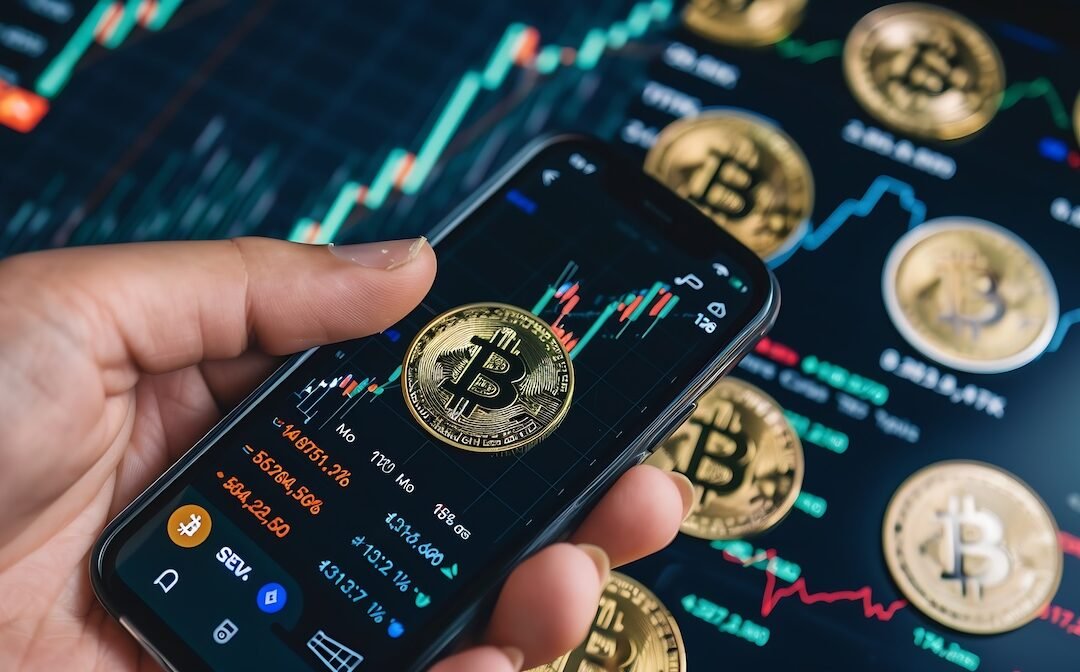
by admin | Mar 24, 2025 | cryptocurrency, cryptocurrency investing, financial markets, future of cryptocurrencies, investors
Over 600,000 Romanians invest in cryptocurrencies, according to Horia Gustă, president of the Association of Fund Administrators (AAF), quoted by
Economica.net
For comparison, the stock exchange counts merely 220,000 investors.
According to Horia Gustă, the primary barriers to attracting additional investors to regulated markets like BVB are the regulatory rules and insufficient financial literacy.
As traditional financial markets face extensive regulation from the European Union, cryptocurrency firms have operated with minimal oversight up until now, as he points out.
“The European market is highly regulated, making it impossible to see any advertisements for investment funds. These numerous regulations do not seem beneficial. In contrast, crypto operated without such rules and progressed significantly within just a few years,” stated the AAF president.
iulian@romania-insider.com
(Photo source:
Loft39studio/Dreamstime.com
)

by admin | Mar 24, 2025 | currencies, economics, financial markets, international economics, money
-
A CBK report indicated that Kenya’s foreign exchange reserves increased to $10,001 million (KSh 1.3 trillion) in March 2025.
-
CBK said this represents 5.1 months of import cover, supporting importers’ demand for US dollars
-
The Kenyan shilling retained its stability, exchanging at a rate of KSh 129.38 per US dollar.
The LIFEHACK.co.ke correspondent Wycliffe Musalia boasts more than six years of expertise in areas such as finance, commerce, tech, and environmental issues. This background provides him with significant understanding of both Kenya’s and international economic patterns.
Kenya’s foreign exchange reserves have reached their highest level in three months starting from January 2025.
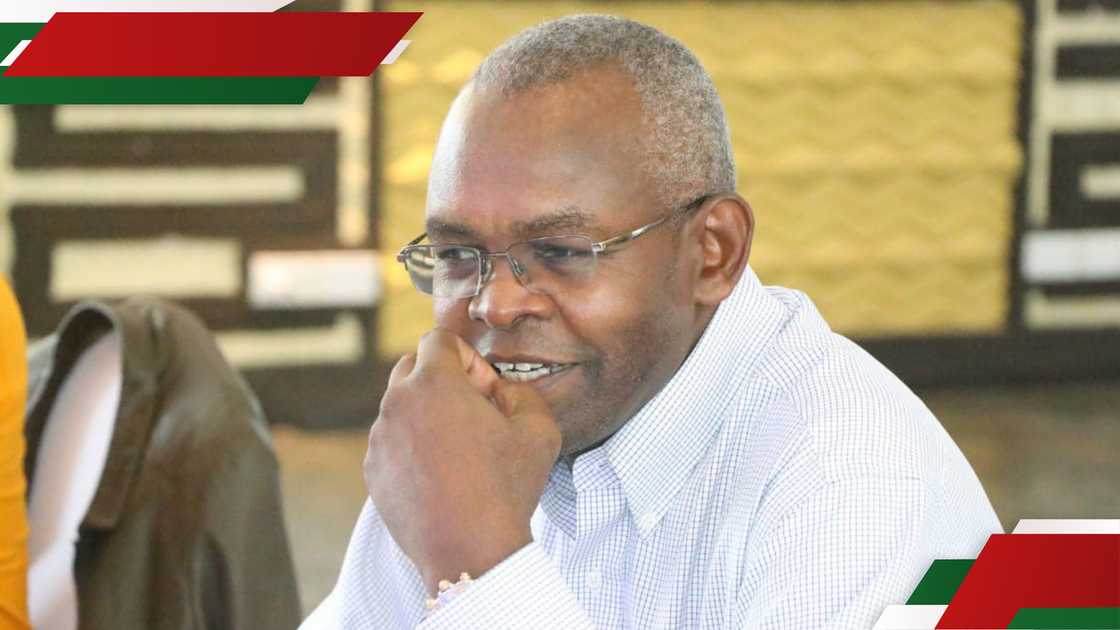
According to data from the Central Bank of Kenya (CBK), foreign reserves reached $10,001 million (KSh 1.3 trillion, using the present exchange rate).
How rising foreign reserves impact Kenya
This figure rose to $8,877 million (KSh 1.1 trillion), up from what was reported in January 2025.
The CBK observed that the increase in foreign currency reserves will be sufficient for approximately 5.1 months of import needs.
As of March 20, the available foreign exchange reserves were sufficient at USD 10,001 million (covering imports for 5.1 months). The Central Bank Report stated this fulfills the CBK’s legal obligation to strive for maintaining at least four months’ worth of import coverage.
In February, the foreign exchange reserves amounted to $9,142 million (KSh 1.2 trillion), which was sufficient to cover approximately four months of imports.
What is the worth of the shilling?
The report indicated that the value of the shilling remained steady over the three-month period ending in March 2025.
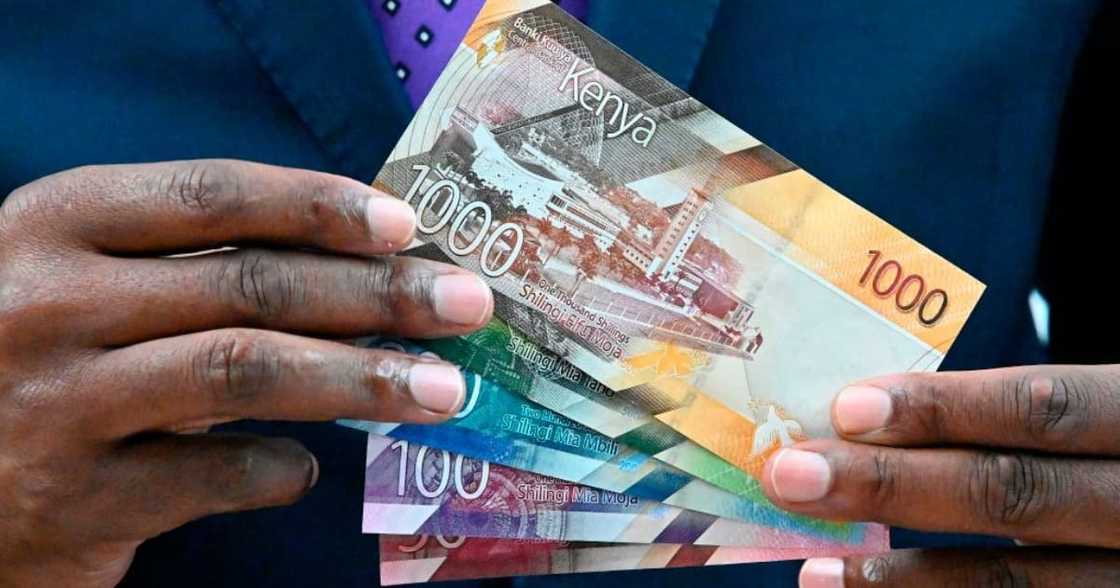
As of March 20, 2025, Kenya’s currency, the shilling, was trading at KSh 129.38 for one US dollar, down from KSh 129.43 recorded at the beginning of the month.
In January 2025, the shilling traded at KSh 129.31 for each US dollar, notwithstanding fluctuations in the foreign exchange market.
The U.S. dollar maintained stability throughout the month, preceding the inauguration of US President Donald Trump, whereas the shilling stayed bullish.
How CBK is maintaining shilling stability
In March 2025, the Kenyan shilling reached its highest point in six months relative to the US dollar when the Central Bank of Kenya implemented strategies aimed at stabilising it.
Following reports of heightened demand in February 2025, the regulator offloaded dollars to traders.
The reserves held by the CBK saw a decline from KSh 1.19 trillion ($9.256 billion) to KSh 1.16 trillion ($9.057 billion) over the previous week, partly due to dollars flowing out of the CBK’s treasury.
The sale was prompted by a rise in dollar inflows, notably from the recently issued infrastructure bond.
What other measures does CBK use to strengthen shilling
-
In February 2025, the regulatory body called for tenders for Treasury bonds as part of an effort to secure KSh 25 billion through local borrowing.
-
In March, CBK urged investors to lend the government KSh 70 billion through a newly launched bond offering aimed at providing budgetary assistance. The bank stated that the subscription window would be open from March 18, 2025, until March 26, 2025, with an auction planned for March 27, 2025.

by admin | Mar 24, 2025 | business, currencies, economics, financial markets, money
On Monday morning, the U.S. dollar gained strength compared to the Vietnamese dong, simultaneously hovering slightly beneath a three-week peak relative to key currencies.
At Vietcombank, the selling rate for the US dollar was set at VND25,825, marking a 0.25% increase from the previous weekend. In contrast, on the unofficial market, the dong depreciated by 0.04%, trading at around VND25,900 per dollar.
The State Bank of Vietnam increased its reference rate by 0.07%, setting it at VND24,831.
Worldwide, the dollar edged slightly beneath a three-week peak against key rivals on Monday as investors waited nervously for more details on U.S. President Donald Trump’s upcoming tariff announcements.
Reuters
reported.
The U.S. dollar index, which assesses the currency’s performance relative to a group of six major currencies, remained steady at 104.03 following an earlier peak of 104.22 on Friday—the highest level since early March. The previous week saw the index climb by 0.4%, marking its first positive weekly showing for the month.
The dollar has been under pressure for most of this year as the market’s assumptions that Trump would quickly usher in pro-growth policies transformed into worries that the president’s aggressive and erratic trade policies could trigger a recession.
The euro gained modestly after three consecutive days of losses, whereas the yen weakened further against the dollar, influenced by an increase in U.S. Treasury yields.
The U.S. currency increased by 0.3% to reach ¥149.77. Meanwhile, the euro strengthened by 0.24%, trading at $1.0836 after reaching a low of about $1.0795 on Friday. Additionally, sterling climbed by 0.15% to stand at $1.2934.
The upcoming round of tariffs is set for April 2, when the White House plans to introduce retaliatory charges on numerous nations.


