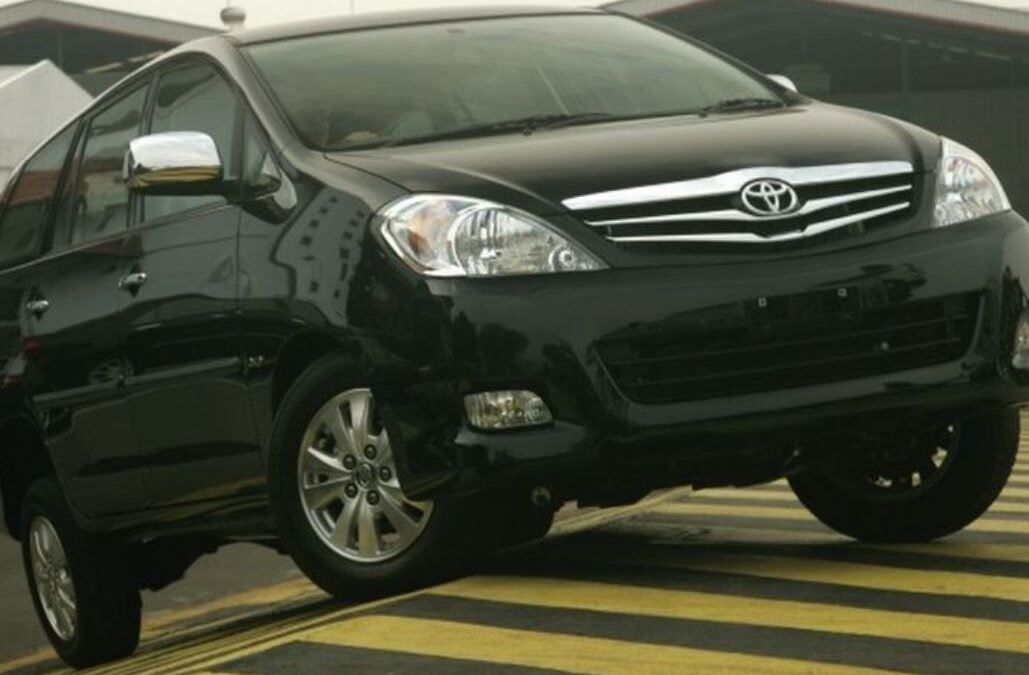
Electric Cars vs. SUVs: How Big Trucks Took Over the Philippine Roads

Around the world, an increasing number of Sport Utility Vehicles (SUVs) are appearing both on and off the streets.
Despite forecasts from the United Nations suggesting an unavoidable shift toward compact and eco-friendly cars due to the pressing nature of the climate emergency and increasing living costs.
This shift did not occur: worldwide, 54% of the vehicles sold in 2024 were SUVs, encompassing gasoline, diesel, hybrid, and electric models. According to reports, this represents a rise of three percentage points compared to 2023 and five percentage points more than the previous year.
GlobalData
.
According to the International Energy Agency (IEA), out of all the SUVs currently on the roads—whether they be new or old—about 95% rely on fossil fuels for their operation.
However, manufacturers argue that their newest batches of these vehicles are progressively turning electric, and not every SUV currently for sale leads to higher emissions.

SUVs stand out easily. They are bulky and bigger vehicles featuring roomy cabins, increased ground clearance, and a lofty seating position offering an improved perspective of the roadway, even though compact variants do exist as well.
Environmental activists like Greenpeace view SUVs as major contributors to the climate crisis and contend that producing these vehicles requires substantial resources due to their large size.
Specialists likewise mention that bigger batteries are needed for the electric models, which subsequently boosts the requirement for essential minerals, adding extra strain on the Earth.
It was believed that momentum lay with compact, energy-efficient electric vehicles. However, the sales of regular-sized EVs have declined in key markets like Japan and Germany, and their growth rate has decelerated in India as well.
In Europe, sales of SUVs have surpassed those of electric vehicles even though trends from over five years ago suggested otherwise. According to data, in 2018, European sales reached 3.27 million units for compact hatchback models—whether fueled by conventional means or electricity—but dropped to 2.13 million units by 2024.
GlobalData
.
Sammy Chan, the sales forecast manager, stated: “Partly due to smaller-sized SUV options available, which saw their European sales increase to almost 2.5 million units in 2024 from around 1.5 million in 2018.”
In 2024, China led with approximately 11.6 million SUV sales, trailed by the United States, India, and Germany, as reported by GlobalData.

What factors are behind this surge in SUV sales?
Experts in the industry indicate that individuals’ buying capacity has been increasing in numerous rapidly developing countries, which makes SUVs more likely to be chosen as cars.
Mike Hawes, CEO of the Society of Motor Manufacturers and Traders (SMMT), stated, “Car makers listen to what consumers want, and more drivers are being drawn to multi-functional vehicles due to their usefulness, comfort, and excellent visibility of the road.”
Auto industry experts likewise mention that producers are drawn to the substantial profit margins of SUVs; they can earn higher profits from these vehicles despite producing them in smaller numbers.
“Dudley Curtis, who works as the communication manager at the European Transport Safety Council, stated that ‘the industry has boosted demand significantly with extensive marketing and advertising efforts over the past few years,’ ” he noted.
He mentioned that SUVs provided the automotive sector with an easy method to increase the price of a vehicle that performs similar functions as others.

Are SUVs an issue?
Due to the strong surge in sport utility vehicle sales, the IEA reports that the oil usage for these vehicles rose by 600,000 barrels daily worldwide from 2022 to 2023, representing over one-fourth of the overall yearly increase in global oil demand.
“If SUVs were considered as part of country rankings, they would stand as the globe’s fifth biggest source of CO2 emissions, surpassing those from Japan along with several other significant economic powers,” stated Apostolos Petropoulos, who works as an energy modeler at the IEA.
The organization states that when compared to medium-sized vehicles powered by gasoline and diesel, SUVs consume approximately 20% more of these fuels because they typically weigh around 300 kilograms more on average.
Actually, road transportation accounts for over 12% of worldwide carbon emissions, making it a major contributor to global warming. Experts warn that every sector needs to quickly reduce their carbon output to prevent a severe climate crisis.
However, industry representatives counter that not every SUV currently for sale leads to higher emissions.
“Around two in five of these [new] vehicle models are zero emission as their body type lends itself well to electrification with longer battery range that can reassure consumers concerned about charging accessibility,” said Hawes, from the SMMT.
This has resulted in the average CO2 emissions from new multipurpose vehicles decreasing by over half since the year 2000, aiding this category in leading the reduction of carbon emissions in UK road transportation.
Even though most newly sold sport utility vehicles (SUVs) continue to use fossil fuels, officials from the International Energy Agency (IEA) have noted that more than 20% of SUVs purchased in 2023 were completely electric. This represents an increase from just 2% in 2018.
Regarding hybrid vehicles capable of operating using either electricity or fossil fuels, a 2022 European study conducted by the International Council on Clean Transportation discovered that plug-in hybrid electric vehicles (covering all kinds such as SUVs) were predominantly running in their gasoline modes. On average, these vehicles utilized electric power for merely approximately 30% of the total kilometers driven.
Comparable outcomes were observed in other significant economic powers like the US and China.
In general, the shift toward SUVs, according to certain experts, has led to a considerable delay in the decarbonization of the transportation industry.
The shift towards larger and more inefficient vehicles like SUVs in certain regions has mostly offset the advancements in fuel efficiency and reduced emissions seen in passenger cars globally, according to the IEA.
The UK Parliament’s climate change committee reported a comparable conclusion in their 2024 study on reducing carbon emissions within the nation.
- BMW postpones electric Mini due to ‘uncertainty’
- What prevents Europeans from purchasing more vehicles made in America?