
by admin | Aug 19, 2025 | automotive industry, car companies, cars, electric cars, singapore
Chinese electric vehicle brand Nio plans to debut in Singapore in the first quarter of 2026, marking its first market in the Southeast Asia region.
The automaker announced in a press statement released on Monday that it will introduce its small electric hatchback called Firefly.
The car allows conventional electric vehicle charging, but it also enables swapping the battery with a completely charged unit within three minutes at Nio’s facilities.
For the first time, this launch will include a right-hand drive variant of the Firefly.
The Straits Times
reported.
Nio previously stated intentions to manufacture vehicles with right-hand drive alongside those with left-hand drive for regions including the U.K. and Southeast Asia. Distribution will be handled by the multi-brand automotive company Wearnes Automotive in Singapore.
Established in 2014, Nio made its debut on the New York Stock Exchange in 2018 and subsequently expanded to the Singapore and Hong Kong stock markets in 2022, as reported.
The Business Times
.
Nio is known for its battery swap technology, which is currently not permitted for passenger EVs in Singapore, though the system has been approved for motorcycles and is being tested on heavy vehicles.
The company and its local distributor Wearnes said they “will evaluate” introducing the technology in the city-state, but offered no specifics on when or how it might be implemented.
The arrival of Nio came after several other Chinese electric vehicle manufacturers, such as JMEV earlier this month and Avatr at the end of July, according to reports.
AsiaOne
.
Another Chinese electric vehicle manufacturer, BYD,
currently leads Singapore’s passenger car market
representing almost 20% of new sign-ups during the first six months of this year.
Toyota from Japan and the German premium brand BMW come next with market shares of 14.4% and 11.1%, respectively.

by admin | Apr 17, 2025 | automotive industry, business, commerce, financial markets, international economics
U.S. President Donald Trump has suggested possible leniency regarding auto tariffs to provide automakers with “some breathing room” to relocate their manufacturing processes back to the United States. This statement came after he decided to grant a temporary reprieve for electronics from new levies, which represents another move away from the broad-ranging trade tariffs initially proposed earlier this month.
I’m seeking assistance for certain automobile manufacturers who are transitioning to components produced in countries like Canada and Mexico,” he stated at the Oval Office on Monday. “These companies require a short period as these items will be manufactured domestically.
On April 3rd, the Trump administration introduced 25% tariffs on imported automobiles. As reported earlier by Bloomberg, prominent automakers such as Ford Motor, General Motors, and Stellantis NV (the parent company of Chrysler) have been advocating for exceptions regarding specific inexpensive automotive parts. These components might otherwise be subjected to extra duties beyond the standard 25% tariff rate when they come from countries outside the United States.
In the meantime, the U.S. Department of Commerce issued an announcement indicating that they have launched inquiries into the semiconductor and pharmaceutical industries. These investigations are conducted under Section 232 of the national security investigation guidelines, which suggests the possibility of additional tariffs being imposed on these sectors. This development contributes to the growing ambiguity around President Trump’s tariff plans.
Following Trump’s statement that exceptions on electronic goods would be short-term and his assertion that “NOBODY will escape ‘being held accountable’ for the unjust trade deficits” on Sunday, these investigative alerts were issued.
The semiconductor review document stated its objective to “assess the impact on national security from imports of semiconductors and semiconductor manufacturing equipment (SME), along with related goods.” Meanwhile, the pharmaceutical inquiry will focus on evaluating imports including “completed medications, medical countermeasures, essential components like active pharmaceutical ingredients, crucial raw materials, and associated derivatives of these items.”
European markets advance as automakers anticipate potential relief
Following President Trump’s remarks hinting at potential leniency regarding auto tariffs, European markets began the day marginally stronger. By approximately 9:30 am Central European Summer Time, share prices showed an overall uptick, with Germany’s DAX rising by 0.9%, the UK’s FTSE 100 climbing by 0.7%, and the STOXX 600 increasing by 0.6%. However, France’s CAC 40 saw a dip of 3%.
Shares of European automobile companies might see an upside due to changes in U.S. policies after experiencing significant declines over the last month. Specifically, stocks of key German automotive firms such as Volkswagen (VW), BMW, Porsche, and Mercedes-Benz have dropped by approximately 15-18% within this timeframe. As of Tuesday morning, VW saw a rise of 3.7%, BMW surged by 3.8%, Porsche increased by 2%, and Mercedes-Benz jumped by 3.8%.
Nonetheless, European tech and pharma companies might encounter increased stress because of U.S. investigations into semiconductors and drugs. Notably, Denmark-based pharmaceutical heavyweight Novo Nordisk could come under greater examination since the United States represents its biggest individual market for its weight loss medication. The company experienced its sharpest drop-off over one month in March following several unsuccessful clinical trials. Additionally, investor worries have escalated due to President Trump’s warning about tariffs on pharmaceutical goods, potentially impacting profitability.
In the realm of technology stocks, ASML—which stands as Europe’s leading producer of semiconductor manufacturing equipment—is set to draw significant attention prior to the release of its financial outcomes on Wednesday. The company’s shares climbed by 2.8% during early trading on Tuesday.
The euro remains strong due to safe-haven demand.
During Tuesday’s Asian trading session, the euro remained robust above 1.13, reaching its highest position since 2022. As a safe-haven currency, the euro has gained traction due to Trump’s tariffs causing trade disruptions, leading to increased risk aversion across international markets throughout this last month. On Monday, the EUR/USD pairing peaked just over 1.14 before potentially continuing its upward trajectory fueled by ongoing economic instability.
The European Central Bank (ECB) is anticipated to announce its third successive reduction in interest rates this Thursday, further supporting the accommodating monetary policy of the Eurozone due to persistent threats.
On Tuesday morning, the euro increased slightly against the dollar, rising by under 1%.

by admin | Apr 1, 2025 | automotive industry, autos, battery electric vehicles, cars, electric cars
Production ceased in 2023, however, some Bolt EVs and EUVs are only now being delivered from dealership inventories.
-
The Chevy Bolt and Bolt EUV ceased production back in December 2023, more than a year prior.
-
Nevertheless, there are still nine remaining available according to Autotrader.
-
GM announced today that Chevy managed to sell 13 Bolt EVs and Bolt EUVs combined in the first quarter of 2025, indicating a slow but steady pace of sales.
The
The Chevy Bolt EV and EUV ceased production in December 2023.
, but that doesn’t imply they have vanished. Firstly, they will endure eternally within our hearts. Secondly, a
The new version will be released later this year.
Thirdly, older models can still be found on certain lots. Chevrolet reportedly sold 13 Bolt vehicles in the previous quarter, as per data from General Motors.
Q1 2025 sales report.
The Bolt stood out as an under-the-radar champion among electric vehicles; it was one of the initial budget-friendly models capable of traveling more than 250 miles per charge. Although it launched before the Tesla Model 3, it lacked the latter’s allure and cutting-edge tech features. Instead, it offered straightforward, dependable mobility at a reasonable price point aimed squarely at functional utility and lower total costs. Predictably perhaps, U.S. consumers were unimpressed. There has been minimal demand for compact, economical cars overall, let alone those powered solely by electricity. People tend to favor oversized sport utility vehicles coupled with hefty loan amounts. Adding a somewhat lukewarm “Electric Utility Vehicle” concept—a sort of crossover variation—did marginally boost Bolt sales, yet it failed to fully capture America’s attention or enthusiasm.
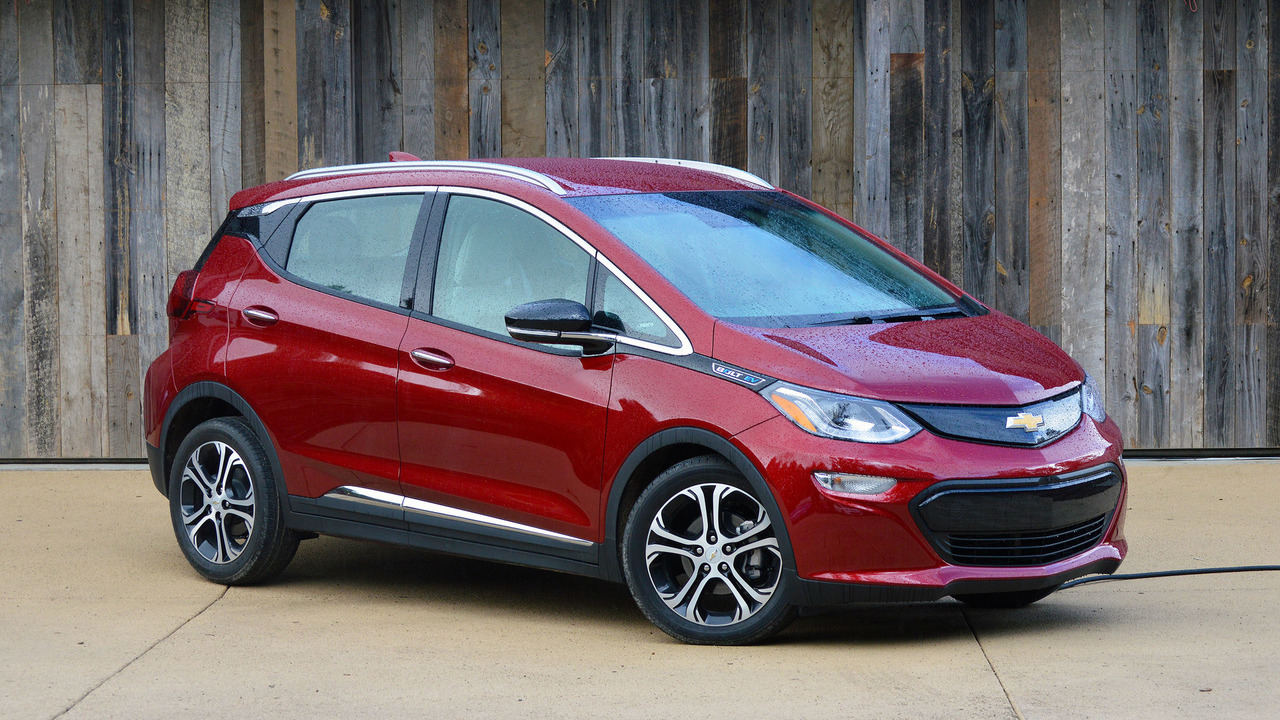
The initial 2017 Chevy Bolt, which we tested fresh off the lot, retained much of its structure throughout its production run even as General Motors introduced updates like Super Cruise and additional technological advancements.
It won over numerous electric vehicle enthusiasts. For years, it stood as the sole viable competitor to Tesla and was the most budget-friendly option offering up to 250 miles of range, earning it an almost legendary status. I have suggested their cars to several individuals, and every person I know who owns one speaks highly of it. The Bolt holds a special place among early adopters of electric vehicles. Personally, I found the car somewhat underwhelming; driving it didn’t excite me much, nor did spending time inside it appeal greatly. However, I am pleased that such a model exists. Additionally, I’m delighted that General Motors plans to reintroduce it later this year, with
a completely new design grounded in the firm’s most recent technological advancements
I really enjoy the software.
my Blazer EV
, yet I dislike that it weighs 5,300 lbs, has poor fuel efficiency, and comes with an exorbitant base price.
Furthermore, due to significant advancements in both electric vehicle technology and production capacity over the past eight years since the initial release of the Bolt, General Motors ought to present a much more attractive and accessible electric option. This type of vehicle is precisely what we require at this moment, and I am hopeful that GM can meet our expectations. Additionally, incorporating genuine rapid charging capabilities would also make a substantial difference, considering the previous limitations.
Bolt wasn’t really suited for long car journeys.
.
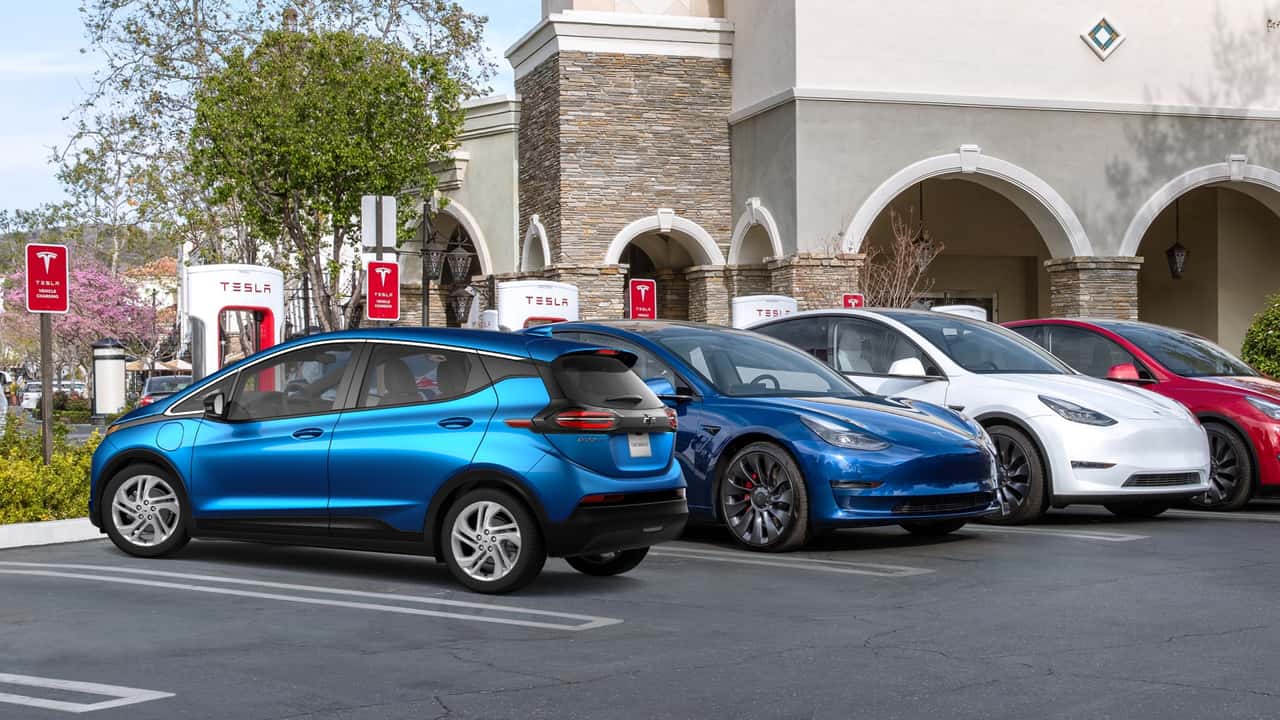
Photo by: InsideEVs
Certainly, you can use a Supercharger for a Bolt; however, it will take some time.
Nevertheless, even though pre-owned models continue to be the standard choice for cost-sensitive purchasers who aren’t opting for Tesla, it’s enjoyable to observe that new Bolts are still available. Ultimately, after accounting for tax incentives, you might acquire one for less than $25,000 at the manufacturer’s suggested retail price.
Occasionally much below that.
Considering that Americans doubt the appeal of smaller electric vehicles and that leftover Bolts have been sitting unsold for at least 15 months, dealers who still have stock might offer you a more attractive price.
Based on Autotrader, there are currently seven Bolt EUVs and two Bolt EVs available as brand-new options in the American market. These vehicles tend to be scattered widely across different regions, frequently located far from key electric vehicle hubs. Therefore, purchasing one may require planning a leisurely cross-country journey. However, should you decide to proceed with your purchase, it’s advisable to move quickly. The initial versions of the Bolt and Bolt EUV are nearing depletion at dealerships, and uncertainty surrounds whether the production schedule for their successors will remain unchanged.
car market’s tariff chaos.
Contact the author:
Mack.Hogan@insideevs.com
.
More Bolt Stories
-
Pre-owned Chevrolet Bolt EVs Are More Affordable Than Expected
-
2026 Chevy Bolt: Similarly Affordable but Truly Profitable for GM
-
Charging a Chevrolet Bolt EV at a Tesla Supercharger: This Is What You Need to Know
-
In 2026, General Motors Claims the Chevy Bolt Will be the ‘Least Expensive’ Electric Vehicle Available
-
2026 Chevy Bolt EUV: All the Details Available
-
Certain Chevy Bolt Owners Require Dealership Assistance For Tesla Charging Capabilities (Updated)
by admin | Apr 1, 2025 | automotive industry, autos, car companies, cars, electric cars
The firm’s budget-friendly electric vehicle gamble is proving successful, yet these favorable circumstances could be short-lived.
A year back, General Motors’ plans for electrification were not faring well. The Chevrolet Bolt had been discontinued. Meanwhile, the Chevy Blaser EV faced a difficult beginning.
leaving one of our reporters caught in a significant public blunder
. Software problems
plagued the Cadillac Lyriq
.
We were discussing how the entire “Ultium” initiative had derailed.
However, the company pressed ahead, establishing itself as a leader in electric vehicles and debuting the most capable budget-friendly EV to date, which turned into
our first-ever Electric Vehicle of the Year award
.
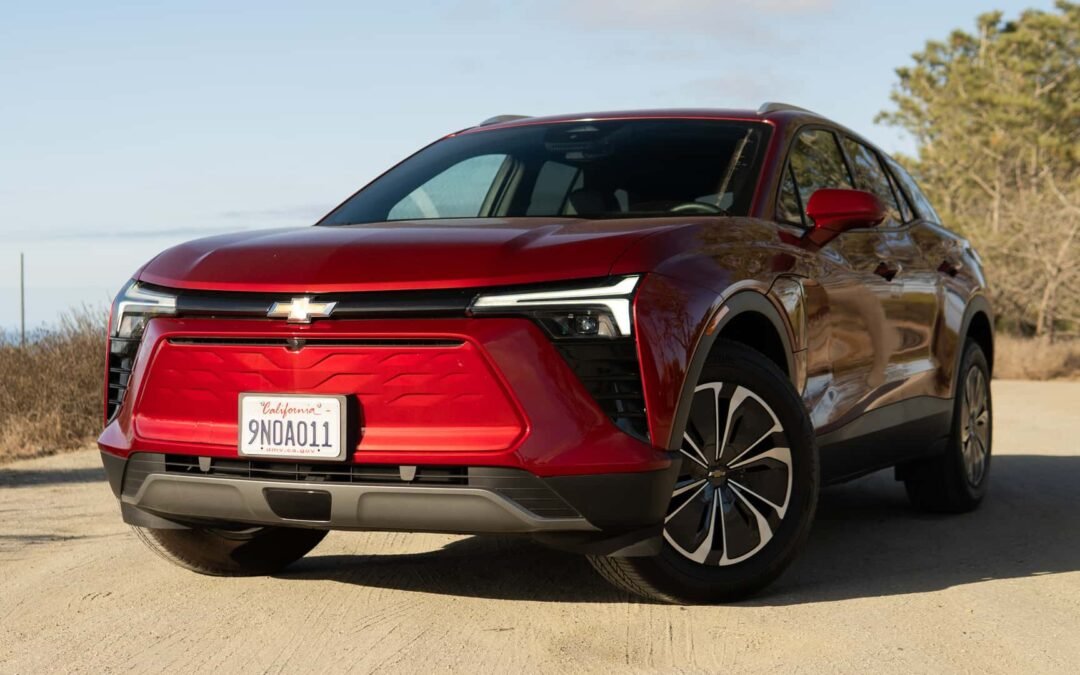
The market has responded. General Motors’ electric vehicle (EV) sales have surged by 94%, positioning them to become the second-largest EV manufacturer in the U.S. However, this achievement comes with a significant caveat. While the company excels in producing EVs, their top-selling models are manufactured in Mexico.
With 25% duties scheduled to come into effect tomorrow
GM will now have to figure out how to sustain its progress even though its two least costly models have become significantly pricier. This presents quite a challenge.

Photo by: Fernando Pino
Our 2024 Breakthrough Electric Vehicle of the Year award went to the Equinox EV due to its excellent pricing and remarkable range. However, it’s manufactured in Mexico.
The Equinox EV starts at around $35,000, and because it’s imported from Mexico, it could have a tariff of around $8,750 for a base model. The Blazer EV will have an even steeper duty. When you dive into GM’s EV sales figures, you see how big of a problem that is. Chevy sold 6,187 Blazer EVs and 10,329 Equinox EVs last quarter.
Those numbers make them the #1 and #2 players in GM’s EV bullpen. Here’s how many sales each of GM’s other EV models recorded last quarter:
-
Cadillac Escalade IQ: 1,956 units sold
-
Cadillac Lyriq: 4,300 sales
-
Cadillac Optiq: 1,716 sales
-
Chevrolet Bolt EV/EUV: 13 units sold
-
Chevrolet Silverado EV: 2,383 sales
-
GMC Hummer EV: 3,479 units sold
-
GMC Sierra EV: 1,249 sales.
The
Cadillac Optiq
The Equinox EV, Blazer EV, and Optiq are also manufactured in Mexico. Adding these together, we have 18,232 sales from the Mexican-made models. In contrast, the remaining models produced in the U.S. contributed only 13,380 sales among them.
The Blazer and Equinox performed exceptionally well on their own. Additionally, they come at the lowest price points among available options, making electric vehicles accessible to a broader audience. Personally, I opted for a Chevy since the Blazer EV had the most budget-friendly leasing option when I made my decision, and it met all of my requirements.
Related News
-
The Chevy Equinox EV Takes Home Our Title of 2024 Breakthrough Electric Vehicle of the Year
-
Trump Imposes 25% Duties on All Incoming Vehicles
-
2024 Chevy Blazer EV Owner Review After Six Months: Pros and Cons Revealed
-
No One Is Emerging Victorious In The Electric Pickup Truck Battle… Not Yet At Least.
-
Chevrolet Equinox EV: Ways to Obtain One for Less Than $30,000
-
2026 Chevy Bolt EUV: All the Details Available
Certainly, the pickup trucks are presently quite costly.
However, more affordable alternatives will be available shortly.
A fresh version of the Bolt EV is expected to launch this year as well, and it’s slated for production in the United States. However, General Motors’ domestically produced items will still face challenges.
According to federal filings
Only 36% of the parts value in the Silverado, Sierra, and Hummer EVs originates from America and Canada combined (the data doesn’t distinguish between them). This implies that if every component within that 36% comes from the United States, approximately 64% of these vehicle’s components by value would still face a 25% tariff.
In brief: All GM electric vehicles might become pricier soon.
General Motors isn’t facing this situation alone. The entire automotive sector is grappling with the impact of these tariffs, leaving everyone uncertain about future developments. However, GM has recently kickstarted its electric vehicle transformation. According to the company, their EVs generate “positive variable profits,” which basically indicates that excluding initial expenses and factoring in the advantages of Zero Emission Vehicle (ZEV) credits they avoid purchasing, EV production turns out to be financially beneficial for them.
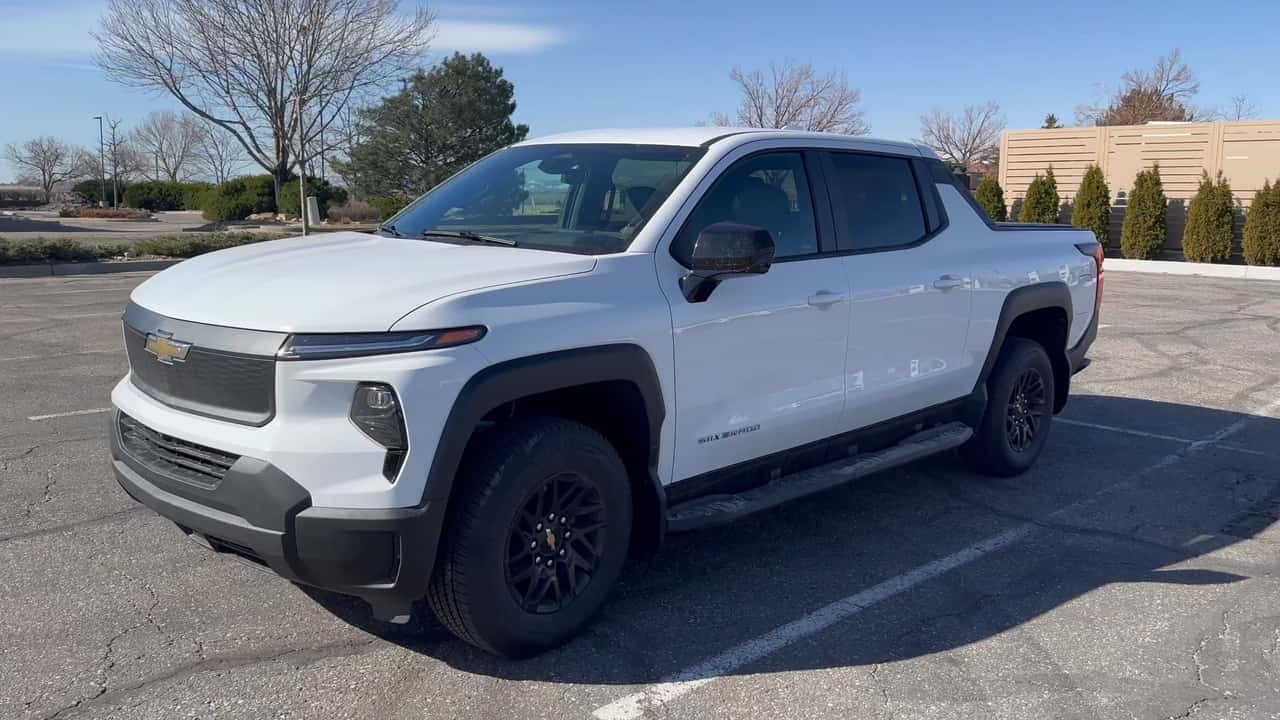
Image courtesy of: Out of Spec Testing (YouTube)
The Chevy Silverado EV 4WD.
It appears unlikely to endure. The growth in sales for the Equinox EV and Blazer EV can be attributed partially to substantial incentives offered. My vehicle came with a $52,000 MSRP, yet my leasing cost remained lower than that of a Honda Civic.
I’ve come across individuals who have managed to secure a two-year lease on a Blazer for less than $5,000 overall, which is quite unusual in this market sector. The firm has to move these vehicles due to their less efficient gasoline-powered pickup trucks and sport utility vehicles, hence the strategy seems effective; however, the pricing clearly doesn’t leave much room for absorbing a 25% duty.
The cost of trucks is also likely to increase, but to a smaller degree. It remains uncertain how significantly these price changes will compare to those of competitors. Electric vehicle alternatives such as the Hyundai Ioniq 5, Volkswagen ID.4, and Tesla Model Y are manufactured in the U.S., although
different levels of American-made components
.
Moreover, with Trump both threatening to eliminate the tax credit and informing the automakers that he will ease fuel efficiency requirements, several conflicting factors remain unresolved.
However, due to the increased costs of all goods, it’s improbable to witness sales expansion for any vehicle manufacturer, particularly not for businesses heavily affected by import duties.
Therefore, GM might have overcome its initial electric vehicle challenge. However, facing upcoming tariffs and an unexpectedly soft demand for electric vehicles, the toughest fight could well lie ahead.
Contact the author:
Mack.Hogan@insideevs.com
.

by admin | Mar 27, 2025 | automotive industry, cars, commerce, international economics, international trade

On Thursday, major global powers condemned U.S. President Donald Trump’s significant tariffs imposed on imported cars and auto components, threatening countermeasures as trade disputes escalate and potential price increases loom ahead.
Germany, a major car exporter, called for strong action from the European Union, whereas Japan stated it will “examine every possible option.”
On Thursday, Canadian Prime Minister Mark Carney stated that the traditional partnership characterized by strong economic, defense, and military connections with Washington has ended. He also mentioned anticipating conversations with Trump within the coming days.
The 25 percent tariffs imposed by the U.S., set to begin on April 3 at 12:01 am (0401 GMT), will affect imported automobiles, light trucks, and car components.
Specialists caution about increased expenses for vehicles, with the Italian automotive company Ferrari announcing price hikes of up to 10 percent on numerous models sold in the U.S., effective next week.
The global stock market experienced a significant downturn, with major car manufacturers such as Toyota, Hyundai, and Mercedes leading the decline. On Wall Street, General Motors’ stocks dropped sharply, followed by declines in both Ford and Stellantis shares.
The French Finance Minister Eric Lombard stated that the sole solution for the European Union is to “impose higher duties on goods coming from America as a countermeasure.”
Carney, who previously described the tariffs as a “direct assault” on his nation, stated that he organized a gathering to explore various trade possibilities. Meanwhile, Mexico’s Economy Minister Marcelo Ebrard mentioned that he aimed to secure “special consideration” for his country.
Trump intensified his warnings overnight, stating on social media that Canada and the EU might encounter “much higher” tariffs if they collaborated “to inflict economic damage upon the USA.”
Price surge
According to JPMorgan analysts, the tariffs imposed on vehicles and components might lead to an uptick in average car prices ranging from $4,000 to $5,300.
Approximately 82 percent of Ford’s U.S. sales come from vehicles made domestically, compared to Stellantis with 71 percent and General Motors with 53 percent.

The American Automotive Policy Council, which represents the major three car manufacturers, cautioned that tariffs should be imposed in a manner that “does not increase costs for customers” and maintains the sector’s competitive edge.
Brian Kingston, the president of the Canadian Vehicle Manufacturers’ Association, stated that these measures would result in increased expenses for both manufacturers and consumers, along with “an industry that is less competitive.”
Although Trump utilized emergency economic measures for previous tariffs, his automobile duties expanded upon an investigation concluded in 2019.
‘Cheaters’
Approximately fifty percent of vehicles purchased in the United States are domestically produced. When it comes to imported cars, roughly half originate from Mexico and Canada, while Japan, South Korea, and Germany remain key exporters as well.
The White House suggests that for American-manufactured vehicles, the typical domestic content probably hovers around 40 percent.
On Wednesday, top trade advisor Peter Navarro criticized “foreign trade cheats,” accusing them of transforming America’s manufacturing industry into a “low-wage assembly line for imported components.”
He targeted Germany and Japan for keeping the production of more valuable components within their own borders.
After reassuming the presidency in January, Trump has levied tariffs on goods imported from key trade allies such as Canada, Mexico, and China, along with a 25 percent tax on steel and aluminum products.
The newest tariffs build upon those previously imposed on vehicles.
However, the White House also noted that cars coming into the United States as part of the US-Mexico-Canada Agreement (USMCA) could be eligible for a reduced tariff based on the percentage of American-made components they contain.
USMCA-compatible automotive components will stay exempt from tariffs as authorities set up a method to address their non-US origin materials.
The Mexican President, Claudia Sheinbaum, stated that imposing tariffs went against the North American trade agreement. However, she mentioned that Mexico would hold off on taking action until early April.
‘Devastating impact’

Ambiguity surrounding Trump’s trade strategies and concerns that these might prompt an economic decline have unsettled financial markets, coinciding with a drop in consumer confidence.
Trump has supported tariffs as a means to increase governmental income and rejuvenate American manufacturing.
Aiming at imported vehicles might put pressure on relationships with Washington’s partners, though.
“Wendy Cutler, who serves as the vice president at the Asia Society Policy Institute and previously worked as a US trade negotiator, stated that levying 25 percent duties on imported vehicles would severely affect numerous key trading allies of ours,” she explained.
In addition to cars, Trump is mulling over specific industry tariffs, which could include those on medicines, chips, and wood.
He has pledged a “Freedom Day” for April 2nd, during which he plans to introduce proportional tariffs aimed at various trade counterparts, designed to counteract what are considered unjust practices.
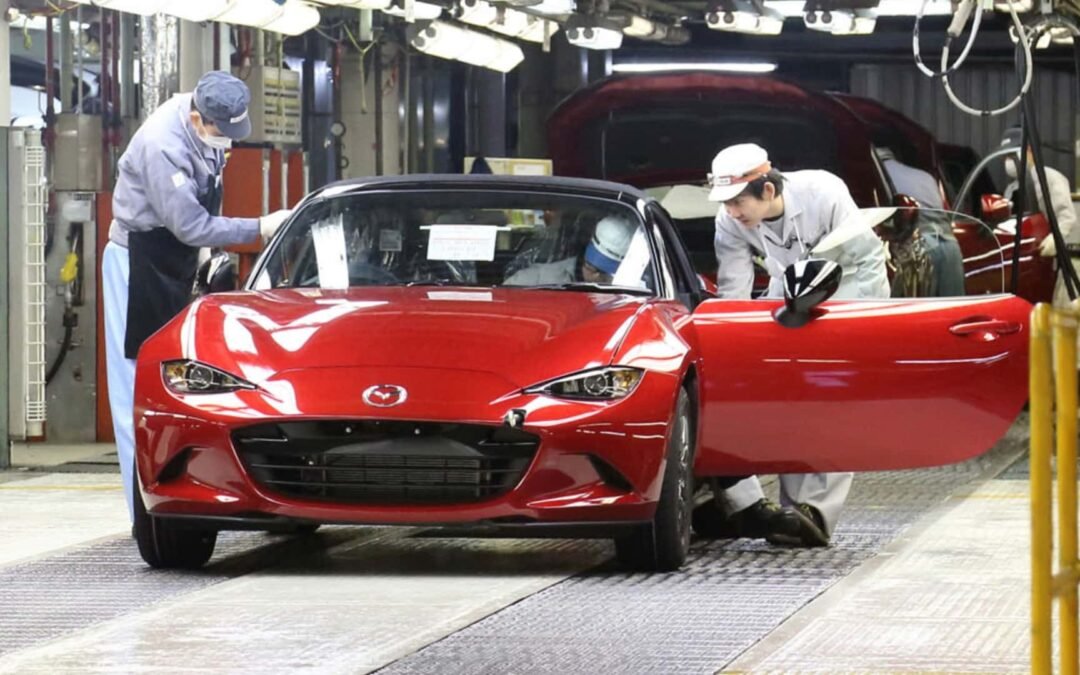
by admin | Mar 27, 2025 | automotive industry, autos, car companies, cars, commerce
These brands and vehicles have the lowest and highest chances of being impacted by the new tariffs.
Recently, President Trump implemented a 25 percent duty on all imported automobiles. This would result in increased prices within the United States for cars manufactured abroad, which includes countries like Canada and Mexico. Additionally, components sourced from overseas intended for use in U.S.-assembled vehicles will also face this tariff, as stated by him.
declaration released by the White House
.
President Trump stated, ‘If you manufacture your car in the United States, there won’t be any tariffs.’
The tariffs will come into play starting on April 3rd, with President Trump indicating they might become ” permanent.” The key issue now is identifying which cars and makes stand to gain the most from these new duties, as well as determining which models could suffer the greatest impact.
The Big Winners
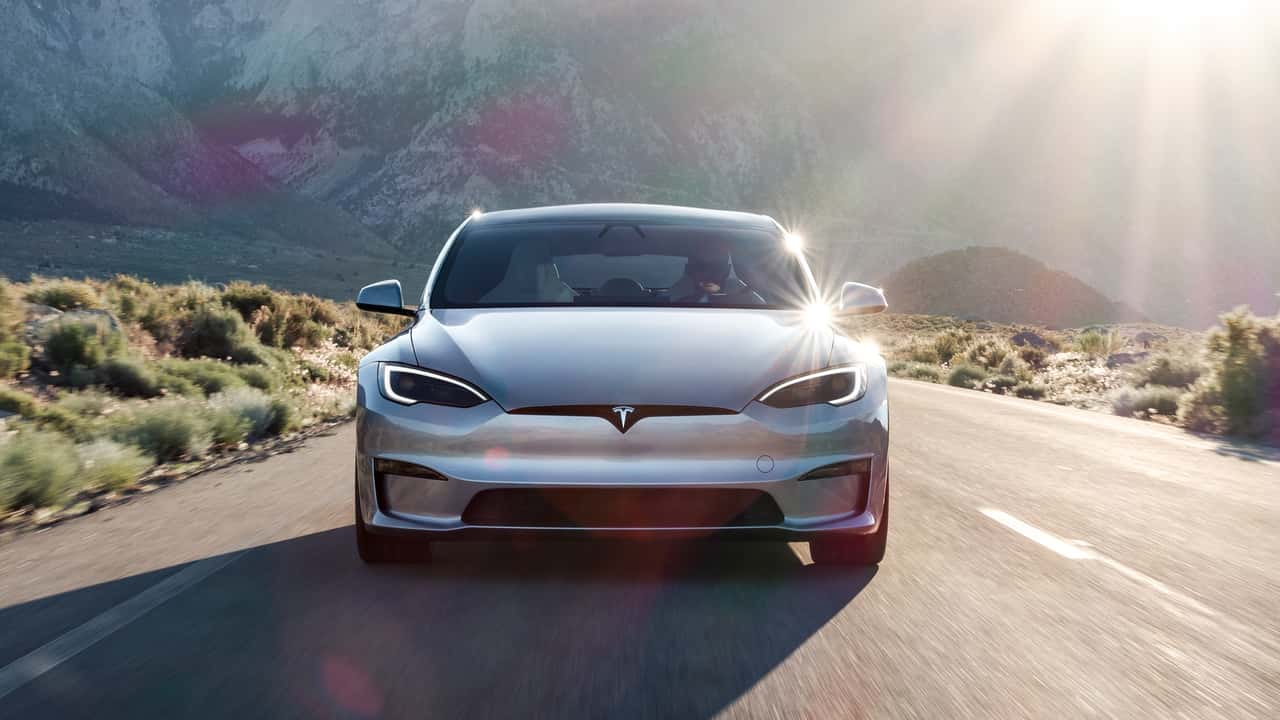
Exploring the Kogod School of Business once again
2024 American-made index
, Tesla stands to gain the most from these new tariffs. Every one of Tesla’s vehicles has more than 80 percent domestic content overall.
At the pinnacle of the ranking stands the Model 3 Performance, boasting domestic production and assembly at 87.5%. Following closely behind are the Model Y (with an 85% domestic content rate), Cybertruck (which has 82.5%), along with both the Model S and Model X each contributing domestically at an 80% level.
This being the case, Tesla CEO Elon Musk indicates that the company won’t remain “untouched” with the introduction of new tariffs. As shared in a post on
X
(formerly
Twitter
Musk stated, “It’s crucial to understand that Tesla has not remained untouched through this. The effect of these tariffs on Tesla continues to be substantial.”
Although the firm manufactures engines and batteries within the United States, Tesla continues to import numerous components from China. Excluding the locally produced motors and batteries, the Model 3 Long Range has “40 percent of its parts sourced from China,” notes Frank DuBois, an associate professor specializing in information technology and analytics at American University.
told
Kelley Blue Book
last year.
Coming in second after Tesla is Ford, which has three variants of the Mustang built primarily from domestically sourced materials at an 80% rate: the automatic version, the GT, and the GT Coupe Premium. In contrast, the Mustang GT equipped with a manual transmission—from Getrag in Germany—is composed of approximately 73% U.S.-made components.
Honda performs impressively with the Passport, scoring 76.5 percent domestically made content, along with the Odyssey, Ridgeline, and Pilot, each boasting a rating of 74 percent. The Jeep Wrangler has 76 percent locally sourced components. In addition, the Volkswagen ID.4 includes 75.5 percent domestic materials. Similarly, General Motors’ Chevrolet Colorado and GMC Canyon models achieve a mark of 75.5 percent for their U.S.-made content.
|
Make / Model
|
Total Domestic Content
|
|
Tesla (Model 3 Performance)
|
87.5 Percent
|
|
Ford (Mustang GT AT)
|
80.0 Percent
|
|
Honda (2024 Passport AWD)
|
76.5 Percent
|
|
Jeep (Wrangler Rubicon)
|
76.0 Percent
|
|
Volkswagen (ID.4 AWD 82 KWH)
|
75.5 Percent
|
Among the top three car manufacturers in Detroit, General Motors is considered the most vulnerable based on President Trump’s proposed tariffs, as stated by JPMorgan analyst Ryan Brinkman. Given that almost 40 percent of GM’s vehicles are manufactured in either Canada or Mexico, Brinkman predicts this could result in an impact of approximately $14 billion on their profits.
In this regard, the White House has admitted that cars made under the United States-Mexico-Canada Agreement (USMCA) will get particular allowances. Particularly, components manufactured according to USMCA guidelines won’t face tariffs until the Commerce Secretary sets up a procedure for handling non-US materials.
The Big Losers
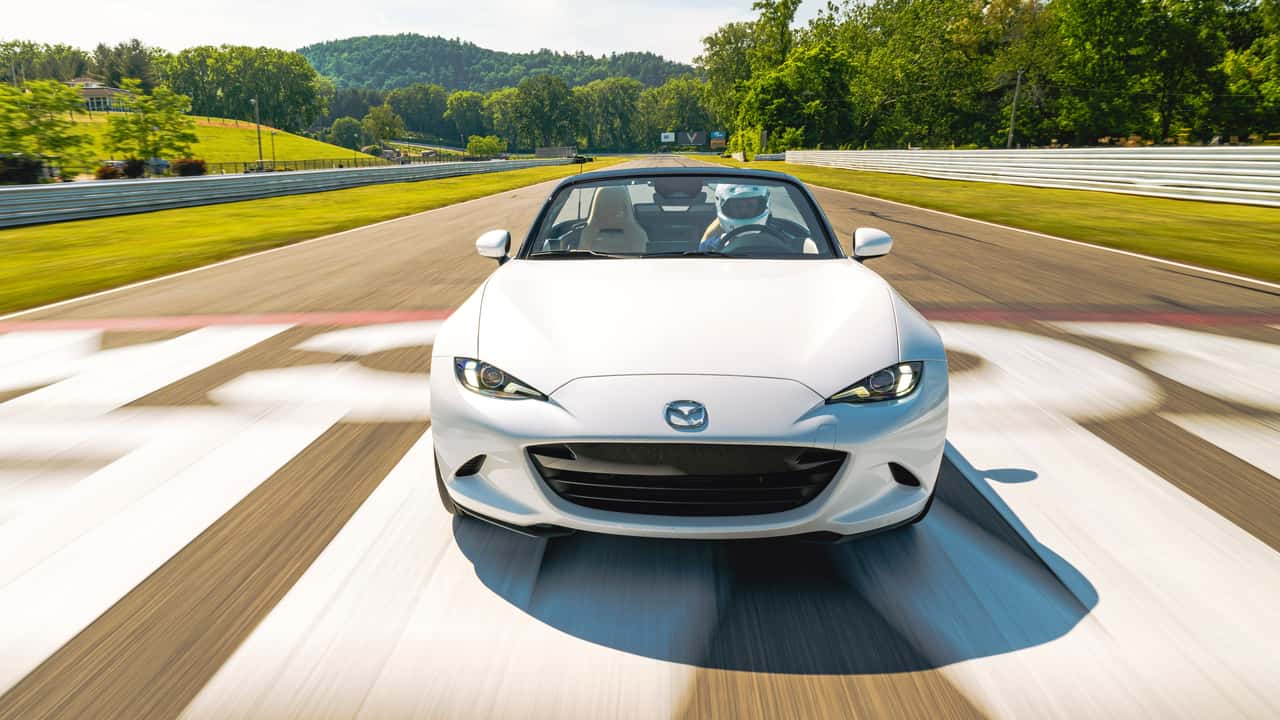
At the other extreme, certain international car manufacturers might experience significant losses in their US market due to these new tariffs. Companies such as Audi, BMW, Lexus, Mazda, and Toyota manufacture several models that consistently place at the lower ranks of the Made-in-America index.
Particularly, some of our beloved budget-friendly sports cars might face significant impacts. Models such as the Miata, the Subaru BRZ, the Toyota GR86, and the GR Corolla receive only a 1% rating on the U.S.-made scale. Several BMW performance vehicles also fall into this category with scores of merely 1%, including the M3 sedan, the Z4, and the discontinued M8.
|
Make / Model
|
Total Domestic Content
|
|
Mazda (Miata)
|
1 Percent
|
|
Hyundai (Elantra N)
|
1 Percent
|
|
BMW (M3 Sedan)
|
1 Percent
|
|
Subaru (BRZ)
|
1 Percent
|
|
Toyota (GR 86 & GR Corolla)
|
1 Percent
|
In 2024, with vehicles accounting for 28.3 percent of Japan’s total exports to the U.S., automobile manufacturers might face significant impacts from the newly imposed tariffs. As reported,
Reuters
, stocks of Nissan, Toyota, and Honda had dropped by 2.2 percent, 2.7 percent, and 3.0 percent, respectively, after the statement was made. Meanwhile, Hyundai and Kia each declined by 4.0 percent.
Japanese Prime Minister Shigeru Ishiba states that they will consider every possible approach to counteract Trump’s tariffs.
“Ishiba stated in a parliamentary address that Japan leads all nations in investments towards the United States; hence, it seems questionable whether imposing equal tariffs on every nation aligns with Washington’s interests. We have consistently highlighted this viewpoint and will keep doing so,” he emphasized.
The Big Picture

Trump’s 25 percent tariff is likely to increase prices on foreign-imported cars. But former Vice Chairman of Product Development at GM, Bob Lutz, says these more stringent regulations on auto imports are a long time coming.
“Tariffs that Trump is implementing roughly reflect those enforced by our key trade partners for many years,” Lutz mentioned to
Motor1
There is no question that these duties will raise the cost of non-US vehicles, leading to a drop in their sales figures. This is precisely what tariffs aim to achieve.
At present, the European Union applies a 10 percent duty on vehicles imported from the United States, along with an extra 20 percent VAT. However, the EU has lately suggested reducing this rate from 10 percent down to 2.5 percent as part of their efforts to alleviate trade disputes with the U.S.
according to some reports
.
Lutz points out that ‘the U.S. must safeguard its residual industries,’ much as every other country does. While tariff-free imports result in lower consumer costs, they simultaneously lead to a reduction in manufacturing positions, ultimately causing national deterioration.
These fees will lead to temporary discomfort and disruption, yet the adaptation process should be quick and advantageous for worldwide commerce. It’s unsustainable for the US to continually experience massive trade gaps each year with major trading allies.
The Latest On Tariffs
-
Thanks, Tariffs: Prices for JDM Imports Are Set to Soar Significantly
-
Trump Imposes 25-Percent Duties on Every Imported Car


