
by admin | Nov 26, 2024 | brain health, health, mental health, skills, wellness
We place great emphasis on having a supple body; we practice yoga, engage in stretching routines, and more.
But do we also pay attention to a flexible mind? Yet a flexible mind would help us become mentally and emotionally stronger, more creative and resilient.
Mental flexibility can do a lot for us! The routines we have built up with aging can also limit us. So make work of a more flexible mind that absorbs new information more easily, adapts more quickly to change and finds creative solutions to everyday challenges.
What is mental flexibility?
Mental flexibility is the ability to adapt your thinking, to look at things from a different angle and to let go of patterns (that no longer work).
When we work on a more flexible brain, we give ourselves the space to look at each situation in a fresh way and find solutions that we previously thought were unattainable.
How do I get started?
There are easy methods to “expand” your mind bit by bit every day, making your brain more adaptable.
Step 1:
Small changes, big impact
Start by doing one thing different from what you are used to each day. This is how you break routine. For example, take a different route on your daily walk. Or choose a different place at the table. By making small changes, you challenge your brain to think in a different way. Also, it helps to reduce the “rigidity” in your thinking.
Step 2:
Push yourself to avoid doing something specific.
Adopt the contrary strategy by intentionally avoiding your usual actions.
For instance, you could decide against making your bed immediately after getting up or avoid heading directly for that coffee machine.
In this manner, you discover the sensation of loosening your grip slightly and realize that you can still operate just fine without rigid frameworks.
Step 3:
Change your environment
Alterations in your surroundings prompt your mind to consider new perspectives.
For instance, try sipping your coffee in a new location or take a stroll in an unfamiliar setting. Physical movement continues to be a strong asset and offers a cognitive uplift as well. This shift allows you to discover fresh concepts and enables you to view matters from a broader viewpoint.
Step 4:
Learn something new
Begin thinking “outside the box” by initiating a fresh pastime, such as learning a new skill. Broaden your horizons and embrace novel opportunities. Consider acquiring proficiency in another tongue, engaging with a different musical instrument, or enrolling in a dance class. These activities demand focus, perseverance, and they also encourage the formation of new neural pathways in your brain.
Step 5:
Be bold enough to reflect on your ideas
Regularly challenge your beliefs and allow room for considering different viewpoints. It’s essential to have the courage to doubt our notions of how things “should” or “ought” to be. Must all our actions adhere strictly to these norms? Is achieving perfection truly necessary for every task? Could there possibly be another approach to managing this circumstance? …
Begin your day by flexing your mind!
When you “stretch” your mind, you enhance creativity, resilience, confidence, and develop skills for managing change effectively. This process liberates you from the anxiety of rigid expectations. Through daily minor alterations, you gradually cultivate flexibility in thinking. Over time, this allows you to approach life with openness, welcome novel experiences, and broaden your perspectives. It’s truly a wonderful present to bestow upon yourself!
(SR for SANGKRITALOKA/Source: SeniorenNet/Illustration image: Unsplash)
Make sure to check out all our articles on MSN by subscribing to our content. Simply click on ‘follow’ located beside our logo at the top.

by admin | Nov 22, 2024 | diet and nutrition, health, health and exercise, nutrition, nutritionists
Peanuts, almonds, and pistachios are protein-rich alternatives to eggs for those looking to diversify their dietary variety.
Health news platform
Eating Well
notes that eggs are renowned for being a protein powerhouse, with about 6 grams of protein per serving. They are often used as a benchmark for evaluating the protein content in other foods. Yet, certain nuts can match this standard, providing a compact and nutrient-dense source of energy, as demonstrated by the three examples below.
1. Peanuts
Although peanuts are technically legumes, they are generally categorized as nuts due to their similar taste and nutritional value. A 1-ounce (29 grams) serving of peanuts provides 7 grams of protein and 2 grams of fiber, making them an excellent choice for a fulfilling snack.
According to
Medical News Today
, peanuts are also rich in essential vitamins and minerals. Their nutritional benefits include supporting heart health, managing blood sugar levels, and more.
2. Almonds

|
|
Peanuts serve as an excellent egg alternative because of their high protein levels.Illustration photo by Pexels
|
Almonds stand out as well, with 6 grams of protein per ounce (about 23 almonds).
Besides protein, 23 almonds also deliver 3.5 grams of fiber, which exceeds 10% of the daily recommended fiber intake. They are additionally beneficial for their antioxidants and contributions to heart health.
3. Pistachios
Not only do pistachios add a delightful taste to different recipes, they are also notable for their high protein content, offering 6 grams per ounce when shelled. Additionally, these nuts offer multiple health advantages such as providing considerable levels of potassium, vitamin B6, and manganese.
New studies suggest that pistachios could boost gut health through increases in advantageous microorganisms.
While
nuts
contain more calories than
eggs
Their extensive range of nutrients, such as protein, fiber, vitamins, and minerals, renders them a crucial component of a well-rounded diet. Incorporating a variety of foods rich in different types of proteins, complex carbs, fibers, and beneficial fats is key to maintaining excellent overall health.

by admin | Nov 20, 2024 | aging, biotech & biomedical, health, healthy living, life sciences
For centuries, humans have searched for methods to prolong life, with the pursuit of long life spans tracing back millennia. As molecular biologist João Pedro de Magalhães aptly states, “Aging is part of nature. However, technology and science aim at surpassing these inherent boundaries.” In contemporary times, researchers across the globe are investigating revolutionary techniques to increase human lifespans—ranging from genetic treatments that enable cells to withstand and potentially undo aging processes to advancements previously confined to the realms of sci-fi like cryonics and digital data preservation.
The worldwide market for longevity and anti-aging treatments is growing quickly, projected to hit $44.2 billion by 2030, up significantly from $25.1 billion in 2020, as per Allied Market Research data. Venki Ramakrishnan, who won the Nobel Prize and formerly led the Royal Society, points out that over 300,000 scholarly papers on aging were released in just ten years, with upwards of 700 new ventures pouring billions into longevity studies. This international drive underscores our dedication to extending life spans healthily across the globe.
Like numerous nations, the Philippines is witnessing a demographic change with an increasing elderly populace. Data provided by the Philippine Statistics Authority indicates that by 2045, approximately 15.9 percent of the nation’s inhabitants could fall into the age bracket of 60 years old or above. This aging phenomenon coupled with a rising awareness regarding the impact of societal elements on longevity and overall health has sparked curiosity in various treatment options—from straightforward and minimally invasive procedures to sophisticated approaches such as regenerative medicine and cell-based therapies. These alternatives have gained significant traction among people seeking improved quality of life during their golden years.
In his guidebook titled “How to Slow, Stop and Reverse Aging — and Not Die from Something Stupid,” Dr. Peter H. Diamandis shares further insights into living longer. Among these he underscores strength training exercises, cutting-edge diagnostic tools for early intervention, and nutritional supplements aimed at enhancing cell vitality, as well as adopting what he calls a ‘lifespan mentality.’ Additionally, Dr. Diamandis stresses that good-quality sleep plays an essential role in regeneration, mental sharpness, and immune system support.
Breakthroughs
During a recent conference on Regenerative Medicine in Asia, Dr. Quincy Raya, who serves as the medical director at the Raya Clinic and was also one of the founding vice presidents of the Asian Society of Regenerative Medicine, explored various uses for this field including treatments related to orthopedics, general surgery, neurology, ophthalmology, plastic surgery, cosmetic procedures, aesthetic enhancements, gynecological care, male health issues, dentistry, and cell transplants. She highlighted during her talk how regenerative medicine represents an evolving multidisciplinary strategy aimed not just at managing diseases but helping bodies heal, regenerate, and return themselves to optimal conditions. Additionally, she mentioned that it involves generating live, functioning bodily tissues capable of replacing those impaired or lost because of aging, illnesses, injuries, or congenital flaws. This discipline utilizes methods like cellular therapy, techniques focused on constructing new tissues, and hybrid biological devices meant to mimic organs.
In light of advancements in biotechnology and artificial intelligence for enhancing health and lifespan, Dr. Raya plans to host a conference focused on longevity and biohacking by August of next year. The event aims to gather specialists in longevity science, particularly those affiliated with prestigious institutions such as Harvard, Stanford, and Cornell Universities.
Stem cell therapies hold particular promise. According to Dr. Chadwick Prodromos, who leads theProdromos Stem Cell Institute, stem cell injections have the potential to decrease memory loss, mental cloudiness, and tiredness, along with revitalizing both the heart and brain. Additionally, these procedures are under investigation for various neurological disorders such as spinal cord damage, stroke impacts, and cerebral palsy.
Furthermore, an extensive Harvard study conducted over 85 years discovered that maintaining positive relationships is crucial for living a long and healthy life. This significant research highlights the critical role of social health and robust bonds, which play key roles in fostering happiness as well as enhancing both physical and psychological wellness.
The growth of technology is similarly supporting healthier aging, with smart home gadgets enabling elderly individuals to remain independent and tools facilitating ongoing social interactions. Such developments play a key role in detecting diseases at an earlier stage and managing them effectively, permitting folks to keep track of their well-being and obtain preventative treatment.
The Harvard Stem Cell Institute indicates that aging is a multifaceted process tied to our diminishing capacity to regrow tissues. Although stem cells aren’t a “youth elixir,” they provide valuable information about what triggers aging-associated illnesses and could pave the way for innovative approaches aimed at enabling individuals to lead longer, more active lives. These cells might aid in uncovering the fundamental reasons behind aging and play a role in therapies designed to improve living conditions as one progresses through years.
Practical steps
With ongoing advancements in research and sophisticated technologies continually expanding the limits of what was once feasible, achieving extended longevity with better health seems increasingly within reach. Nonetheless, we must remember that certain straightforward measures can significantly boost one’s lifespan through personal management practices such as maintaining proper nutrition, engaging in physical activity, fostering strong relationships, and ensuring adequate rest. Such fundamental yet potent routines lay down the groundwork for an elongated existence.
Alvin Lopez serves as a top healthcare administrator in a Fortune 500 firm. He pursued his advanced medical studies at Harvard Medical School and is deeply committed to improving health equity and tackling the social factors that influence well-being.

by admin | Nov 13, 2024 | cardiovascular fitness, health, health & fitness, health and exercise, running and fitness
-
EXPLORE FURTHER: According to fitness professionals, how many sit-ups you should manage per age group?
Curious about how robust your heart is compared to others of similar age?
There’s no need to undertake complex tests, such as sprinting on a treadmill at maximum speed while hooked up to various monitors.
Rather than focusing on distance, try running for 12 minutes and see how far you travel. This can be done through brisk walking or light jogging as well.
The official title of this scientific instrument is The Cooper Test, which is intended to assess the amount of oxygen your body consumes during exercise, referred to as VO2 max.
The greater your VO2 max, the better your heart is reportedly pumping blood to your organs and tissues, suggesting that these systems are functioning well.
Research indicates that individuals who possess a high VO2 max relative to their age are at a reduced risk of dying from cardiovascular diseases compared to those with lower values.
The test was created by American physician Kenneth Cooper in 1968, with the initial purpose of assessing cardiovascular endurance within the U.S. military.
This can be performed on a treadmill, a running track, or on any smooth and solid surface.

You sprint, trot, or briskly walk continuously for 12 minutes and use an app like Strava or Apple Health to monitor the distance you travel in meters.
An outcomes chart posted by the fitness site
Very Well Fit
uncovers the benchmarks for exceptional, superior, moderate, subpar, and inadequate distance measurements.
The data is divided based on gender and age up to 50 years old.
In their thirties, men ought to be capable of running 1.9 kilometers (1.1 miles), whereas women of the same age should complete around 1.7 kilometers, which is approximately one mile.
If a man can cover 2.6K, or 1.6 miles, in his 30s, his VO2 is considered ‘excellent’. The same is true for women in their 30s who manage 2.5K or a mile and a half.
For mid-lifers, the threshold is a little lower. The average man in his 50s can cover a distance of just under a mile, or 1.6K in 12 minutes. If he reaches 2.4K, or a mile and a third, his performance is ‘excellent’.
For women in their 50s, covering an average of 0.8 miles or approximately 1.4 kilometers is typical, whereas achieving more than 2.2 kilometers, which exceeds one mile, would be considered outstanding performance.
Any value falling between 1.1K and 1.6K is seen as inadequate, varying according to different age groups.
COOPER TEST RESULTS RANKINGS
|
AGE
|
EXCELLENT
|
ABOVE AVERAGE
|
AVERAGE
|
BELOW AVERAGE
|
POOR
|
|
Male 20-29
|
over 2800 metres
|
2400-2800 metres
|
2200-2399 metres
|
1600-2199 metres
|
under 1600 metres
|
|
Females 20-29
|
over 2700 metres
|
2200-2700 metres
|
1800-2199 metres
|
1500-1799 metres
|
under 1500 metres
|
|
Males 30-39
|
over 2700 metres
|
2300-2700 metres
|
1900-2299 metres
|
1500-1999 metres
|
under 1500 metres
|
|
Females 30-39
|
over 2500 metres
|
2000-2500 metres
|
1700-1999 metres
|
1400-1699 metres
|
under 1400 metres
|
|
Males 40-49
|
over 2500 metres
|
2100-2500 metres
|
1700-2099 metres
|
1400-1699 metres
|
under 1400 metres
|
|
Females 40-49
|
over 2300 metres
|
1900-2300 metres
|
1500-1899 metres
|
1200-1499 metres
|
under 1200 metres
|
|
Males 50
|
over 2400 metres
|
2000-2400 metres
|
1600-1999 metres
|
1300-1599 metres
|
under 1300 metres
|
|
Females 50
|
over 2200 metres
|
1700-2200 metres
|
1400-1699 metres
|
1100-1399 metres
|
under 1100 metres
|
|
Source: Verywell fit
|
The test doesn’t incorporate scores for individuals over 50; however, older adults may still utilize it.
digital calculator
to calculate their VO2 Max score.
The VO2 Max score isn’t the sole straightforward metric that determines your health level relative to your age.
Experts additionally mention that the count of push-ups one can perform serves as a reliable marker for assessing both strength and stamina. Research indicates that this measure may reflect the longevity of an individual’s life span.
That’s because the exercise engages most major muscle groups throughout the entire body, including legs, abs, shoulders, back and arms.
As per the Mayo Clinic guidelines, men should strive for 28 pushups, whereas women should target 20.
In 10 years, when you reach 45, the Mayo Clinic recommends that women should manage to perform 14 push-ups, whereas men should aim for 16.
For individuals aged 55, the number reduces to 10 push-ups for women and 12 for men.
For the eldest age group as per the Mayo Clinic’s guidelines, both 65-year-old men and women should manage to perform 10
push ups
at a time.
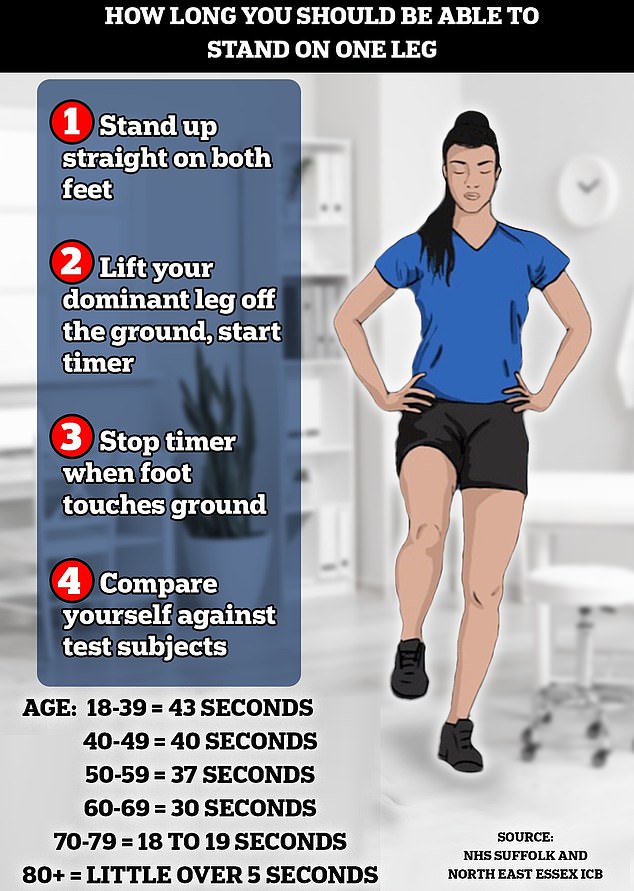
Studies have indicated that elderly individuals capable of standing on one leg for over 10 seconds significantly lower their chances of mortality in the following ten years.
This is due to the fact that a person’s capacity for balancing reflects their overall physical strength and capability to avoid stumbling and falling, which is a major cause of death among older individuals.
Read more
by admin | Nov 7, 2024 | beauty tips, health, health advice, health tips, skin care
Lifehack My ID
– Baris tipis dan kerutan sebenarnya sering muncul di daerah mata, khususnya di bawah mata.
Masih muda tetapi garis halus di sekitar mata sudah kelihatan jelas?
Hal ini bisa bikin tampilan kita jadi lebih terlihat tua, nih! Enggak pengin, kan?
Zat-zat Yang Dapat Membantu Meredakan kerutan di Area Di Bawah Mata
Berikut ini beberapa tips untuk mengurangi tampilan kerutan di bawah mata yang bisa membuat Anda kelihatan lebih matang, agar selalu tampak awet muda. Silakan disimak:
1. Pakai kunyit dengan minyak kelapa
Metode awalnya, kita dapat mencoba menggabungkan kunyit dengan kelapa.
Masukkan sedikit bubuk kunyit ke dalam satu sendok makan minyak kelapa.
Aplikasikan di area di bawah mata kemudian bersihkan setelah 20 menit.
Bisa kita sertakan juga beberapa titik minyak almond ke dalam adukan itu.
2. Mengoleskan minyak zaitun
Minyak zaitun pun dapat menangani garis halus di sekitar area mata.
Cara melakukannya adalah dengan memijat daerah sekitar mata menggunakan minyak zaitun selama kurang lebih sepuluh menit. Hindari memberi terlalu banyak tekanan saat melakukan ini.
Kemudian, bilaslah dengan menggunakan air hangat, oke!
3. Memanfaatkan yogurt
Berikut ini merupakan cara untuk menyingkirkan kerutan di area bawah mata menggunakan yogurt.
Kita hanya perlu menggabungkan sebagian kecil yoghurt dengan satu sendok air mawar serta madu.
Applikasikan sebagai masker wajah dan fokuskan penggunaannya di area sekitar mata.
Sekoci jika sudah kering, girls.
4. Memanfaatkan pepaya
Metode terakhir untuk menyingkirkan kerutan di area bawah mata adalah dengan memanfaatkan buah pepaya.
Haluskan papaya secara memadai lalu tambahkan sejumlah kecil madu hingga berbentuk seperti pasta.
Applikasikan di area sekitar mata lalu diamkan hingga kering.
Bersihkan menggunakan air panas.
Selamat mencoba, girls!
(*)

by admin | Nov 7, 2024 | blood pressure, exercise, health, health and exercise, hypertension
As little as five minutes of daily physical activity can reduce blood pressure and aid in preventing cardiovascular issues, according to recent studies.
Incorporating brief periods of physical activity into your everyday schedule – like choosing the stairs over the elevator or going for a bike ride – can help lower these measurements.
Experts suggest that minor adjustments to daily habits, such as replacing five minutes of television viewing with five minutes of jogging, can substantially improve cardiovascular well-being.
The research indicates that exercises which increase your heartbeat, such as dancing, running, or even thorough housecleaning, offer the most advantages.
Researchers from University College
London
(UCL) and the University of
Sydney
examined 14,761 individuals utilizing activity trackers to investigate the connection between their everyday movements and blood pressure levels.
Throughout the day, individuals typically allocated about seven hours for sleep, ten hours engaged in sedentary activities like sitting, three hours standing, an hour of slow walking, another hour of brisk walking, and roughly 16 minutes participating in exercises that elevated their heart rates, including jogging and biking.

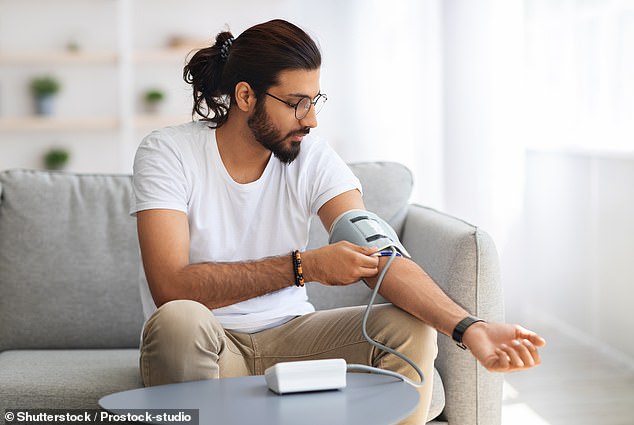
Adding an additional five minutes of physical activity that increases your heartbeat, like climbing stairs, jogging, or biking – instead of engaging in other activities – can decrease systolic blood pressure (SBP) by 0.68 millimeters of mercury (mmHg) and diastolic blood pressure (DBP) by 0.54 mmHg.
The systolic value is the upper figure in a blood pressure measurement, indicating the pressure exerted as the heart pumps blood throughout the body. The diastolic value is the lower number, representing the pressure during the intervals when the heart is at rest between contractions.
According to the researchers, at a population level, decreasing systolic blood pressure (SBP) by 2 mmHg and diastolic blood pressure (DBP) by 1 mmHg is roughly comparable to reducing the risk of heart disease by about 10 percent.
This might be accomplished by shifting 20-27 minutes away from other activities towards exercise for the higher figure, and allocating 10-15 minutes for the lower figure, according to the study in Circulation.
For instance, replacing 21 minutes of sitting idle, 22 minutes of standing, or 26 minutes of leisurely walking with activities like cycling or running could produce similar outcomes regarding systolic blood pressure levels.
To improve diastolic blood pressure, one could replace 10 minutes of brisk walking, 11 minutes of inactive sitting, or 13 minutes of sleep with appropriate physical activity.
In the UK, high blood pressure stands as the primary factor for strokes and heart attacks, affecting approximately 14 million adults, among whom about five million remain undiagnosed.
If not treated, the heart might enlarge gradually because of the elevated pressure, pump less efficiently, and could result in heart failure.
Dr. Jo Blodgett, the lead author from UCL, stated, “Our research indicates that for the majority of individuals, engaging in exercise is more effective at lowering blood pressure compared to lighter activities like walking.”
‘Good news is that regardless of your level of physical capability, you can positively impact your blood pressure levels relatively quickly.’
The distinctive aspect of our exercise variable is that it encompasses all types of activity similar to exercises, ranging from climbing stairs to brief cycling trips, most of which can easily be incorporated into everyday life.
‘Even for individuals who aren’t very active, walking can still provide certain advantages when it comes to lowering blood pressure.’
‘However, if you aim to alter your blood pressure, increasing the load on your cardiovascular system via exercise will yield the most significant impact.’
Read more
Page 13 of 15« First«...1112131415»


