by admin | Aug 11, 2025 | europe, european union, international borders, passports and international travel, Travel
The upcoming international journey to Europe for you might not include an official stamp in your passport indicating the specific nation or nations you have traveled to.
Beginning on October 12, 29 European nations will start implementing a new Entry/Exit System (EES) instead of conventional passport stickers, aiming for full functionality by April 10, 2026.
This electronic system aims to speed up and enhance customs inspections by tracking the arrival and departure of non-EU visitors through biometric information such as fingerprints and face scanning.
The 29 nations participating are members of the
Schengen Area
a region in Europe where most internal border checks have been removed, facilitating the unrestricted travel of individuals between participating nations. The Schengen Zone now comprises 25 European Union members along with four additional non-EU countries.
While travellers have historically moved between these countries with minimal passport checks, the EES will streamline the process further by providing self-service options and enabling travelers to submit their information ahead of time, cutting down time spent at border crossings.
Biometric details gathered can further assist authorities in recognizing people who remain beyond their permitted stay, employ fake identities, or exploit visa-exempt travel. Customs officers and police will be able to view this data to more effectively handle security threats.
Here is the complete list of 29 nations that will begin removing passport stamps starting October 12 with the implementation of the new EES system:
Austria
Belgium
Bulgaria
Croatia
Czechia
Denmark
Estonia
Finland
France
Germany
Greece
Hungary
Iceland
Italy
Latvia
Liechtenstein
Lithuania
Luxembourg
Malta
Netherlands
Norway
Poland
Portugal
Romania
Slovakia
Slovenia
Spain
Sweden
Switzerland
Supplied by SyndiGate Media Inc.
Syndigate.info
).
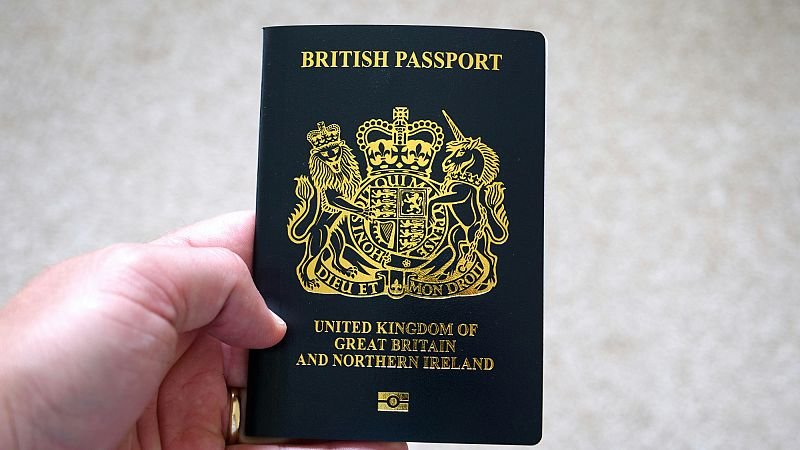
by admin | Apr 2, 2025 | europe, european union, international borders, international travel, passports and international travel
The United Kingdom’s Electronic Travel Authorisation (ETA) system has now been extended to include travelers from Europe.
As of 2 April 2025, all EU citizens (excluding those from Ireland), EEA members, and Swiss nationals will require ETA authorization to enter the United Kingdom.
Starting from January 8, 2025, the system will become obligatory for travelers hailing from the United States, Canada, and Australia. This follows the earlier implementation in November for citizens of Bahrain, Jordan, Kuwait, Oman, Qatar, Saudi Arabia, and the UAE.
To get the visa waiver, which will cost £10 (€12) starting today or £16 (€19) from April 9th onwards, travelers must go through an online procedure—however, some Britons holding dual citizenship are already encountering problems.
How can one apply for the United Kingdom’s Electronic Travel Authorization (ETA) visa exemption?
Travelers have the option to utilize the official mobile application, which can be
downloaded
From the UK government website, or
apply online here
.
To finish the application process, you require the
passport
The travel segment you’ll be using requires providing an email address along with either a credit card, debit card, Apple Pay, or Google Pay information. Additionally, you must respond to a series of eligibility queries. Entering specific travel particulars isn’t necessary.
The authorities recommend submitting your application no later than three business days prior to your travel date.
You have the option to remove the app once you’re done with it.
applying
Your estimated time of arrival will be digitally connected to your passport, and you won’t need to present any additional documents upon entering the UK.
Although it appears quite straightforward, the application procedure has caused some confusion among Britons who hold dual citizenship, leaving them unsure about whether they need to apply for the visa waiver or not.
Issues with ETA applications for British dual citizens
Theoretically, individuals holding both British citizenship and another nationality do not require an Electronic Travel Authorization (ETA) and ought to have the option to enter the United Kingdom using whichever passport they prefer.
However, confusion has emerged among individuals without a British passport since their documents may be expired, missing, or they might not have been issued one at all.
If they opt to travel using their EU passport, the application process will be as follows:
ETA
– and whether this is required – remains uncertain.
The ETA application form requires travelers to disclose any additional nationalities they might have, yet the dropdown menu doesn’t offer an option for ‘British Citizen.’
If British dual citizens proceed with their application without disclosing their ‘secondary’ citizenship, they could potentially be required to provide incorrect information regarding their dual nationality.
Euronews Travel asked an adviser from the Home Office about their views during their online chat session.
The adviser declined to provide advice on avoiding declaration of British citizenship.
ETA
They mentioned that if you hold both British and Irish citizenship, you are not required to obtain an ETA.
However, “you prove your
permission to travel
Using your valid British or Irish passport, or another passport that includes a certificate of entitlement for the right of abode in the UK.”
When asked what to do if the traveller is not in possession of any of these documents, the advisor responded, “You either need to apply for a British passport or a certificate of entitlement”.
Applying for a renewed UK passport from abroad incurs a cost of £101 (€123), whereas obtaining a certificate of entitlement requires a payment of £550 (€658). Each process typically takes multiple weeks to complete.
Euronews Travel has contacted the Home Office seeking official guidance.


