by admin | Sep 29, 2025 | bags, cargo, flying, luggage, Travel
Ordered to remove her bulky baggage, the woman walked around a corner, added more clothing, and placed heavy objects in her pockets.
Having read the article titled “Passenger criticizes airport staff for 0.5 kg of extra hand baggage,” I feel empathy towards the writer. However, numerous readers claimed that an additional 0.5 kg is insignificant and deserves to be ignored, a perspective often held by Vietnamese passengers.
Last week, as I went through security at HCMC for a trip to Da Nang, I saw something that made me feel distressed and prompted doubts about how certain Vietnamese travelers behave towards…
air travel rules
.
A female passenger carried a hand luggage weighing almost 10 kilograms, whereas the airline allowed only up to 7 kilograms. The check-in personnel requested her to either take out certain belongings or cover the cost of checking the bag. Feeling distressed, she took her suitcase to an isolated area where she changed into additional clothing and placed heavy objects into her pocketbook and backpack. Upon returning, although the suitcases weighed more than 7 kilograms, they were permitted.
In the waiting area, she removed the belongings and placed them again into her bag. She managed to avoid several hundreds of thousands of VND in luggage charges, with some suggesting that an additional few kilograms has minimal effect on air travel safety.
The incident made me aware of a specific degree of unfairness within air travel. Travelers who follow rules, pay extra for luggage, and spend more time waiting to retrieve their bags ultimately waste both time and money. Meanwhile, those who bypass the system move effortlessly, leaving the consequences for others.
This kind of conduct may result in a pattern of disregarding rules and undermines the equity essential for aviation. Should each traveler bring a few additional kilograms, aircraft could exceed their designated weight limit by hundreds of kilograms.
Overloaded cabin spaces
may pose safety hazards and complicate the storage of belongings. Carry-on bags are positioned above travelers’ seats, making them significantly distinct from checked luggage kept underneath.
I know everyone aims to save time and expenses. However, politeness during travel isn’t about adding a little more weight; it’s about following the regulations. When traveling overseas, most individuals accept checking an additional bag when they exceed the limit by 0.2 kg. Then why does “flexibility” become the norm in Vietnam?
A bulky suitcase holds not only garments but also reflects an attitude of taking shortcuts, with effects that eventually impact others. Everyone would find traveling smoother if passengers adhered to regulations right from the beginning rather than seeking loopholes. This is true comfort for airline passengers.

by admin | Sep 29, 2025 | lounges, tourists, Travel, vacations
British travelers have escalated their competition for sunbeds to extreme levels by staying on recliners throughout the night to
secure the most favorable position beside the pool at a Spanish hotel
.
Ben Smith was shocked when he saw that the top lounge chairs at his Tenerife hotel had been occupied — three hours prior to the pool opening.
Although it was still dark outdoors, most of the poolside loungers were taken — seemingly by guests who had spent the night there to secure their spot.
Tourist Ben, 30, from Sheffield, referred to the strange situation as a ‘vicious cycle’.
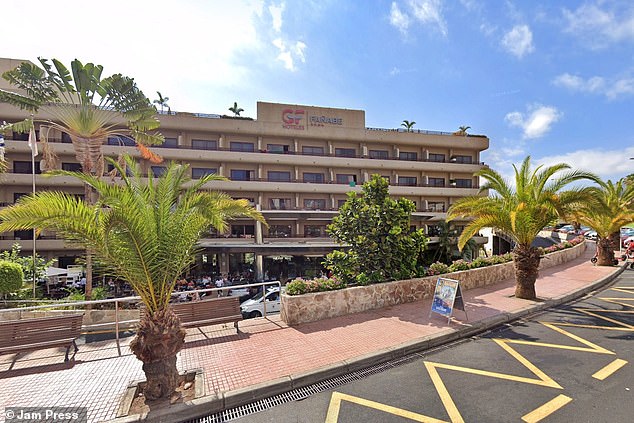
He recorded video of the strange ceremony at the £259 per person per night Gf Fanabe Hotel — a four-star hotel that appears to have been affected by this year’s sunbed conflicts.
The video was recorded on Monday, August 25, at the beginning of Ben’s two-week summer break.
“People rest on deck chairs to claim their place,” he mentioned.
They keep the beds reserved, yet the hotel enforces a rule where if your bed remains empty, they take away the towels—so they simply lie on top of them.
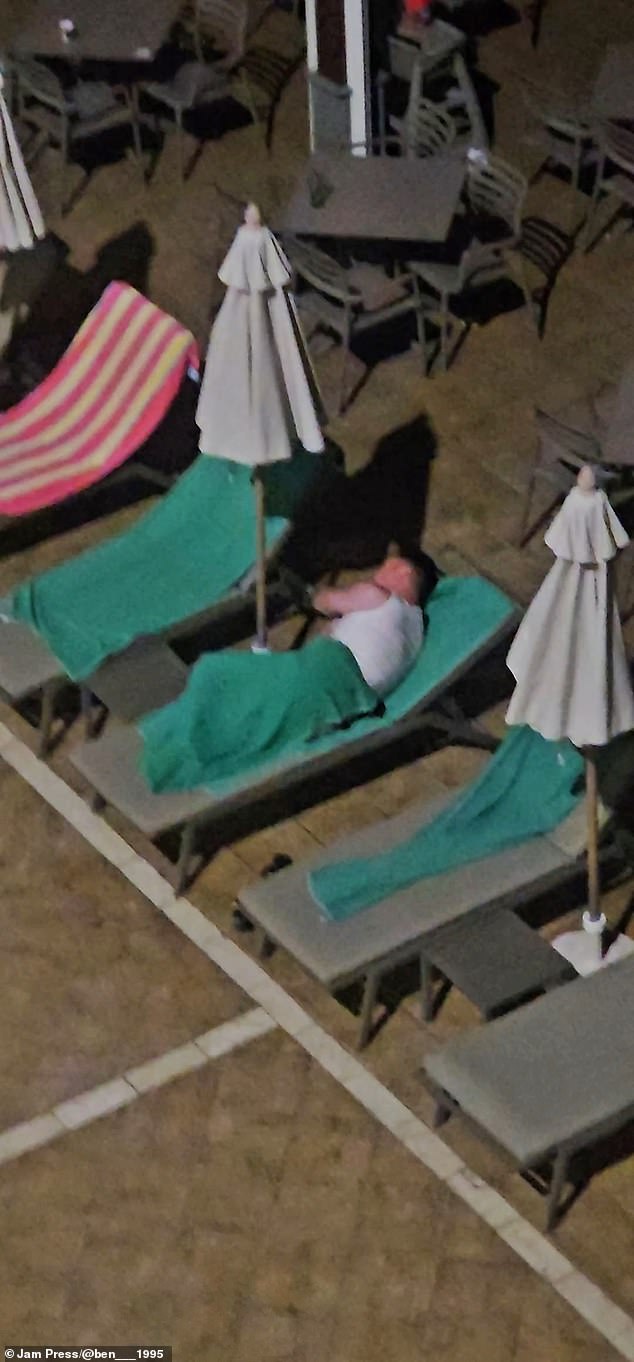

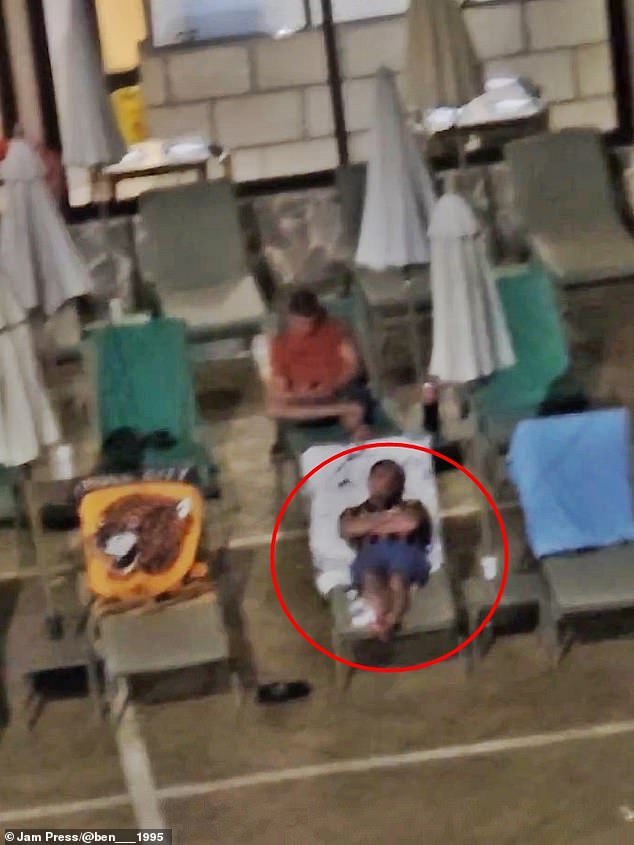
Some appear to be resting.”
“Several seem to be sleeping.”
“A few are evidently fast asleep.”
“It looks like some are in deep sleep.”
“There are those who seem to have fallen asleep.
It’s somewhat foolish. I understand why individuals engage in it, yet it forms a harmful cycle, as one might say.
They are the ones responsible for the issue they wish to escape.
If individuals did not book accommodations they weren’t going to use, there would be no problem.
I haven’t noticed the beds being fully occupied with people, only with towels.
Recently, there was only one bed shared among three of us, and a woman generously offered us one of hers — it wasn’t needed, and she asked us to remove her towel.
I suppose, in a way, it’s kind of her, but then again, why is her towel placed there when she isn’t using it?
‘It’s mostly selfishness.’
The Gf Fanabe Hotel has been contacted for a response.
Read more
-
Unusual disputes over sun loungers at a Spanish hotel: What motivates visitors to arrive early solely for a lounger?
-
Unyielding competition for sun beds: Is securing lounge chairs through the night actually more expensive than staying at a hotel?
-
What makes anxious travelers resorting to unusual methods in Europe’s growing “tanning bed conflicts”?
-
Intensifying sunbed conflicts: Do travelers now use unusual early morning alarms to secure prime pool positions?
-
Scorching sunbed story: Why are British holidaymakers scheduling alarm clocks for lounge restrictions during their coastal getaways?
by admin | Sep 27, 2025 | africa, business, environmentalism, Travel, world
ADDIS ABABA – The Ethiopian Tourism and Hotel Industry Association (ETHMA) has introduced a fresh project aimed at establishing Addis Ababa as a top choice for global conventions and corporate travel.
Getahun Alemu, president of ETHMA, stated to The Ethiopian Herald that Addis Ababa is gradually becoming a center for meeting tourism, fueled by the expansion of contemporary hotels, top-tier convention facilities, and enhanced visitor attractions.
“Such advancements enhance Ethiopia’s global reputation and support economic development, facilitate the sharing of knowledge, generate employment opportunities, promote culture, and boost the tourism industry,” he stated.
As per Getahun, individuals involved in the industry, ranging from hotels to travel agencies, are progressively adopting online advertising strategies to market their offerings worldwide. He further mentioned that efforts towards ecological preservation and safeguarding of natural resources are becoming more prominent, thereby securing long-term advantages for both locals and tourists.
He stated, ‘The use of online platforms greatly contributes to the sustainable growth of Ethiopia’s tourism industry.’ ‘Community involvement and conservation efforts provide lasting benefits for both the development and maintenance of this sector.’
Emphasizing Ethiopia’s abundance of natural wonders such as Simien Mountains National Park, Bale Mountains, and the Omo Valley, Getahun highlighted that ecotourism continues to be a key focus.
Although there is promise, he recognized significant obstacles including insufficient facilities, low public knowledge, poor advertising and outreach, and occasional uncertainty.
In order to address these issues, he called for increased engagement from the private sector and enhanced funding for facilities related to hospitality and tourism. “Fostering participation from the private sector is essential for tackling present difficulties and realizing Ethiopia’s tourism capabilities,” he highlighted.
Copyright 2025 The Ethiopian Herald. All rights reserved. Shared via AllAfrica Global Media (SANGGRALOKA.COM).
Tagged:
Travel and Tourism,
Ethiopia,
East Africa
Supplied by SyndiGate Media Inc.
Syndigate.info
).
by admin | Sep 26, 2025 | diplomacy and diplomats, foreign policy, nigeria, security, Travel
A former Nigerian official and security expert has sharply condemned the most recent travel warning released by the U.S. government, calling it inflated, unhelpful, and grounded in obsolete information.
On July 15, 2025, the U.S. Department of State issued an alert advising Americans to carefully think about traveling to Nigeria because of extensive instability, terrorist activities, abductions, public disturbances, and inadequate medical facilities. Eighteen states were placed in the “Avoid Travel” classification, such as Borno, Yobe, Kogi, and parts of northern Adamawa owing to threats from terrorists and kidnappers, along with some southern regions affected by criminal violence and gang activity.
In response to the warning, Ambassador Suleiman Dahiru, a former Nigerian diplomat, stated that the U.S. administration has established a habit of releasing travel advisories that fail to enhance safety but end up harming Nigeria’s global image.
It’s regrettable that the United States has developed a practice of issuing warnings, often together with its European allies,” Dahiru stated during an interview yesterday. “Unfortunately for them, none of these advisories have led to any outcome.
He criticized the United States for being hypocritical, noting that numerous dangers mentioned in the warning are actually more common inside the country.
“In only one place, America, do people visit a restaurant for food and end up getting shot and dying there. In just one country, America, individuals go to a shopping mall to browse and then meet their death there. I haven’t come across any reports about Nigerians or foreigners being murdered inside a shopping mall in Nigeria,” he stated.
Dahiru also claimed that the advice was driven by political intentions and showed insincerity.
“They are using old data or intelligence. They are also depending on conversations at beer parlors. Everything they’re discussing hasn’t occurred in Nigeria,” he stated.
He additionally condemned the United States for not working with Nigerian officials in a productive manner.
“If the United States is genuine, and if they notice some issues that are problematic, it is their responsibility to inform the Nigerian government so that the Nigerian government may implement appropriate actions to safeguard both Nigerians and foreign nationals,” he stated.
A retired official voiced worries about what he referred to as the United States’ conflicting principles and its partnership with Israel, specifically concerning the human suffering in Gaza.
“They are working together with Israel to carry out their actions without regard for human life,” he stated.
There is completely no reason to issue these false warnings, particularly since none of the alerts have led to any accident or disaster in Nigeria.
Cybersecurity specialists have also raised concerns about when and how broad the alert was, cautioning that these notices might put pressure on international relationships and deter overseas investments.
The Nigerian authorities have not released an official statement regarding the most recent alert, although they previously criticized a comparable notice, maintaining that Abuja is still secure for both locals and tourists.
A security analyst criticizes the travel warning, raises concerns about diplomatic consequences, and highlights potential financial dangers
A prominent Nigerian security expert has condemned the most recent travel alert released by the U.S. authorities, calling it standard practice yet harmful to Nigeria’s international reputation and foreign ties.
In an interview held yesterday evening, Kabiru Adamu, the Managing Director of Beacon Consulting Limited, stated that the newly issued guidance—released by the U.S. State Department and shared through its embassy in Abuja—is “a standard procedure” grounded in gathered security data covering environmental, political, and health-related dangers.
Now, regarding this new warning, the significant shift we observed was related to what they described as the uneven access to healthcare services,” Adamu stated. “Essentially, things stayed much the same… however, this specific mention carries various consequences for Nigeria.
He outlined four significant outcomes: deterioration of public perception, increased diplomatic tensions, heightened demand for healthcare system reforms, and negative impact on Nigeria’s challenging medical field.
“It strengthens the global view of Nigeria as insecure and without essential facilities. We might discourage overseas investments and travel,” he mentioned.
Adamu pointed out that the advice might deter people from the diaspora from visiting, lead to stricter insurance conditions, and raise the chances of kidnapping for ransom.
We feel somewhat let down since, as demonstrated in our June report, there has been a 79% drop in kidnapping for ransom incidents across various regions of Nigeria. Regrettably, this warning from the U.S. government failed to account for that.
He cautioned that the advice might increase risk premiums for global investors and impose operational challenges on foreign travelers and supply networks.
If the warning states ‘avoid traveling’… and critical business supplies come from such areas, it could significantly affect the capability of maintaining the supply chain.
Adamu also foresaw secondary impacts on other international embassies.
I wouldn’t be shocked if, in the next few days, you observe European Union nations issuing comparable warnings… Australia might also take the same approach. Japan could follow suit as well, merely mirroring what the United States has done.
He ended with a call for diplomatic interaction between Nigeria and the United States.
This travel warning doesn’t reflect a welcoming nation… I’m hopeful that the Nigerian authorities will improve their approach… so that future updates of this nature… may become less severe.
FG mum…
Although several attempts were made through phone calls and text messages to reach the representative from the Ministry of Foreign Affairs, Mr. Kimiebi Ebienfa, there has been no reply concerning the department’s stance on the most recent U.S. travel warning.
Nevertheless, one might remember that last month, the Nigerian administration publicly condemned an analogous notice released by the U.S. Embassy, which advised its staff not to visit military and governmental sites in Abuja, referencing increased worldwide safety issues without identifying any specific regional danger.
In reply to the alert, the Minister of Information and National Orientation, Mohammed Idris, mentioned that Abuja continues to be secure for locals and tourists, confirming Nigeria’s appreciation for foreign embassies’ ability to provide warnings, but emphasizing there was nothing to worry about.
In response, when reached late last night regarding the new travel warning released by the U.S. Embassy in Nigeria, Alkasim Abdulkadir, the Special Advisor for Media and Public Relations to the Minister of Foreign Affairs, Yusuf Maitama Tuggar, stated: “Currently, the department is examining the details of the advisory and will provide a suitable reply.”
The travel advisory Travel
The guidance states, among other things: “Avoid traveling to: Borno, Yobe, Kogi, and northern Adamawa states because of terrorist activities and abductions. Bauchi, Gombe, Kaduna, Kano, Katsina, Sokoto, and Zamfara states because of abduction risks. Abia, Anambra, Bayelsa, Delta, Enugu, Imo, and Rivers states (excluding Port Harcourt) due to criminal activity, kidnappings, and violent groups.”
National Overview: The nation experiences frequent violent crimes such as armed theft, physical attacks, vehicle hijackings, abductions, taking of captives, highway robberies, and sexual assaults.
Ransom-related kidnappings occur frequently. These incidents mainly focus on individuals with dual nationality who are traveling in Nigeria and American citizens seen as affluent. Additionally, kidnapping groups have begun intercepting victims along highways between states.
Regarding terrorism, the U.S. administration cautioned that there is a potential for violent acts by terrorists in Nigeria. This encompasses both attack operations and additional related actions.
“Violent crimes and gang activities are prevalent in this region. Offenses involve abductions and attacks against Nigerian law enforcement agencies,” it stated, noting that conflicts may erupt between farming and pastoralist groups in remote regions.
“Nigeria’s healthcare institutions typically do not meet the levels of U.S. or European setups. Several drugs remain inaccessible. This encompasses standard treatments for conditions like diabetes or asthma,” the administration cautioned.
Carry sufficient non-prescription and prescribed medications for the duration of your trip to Nigeria. Ensure immunizations are up-to-date with all routine vaccines, along with yellow fever, meningitis, typhoid, cholera, hepatitis A, hepatitis B, and a booster dose for polio.
Every visitor must use malaria prevention medication. Nigeria has a significant risk of malaria. The issue of fake medicines is widespread. Medical facilities usually require upfront cash payments for treatment.
Most medical facilities and healthcare providers do not recognize U.S. health insurance. Emergency care systems similar to those found in the U.S. or Europe are absent. The availability of blood supplies is frequently uncertain.
Emergency ambulance services can be inconsistent, equipped poorly, and frequently lack qualified paramedic staff. It is highly advised to obtain travel insurance, such as coverage for medical repatriation, prior to your trip.
Offered by SyndiGate Media Inc. (
Syndigate.info
).

by admin | Sep 20, 2025 | adventure travel, beautiful places, Travel, travel destinations, travel recommendations
A lone traveler has shared the incredible locations she’s explored that have left her completely amazed.
Sarah, known as @vivjewelry on social platforms, documents her travels across the globe through online posts, and .
In a clip, she shares details about several top destinations she has explored.
No European locations are among her preferred places, and Sarah has visited various spots ranging from the Middle East to Mexico.
At the time of the video, she had been traveling for six months and describes her journey as having ‘no end’.
“I left my job, sold all my belongings, and now every part of my life fits into two backpacks,” Sarah states.
Sarah exclaims: “The first place that completely amazed me is a tiny village nestled in the mountains of”
Mexico
named San Jose del Pacifico.
The traveler portrays it as “the most fanciful” and “enchanting” town one could imagine.
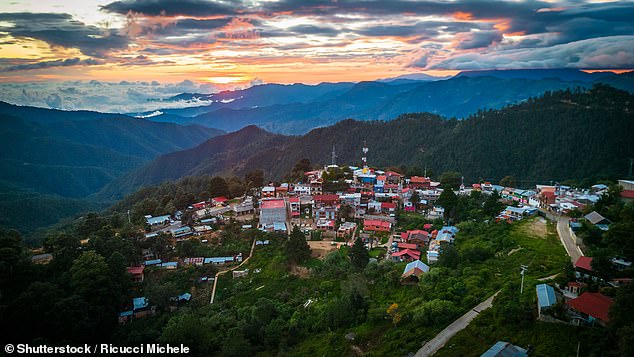
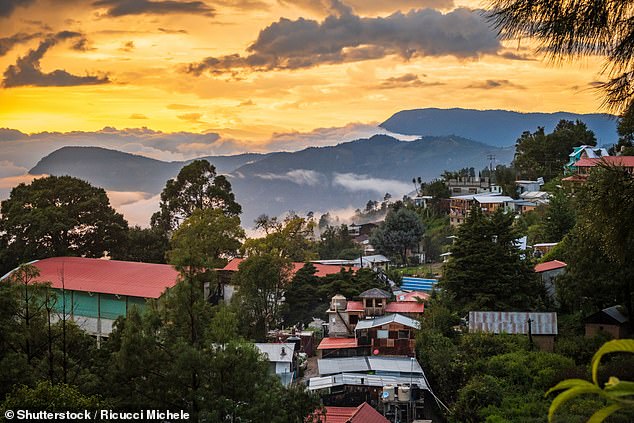
“This small town lies hidden among the mountains, vibrant and full of artwork and graffiti. There’s absolutely no connectivity, making it necessary for you to truly unplug. It was one of my favorite spots in Mexico,” Sarah adds.
She notes that fungi are prohibited in Mexico, yet there exists a “gap” within the municipality.
“Since indigenous customs allow their use for spiritual or ritual purposes, it isn’t against the law,” Sarah states.
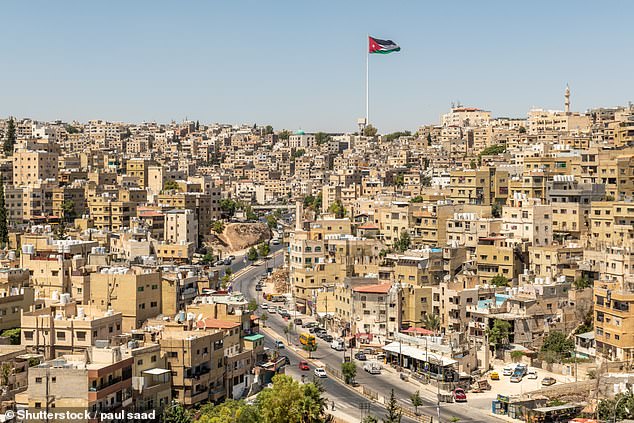
Sarah’s next stop was Jordan, where she visited several different cities throughout her journey.
While visiting the Middle Eastern nation, she was completely unaware of what to anticipate.
“From the culture, the people, and the cuisine, as well as everything you can witness in Jordan, it completely amazed me,” Sarah exclaims enthusiastically.
She says: “During the week I was there, I explored the city of Amman, and I also spent two nights in the Wadi Rum desert. I attended a party in the middle of the Wadi Rum desert, which was really unexpected.”
I definitely visited Petra, which is incredible on its own, then we headed to Aqaba where we swam in the Red Sea, and as we returned, we passed the Dead Sea, where swimming is possible and you naturally float, giving you a sensation similar to being an infant.
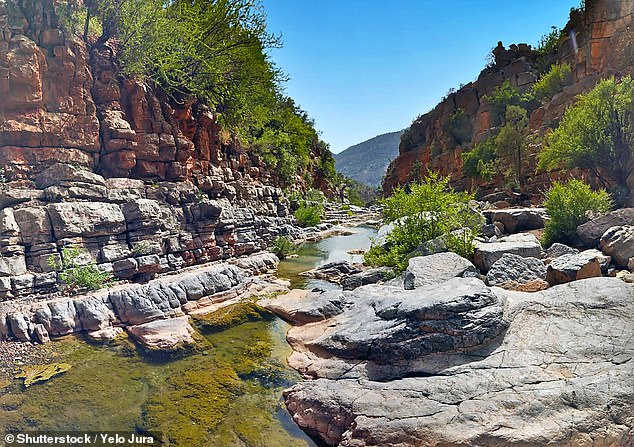
Sarah also refers to Tamraght, Morocco, which she visited spontaneously following a suggestion from someone in Mexico.
“Guys, I want to stay here. There’s a beach, great food, surfing, skateboarding, and nice people,” she says.
I experience great vibes here, and I’m not even visiting during the peak time.
She continued by explaining that the location had started to feel like her “safe haven,” and she confessed, “I’m going to be really upset when I have to go, but I’ll come back.”
Read more
-
What hidden treasure makes it onto Liz Parry’s list of preferred places for traveling alone?
-
Which affordable but stunning places would solo traveler Rachel Smith suggest for thrill-seeking travelers?
-
Is the life of a digital nomad truly as exciting as it appears? Find out why Sarah Khan described it as ‘confusing’ even though she traveled to beautiful places!
-
What makes Zara Aitken feel most secure on a small island with no street lamps? Find out the surprising places she recommends for safe solo travels as a woman!
-
Which surprising and impressive secret spots are tourists praising across the globe?