by admin | Mar 24, 2025 | business, commerce, financial services, investing, news
On Monday, the Lagos State Government joined forces with EnterpriseNGR through the Lagos International Financial Council (LIFC) MoU signing ceremony. This event brought together representatives from the City of London as well as officials from the United Kingdom’s Foreign, Commonwealth, and Development Office (FCDO). The purpose was to collaborate on establishing an international financial center in Lagos aimed at boosting economic progress within the region.
Governor Babajide Sanwo-Olu, who concurrently holds the position of Chairman of LIFC, along with the Co-Chairperson of LIFC and Chairman of Access Holdings, Mr. Aigboje Aig-Imoukhuede, observed the signing ceremony conducted by the State Commissioner for Finance, Mr. Yomi Oluyomi; the Chief Executive Officer of EnterpriseNGR, Mrs. Obi Ibekwe; the Head of Eurasia, Middle East, and Africa at The City UK, Chika Mourah; and the Director of International Development at The City UK, Anna Rogers.
Among those present at the signing were representatives such as Mr Simon Field, the Chargé d’Affaires of the British Deputy High Commission in Lagos; Mrs Bimbola Salu-Hundeyin, the Secretary to the Lagos State Government; and Mr Bode Agoro, the Head of Service, along with several others.
During his speech at the event, Governor Sanwo-Olu affirmed his administration’s dedication to establishing the Lagos International Financial Centre. He called upon all attendees for their backing to turn this aspiration into a tangible achievement.
The governor stated that the signing of the Memorandum of Understanding marked the start of a new phase in setting up LIFC and transforming Lagos into the first international financial center in Sub-Saharan Africa.
As he puts it, this step isn’t solely focused on Lagos; rather, it aims at positioning Nigeria—as well as domestic and foreign investors—”on a platform where business operations can thrive more effectively, fostering an environment characterized by greater predictability and reliability within this region’s financial sector.”
Associated News: Reasons Behind Redesigning the Oshodi Transport Hub – Government of Lagos
What do you think about the national service corper who insulted the president and referred to Lagos as having an unpleasant odor?
‘I previously had to pay over ₦40,000 each month to area boys and others in Lagos.’
“We are adapting our concept and project so we can showcase both Lagos and, consequently, Nigeria as part of the global list of cities featuring international financial hubs,” he stated.
Governor Sanwo-Olu showed gratitude to all the collaborators for providing both financial and technical backing toward setting up an International Financial Centre in Lagos.
Earlier, the Co-Chairman of LIFC, Mr Aig-Imoukhuede, praised Governor Sanwo-Olu and his team for their bravery in advancing the vision of the LIFC, stating that “The contribution of Babajide Sanwo-Olu to Lagos State benefits not only the state but also participants in the capital markets.”
Aig-Imoukhuede characterized the Memorandum of Understanding (MoU) as a crucial milestone for the development of the Lagos International Financial Centre project, emphasizing that Nigeria was nearing its goal of establishing this center in Lagos.
“Today, we bear the banner of Lagos State, Nigeria, and by extension, Africa. We are moving towards the promised land of establishing an international financial hub in Lagos and for Nigeria,” he stated.
The Chairperson of Access Holdings also praised the media for providing fair and informative coverage, encouraging them to increase such efforts. They called upon the media to continue offering unwavering support in all aspects.
Additionally, Rogers from TheCityUK as the Director of International Development stated that this collaboration aims to unite all parties involved in making Lagos a prominent powerhouse across Africa.
Rogers conveyed the enthusiasm of the UK city about participating in this endeavor, calling the Lagos State Government’s choice truly praiseworthy.
The United Kingdom’s city takes great pride in serving as a strategic ally for the establishment of the Lagos International Financial Centre. We find the choice made by the Lagos State Government truly praiseworthy, and we are enthusiastically looking forward to being an integral part of this venture.
“We are delighted that through our partnership, we’ll continue to provide an avenue for UK and Nigerian financial professional services practitioners, policymakers, and regulators to share knowledge on best practices in areas such as corporate governance, financial services, regulation, technology, innovation, and many others.
“These initiatives will result in heightened trade activities along with greater investments and collaborations between the two nations and on a global scale,” she asserted.
FURTHER READING ON THE LATEST HEADLINES FROM NIGERIAN TRIBUNE
Stay updated with the latest news from Tribune Online in real time! Connect with us on WhatsApp for instant access to breaking news, special reports, and personal conversations. Become part of our WhatsApp Community today!
Tags: Lagos LIFC Sanwo-Olu
Provided by SyndiGate Media Inc.
Syndigate.info
).
by admin | Mar 24, 2025 | business, economics, financial services, investing, investing business news
By Francis Ntow, GNA
Accra, March 25, GNA – The IMF has announced that it plans to invest $450 million into Ghana’s private sector this year with the aim of enhancing productivity and generating job opportunities.
Mr. Kyle Kelhofer, who serves as the Senior Manager for Ghana, Liberia, and Sierra Leone at IFC, World Bank Group, mentioned that this assistance provided to businesses is an integral part of their initiatives aimed at decreasing global poverty and enhancing overall development.
During an interview conducted alongside a visit to several Foreign Direct Investment (FDI) firms in the nation led by the Minister of Trade, Industry, and Agribusiness, Mrs. Elizabeth Ofosu-Adjare, in Accra over the weekend, he made these remarks.
“Last year, our investments in Ghana reached over $450 million, primarily benefiting the private sector. We aim for a comparable figure this year as well. Therefore, we will keep providing support to businesses on a commercial basis with the objective of generating additional and higher-quality employment opportunities,” stated Mr. Kelhofer.
He characterized the minister’s trip to the firms with the aim of understanding their difficulties and assisting in resolving them as a correct move toward luring and maintaining international enterprises within the nation, which would aid in boosting economic development.
He stated that the government can keep working towards enhancing the investment environment, enabling businesses to flourish and attracting additional enterprises such as B5Plus. This would help create more and higher-quality job opportunities in Ghana and increase local value addition.
He believed that increasing domestic manufacturing could aid the nation by decreasing imports and reducing costs for other sectors’ growth. He advocated for establishing additional opportunities to utilize indigenous materials and manpower.
Mrs Ofosu-Adjare stated that the government, via the Ministry, would address issues related to land disputes by employing Alternative Dispute Resolution (ADR) methods. Additionally, they aim to tackle tax concerns to foster an environment where businesses can flourish within the nation.
She urged international businesses to handle their employees with respect, stating, “Your workforce is your backbone—treat them right, compensate them fairly, and collaborate joyfully.”
GNA
SOF
Provided by Syndigate Media Inc. (
Syndigate.info
).

by admin | Mar 24, 2025 | financial markets, investing, investing market news, investing news, investors
Trump’s repeated tariff threats have rattled global markets. But in India, the market slump isn’t just about Trump. Millions of small investors are feeling the squeeze — for reasons beyond a potential US trade war.
It was the fear of missing out, or
Fear of Missing Out
That prompted Kanishk K. to begin investing in the stock market.
He informed LIFEHACK that during India’s struggle with the second wave of the COVID-19 lockdown in 2021, he began observing advertisements on Instagram showcasing social media personalities offering advice on earning money.
“I didn’t want to be left behind as others were making profits. This aspect really drew me towards investing in the market,” Kanishk stated.
He detailed how, following his initial foray into mutual funds, he progressively shifted towards stock market trading.
Similar to many novice investors, he lacked knowledge regarding the basics of investing but stayed updated on market trends, particularly through Reddit, the U.S.-based social media platform, as he mentioned.
Initially, “everything was going well.”
Enthusiasm in the stock market amid the COVID-19 pandemic
Saloni Puj* and Ishan Shah had experiences akin to Kanishk’s.
Puj, a media expert hailing from Kolkata, which serves as the capital of West Bengal, along with Shah, who operates a cultural hub imparting knowledge in art and music within the western metropolis of Ahmedabad, both ventured into stock market investments roughly during the period when pandemic-induced lockdowns were implemented.
Shah mentioned that the market was performing exceptionally well, giving the impression that everyone making profits was doing so through trading. He admitted to purchasing arbitrary stocks, often following suggestions from others. Surprisingly, regardless of his actions, he continued to see gains.
Puj adopted a more cautious strategy.
She stated that she was well-aware the market was experiencing an enthusiastic phase, and she recognized the bubble that was forming at the time.
In September 2024, the situation took a turn for the worse as the excitement surrounding their ventures suddenly deflated. Following an extended period of growth, the markets experienced a correction, which was then succeeded by a prolonged downturn.
New retail investors join the marketplace
For many Indians who entered the stock market following the pandemic downturn, the subsequent upturn proved to be an exciting period. This surge mirrored the approximately €250 billion ($275 billion) economic support package that Prime Minister Narendra Modi’s administration introduced in 2020.
Throughout the lockdown period, numerous individuals found themselves with additional free time and resources at their disposal, leading many to be swayed by the notion of earning fast and effortless profits.
“Sagun Agrawal, a derivatives trader in India’s capital markets and an advocate for financial literacy among women, noted that during the pandemic, individuals found themselves with extra money, leading many younger investors to enter the stock market as retail participants. This influx was beneficial for the market, enhancing liquidity and generating investment funds for capital creation,” he explained.
Online trading has gained popularity due to new firms providing minimal transaction costs and straightforward credit accessibility. An example of this is Margin Trading Facility (MTF), enabling investors to purchase stocks by initially paying just a portion of the total price. In this setup, brokers finance the remaining balance as a loan, accompanied by an interest charge.
What caused the market decline?
According to NSE data, from March 2020 to March 2024, the count of registered investors in India nearly tripled, reaching approximately 92 million.
India’s NIFTY 50 stock market index rose from approximately 8,000 points in March 2020 to unprecedented heights above 26,000 points in September 2024. Retail investors, swept up in the excitement, believed that everything was going well — right up until things took a turn for the worse.
In the six months since September last year, Indian equities have lost more than $1.2 trillion in value. In February, the NIFTY 50 benchmark index was down 16% from its peak, and on its longest losing streak since 1996. It was the worst performing global market.
Among those most severely affected were small retail investors.
“A significant number of these retail investors lacked proper information and pursued overly hyped securities, causing a bubbly environment in the market. Over the past six months, as adjustments occurred, these investors experienced substantial financial losses,” stated Agrawal.
Bijoy Peter, a senior partner at Bangalore-based Germinate Investor Services, noted that one factor behind the market adjustment was the gap between the escalating valuations of Indian corporations and their decreasing profits. He also mentioned that India’s GDP growth had decelerated to 5.4% during the July-September 2024 quarter.
He additionally highlighted insufficient governmental investment in infrastructure and various sectors back then, along with other worldwide influences.
Foreign Institutional Investors (FIIs) began withdrawing their funds from India. Meanwhile, China initiated similar actions.
implementing significant stimulus measures
In its marketplace, this attracted capital flows to the area, he mentioned.
The transfer of funds from India had significant consequences.
“When a substantial amount of money leaves, the consequences are significant since investors must offload their assets,” explained Peter. “Such extensive selling greatly influences share values, leading to a decline in the overall market.”
Peter highlighted that numerous beneficial initiatives introduced by the administration have gone unnoticed by the markets—such as raised tax thresholds, actions by the Reserve Bank of India aimed at infusing liquidity into banks, along with the government’s pledge for heightened expenditure on infrastructure projects.
Agrawal pointed out that back in September, the major participants were Indian High-Net-Worth Individuals (HNIs) along with significant investors. According to her, they perceived that the market was overpriced and offered little potential for additional gains.
“One trader, requesting anonymity, stated that when key investors withdrew their funds from the market, it triggered a downturn, leaving minor investors to absorb the financial losses,” as reported by LIFEHACK.
‘Trump offers India an unparalleled chance’
Despite facing turbulent conditions over the past five months, Indian markets are now showing signs of improvement as the stock market saw substantial increases last week.
Nevertheless, investors continue to be wary due to US President Donald Trump’s warnings about implementing reciprocal tariffs on India starting April 2, referring to India as “a major tariff abuser.”
Delhi has stated that it is engaged in talks with the United States aimed at setting up a trade agreement that would tackle tariffs and improve market accessibility.
Dr. Surjit Bhalla, an economist and formerly the executive director for India at the IMF, who also served in the Economic Advisory Council during Prime Minister Modi’s second term, expressed optimism about India’s prospects under President Trump, stating that this administration has offered India a singular chance to implement reforms.
This opportunity is unprecedented, especially when it comes to sectors such as trade, foreign direct investment, and various critical elements influencing GDP expansion and profitability.
“Bhalla stated that this is a vital time for implementing essential changes, covering sectors such as agriculture, both externally and internally. This presents an opportunity for India to progress to the next phase of reforms,” he added.
Small investors smarter now
In the meantime, retail investors such as Kanishk, Shah, and Puj, who have endured challenging periods over the last several months, are preparing for the potential effects of Trump’s proposed tariffs, all while hoping for the best.
Kanishk mentioned that he has become more careful following the downturn, stating that he now “takes the advice from financial influencers with a grain of salt.”
A year ago, Shah ceased operations, occasionally pondering if quitting prematurely. However, now he feels relieved as he observes everyone feeling quite stressed. He mentioned, “I think I may have avoided a major issue.”
Puj has completely overhauled her investment approach; she plans to remain stationary and purchase only modest amounts when the market declines.
After witnessing all her investments lose value just recently, she stated that she has become more knowledgeable now, noting, “Dropping in value isn’t very enjoyable.”
*names changed on request
Edited by: Keith Walker
Author: Shakeel Sobhan (located in New Delhi)
by admin | Mar 24, 2025 | banking, business, investing, investing business news, money
-
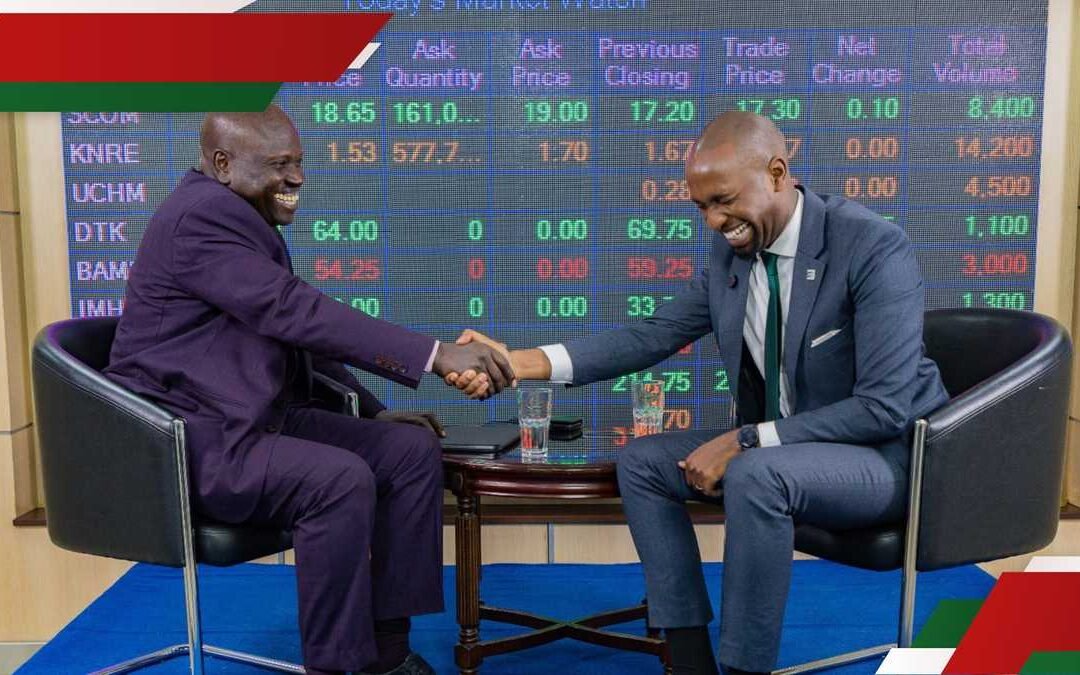
The highest-grossing firms and banks in Kenya showcased significant increases in profits along with considerable dividend distributions for the fiscal year 2024, with the banking sector at the forefront.
-
Large financial institutions such as the Co-operative Bank, KCB Group, and Standard Chartered Bank saw notable increases in their annual profit figures.
-
Daniel Kathali, an economist who spoke with LIFEHACK.co.ke, stated that the profit margins can partially be credited to yields from government bonds along with elevated interest rates on loans and several additional elements.
Elijah Ntongai, who works as a journalist for LIFEHACK.co.ke, possesses over four years of experience in researching and reporting on finance, businesses, and technology. He offers valuable perspectives on both local Kenyan developments and international patterns.
Investors in Kenya are rejoicing as the start of the 2024 fiscal year brings a wave of strong profit declarations and substantial dividend distributions from several top firms across the nation.

All publicly traded companies, including major banks and leading firms in industries such as energy, agriculture, and corporations, have published their fiscal year-end results for the period concluding in December 2024, as mandated.
What factors led to higher profitability?
Significantly, numerous firms listed on the Nairobi Securities Exchange reported unprecedented profits and dividends, crediting their enhanced profitability to different strategic approaches.
Commenting on the increase in profitability during a time when numerous Kenyan enterprises and overall business expansion faced challenges nationwide, Daniel Kathari observed that many companies must prioritize their stakeholders and undertake ventures that generate greater returns.
In recent times, we’ve observed a rise in internal lending by the government. Consequently, numerous enterprises, especially within the finance industry, have seized the chance to significantly invest in low-risk Treasury bonds and notes, yielding substantial returns. Additionally, these banking institutions have made considerable investments beyond Kenya’s borders; their overseas branches are generating significant revenue as well.
Don’t overlook the fact that loan interest rates were extremely high, enabling banks to levy up to 20%, thereby potentially boosting their profit margins. The stabilization of the Kenyan shilling likely played a role as well in contributing to the substantial profits recorded in 2024,” remarked Kathali.
Companies and dividends announced
In 2024, the banking sector has proven to be exceptionally successful, with leading banks announcing significant increases in profits and substantial dividend payouts for 2025.
Company
|
YoY profit growth (%)
|
Profit after tax (KSh)
|
Dividend paid out per share (KSh)
|
Payment date
|
1.
|
Cooperative Bank of Kenya PLC
|
9.8%
|
25.5 billion
|
Final dividend of KSh 1.50
|
June 10, 2025
|
2.
|
ABSA Bank Kenya Plc
|
28%
|
20.9 billion
|
Final dividend of KSh 1.75
|
May 22, 2025
|
3.
|
Standard Chartered Bank in Kenya Limited
|
45%
|
20 billion
|
Final dividend of KSh 37
|
May 28, 2025
|
4.
|
KCB Group Plc
|
64.9
|
61.8 billion
|
Final dividend of KSh 1.50
|
May 23, 2025
|
5.
|
Stanbic Holdings Plc
|
12.8%
|
13.71 billion
|
Final dividend of KSh 18.90
|
May 16, 2025
|
6.
|
East African Portlands Plc
|
Final dividend of KSh 1.00
|
March 21, 2025
|
7.
|
Safaricom Plc
|
Intermediate dividend of KSh 0.55
|
March 21, 2025
|
8.
|
Kenya Power & Light Company PLC
|
Intermediate dividend of KSh 0.20
|
April 11, 2025
|
9.
|
EABL
|
Intermediate dividend of KSh 2.50
|
April 30, 2025
|
10.
|
KenGen
|
Final dividend of KSh 0.65
|
February 13, 2025
|
As many leading Kenyan firms have already released their fiscal year 2024 earnings reports along with dividend distributions, market participants are now looking forward to similar updates from additional sector leaders.
A number of these firms like Safaricom Plc, Equity Group Holdings Plc, and British American Tobacco Kenya (BAT Kenya) are anticipated to disclose their financial outcomes for the fiscal year ending December 2024 along with the subsequent final dividend distributions.

by admin | Mar 24, 2025 | investing, news, nuclear energy, nuclear power plants, nuclear reactors
The Romanian Ministry of Energy, holding an 82% stake as the main shareholder, instructed Nuclear Electrica (SNN), through a notification sent to investors, to proceed with the transaction where their joint venture (JV) partnership with private firm Nova Power and Gas (NPG) would acquire the parcel of land intended for developing the initiative—a small modular reactor (SMR) facility in Doicesti—from NPG itself.
When the notice was dispatched to stakeholders prior to the close of trading on March 21, the value of SNN’s stock fell by 4%.
In January, officials from the Ministry of Energy refrained from supporting the protocols for purchasing the land during the shareholders’ assembly, as reported.
Profit.ro
.
The partnership deal finalized in September 2022 between SNN and NPG apparently stipulates that the land will be sold based on its book value (along with additional expenses involved), instead of its current market value as suggested in the document submitted for approval to SNN’s shareholders, reports Profit.ro.
The state-owned Nuclearelectrica (SNN) and Nova Power and Gas (NPG), which is controlled by Romanian entrepreneurs Teofil Mureșan, Simion Mureșan, and Marian Pantazescu, established a 50:50 joint venture called Ropower Nuclear—a project company—in September 2022. The purpose was to develop a small modular reactor (SMR) project anticipated to have costs ranging from €4-6 billion.
NPG was chosen by Nuclearelectrica due to owning the location of a decommissioned coal-fired power station in Doicesti, which was deemed suitable for the project thanks to its pre-existing infrastructure. Although NPG operates within the energy sector, its experience with a venture of this scale—the small modular reactor (SMR) initiative—and its financial capabilities (along with the assurances it can offer) fall short when contrasted with those of Nuclearelectrica.
The amount that Ropower Nuclear has agreed to pay NPG for the parcel of land will reflect the current market value, established under typical market circumstances and adhering to all pertinent legal requirements, as stated in the document shared with Nuclearelectrica’s shareholders for approval at their general assembly scheduled for April 8.
The cost will encompass all expenses NPG has covered regarding the land, such as financial charges, capital investments, costs associated with enhancements, upgrades, cleanup efforts, and modifications made to the property from when NPG acquired title until the nuclear power plant site transfers from NPG to the project company. This also includes expenditure for maintaining, conserving, and managing the land, which occurred after the contract was signed but before transferring the NPG property to the project entity. It should be noted that the project firm might ask NPG to furnish documentation substantiating these figures, ensuring they aren’t duplicated within the previously stated evaluation document.
iulian@romania-insider.com
(Photo source: Nuclearelectrica.ro)

by admin | Mar 24, 2025 | business, diversity, equities, investing, investment strategies and advice
A key lesson I picked up as I started my investment journey is how crucial diversification can be.
Diversification is crucial since different types of assets tend to behave distinctively. Take for instance last year; local bonds outperformed stocks. Yet, at other points in history, equities have shown superior performance compared to fixed-income securities.
Having assets from different classes will make your investment portfolio less prone to fluctuations and help it perform more steadily over time when contrasted with a portfolio that only concentrates on a single type of asset.
Among the numerous stocks listed on the Philippine Stock Exchange (PSE), their performance levels differ significantly. Take for instance the constituents of the PSE Index (PSEi); Converge emerged as the top performer in 2024 with its share price nearly doubling. Conversely, Bloomberry stood out as the poorest performing stock within this timeframe, seeing its share value drop by 53.5 percent.
Should you unfortunately hold shares in Bloomberry, your investment portfolio wouldn’t have taken as big of a hit if you had other stock holdings too.
A key rationale for diversification is to steer clear of errors that could result in substantial financial setbacks.
In terms of investment, the size of your funds significantly influences the total profits you can achieve. To illustrate, a 20% gain on a ₱100,000 investment yields just ₱20,000 whereas a 10% profit on a ₱1 million portfolio amounts to ₱100,000.
If you already possess P1 million, you wouldn’t want to make errors that could result in a substantial decrease of your funds.
A method to achieve this is by steering clear of putting all your investments into one stock since unexpected events might lead to a sharp decline in a company’s share price, resulting in considerable financial loss.
In addition to investing in multiple asset classes and various stocks or bonds, there are numerous other methods to diversify your investments.
A method is to purchase international shares and debentures. These financial instruments from abroad tend to behave distinctively when contrasted with local equities and fixed-income securities, particularly those issued by nations beyond Asia.
In the previous year, the U.S.’s S&P 500 index surged by 23.3 percent whereas the Philippine Stock Exchange Index (PSEi) climbed just 1.2 percent. As of now this year, both indices have experienced declines. Nonetheless, some markets like China’s are showing robust performance.
The positive development here is that investment funds targeting foreign stocks and bonds are now accessible to Filipinos interested in exploring international markets. You can acquire these funds via asset management firms, banks, and brokers with just a few thousand pesos.
A different approach to diversification involves purchasing stocks and bonds from various sectors. These distinct elements impacting separate industries account for their varying performance levels.
Last year, the PSE Financials Index rose by 24.1 percent due to increased profit margins for banks and consistent loan requests. Conversely, the PSE Property Index declined by 16.7 percent because negative sentiments towards property firms were fueled by elevated interest rates and an abundance of unsold residential condos and leased offices.
Ultimately, when purchasing bonds, you can spread out risk by acquiring those with varying maturity periods—ranging from short-term to long-term ones. This strategy ensures that not all of your bonds will be ready for redemption simultaneously, enhancing both your cash flow flexibility and your capacity to take advantage of new prospects as they arise.
If, for instance, you allocated all your resources into a 10-year bond at the peak of the COVID-19 outbreak when interest rates were extremely low, you wouldn’t have been able to put money into bonds offering significantly better returns currently available.
Diversification serves as a crucial strategy for managing risks since it aids in minimizing volatility and prevents substantial financial losses. While your possible returns may not match those from heavily investing in a single stock that significantly increases in value within a year, you gain peace of mind knowing that the likelihood of suffering major setbacks due to poor decisions is greatly reduced. INQ


