Japanese Language Integration: Challenges for Children from Abroad Persist
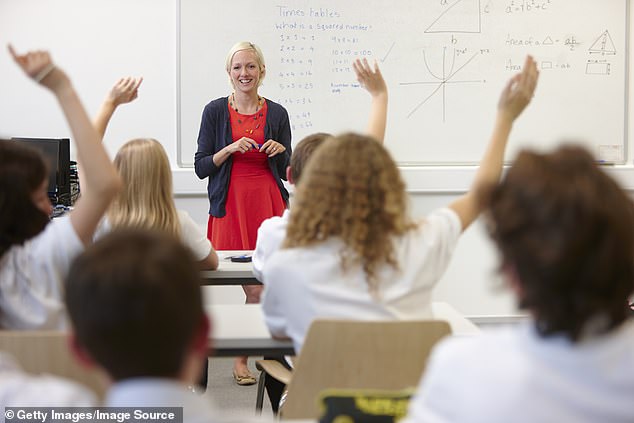
In Takasaki, Gunma Prefecture, despite the chilly and rainy weather in early October, the interior of the second-grade classroom at Takasaki Municipal Seibu Elementary School buzzes with warmth and enthusiasm. The lesson revolves around building vocabulary related to rivers and aquatic life; names of various water bodies decorate the chalkboard. Students enthusiastically raise their hands hoping to respond to the instructor’s queries. Among them sits 7-year-old Lulu Eiren Belle Masuda from the Philippines—a child who occasionally seeks assistance from her neighbor during these sessions. Beside her is 54-year-old Ayako Suga, serving as a language assistant.
“Eiren mentions that it’s challenging to converse with others since her main mode of communication is in English.” Although English is predominant at home, the dynamics shift in the classroom as she is the sole non-native Japanese speaker. She admits, “I sometimes require additional assistance,” particularly noting that speaking in front of the entire class makes her feel extremely uneasy.
Inherent difficulties encountered by students who are not native speakers at schools
Eiren’s experience mirrors an increasing trend in Japanese schools due to the rising number of foreign residents. By the close of 2024, this demographic saw a significant increase of 10.5%, reaching a total of 3.7 million individuals—the highest recorded figure so far. The government has set targets to attract approximately 820,000 additional overseas workers between 2024 and 2028 through various policies designed not only for labor but also facilitating easier pathways to permanent residency. This enables skilled workers to integrate their families into society seamlessly.
In Gunma Prefecture, where Eiren resides, the population of foreign inhabitants increased by 10.7% within a single year, totaling more than 72,000 individuals by December 2023. This growth necessitates that schools such as Seibu Elementary adapt to accommodate their increasingly varied student populations and find methods to assist students like Eiren, who do not have native proficiency in Japanese. Nonetheless, significant obstacles remain when trying to offer adequate help.
According to Professor Hiromi Saito from the Graduate School of Education at Tokyo Gakugei University, one of the core issues behind these problems is Japan’s lack of full recognition of immigrants. These children are effectively treated as immigrants, but the educational system does not acknowledge this fact. Consequently, schools—especially public ones—have failed to create a coherent structure to tackle the long-term, crucial challenge of educating these students systematically.
The insufficient acknowledgment is further exacerbated by minimal financial backing from the central government. As she highlights, although MEXT has developed materials such as textbooks and instructional videos, along with compiling locally generated resources available online, this constitutes nearly all their direct assistance beyond select locations like Yokohama. Additionally, they have set standards recommending one language tutor for every eighteen pupils requiring additional help with Japanese and encourage using technological aids for distance education. However, she notes that actual provision of linguistic tuition for kids with immigrant backgrounds typically amounts to around seventy to eighty hours annually—scarcely sufficient time to impart even rudimentary conversation abilities.
“Without financial support, local governments and municipalities cannot establish systems, employ staff members, or offer training,” says Saito. “While MEXT is suggesting various measures, the conditions necessary for their implementation—be it through established procedures, adequate staffing, or suitable facilities—are not present across the country. This issue affects every region.”
At the Takasaki Municipal Board of Education, the recurring response echoed similarly. In response to inquiries about what assistance they primarily required from the national government to cater to non-native speaking students, a high-ranking official succinctly answered “Funding.” Despite Takasaki’s efforts to address the linguistic needs of each student who requires additional support—deploying their 30 language aides wherever requested—they barely manage to satisfy all demands.
Moreover, the support for language assistants is generally limited to two years per child, according to guidelines. However, Eiren’s language assistant, Suga, cautions that this timeframe might prove insufficient if the count of children requiring assistance keeps increasing.
“I would appreciate it if measures were implemented to provide adequate support so that we can address the requirements of the children and achieve the academic standards set by the schools. It is my sincere wish that both the Takasaki Municipal Government and the Board of Education create a robust system for comprehensive assistance as the population of foreign students increases. Currently, there isn’t an ample supply of teaching aides; however, despite this limited availability, we manage with what little resources we have and make the current system function effectively. Nonetheless, situations may arise where some children do not receive the necessary help,” she states.
The endeavors of language aides
Language aides such as Suga and Mika Senzaki Novaes, who was also spoken to by Mainichi, play crucial roles in assisting children from multicultural backgrounds to understand the Japanese curriculum found in their lessons and textbooks. Nonetheless, these aids aren’t JSL educators, and their interaction with pupils usually caps at two sessions each lasting about two hours per week. Consequently, this often leaves an unbridgeable gap between the assistance provided and what the students truly require.
Senzaki Novaes, who assists an 8-year-old Brazilian student named Shizuka (a pseudonym) at Takasaki Municipal Sakurayama Elementary School, emphasizes, “It’s crucial to understand that mastering Japanese and understanding academic subjects are two distinct challenges. While I aim to support her with Japanese practice, my limited session time doesn’t allow me to delve into broader educational content.” Outside of her regular job duties, she dedicates numerous hours to developing custom teaching tools since suitable commercial options are hard to come by.
“I find many terms unfamiliar to these children. I put considerable effort into assisting them so they can adapt to their Japanese schooling and everyday routines, as well as manage the classroom activities effectively,” says Suga.
Even though these obstacles persist, the work of language assistants is proving impactful. According to Shigeko Yajima, who teaches Eiren’s homeroom class, “In regular conversations, Eiren speaks Japanese quite well; her vocabulary size is nearly identical to that of her peers.” Nonetheless, Yajima recognizes that Eiren requires assistance with academic content, highlighting the importance of Suga. As Yajima points out, “Whenever she struggles to comprehend certain topics, Suga steps in to provide support.”
Similarly, Shizuka has advanced thanks to Senzaki Novaes’ assistance. Despite finding kanji and kokugo challenging—classes designed for native Japanese speakers—she mentions, “I enjoy having her around; it makes learning more manageable.” When questioned about whether she believes her Japanese skills are getting better, she nods vigorously and breaks into a smile.
Senzaki Novaes, who runs the organization Vamos providing language help to children with foreign roots, notes that Shizuka understands about 70% of what’s being said in regular conversations at school but struggles with more complex exchanges and study materials. “She can do math calculations, but she doesn’t understand what’s being asked in word problems,” Senzaki Novaes explains. “In kokugo class, there are words she can enunciate or write but doesn’t know the meaning of, so she doesn’t understand the sentence. It’s the same for other subjects like social studies or science.”
The Takasaki School Board successfully addressed all language assistance requests for the academic year 2024, yet uncertainty looms ahead. While they have maintained their practice of limited school visit durations by these assistants, significant needs still persist—especially for students speaking less common languages such as Tagalog, Nepalese, and Uzbek, where adequately trained helpers are scarce. Often, interactions between assistants and pupils involve a mix of basic Japanese and occasionally another shared tongue whenever feasible.
Implications for the future
The difficulties encountered by children from abroad in Japan’s educational system are not individual cases but rather symptoms of broader social changes. Due to an increasing elderly populace and decreasing number of births, the nation has begun relying on foreign workers to address labor gaps and bolster economic growth. According to Professor Saito, under updated immigration policies facilitating family reunification for professional migrants, these kids “are expected to contribute to Japanese society down the line, and this understanding is slowly becoming more prevalent.”
The statistics highlight the challenges faced by these young individuals. The education ministry reports that high school students from foreign backgrounds needing Japanese lessons have a dropout rate of 6.7%, which is notably above the nationwide average of 1.0%. Of those who do manage to graduate, merely 51.8% proceed to further studies, whereas this figure stands at 73.4% for native-born students in Japan. Furthermore, among immigrant pupils entering employment, as many as 39.0% secure irregular or part-time positions, contrasted sharply with just 3.3% of overall high school leavers taking such roles.
Senzaki Novaes, Shizuka’s aide, cautions about the long-lasting effects of insufficient assistance. She states, “There might be an increase in individuals with international backgrounds who receive minimal Japanese education within Japan.” According to her, “Should these kids fail to acquire adequate proficiency in speaking Japanese for academic purposes, their career prospects will likely remain narrow. This situation can trap resident foreigners in lower societal positions.”
Tackling these inequalities necessitates an all-encompassing educational strategy, according to Saito. She states, “Education for immigrant children must not be confined solely to teaching them Japanese.” It ought to encompass assistance with cultural integration, personal growth, job placement, and professional advancement. In order for individuals to reside happily in Japan, view themselves as part of society, and perceive the nation as a place where they can construct their futures, Japan has to create an inclusive educational policy that nurtures feelings of inclusion and potential among immigrants.
(Robert Sakai-Irvine, staff writer for The Mainichi)