


In Jaipur, located in northern India, the pale pink tones of the buildings glow against the hazy sunlight characteristic of Rajasthan. This “Pink City” boasts impressive palaces, historic celestial observatories, and vibrant marketplaces, offering a wealth of architectural marvels and cultural riches. Below is your guide to exploring these must-see attractions!
The Palace of Winds (Hawa Mahal), Jaipur’s grand residence
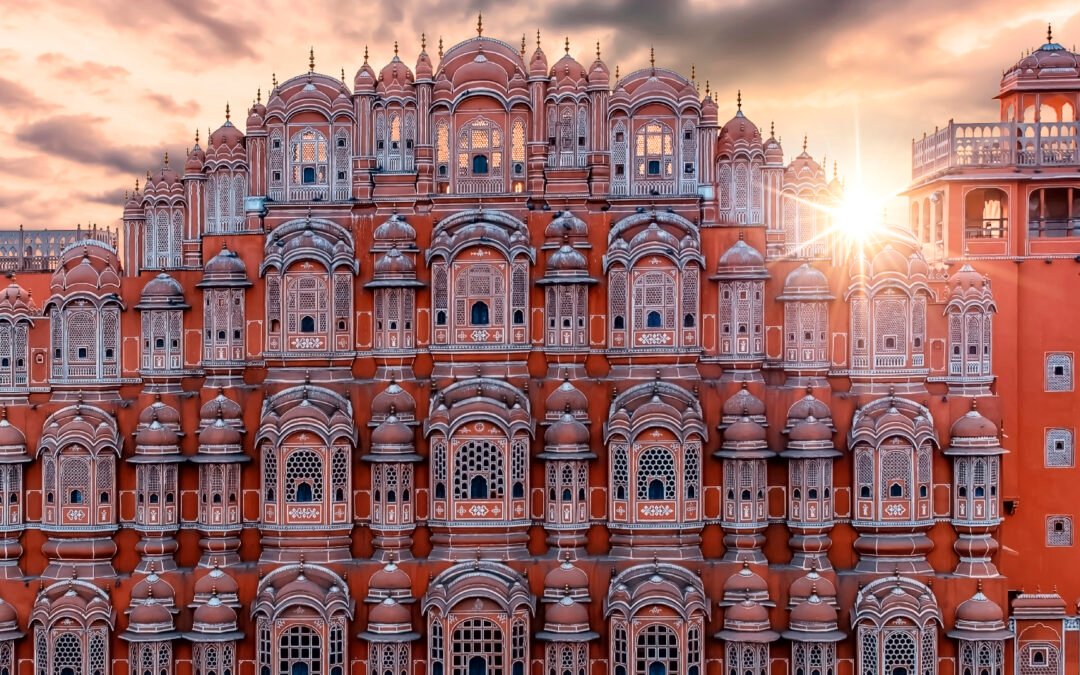
The Hawa Mahal, known as the Palace of Winds, boasts an astounding pink sandstone exterior at its outset.
heart of Jaipur
Everything remarkable about this opulent monument was constructed in 1799 under Maharaja Sawai Pratap Singh. The building essentially serves as an enormous lattice wall designed for allowing royal ladies to view urban activities from within their quarters unseen (as per the era’s strict etiquette).
purdah
Today, it boasts 953 tiny windows, referred to as
jharokhas
Allow the sunlight to enter, casting dramatic shadows. Within, an intricate network of galleries guides you to a terrace that provides a stunning vista of the City Palace and the Jantar Mantar.
The Jantar Mantar observatory: the brilliance of astronomical knowledge
A
UNESCO World Heritage Site
, Jantar Mantar serves as far more than just an observatory; it contains 19 massive astronomical devices within its premises, all situated across an 18-acre area.
th
The century-old brick construction established by Maharaja Jai Singh II includes the colossal Sundial known as the Samrat Yantra, which stands at an impressive height of 27 meters. This remarkable instrument boasts a precise mechanism capable of indicating the time with just a two-second error margin. Adjacent to this, there are two large semi-domes forming the Nari Valaya Yantra. These structures represent the Earth’s northern and southern hemispheres and serve the purpose of calculating time across different regions globally.
The City Palace, the historical and cultural nucleus of Jaipur
Situated at the center of Jaipur, the City Palace is an impressive ensemble constructed in a mix of Rajput and Mughal architectural styles. It was established during the 18th century.
th
The century-old palace, established by Maharaja Sawai Jai Singh II, contains a museum filled with an abundance of precious artifacts: intricate fabrics, historic documents, and ritualistic arms that narrate the legacy of the maharajas, the illustrious rulers of Rajasthan. Be sure not to overlook the four lavishly adorned gateways representing different seasons within the Pitam Niwas Chowk courtyard, as well as the Diwan-i Am, which served as a grand pavilion for public gatherings where the maharajas would meet their subjects and visitors.
The Markets of Jaipur, a burst of color and artistry
In Jaipur, the historic district thrives thanks to its artisans, merchants, and intrigued observers who infuse vitality into the conventional bazaars daily. Each
muhalla
The Ramganj Bazar specializes in vibrant leather footwear, whereas Gopalji ka Rasta excels in exquisitely cut semiprecious gemstones. Meanwhile, the Johari Bazaar offers an array of embroidered fabrics, and nearby Kumharon ki Nadi showcases piles of handcrafted ceramics. Lastly, multihued turbans, symbolic of Rajasthan’s heritage, are prominently displayed at Bari Chaupar.
The Albert Hall Museum, a sanctuary of art and culture in Jaipur
Drawing inspiration from Indo-Saracenic design, the grand Albert Hall Museum is situated at the center of Ram Niwas Gardens. Constructed in 1876, this principal museum of Jaipur showcases numerous exhibits such as sculptures, paintings, musical instruments, exquisite textiles, geological specimens, and even an ancient Egyptian mummy. The displays on the ground level delve into Rajasthani customs through presentations featuring puppets and attire, offering visitors insight into the region’s rich cultural heritage.
Nahargarh Fort, the quiet sentinel of the Aravalli Hills
Perched atop the Aravelli Hills overlooking the Pink City, Nahargarh Fort provides an awe-inspiring view of the area and insight into Jaipur’s military past. Constructed in 1734, the fortress initially served as protection for the city and offered sanctuary to the royal family during conflicts. The walls and vibrant palaces continue to reflect this protective purpose, with the principal courtyard featuring a delightful sight.
baori
(well-placed). The most striking structure within the complex, the Madhavendra Bhawan Palace, was constructed in the 19th century.
th
for the spouses of Ram Singh II during the century.
Rambagh Palace, a marvel of opulence and heritage
Initially serving as a hunting lodge for the ruling dynasty, Rambagh Palace encapsulates the regal charm of Rajasthan. It was converted into a palace during the early part of the timeline mentioned.
th
A century later, in 1930, it became the primary dwelling of the maharaja. Following India’s independence, it transformed into an opulent hotel. Nowadays, its expansive gardens, grand colonnaded walkways, and stunning Art Deco decorations preserve the essence of its regal heritage. The presence of strutting peafowl enhances this sense of magnificence, particularly when the monsoons arrive. It stands as a site to be marveled at… or reserved for an unparalleled stay!