


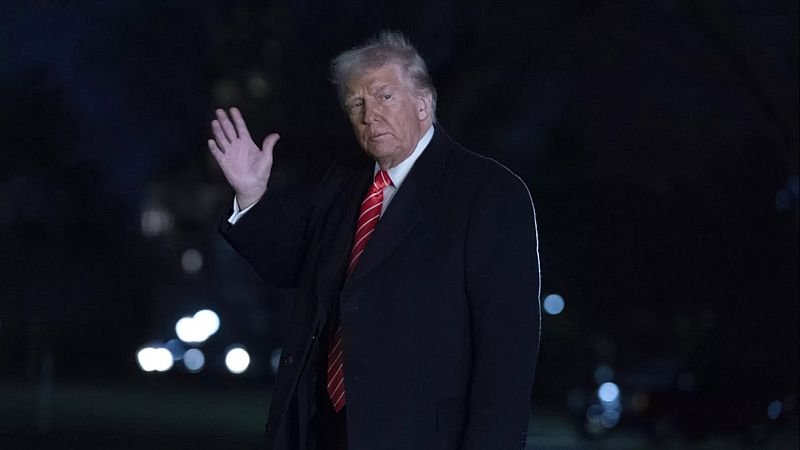
President Donald Trump stated on Monday that Venezuela has shown “extreme hostility” towards the United States, and as of April 2nd, nations buying oil from it will have to pay tariffs on all their imports into the U.S.
These duties would probably increase the taxation burden for China, which accounted for 68% of Venezuela’s oil exports in 2023, as per a 2024 report from the U.S. Energy Information Administration.
The report indicates that Spain, India, Russia, Singapore, and Vietnam are some of the nations also getting oil from Venezuela.
However, even the United States—despite imposing sanctions on Venezuela—continues to purchase oil from the nation. According to data from the Census Bureau, the U.S. imported approximately 8.6 million barrels of oil from Venezuela in January, which constituted part of the total imports for that month at around 202 million barrels.
On Monday, the Treasury Department granted an extension to US-based Chevron Corp., permitting them to extract and export Venezuelan oil until May 27. This extension, referred to as a general license, provides relief from economic sanctions and enables the continuation of their oil production activities.
In February, Trump declared an end to the business ties between Chevron and Venezuela, which had served as a crucial financial support for the South American nation.
The Venezuelan President, Nicolás Maduro, retaliated by stating that the U.S. had breached global commerce regulations through what he termed as an “unjustified, unlawful, and desperate action.” This move was aimed at impeding the progress of the South American country.
The government stated that for many years, the rejected far-right faction in Venezuela has advocated for economic sanctions, aiming to cripple the country.
Their failure stems from Venezuela being a sovereign nation where its people have stood firm with pride, and due to the global refusal of any economic tyranny.
The US president contends that tariffs will revive manufacturing jobs instead of exacerbating inflationary pressures and impeding economic growth, contrary to warnings from economists. He recently cited an informal example when Hyundai declared at the White House plans to construct a $5.8 billion (€5.4 billion) steel facility in Louisiana.
This investment clearly shows that tariffs are highly effective,” stated Trump, adding that the new facility being built by the South Korean carmaker will generate 1,400 employment opportunities.
The executive chairman of Hyundai Motor Group, Euisun Chung, conveyed to the president: “We feel truly honored to be alongside you and delighted to construct the future together.”
In 2024, Maduro was inaugurated for a third presidential term in Venezuela; however, both the country’s opposition groups and the European Union dismissed this swearing-in ceremony as invalid due to claims of rigged voting processes.
The former US President Joe Biden’s administration similarly condemned the “fraudulent” election and enacted fresh sanctions on Caracas. Notably, they raised the bounty to $25 million (€23.9m) for details resulting in the apprehension of the Venezuelan leader.
During Maduro’s long tenure as ruler, millions of Venezuelans have fled their homeland due to political instability, economic downturn, and severe shortages of essential supplies like food, medication, and power.
A more daring action against China?
Trump’s recent tariff threats indicate that his administration might be prepared to adopt more aggressive actions against China as part of their push to reshape the rules governing the worldwide economic system.
The Trump administration has already imposed blanket 20% tariffs on goods coming from China in an attempt to combat illegal fentanyl trafficking. However, adding yet another 25% duty on these imports might heighten the strain between the globe’s two biggest economic powers.
Trump said Venezuela will face a “secondary” tariff because it is the home to the gang Tren de Aragua. The Trump administration is deporting immigrants that it claims are members of that gang who illegally crossed into the United States.
Trump has labelled 2 April as “Liberation Day” based on his still unclear plans to roll out import taxes to match the rates charged by other countries, as well as fully levy 25% tariffs against Mexico and Canada, the two largest US trading partners.
The US President has furthermore raised the 2018 duties on steel and aluminum to 25% for every imported product and has pledged to impose extra taxes on vehicles, medical products, timber, semiconductor chips, and copper.
On Monday, the US stock market was rising as investors anticipated that the tariffs would be more precisely aimed rather than being widespread. Nevertheless, the S&P 500 index has declined year-to-date due to worries that a trade conflict might impede economic expansion and boost inflationary pressures.
However, Trump has been rather carefully guarding his intentions regarding tariffs, stating on Monday that although he aims to impose “reciprocal” charges, they “might end up being even more lenient than expected.”