oleh admin | Agu 24, 2025 | aviation, cars, flying, technology, technology trends
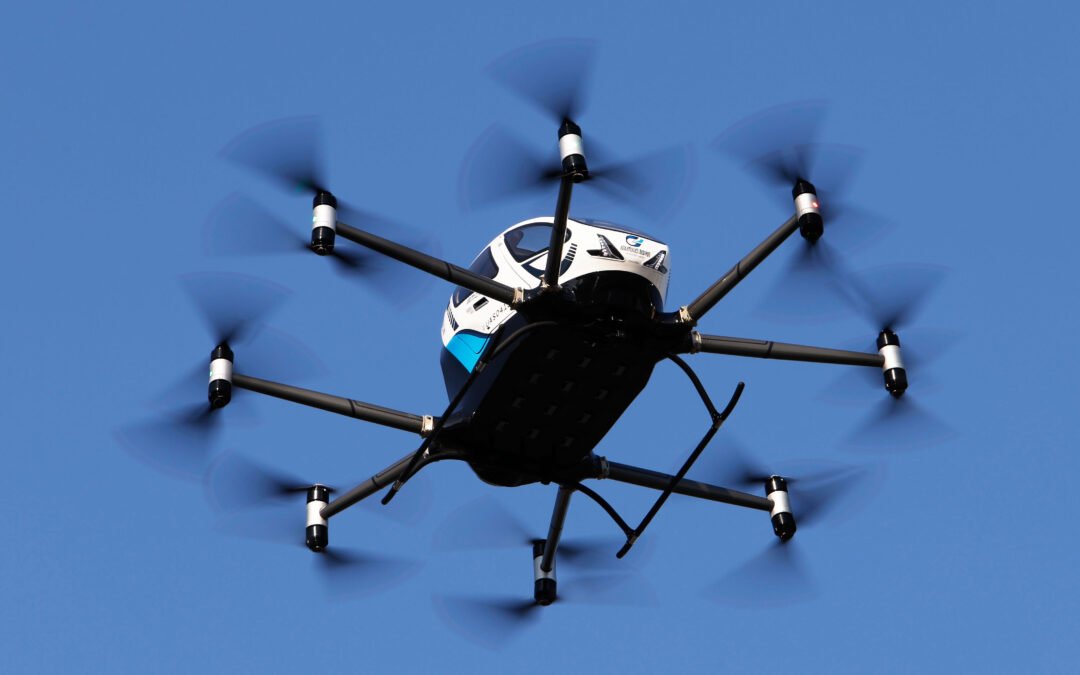
August 19, Nepal – Excitement is growing across social media platforms and emerging websites in Nepal, where anticipation builds around the upcoming NADA Auto Show 2025 in Kathmandu. The event is set to feature a flying vehicle, officially referred to as an eVTOL (Electric Vertical Take-Off and Landing) aircraft. This groundbreaking innovation, part of the broader concept called Advanced Air Mobility (AAM), represents a major leap toward next-generation transport solutions. Such advancements appear crucial for Nepal due to its challenging terrain.
Exhibition and execution are quite different things. The opportunities it unlocks are exciting, while the path to operation is challenging. Meanwhile, a nuanced understanding of this novel technology, its developmental impacts and potential implementation challenges may turn expectations into reality.
Global landscape
AAM signifies a remarkable shift in aviation technology, with the potential to revolutionise the aviation sector. It can operate at lower altitude and shorter range, requires minimal infrastructure and maintenance, making it well-positioned to deliver cleaner, safer, quieter, flexible and cost-effective transport solutions compared to conventional means.
More than 267 cities and areas spanning 63 nations are either implementing or testing AAM programs. Commercial deployments are anticipated in countries including the United States, China, South Korea, France, Japan, and Saudi Arabia by 2026.
A wide variety of eVTOL aircraft types have already been developed. Alongside the setting up of vital infrastructures, such as vertiports, is also gaining pace. As of February 2025, 1,504 vertiports are planned globally, a sharp rise from 1,004 in September 2024, with China accounting for over 50 percent of all projects.
Leading aviation authorities of the world released a joint AAM roadmap in June 2025 to guide certification, coordination, regulation and social acceptance of air taxis and drone operations. South Korean company OPPAV’s manned-unmanned eVTOL ran a successful flight test in 2023 and Chinese Ehang’s EH216-S received certification for passenger use. This underscores the global momentum towards pilotless air mobility. Market forecasts also highlight substantial growth potential for AAM. The global AAM market was valued at USD 11.5 billion in 2024 and is expected to reach USD 73.5 billion by 2034.
Through regulated sandbox settings for trial flights and collaborations between private entities and government bodies involving leading eVTOL companies, world governments are backing advancements in Advanced Air Mobility. The bold NEOM urban development initiative in Saudi Arabia and Dubai’s preparedness through approved vertical takeoff and landing sites highlight the promise of this emerging technology.
Transformative potential
Connectivity in Nepal is severely hampered by its rugged and disaster-prone terrain. Dispersed rural settlements and unreliable transport infrastructures exacerbate the situation. Roads are often hard to build and maintain due to harsh topography and frequent disasters. Air travel remains crucial while affected by limited infrastructures, topography and weather constraints.
AAM offers a game-changing solution to the country’s transportation problems. It is an agile and environmentally friendly option that can bypass damaged or non-existent roads and operate in previously unreachable areas. It can improve healthcare, reducing fatalities via rapid deployment of medical supplies and personnel, including emergency medical evacuations.
The novel technology accelerates economic activities and growth, offering market access to local producers and farmers producing goods that often struggle to reach the market. It also supports tourism by establishing connectivity with previously isolated tourist attractions.
AAM can aid in disaster readiness and swift action through the rapid delivery of necessary supplies during emergencies. Aerial monitoring, real-time mapping, and fire-fighting abilities also improve efficient disaster management, reducing possible damages.
AAM vehicles produce zero emissions and operate more quietly, providing ecological benefits. In contrast to many nations that continue using harmful energy sources for power production, Nepal can utilize its rich hydropower resources to charge eVTOLs.
Apart from the transport revolution, AAM offers a platform for innovation and skills development. The youth population of Nepal makes it well-positioned to develop human capital in terms of AAM pilots, technicians and drone engineers.
Therefore, AAM presents groundbreaking possibilities for Nepal to surmount geographic challenges, enhance economic stability, and promote various Sustainable Development Goals.
Challenges to AAM adoption
Despite the promising prospects, the successful adoption of AAM in Nepal seems challenging. The absence of a legal and institutional framework, robust airspace management provisions and safety protocols, including pilot licensing for operating eVTOLs and autonomous aircraft, could hinder timely adoption.
Nepal might encounter difficulties when using eVTOLs at elevated altitudes to address its remote area accessibility requirements, since the majority of commercially available eVTOLs are built for use in city environments at lower elevations. In addition, factors like climate conditions and weather variations can influence both battery performance and lifting capability. Moreover, the restricted range and carrying capacity of present-day models could limit their effectiveness for extended or more demanding journeys across Nepal’s tough terrain.
The absence of essentials such as vertiports, reliable 5G connectivity, dedicated charging stations and robust electric grids, especially in rural and remote areas, could further delay the implementation and operation.
A lack of specialized knowledge and skilled personnel in AAM technologies poses a challenge for effective implementation. Developing local proficiency in cutting-edge aerospace technology, upkeep, and compliance matters will demand significant funding for learning and development programs.
In addition, as a relatively new technology, the initial expenses involved in acquiring airplanes, such as building facilities and educating staff, are anticipated to be substantial. This may influence financial choices and the ability of a nation with limited resources, like Nepal, to commit.
Limited public understanding of this new technology could lead to skepticism and hesitation in using air transportation services, whereas increasing knowledge will demand further financial resources.
What can Nepal do?
Given Nepal’s technical, financial and human resource constraints in the field of modern aviation, an incremental approach with extensive international collaboration is required to harness the full potential of AAM.
To ensure secure and effective implementation, it is essential to establish a specialized team within the Ministry of Culture, Tourism and Civil Aviation (MoCTCA), working alongside major sectoral departments to achieve coordinated efforts across different areas. A National AAM Strategy can outline an explicit schedule and arrange required resources. Utilizing existing reference documents such as the Asia-Pacific AAM Framework may aid in shaping regulations and oversight.
Global cooperation and involvement from the private sector are essential for unlocking the capabilities of AAM. Engaging regionally and globally with those who have adopted or pioneered AAM can drive progress. Collaborating with the private sector through tax benefits and legal frameworks may support technological innovation aligned with Nepal’s needs.
The government should focus on the implementation of pilot projects in collaboration between CAAN, Nepal Army, academic institutions and the private sector with regulatory sandboxes to ease testing in early stages. For initial deployment, we could prioritise medical logistics, disaster response.
To ensure preparedness of infrastructure, it is essential to design and fund vertiport facilities along with specialized charging points in key areas. Moreover, prompt funding of education initiatives for the required labor force is crucial for smooth implementation.
The anticipated display of eVTOL represents Nepal’s fascination with advanced transportation solutions, yet underscores the difference between ambition and preparedness.

oleh admin | Agu 24, 2025 | cybersecurity, news, news media, politics, security
Released on, Aug. 19 – August 19, 2025 at 7:00 AM
Be mindful! A small device in the user’s hand has the power to shape their thoughts or ideas subtly, often going unnoticed. This could be considered an unsettling result of dependency on online services readily accessible via smartphones, tablets, and computers. The continuous flow of information appearing on these devices, lacking proper oversight and verification, fosters distorted stories.
Extremist groups and troublemakers have found it simpler to connect with their intended audiences via unrestricted online platforms. Since Pakistan is currently facing terrorism from multiple sources, the existence of prohibited entities within digital spaces demands stringent preventive actions.
Careful inquiries into terror incidents have uncovered surprising insights about how online services are being exploited by groups opposing the government. Individuals responsible for notable attacks can easily exchange information and plan actions against the country without detection, largely due to significant inconsistencies within national digital systems.
It’s encouraging to see the federal government showing commitment to address these shortcomings through specific actions. Recent reports about discussions among federal officials regarding this critical matter highlight the strong determination of the state to take control over the unrestricted online freedom enjoyed by outlawed extremist organizations. The recent suspension of over 850 social media profiles linked to prohibited groups marks the start of a carefully planned effort aimed at electronically isolating terrorists and those who support them.
A rising tide of terror in Khyber Pakhtunkhwa and Balochistan appears to be deliberately targeting the authority of the government, using a dangerous mix of brutal assaults and destructive propaganda spread via widely accessible social media networks. As per official statements, the Pakistan Telecommunication Authority (PTA) has restricted numerous online profiles managed by extremist militant organizations such as the outlawed TTP, BLA, and BLF.
Interestingly, social media sites designed for public benefit and rapid information exchange are being exploited by extremists and rebels without facing any consequences. The unchecked abuse of online spaces is increasingly endangering people’s safety, societal stability, and local tranquility. Frequent terror strikes within Pakistan targeting police departments, military personnel, ordinary citizens, and international workers involved in development initiatives clearly show harmful involvement from both nearby and distant entities.
The core position of Pakistan regarding the participation of Indian state entities in transboundary terrorism support relies on concrete and reliable evidence, particularly the admissions made by Khambhushan Jhadav. The deliberate disruption of CPEC orchestrated by India-backed militant organizations could potentially trigger broader regional conflicts. It is surprising that the overt misuse of social media platforms (such as Facebook, Twitter, Instagram, TikTok, and WhatsApp) has not triggered any warning signals within the headquarters of the high-tech companies behind these services.
Pakistan has appropriately brought up this delicate matter with the platform administrators, as the extent of abuse and the influence of extremist groups among their supporters is highly concerning. The Pakistan Telecommunication Authority (PTA) and the National Center for Cyber Crime Investigations (NCCIA) have identified 533 accounts, which boast over 2 million followers, engaged in supporting terrorism, spreading subversive messages, inciting ethnic conflict, and promoting religious radicalism.
Social media platform owners can no longer ignore these obvious violations. Recent discussions between tech officials and Pakistani government representatives focused particularly on implementing strong corrective actions to break this pattern of neglect. The seriousness of this issue requires greater structured collaboration between governmental bodies and digital platform administrators.
The only alternative left is the prohibition of extremist accounts and mandatory disclosure of necessary information to government agencies by platform administrators. The government needs to make sure that theoretical discussions regarding free speech and human rights are no longer exploited by Indian intermediaries to hide the evident misuse of online platforms by terrorist organizations. Any hesitation or lack of response from company management cannot be accepted by regulatory bodies. The lives lost due to terrorism hold greater importance and sacredness compared to the questionable priorities of major technology corporations, which have previously demonstrated unacceptable failure in identifying illegal actions carried out by outlawed militant groups.
oleh admin | Agu 23, 2025 | business, government, infrastructure, public transportation, transportation
In July 2024, the Federal Capital Territory (FCT) Administration, under the leadership of Nyesom Wike, initiated the building of three contemporary bus stations, marking an inaugural effort for the nation’s capital.
The proposal detailed three terminals for the initial stage: one located in the Kugbo region, another in the Mabushi neighborhood, and the last in the Central Business Area.
Although the Kugbo and Mabushi terminals were finished within a year and became operational in June, the terminal located in the Central Business District faced delays because of site-related problems and is now expected to be completed by the end of the year.
Nevertheless, locals have started voicing worries. Following the completion and inauguration of the two multimillion-naira terminals by President Bola Ahmed Tinubu in June, they have stayed closed and not been utilized, with no bus or taxi services running.
As stated by the minister, the terminals were designed to improve the security of travelers and passengers, along with offering leisure amenities such as an integrated movie theater.
Wike highlighted that the terminals will combine and enhance FCT’s transport network.
“Although we have kept expanding our road network, unless we connect it with different bus stations, we will not reach our objectives. Our aim is to combine and enhance our transportation system. This will eliminate those so-called one-time offenses that constantly occur,” stated the minister.
He stated that the main objective of the initiative was to improve safety by decreasing the presence of unauthorized vehicles on the roads.
“We are working to remove the ‘single-opportunity’ risk where travelers are exposed to threats from unfamiliar drivers. Thanks to this terminal, passengers will be aware of both the drivers and the vehicles they’re entering, enhancing the safety of their trips,” he said.
Wike also tackled the problem of traffic jams and uncontrolled parking, issues that have persisted in the city for years, stating, “These facilities will offer a secure and structured area for cars to be parked, helping ease traffic on the streets.”
Expressing regret over the lack of this kind of facilities previously, he stated, “It is sad that a city like Abuja has never possessed a bus station. However, we appreciate God as our wishes have now come true.”
The FCT Authority stated that the terminals will be open around the clock, providing travelers with a secure and pleasant area for waiting. Our reporter, who has been following the project’s progress, notes that the terminals feature facilities like dining areas, washrooms, and recreational spaces.
Each of the two appointed terminals includes completely climate-controlled zones where travelers can relax with ease. These spaces also have an integrated movie system and internet connectivity. Moreover, there are specific spots designated for collecting tickets and checking out.
Nevertheless, although they possess remarkable characteristics, locals worry that even several months following their installation, the terminals still stand vacant and their transport issues persist.
What use are stations without bus services? – Locals
The bus stations in Abuja were constructed to enhance city mobility, yet several have been unused since they were finished.
Over a month since the inauguration, locals are expressing worries regarding the lack of functioning bus services. Without established routes, timetables, or personnel, several people are doubting the value of these stations.
A tour of the Kugbo and Mabushi terminals reveals that although the structures are contemporary and solidly constructed, they remain mostly vacant.
These stations, supported by taxpayer funds, have turned into tranquil areas without evidence of real transportation operations.
Inhabitants claim that these structures function more as symbols rather than effective answers to Abuja’s increasing transportation demands.
“It’s insufficient just to cut ribbons; we require buses on the streets. We need financial support for those with limited income. We also need qualified personnel, accurate schedules, and up-to-date information. If you claim to be advancing the city, make sure residents can experience it,” said Mr. Tunde Balogun, a businessman from Wuse.
People who commute every day from suburban areas into the central part of the city are experiencing stress.
Aisha Lawal, a government employee residing in Gwarimpa stated, “These kiosks are merely present—appearing nice yet vacant. There are no buses, no movement, no purpose. What exactly are we commemorating?”
Andrew Chukwuma, a transport operator traveling between Berger and Jabi, shared comparable concerns, stating, “The authorities are constructing terminal facilities, yet where are the buses? We’ve noticed the Kugbo and Mabushi terminals remain closed since they were opened in June. They claim these places are meant for the general population, but there’s absolutely nothing available for us. Travelers endure hardships, and we operators lack an effective structure to rely on.”
People living in regions like Kubwa, Kuje, Lugbe, Karu, and Nyanya still face extended waiting periods, crowded transport, and fluctuating costs.
Blessing Oche, a public official traveling from Lugbe, stated, “I spend hours waiting but still get crammed into packed buses. With no other options available, operators demand exorbitant fares. Simply constructing terminal facilities isn’t sufficient; the government needs to supply proper bus services as well.”
Travelers have also expressed worries regarding security.
An unnamed bank employee recounted a recent experience with a group of thieves, saying, “They stole everything — my phone, computer, and backpack. This is why we require a secure, state-backed transportation system.”
Madam Halima Hashir, who travels from Karu-Nyanya every day, mentioned that her transportation costs amount to N5,500 per day.
“What is my salary?” every day, as she passes the Kugbo terminal, which remains closed. “These terminals aren’t benefiting anyone; they’re just vacant structures while we face difficulties,” she expressed sorrowfully.
Due to the lack of an operational transportation network, numerous locals have no choice but to rely on unsafe and unofficial alternatives.
Outdated buses, delivery motorcycles, and various personal vehicles now dominate the streets, leading to hazardous commuting situations.
Mr. Ejike Hygenus, a former teacher from Kuje, remembered a more favorable period: “In the time of El-Rufai, we had well-maintained and lengthy buses commonly known as El-Rufai buses connecting the outskirts with the city center. They were affordable, dependable, and secure. These days, such services no longer exist—only structures labeled as stations,” he mentioned.
Specialists share their perspectives on future directions
Professionals discuss potential paths ahead
Experts provide insights into next steps
Authorities comment on possible trajectories
Experts offer opinions on what lies ahead
Scholars outline ways to proceed
Experts analyze upcoming strategies
Experts suggest approaches for moving forward
Experts present views on subsequent actions
Experts contribute ideas about the course of action
Former general manager of the Abuja Urban Mass Transit, Mr. Najeeb Mahmoud Abdul Salam, stated that the present circumstances require immediate changes.
He highlighted the importance of collaboration between the public and private sectors, support from donors, better regulatory frameworks, and a renewed focus on strategic planning within the national transportation policy.
He further advocated for improved monitoring and control of the terminals to guarantee secure and efficient service provision.
A public policy specialist, Dr. Adetokunbo Margaret, cautioned that infrastructure not utilized properly could result in a lost opportunity for investment.
What is required at this moment is not additional terminals, but buses traveling on the streets, well-defined pathways, skilled operators, and an effective oversight framework.
She recommended that the private sector could manage it, but the government needed to establish and implement the regulations.
A mobility advisor, Mrs. Ifeoma Onuche, emphasized the importance of preparation and teamwork, stating, “These stations shouldn’t merely serve as symbolic initiatives. Where is the cooperation with private transportation providers? What is the transportation plan that dictates how these facilities should function?”
Numerous locals still experience everyday challenges on the roadways. Merchants, pupils, and employees encounter high costs, inconsistent transit options, and increasing security issues.
Trader Chukwuemeka Eze from Nyanya market stated plainly: “It’s similar to constructing hospitals without medical staff. What we require are buses today, not next year.”
Abdullahi Yusuf, who lives in Bwari stated, “With fuel costs still elevated and ride-hailing options being costly for many locals, unofficial transportation networks have stepped in to fill the void—but this comes with significant issues. Vehicles often break down, there are unsafe conditions, and incidents of regular harassment are common during commutes.”
Citizens are demanding swift action, such as the rapid introduction of bus services on heavily used routes, involvement of the private sector in managing terminals, implementation of electronic payment methods for fares, and stricter oversight. They believe that transport should be regarded as an essential community service, rather than merely a symbolic gesture.
As per Mathew Ijaodola, a local from Kubwa, without tangible actions being implemented, Abuja’s stations might stay well-constructed yet underutilized facilities, with the city’s inhabitants still trapped, awaiting not only bus services but also an effective transportation network.
Official from FCTA explains cause of postponement
A representative from the FCT Transport Secretariat, who requested not to be named, cited the procedure of granting terminal operations to private companies as the reason for the delay.
An official stated that the government had chosen for the terminals to be managed by a private organization instead of the transportation department.
He mentioned that the administration was in the midst of hiring a company to manage the terminals and pledged that once the procedure is finished, locals would begin to experience the effects.
The official had earlier stated that the terminals would not be managed by the FCT Transport Secretariat.
“We will entrust it to private companies that will manage it effectively,” the minister stated during the inauguration in June.
Supplied by SyndiGate Media Inc. (
Syndigate.info
).