


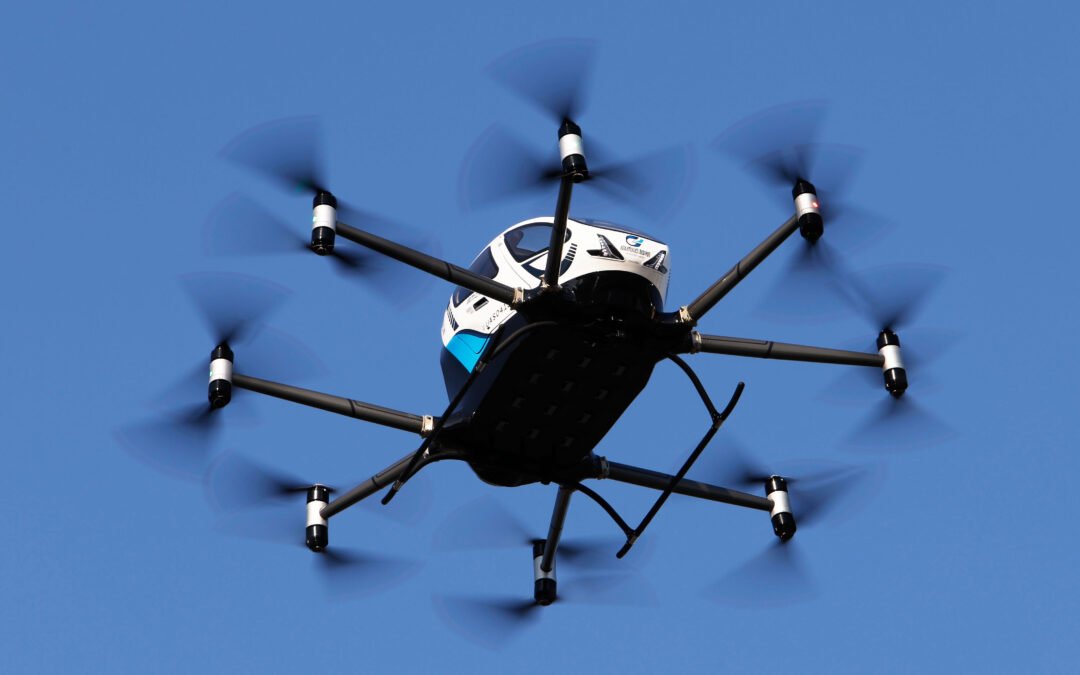
August 19, Nepal – Excitement is growing across social media platforms and emerging websites in Nepal, where anticipation builds around the upcoming NADA Auto Show 2025 in Kathmandu. The event is set to feature a flying vehicle, officially referred to as an eVTOL (Electric Vertical Take-Off and Landing) aircraft. This groundbreaking innovation, part of the broader concept called Advanced Air Mobility (AAM), represents a major leap toward next-generation transport solutions. Such advancements appear crucial for Nepal due to its challenging terrain.
Exhibition and execution are quite different things. The opportunities it unlocks are exciting, while the path to operation is challenging. Meanwhile, a nuanced understanding of this novel technology, its developmental impacts and potential implementation challenges may turn expectations into reality.
Global landscape
AAM signifies a remarkable shift in aviation technology, with the potential to revolutionise the aviation sector. It can operate at lower altitude and shorter range, requires minimal infrastructure and maintenance, making it well-positioned to deliver cleaner, safer, quieter, flexible and cost-effective transport solutions compared to conventional means.
More than 267 cities and areas spanning 63 nations are either implementing or testing AAM programs. Commercial deployments are anticipated in countries including the United States, China, South Korea, France, Japan, and Saudi Arabia by 2026.
A wide variety of eVTOL aircraft types have already been developed. Alongside the setting up of vital infrastructures, such as vertiports, is also gaining pace. As of February 2025, 1,504 vertiports are planned globally, a sharp rise from 1,004 in September 2024, with China accounting for over 50 percent of all projects.
Leading aviation authorities of the world released a joint AAM roadmap in June 2025 to guide certification, coordination, regulation and social acceptance of air taxis and drone operations. South Korean company OPPAV’s manned-unmanned eVTOL ran a successful flight test in 2023 and Chinese Ehang’s EH216-S received certification for passenger use. This underscores the global momentum towards pilotless air mobility. Market forecasts also highlight substantial growth potential for AAM. The global AAM market was valued at USD 11.5 billion in 2024 and is expected to reach USD 73.5 billion by 2034.
Through regulated sandbox settings for trial flights and collaborations between private entities and government bodies involving leading eVTOL companies, world governments are backing advancements in Advanced Air Mobility. The bold NEOM urban development initiative in Saudi Arabia and Dubai’s preparedness through approved vertical takeoff and landing sites highlight the promise of this emerging technology.
Transformative potential
Connectivity in Nepal is severely hampered by its rugged and disaster-prone terrain. Dispersed rural settlements and unreliable transport infrastructures exacerbate the situation. Roads are often hard to build and maintain due to harsh topography and frequent disasters. Air travel remains crucial while affected by limited infrastructures, topography and weather constraints.
AAM offers a game-changing solution to the country’s transportation problems. It is an agile and environmentally friendly option that can bypass damaged or non-existent roads and operate in previously unreachable areas. It can improve healthcare, reducing fatalities via rapid deployment of medical supplies and personnel, including emergency medical evacuations.
The novel technology accelerates economic activities and growth, offering market access to local producers and farmers producing goods that often struggle to reach the market. It also supports tourism by establishing connectivity with previously isolated tourist attractions.
AAM can aid in disaster readiness and swift action through the rapid delivery of necessary supplies during emergencies. Aerial monitoring, real-time mapping, and fire-fighting abilities also improve efficient disaster management, reducing possible damages.
AAM vehicles produce zero emissions and operate more quietly, providing ecological benefits. In contrast to many nations that continue using harmful energy sources for power production, Nepal can utilize its rich hydropower resources to charge eVTOLs.
Apart from the transport revolution, AAM offers a platform for innovation and skills development. The youth population of Nepal makes it well-positioned to develop human capital in terms of AAM pilots, technicians and drone engineers.
Therefore, AAM presents groundbreaking possibilities for Nepal to surmount geographic challenges, enhance economic stability, and promote various Sustainable Development Goals.
Challenges to AAM adoption
Despite the promising prospects, the successful adoption of AAM in Nepal seems challenging. The absence of a legal and institutional framework, robust airspace management provisions and safety protocols, including pilot licensing for operating eVTOLs and autonomous aircraft, could hinder timely adoption.
Nepal might encounter difficulties when using eVTOLs at elevated altitudes to address its remote area accessibility requirements, since the majority of commercially available eVTOLs are built for use in city environments at lower elevations. In addition, factors like climate conditions and weather variations can influence both battery performance and lifting capability. Moreover, the restricted range and carrying capacity of present-day models could limit their effectiveness for extended or more demanding journeys across Nepal’s tough terrain.
The absence of essentials such as vertiports, reliable 5G connectivity, dedicated charging stations and robust electric grids, especially in rural and remote areas, could further delay the implementation and operation.
A lack of specialized knowledge and skilled personnel in AAM technologies poses a challenge for effective implementation. Developing local proficiency in cutting-edge aerospace technology, upkeep, and compliance matters will demand significant funding for learning and development programs.
In addition, as a relatively new technology, the initial expenses involved in acquiring airplanes, such as building facilities and educating staff, are anticipated to be substantial. This may influence financial choices and the ability of a nation with limited resources, like Nepal, to commit.
Limited public understanding of this new technology could lead to skepticism and hesitation in using air transportation services, whereas increasing knowledge will demand further financial resources.
What can Nepal do?
Given Nepal’s technical, financial and human resource constraints in the field of modern aviation, an incremental approach with extensive international collaboration is required to harness the full potential of AAM.
To ensure secure and effective implementation, it is essential to establish a specialized team within the Ministry of Culture, Tourism and Civil Aviation (MoCTCA), working alongside major sectoral departments to achieve coordinated efforts across different areas. A National AAM Strategy can outline an explicit schedule and arrange required resources. Utilizing existing reference documents such as the Asia-Pacific AAM Framework may aid in shaping regulations and oversight.
Global cooperation and involvement from the private sector are essential for unlocking the capabilities of AAM. Engaging regionally and globally with those who have adopted or pioneered AAM can drive progress. Collaborating with the private sector through tax benefits and legal frameworks may support technological innovation aligned with Nepal’s needs.
The government should focus on the implementation of pilot projects in collaboration between CAAN, Nepal Army, academic institutions and the private sector with regulatory sandboxes to ease testing in early stages. For initial deployment, we could prioritise medical logistics, disaster response.
To ensure preparedness of infrastructure, it is essential to design and fund vertiport facilities along with specialized charging points in key areas. Moreover, prompt funding of education initiatives for the required labor force is crucial for smooth implementation.
The anticipated display of eVTOL represents Nepal’s fascination with advanced transportation solutions, yet underscores the difference between ambition and preparedness.