


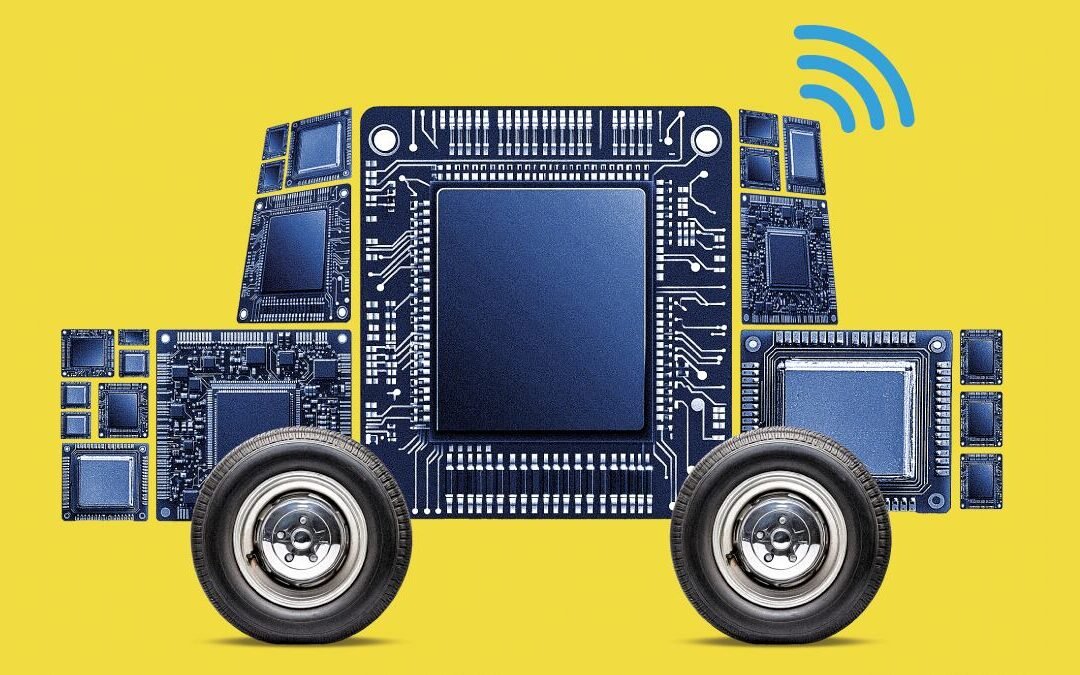
With automobiles increasingly resembling rolling computer systems, car manufacturers are competing to create their own semiconductors—which are essential components for elements ranging from electric drivetrains to advanced driver-assistance technologies. The disruptions caused by the COVID-19 pandemic highlighted the vulnerabilities associated with depending solely on outside semiconductor providers. Moreover, as the automotive sector transitions towards electrification and autonomy, this surge in demand emphasizes the necessity for sophisticated, high-performing microchips even further.
In an effort to decrease reliance on external chip producers, businesses are establishing their own internal semiconductor design groups, opening R&D facilities in Silicon Valley, and entering into agreements with manufacturing firms for outsourced production. Additionally, some enterprises are forging joint ventures; for instance, they might team up with Taiwan-based Foxconn to jointly develop automotive-specific microchips.
Electric vehicle (EV) manufacturers such as Tesla and China’s BYD have traditionally focused on developing their own chips, but now conventional carmakers—like Toyota, Hyundai Motor Group, Stellantis, and General Motors (GM)—are also entering this competition.
Automotive semiconductors were previously seen as a specialized sector, yet their importance has expanded with the increasing technological sophistication of vehicles. In contrast to sophisticated processors utilized in smartphones and data centers, automotive chips tend to be simpler, which makes them more amenable to internal production by automobile manufacturers.
Nevertheless, the supply continues to be restricted. In the past, chip producers have primarily focused on catering to the consumer electronics sector, which has left automotive manufacturers vying for a scarce allocation of chips. This disparity grew particularly evident during the pandemic as worldwide shortages compelled numerous auto companies to suspend their manufacturing operations.
South Korea’s Electronics and Telecommunications Research Institute (ETRI) reports that traditional Internal Combustion Engine (ICE) vehicles typically incorporate approximately 200 semiconductor components each, whereas Electric Vehicles (EVs) necessitate about 1,000 such devices, with Autonomous Vehicles requiring over 2,000. Notably, power semiconductors—critical for determining an EV’s operational range—are considered particularly significant in this domain.
According to market research company Verified Market Research, the worldwide automotive semiconductor market is expected to expand at an annual compounded growth rate of 5.83%. This would bring the total value up to $82.8 billion by 2031, starting from $54.8 billion in 2024.

The Hyundai Motor Group, having traditionally relied heavily on Germany’s Infineon Technologies for its chips, is now becoming more involved in semiconductor production. In 2020, the group’s car components division, Hyundai Mobis, purchased Hyundai Autron—a firm formerly dedicated to semiconductors for internal combustion engines. Following this acquisition, Hyundai Autron has redirected its efforts towards developing electric vehicle (EV) chips. Moreover, Hyundai Mobis intends to start producing essential automotive semiconductors through contract manufacturing later this year.
In 2023, Hyundai reinforced its relationship with Infineon by forming a collaboration aimed at jointly developing power semiconductors specifically for electric and hybrid cars.
Toyota has chosen an alternative path by establishing a joint venture with its component supplier Denso to advance automotive semiconductor development. In contrast, Volkswagen is pouring investments into chip technology via its software division, Cariad, with the objective of designing bespoke semiconductors specifically for their cars.
GM is intensifying its chip strategy as well. The company has joined forces with Dutch semiconductor manufacturer NXP Semiconductors to collaboratively develop chips for their upcoming generation of electric vehicles.
From the outset, Tesla has been designing its own chips and relying on external contractors for manufacturing. On the other hand, China-based BYD both designs and manufactures its own car-specific semiconductors. In 2023, BYD declared an investment of 100 billion yuan ($13.8 billion) aimed at advancing its capabilities in semiconductor technology as well as autonomous driving systems, thereby intensifying its efforts in this area.

In addition to creating new chip designs, automobile manufacturers are also focusing on simplifying the semiconductor supply chain. They are integrating various functionalities into fewer chips to decrease complexity and make purchasing processes more efficient.
For example, Stellantis is collaborating with Foxconn to jointly develop semiconductors that might substitute up to 80% of the current chip usage in Stellantis cars. The objective behind this initiative is to reduce expenses, streamline manufacturing processes, and secure a more consistent supply chain.
The pandemic highlighted weaknesses in the automotive chip supply chain,” stated Lee Hang-gu, a researcher at the Korea Automotive Technology Institute. “Meanwhile, China’s drive towards independent semiconductor development is also spurring global automakers to enhance their own chip technologies.