oleh admin | Mar 24, 2025 | africa, business, energy sector, government, politics
By Francis Ntow
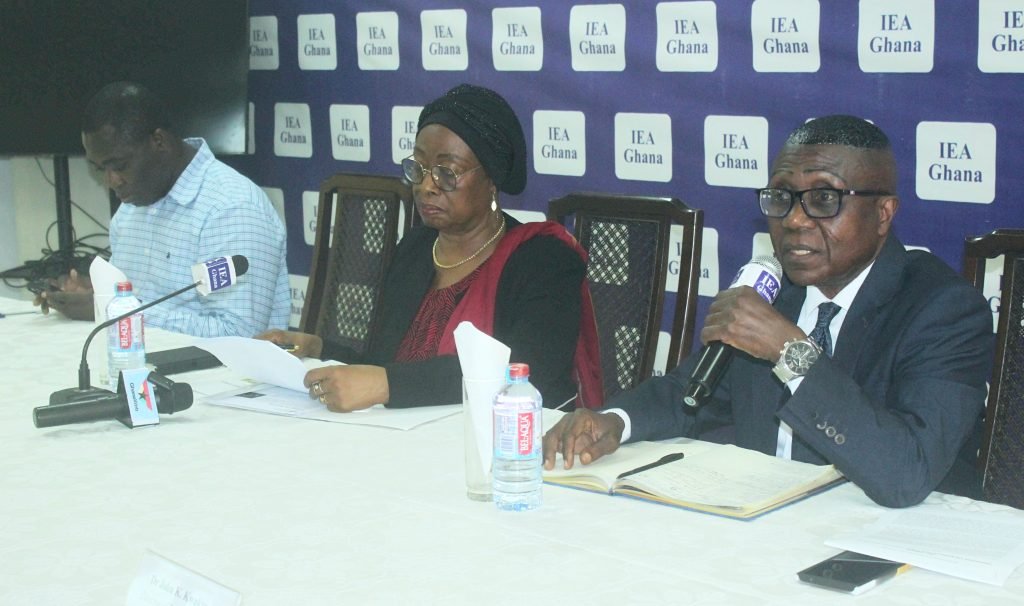
Accra, March 24, GNA – The Institute of Economic Affairs (IEA) has urged the government to promptly reassess all agreements related to Ghana’s natural resources with the aim of maximizing the nation’s benefits from their extraction.
She stated that the evaluation must ensure the nation achieves a minimum return of 60 percent from its natural assets, valued at more than 10 trillion, to aid in the country’s economic shift and reduce its debt load.
Former Chief Justice and IEA Fellow, Justice Sophia Akuffo, addressed this topic during a press conference in Accra on Monday, focusing on “Optimizing the Benefits from Ghana’s Natural Resources.”
She expressed worries about the exploitation of Ghana’s natural resources over several years, due to concession leases that granted sole control to international companies. These entities retained an unfairly large share of the goods and paid minimal sums as royalties and taxes.
The natural resources encompass gold, diamonds, bauxite, iron ore, petroleum, natural gas, cocoa, and timber.
She requested the government to take cues from the United Kingdom (UK), Australia, Qatar, Tanzania, Botswana, Angola, and Eritrea, who examined their mining legislation and agreements to secure up to 50 percent for their national interests.
For instance, in Angola, the Petroleum Income Tax operates under a Production Sharing Agreement with a tax rate of 50% for taxable income. However, operations conducted through different contractual arrangements like consortium agreements face a higher tax rate of 65.75%, according to Justice Akuffo.
The ex-Chief Justice mentioned the UK as an example, where they had a separate corporate tax rate of 30 percent, an additional charge of 10 percent, and a levy of 38 percent on the extraction and production of oil and natural gas.
Likewise, according to Article 41 of Eritrea’s Mining Law Proclamation, the government was permitted to hold an equity stake of up to 40 percent in total, which includes a mandatory participatory interest of 10 percent in any mining venture.
“The moment has arrived for Ghana to terminate its Guggisberg-style agreements that favor international corporations and instead embrace contemporary optimal methods, ensuring that a greater portion of the resource revenue benefits the nation rather than solely foreign mining enterprises,” she stated.
She requested the establishment of a five-person panel consisting of seasoned Ghanaian individuals to examine and suggest revisions to every law and contract related to natural resources. This was aimed at maximizing the advantages these resources could bring to the nation.
The former Chief Justice suggested that Ghana should fully embrace domestically-owned production lines or, at minimum, establish joint ventures between Ghanaians and foreigners in the natural resources sector, which would involve cost-sharing and profit distribution.
Dr. John Kwakye, the Director of Research at IEA, remarked, “Although our nation boasts abundant wealth beneath the soil, it appears impoverished above ground.” He further stated that leaders have not sufficiently leveraged the country’s natural resources to foster national progress.
“More than 10 trillion dollars worth of natural resources could potentially be harnessed if appropriate systems are in place… If you’re unprepared, keep them underground until the necessary expertise and funding become available,” he stated.
Should it require street protests to prompt the government into favoring Ghanaian interests in natural resource agreements, the IAE will be at the forefront.
Dr. Kwabena Nyarko Otoo, the Deputy Secretary General of the Trades Union Congress (TUC), has called upon the government to boldly reassess all laws and agreements to ensure they benefit the nation.
He committed TUC to ongoing collaboration with the IEA and other partners in developing policies aimed at ensuring appropriate changes in foreign ownership and control of Ghana’s natural resources.
GNA
ABD
Provided by Syndigate Media Inc. (
Syndigate.info
).
oleh admin | Mar 24, 2025 | africa, coaching, football clubs, soccer, sports
The assistant coach of Amavubi, Eric Nshimiyimana, stated that his team learned valuable lessons from their recent 2-0 loss to Nigeria and aims to utilize these insights effectively before facing the Lesotho Crocodiles on Tuesday at Amahoro Stadium. This match remains crucial for keeping their aspirations for qualifying for the World Cup 2026 intact.
Rwanda slipped down to third position within Group C following this setback against Nigeria; however, Nshimiyimana believes they gained constructive elements during the encounter which could aid them towards securing victory over Lesotho. Following the defeat to Nigeria, acceptance was necessary. Football involves continuous learning and improvement—we must address certain errors swiftly since our next contest looms closer than expected. Some positive aspects emerged from the previous match, offering us opportunities to enhance performance moving forward. The upcoming fixture versus Lesotho requires an altered strategy compared to prior engagements, according to remarks made by Nshimiyimana during a preparatory media briefing held Monday.
It is imperative now more than ever that every player gives everything they’ve got when confronting Lesotho, aiming solely for maximum point accumulation. Fortunately, all squad members remain physically ready leading up to Wednesday’s showdown. Despite being sidelined owing to amassed cautionary warnings, team leader Djihad Bizimana shall not participate in subsequent play; nonetheless, Coach Nshimiyimana expressed confidence in available alternatives capable of filling the leadership void left behind. Instead, Thierry Manzi steps into command duties as designated captain going forth. Achieving triumph through such efforts places Amavubi firmly in second slot standings with ten total credits accrued thus far.
Provided by Syndigate Media Inc. (
Syndigate.info
).
oleh admin | Mar 24, 2025 | africa, children and families, education, government, politics
An educational food program in Kenya called Food4Education was so impressive that it moved KingLetsieIIIoftheKingdomofLesotho andDr.AkinwumiiAdesanioftheAfricanDevelopmentBankGroupto appeal passionately to governments and business leaders to take greater action against hungerin classrooms.
KingLetsie III and Adesina toured RuiruPrimarySchool, located on the periphery of Nairobi, to see firsthand how what started asa provisional setup in 2012 for just 25 pupils has grown into adaily operation providing healthy meals to 500,000children. Up untilnow, Food4Educationhas served over 100 millionmealsacross 10countiesinKenya.
At present, merely 30 percent of children in Sub-Saharan Africa have access to school feeding programs, underscoring the critical necessity for immediate action and financial support.
Food4Education: A Framework for School Feeding Programs
The concept behind Food4Education was conceived by Wawira Njiru when she was just 21 years old. She established this nonprofit organization with the aim of making a positive impact within her local community.
Following an inspection of the institution’s culinary facilities, King Letsie III and the World Bank Group President put on aprons and headcovers just in time to distribute fresh servings of cooked rice, beans, and fruit to the students. Both leaders partook in enjoying this meal as well.
KingLetsie III and Adesina learned about the significance of theprogram for boosting school enrollment, enhancing educational achievements,promoting job creation, and invigoratinglocal economies.
At Ruiru Primary School alone, Njiru mentioned that enrollment had surged over twofold from 600 to 1,500 students, with attendance also seeing significant improvement as “children are genuinely enthusiastic about coming to school and eagerly anticipate lunchtime.”
Across schools supported by Food4Education in Kiambu County, enrollment has risen by 36.5 percent, whereas in Nairobi City County, which includes the capital city, it has gone up by 22.3 percent.
“Eliminating hunger among school-aged children is not an unattainable aspiration; it’s something we can achieve,” stated His Majesty KingLetsie. “The moment has come for us to take decisive actions and increase investments. We should proceed with haste and steadfast dedication to transform our goals into tangible outcomes.”
Bank Group President Adesina firmly stated that no parent should suffer through the agony of seeing their child cry out of hunger due to insufficient resources. He strongly emphasized the duty of African governments and business leaders to increase investments in both nutrition and education.
The problem concerning malnutrition and stunted growth isn’t merely a societal concern; rather, it’s a matter of leadership and accountability. We must question why, with 65 percent of arable land still available for cultivation in Africa, children continue to suffer from hunger at night. This query came from Dr. Adesina, alongside his spouse, Mrs. Grace Yemisi Adesina.
The next destination for the King and Adesana was the Food4Education facility, which includes both a warehouse and a laboratory. Here, they witnessed firsthand how food samples are tested for quality assurance. During their visit, they saw an automated system organizing products like beans, rice, and various staple grains, as well as employing environmentally friendly methods to store these items safely.
Food is strictly inspected.
The staff organized the packaged grains and cereals.
Njiru stated, “Our journey has been transformative—we had no guidebook or established route; we learned as we went along.” Through a practical methodology, they didn’t merely develop an end-to-end solution; instead, they crafted a model promoting comprehensive reform by enhancing education and nutrition, all while generating employment and chances for the communities they support.
The tour ended at the Giga Kitchen, which is Africa’s biggest eco-friendly kitchen. This facility produces around 60,000 nutritious meals each day through the use of fuel derived from recycled materials as well as environmentally friendly steam-cooking methods.
The aspiration of Food4Education is to provide daily meals for 1 million children in Kenya by 2027, with plans to extend its reach to an additional 2 million children across two extra African nations by 2030.
Food4Education functions efficiently on a large scale through advanced technologies like Tap2Eat wristbands. These enable digital payments from parents while offering precise operational insights that minimize food wastage and keep expenses manageable for families. Each element of this system has been meticulously crafted to serve as a replicable and scalable model throughout the region.
Addressing child malnutrition is a challenge we can tackle with innovative solutions,” Njiru stated. “The cost of hunger for Africa and the global community exceeds what most people understand. It robs our children of their dignity, consumes their potential, and leads to an economic loss equivalent to up to 16.5 percent of Africa’s yearly GDP.
As the African Union’s Advocate for Nutrition and the Bank’s Champion for African Leaders on Nutrition, KingLetsie III and Adesina reinforced their dedication to fostering political support and attracting fundingforthe development ofschoolfeeding programs acrossAfrica.
As we gather here with a shared objective, let’s acknowledge that sustainable school feeding initiatives are more than just interventions—they represent a pledge to foster human capital growth, bolster economic stability, and ensure food safety,” remarked KingLetsie at a press conference following his tour.
The Bank Group President, Adesina, emphasized, “We must start viewing investments in nutrition not merely as an expense, but as a crucial investment in grey matter infrastructure – the growth of human capital, specifically via improvements in nutrition and education, which will propel our economies far into the future.”
Those accompanying Adesina included Dr. Beth Dunford, Vice President of the Bank Group for Agriculture, Human, and Social Development; Kennedy Mbekeani, Director General for the East African Region; and Dr. Victor Oladokun, Senior Advisor to the President for Communication and Stakeholder Engagement.
Provided by Syndigate Media Inc. (
Syndigate.info
).
oleh admin | Mar 24, 2025 | africa, immigrants, immigration, migrants, news
The Chairman/CEO of the Nigerians in Diaspora Commission, Abike Dabiri-Erewa, has revealed that over 956 Nigerians were evacuated from Libya in the first quarter of 2025.
This accomplishment was made possible by the joint efforts of the International Organization for Migration, Nigeria, and the National Commission for Refugees, Migrants, and Internally DisplacedPersons.
A statement released on Monday by NiDCOM’s spokesperson, Abdur-Rahman Balogun, outlined specifics regarding the evacuation. It revealed that the repatriation occurred through six separate flights from January to March 2025. According to this information, the groups included 683 women, 132 men, 87 children, and 54 infants.
As stated, the evacuation occurred on January 28, February 11, 19, and 25, along with March 4 and 18. The largest group of people returning, totaling 176 individuals, was noted for the expedition on March 18.
The statement read: “Hon. Abike Dabiri-Erewa, the Chairman/CEO, Nigerians in Diaspora Commission, says over 956 Nigerians have been evacuated from Libya in the first quarter of 2025 alone.”
“The breakdown shows that 683 of them were females, 132 males, 87 children, and 54 infants. The returnees were brought back home in six tranches from January to March 2025.”
The six journeys encompassed numbers 152 on January 28, followed by 145, 180, and 159 on February 11, 19, and 25, respectively. Additionally, the counts of 144 and 176 were recorded on March 4 and 18.
The statement revealed that more than 15,000 Nigerians have successfully returned home from Libya as part of an ongoing evacuation initiative led collaboratively by the Federal Government and the International Organization for Migration (IOM) since the start of this effort.
Dabiri-Erewa emphasized the commission’s ongoing caution to Nigerians about avoiding illegal migration via dangerous paths such as Libya.
“Given the sensitive political climate in Libya, we repeatedly advise Nigerians to steer clear of using Libya as a route to Europe; this applies not only to Libya but also to other unauthorized pathways,” she cautioned.
She similarly encouraged Nigerians to explore lawful and secure routes for migration, highlighting her worries about the disturbing pattern of certain individuals who have been returned opting to undertake the dangerous trip once more following their rescue.
Dabiri-Erewa reaffirmed the Federal Government’s commitment to safeguarding the rights, dignity, and welfare of Nigerians both at home and abroad.
She highlighted the importance of continuous cooperation with governmental bodies, NGOs, the press, and various stakeholders to enhance public awareness about the risks associated with illegal immigration.
Provided by SyndiGate Media Inc. (
Syndigate.info
).
oleh admin | Mar 24, 2025 | africa, health, healthcare and medicine, medical conditions and diseases, public health
Abu Dhabi
[
UAE
], March 24 (ANI/WAM): Experts from WOAH Collaborating Centre for Camel Diseases, affiliated with the
Abu Dhabi
The Agriculture and Food Safety Authority (ADAFSA) in the
UAE
, has identified one of the potential causes behind the enigmatic condition.
camel
mortality in Ethiopia.
This phenomenon has resulted in significant economic losses and severe social consequences over the past two decades.
The announcement was made during the 26th Conference of the WOAH Regional Commission for Africa, held in Ethiopia from 4-7 February 2025. The event was attended by the Deputy Director-General of WOAH, leading scientific experts, and representatives from various countries and global organisations.
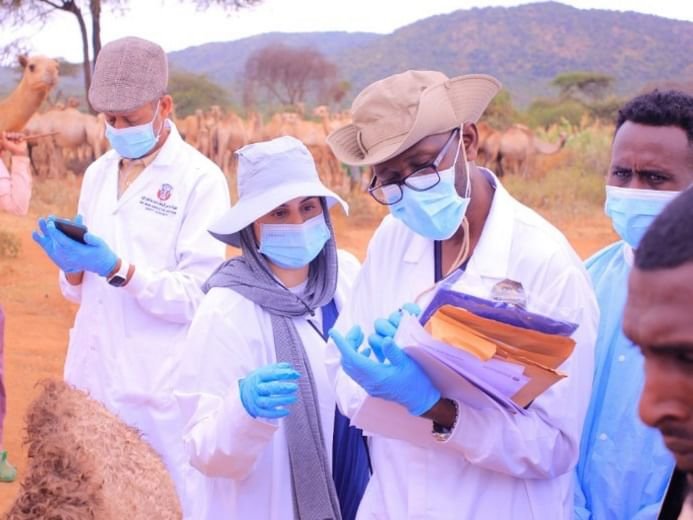
During the conference, ADAFSA team of experts from the WOAH Collaborating Centre of Camel Diseases presented the findings of their field investigations and laboratory analyses, which were conducted in response to a formal request from Ethiopia’s Ministry of Agriculture seeking scientific support in identifying the cause of this enigmatic disease outbreak.
In July 2024, a specialised technical team from WOAH Collaborating Centre for Camel Diseases in collaboration with the Animal Health Institute (AHI) in Ethiopia, conducted a field visit to Ethiopia, where clinical samples were collected from infected
camel
s in Borana zone, southwest of Ethiopia.
The initial lab tests verified the existence of the Wesselsbron virus (WSLV), which is a member of the Flaviviridae family and falls under the genus Flavivirus in the affected individual.
camel
For the first time, this discovery has attracted significant international notice and received considerable acclaim from officials in the impacted nations such as Kenya and Somalia, along with major organizations focused on global animal health.
This achievement reaffirms the
UAE
‘and ADAFSA’s prominent position in backing international initiatives aimed at safeguarding animal health, especially in the
camel
sector, and to boost regional and global biosecurity. It also reinforces
Abu Dhabi
‘s position as a centre of excellence in veterinary research, contributing to biosecurity and food security.
Given these preliminary results, the Collaborating Centre for Camel Diseases, alongside the Ethiopian Ministry of Agriculture, has suggested that future research should focus on the epidemiology of the “Wesselsbron virus” in
camel
s. They also recommend broadening the scope of investigations to include East African countries to corroborate the initial findings identified in Ethiopia.
They also concurred on enhancing analytical methods for carrying out serosurveys in the impacted regions, along with executing field tests to examine the virus’s effects.
camel
In addition to potentially developing an effective vaccine to curb the transmission of WSLV, efforts are currently being made to collaborate with health agencies in Ethiopia. This collaboration involves analyzing human specimens to detect the virus, with the aim of broadening our comprehension of its zoonotic and epidemiological implications through a One Health perspective.
To strengthen global scientific collaboration and enhance knowledge sharing, specialists from ADAFSA visited the Ethiopian Animal Health Institute. There, they set up and initiated confirmatory diagnostic procedures to detect the Wesselsbron virus in the institute’s labs. This effort allowed them to identify the virus in previously stored clinical specimens, thereby corroborating ADAFSA’s findings with further evidence.
Additionally, ADAFSA and Ethiopia’s Ministry of Agriculture are set to sign a Memorandum of Understanding (MoU) aimed at strengthening research capabilities and disease surveillance in animal diseases. The agreement will include collaboration in knowledge exchange and information sharing, joint training programs for veterinary professionals, and collaborative research projects to deepen scientific understanding of
camel
diseases in the region.
This collaboration is anticipated to strengthen biosecurity protocols and boost livestock wellness, providing advantages for pastoral groups reliant on animal husbandry.
camel
s for their livelihoods.
This collaboration reflects the
UAE
Dedication to backing global initiatives for animal health and promoting the One Health concept, which connects human, animal, and environmental well-being to foster sustainable development and enhance biosafety.
Asma Abdi Mohamed, Director of Biosecurity Affairs Division at ADAFSA and Head of the experts Research Team, expressed her pride in this milestone achievement, stating, “Identifying Wesselsbron virus as a possible causative agent of mysterious
camel
The deaths in Ethiopia signify an unparalleled scientific accomplishment. This milestone highlights the proficiency of our Collaborating Centre for Camel Diseases and underscores its capability to deliver scientific solutions that safeguard livestock while improving regional and international biosafety.”
She stated, “Our discovery was facilitated by the diligent work of our research group along with our robust partnership with Ethiopian entities and WOAH. We continue to be devoted to advancing this study to create efficient preventive measures and treatments that protect animal herds.”
ADAFSA continues to be committed to progressing scientific research and enhancing animal disease diagnostics, strengthening its position as a vital participant in international initiatives aimed at curbing pandemics and livestock illnesses.
At ADAFSA, our commitment includes broadening regional and international collaboration via experience sharing, jointly developing training programs, engaging in field research, and implementing a “One Health” strategy to safeguard livestock health and promote sustainable growth. (ANI/WAM)
Provided by SyndiGate Media Inc.
Syndigate.info
).
oleh admin | Mar 24, 2025 | africa, flying, military, morocco, saudi arabia
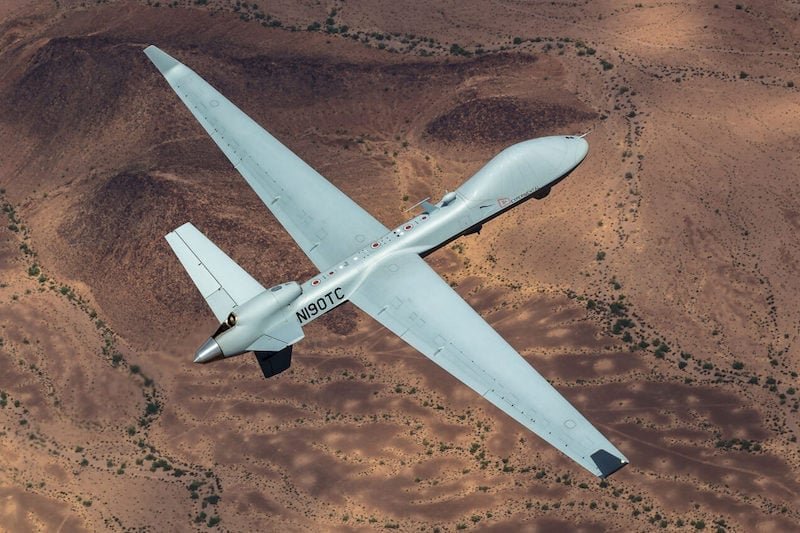
Morocco, in collaboration with the United States and France, is studying the possibility of building an airport in the far south of the Sahara to launch airstrikes against jihadist bases in the Sahel, according to
La Razón
.
The scheduled missions were set to include both drones and fighter jets, aimed at neutralizing extremist factions in the area.
Sources close to the initiative informed La Razón that these air strikes would occur with the consent of the involved nations—namely Niger, Mali, and Burkina Faso.
The goal is to neutralize a growing security threat that poses a risk not only to these nations but also to Morocco, which jihadist groups see as an obstacle to their expansion towards Europe.
Recently, Moroccan intelligence agencies carried out operations in multiple cities, where they discovered a cache of weapons meant for assaults planned by a prominent leader affiliated with the Islamic State in the Greater Sahara (EIGS).
This operation thwarted several scheduled assaults and underscored the escalating security issues in the area.
Supported by French intelligence agency Direction Générale de la Sécurité Extérieure, Morocco’s counter-terrorism unit Office for Counterterrorism thwarted a terror cell active across nine urban centers.
The authorities apprehended 12 individuals and confiscated a substantial stockpile of explosives, advanced weaponry, along with confidential files.
The materials were discovered at an undisclosed logistical facility in Errachidia, close to the Algerian frontier. It is said that this network was headed by the individual overseeing ISIS’s external activities in the Sahara region, tasked with orchestrating several assaults.
A geostrategic expert named Roudani Charkaoui informed LIFEHACKAr previously that extremist organizations view Morocco as a crucial target within their larger strategy aimed at destabilizing the area.
Cherkaoui stated that Morocco acts as the final defense before Europe, being essential in stopping extremist activities from crossing boundaries.
The post
Morocco, the United States, and France are contemplating constructing an airport in the Sahara region aimed at enhancing counter-terrorism efforts.
appeared first on
LIFEHACKEnglish – Morocco News
.


