oleh admin | Mar 30, 2025 | art, artwork, culture, exhibitions, poland
Over 150 pieces such as paintings, drawings, and prints from the 19th and 20th centuries are currently being exhibited in Japan. This collection has been referred to as a ‘treasure trove’ featuring some of the most renowned instances of Polish Modernism.
The exhibition holds significant importance for Polish-Japanese cultural ties. For the first time in the Land of the Cherry Blossoms, it offers an opportunity to display artworks that form the core of our national heritage,” stated Polish Minister of Culture and National Heritage Hanna Wróblewska at the formal unveiling ceremony.
Dr. Andrzej Szczerski, the director of the National Museum in Krakow, where many examples of artisanal crafts are displayed regularly, commented that this event marked “the biggest exhibition of Young Poland’s art ever held in Japan.”
“The numerous audience and media representatives who attended the opening emphasised the artistic importance of the works on display and the significance of the exhibition, showing how the art of Young Poland was able to express both national content and speak the universal language of art,” he said.
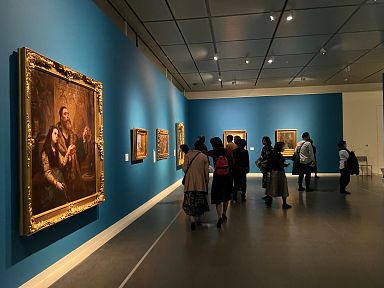
The exhibition takes up the whole floor at MOMAK (The National Museum of Modern Art, Kyoto), and it is organized around various themes that touch upon inspirations derived from nature, history, Japanese culture, and Polish national style.
Polish modernist masterpieces in the center of Japan
“The narrative presented here revolves around Polish history; its opening chapter is depicted through the creations of Jan Matejko and Artur Grottger. However, most importantly, this period is illuminated by the contributions of Young Poland’s artists. During the transition from the 19th to the 20th century, these artists were instrumental in forging a sense of national identity and ensuring that Poland remained prominent and influential within European artistic circles, even when it was absent as a nation-state on world maps,” states the exhibition catalog.
Included among the displays are creations by esteemed Polish artists like Olga Boznańska, Jacek Malczewski, Józef Mehoffer, Władysław Podkowiński, Józef Pankiewicz, and Stanisław Wyspiański.
Among the artworks visitors can enjoy are Włodzimierz Tetmajer’s “The Artist’s Family,” Leon Wyczółkowski’s “Stańczyk,” and Józef Pankiewicz’s “Czeszysta.” Also featured are several works by Jacek Malczewski such as his ‘Portrait of Feliks Jasieński,’ ‘Girl with Chrysanthemums’ and ‘Florists’ created by Olga Boznańska. Additionally, you’ll find pieces like Alphonse Karpinski’s “Jane with a Japanese Doll” along with various paintings from Wojciech Weiss including “Musicians on the Bridge”, “Poppies,” and “Fears”. Lastly, there is “The Bearded Woman” painted by Władysław Ślewiński.
At the MOMAK exhibition, you can also see two previously unexhibited works by Boznanska: “Tulips” and “Mrs. L’s Portrait.” These pieces were acquired during the artist’s lifetime by Magosaburo Oohara, a renowned Japanese businessman, art collector, and benefactor. Today, they form part of the holdings at the Ohara Museum of Art in Kurosaki, Japan, which houses the entirety of Mr. Oohara’s collection.
The ‘Young Poland’ movement – characterized by revolt, liberty, and self-expression
As art historian and founder of the ‘Outside the Frame’ platform, Maja Michalak points out that Young Poland represents a distinctive and highly varied era in painting. Similar to movements like Young Germany or Young Scandinavia, various regions across Europe adopted analogous names for their artistic trends, aiming to highlight the novelty and pioneering spirit inherent in these styles at the time.
“During this period, the hallmark was the expression of defiance, the urge for liberty, and the aspiration to view art from a new perspective. This also enabled them to showcase what mattered most to each individual artist,” explains Michalak.
“The artists focused more on expressing their personal uniqueness by incorporating the multiple overlapping styles from that era: Art Nouveau, Impressionism, Symbolism, as well as Expressionism. Each artist displayed these influences in somewhat distinct manners,” she explains.
The allure of ‘Japonism’ — a passion that bridged two civilizations.
One distinctive feature of the exhibition in Kyoto is the chance to explore how Japanese aesthetic principles impacted Polish artists over a hundred years ago.
Michalak points out that we must discuss the prevalent Japonisme during this period, an intense attraction to East Asian artistic styles, which captivated many artists. They incorporated various aspects like fans and kimonos—items being brought over and depicted in their works—as well as themes such as dragonflies and peacocks, symbols closely linked to Asian traditions. Additionally, they adopted compositional techniques involving diagonals and increased asymmetry, concepts borrowed from Japanese woodblock prints.
Urszula Kozakowska-Zaucha, the curator of the Kyoto exhibit, highlights the significant contribution made by a prominent Polish art critic and collector toward introducing Japanese art to Poland: “These exceptional artworks are displayed alongside Japanese woodblock prints, illustrating the connection between Polish art and Japan. A key figure featured prominently in this exhibition is Feliks ‘Manggha’ Jasieński, an influential art collector whose personal collection merits its own segment. His enthusiasm for gathering such pieces and his close ties with the Young Poland artists from Kraków helped popularize Japonisme within their circle.”
Jasieński gathered exemplary pieces of Japanese art for his collection, making these works accessible to artists who could borrow them when needed. Ultimately, in 1920, he contributed his complete art collection to the National Museum in Krakow.
He also enlisted artworks from artists influenced by Japan, whom he adored, notes Michalak. The pairing of Young Poland and Japan in this exhibit is intentional. This arrangement could facilitate interaction between the Japanese audience and these pieces since they would recognize cultural components familiar to them.
‘Girl with chrysanthemums’ – the symbol of the exhibition and Boznanska’s renaissance
The promotional materials for the exhibition showcased Olga Boznańska’s painting ‘Girl with Chrysanthemums,’ which stands out as one of the era’s most renowned pieces from the Young Poland movement. This selection appears intentional—Boznańska enjoys renewed acclaim after her passing, and her nuanced, introspective portraits resonate well with modern audiences. Notably, within the animated promotion for the exhibit, the once somber young girl depicted in the artwork now beams joyfully.
Olga Boznańska stands among those female artists who dedicated their entire lives to artistic creation,” says Michalak. “She sought equal chances for creativity just like men do and wished to receive similar treatment from society.” The art critic further notes, “Her career was her top priority, showcasing her strong resolve in this pursuit.
Boznańska lived primarily in Paris, where she gained significant recognition for her emotionally charged portraits that were rich with psychological insight.
“The style of painting is highly distinctive and symbolic of Boznańska’s work. Her skillful technique captures an intimate closeness to the subjects depicted, infused with deep emotional resonance. This approach can be likened to how the Baroque painter Diego Velázquez wielded his brush; indeed, Boznańska drew inspiration from him as well as contemporaries like Édouard Manet, James McNeill Whistler, or Berthe Morisot. Such psychologically nuanced portraiture is quintessential to Olga Boznańska’s legacy,” explains Michalak.
“Generally speaking, I believe that the period known as Young Poland represents one of the finest eras in our country’s artistic history, particularly within Polish painting,” states Michalak. “This era boasts an impressive array of artists whose work is captivating both for its historical significance and the messages they sought to communicate, as well as for its aesthetic value and visual appeal. Be it works by Boznańska, Pankiewicz, Mehoffer, or Ślewiński—these masterpieces exemplify exceptional artistry. In my view, such talent ought to serve as our nation’s cultural ambassador and become synonymous with high-quality Polish paintings internationally.”
The exhibition titled “Young Poland: Polish Art 1890-1918” will remain open in Kyoto up until June 29th.
oleh admin | Mar 30, 2025 | architecture, art, art history, paintings, visual arts
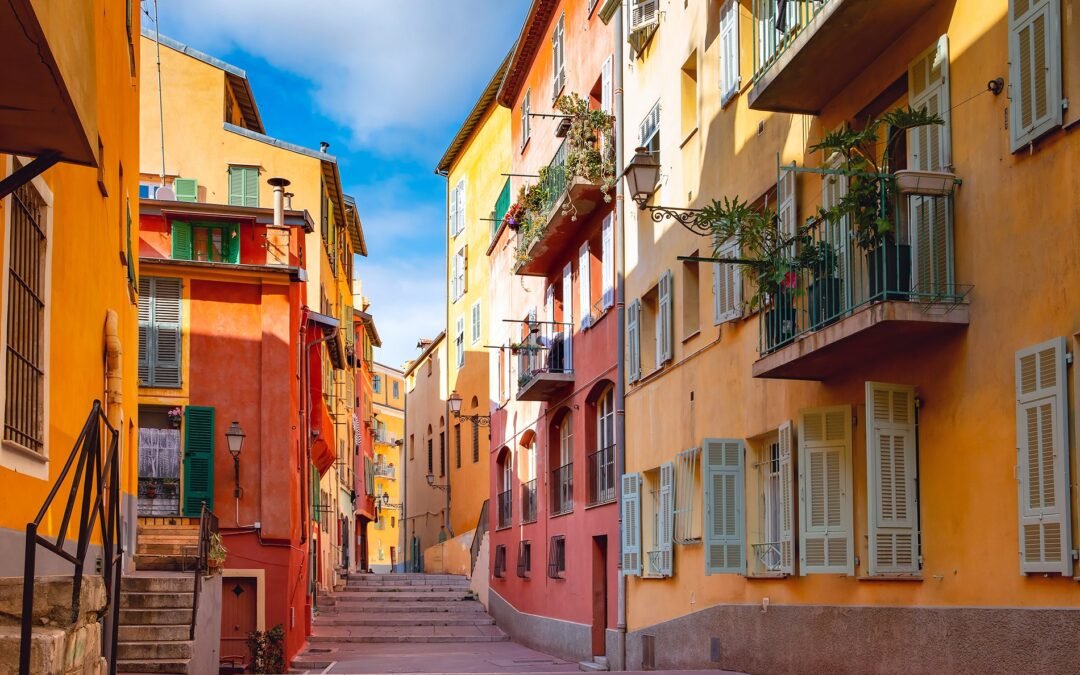
The distinctive Mediterranean architecture of the French Riviera, featuring its pale façades, along with its alluring coastal views, has long served as an endless muse for artists across numerous centuries. These five artworks beautifully encapsulate the spirit of this cherished shoreline.
Apart from its visual charm, the
French Riviera’s coastline
Has served as a key theme for artistic investigation, encouraging artists to examine its particular aspects of lighting, color, and the area’s unique way of life.
Heading to the French Riviera? You might want to check out these articles:
-
The Most Beautiful Natural Parks Between Marseille and Nice on the French Riviera
-
The loveliest coastal villages to explore along France’s Côte d’Azur
-
Great: A comprehensive guide for enthusiasts of art and architectural designs
Henri Le Sidaner’s ‘View of Villefranche Bay’ from 1924
Henri Le Sidaner was drawn to the captivating ambiance and soft lighting of Villefranche-sur-Mer when he painted this piece during his latter phase. His aim was to depict the lyrical and serene quality of the bay, highlighting an aura of gentle seclusion. This can be seen in his developed technique, marked by fine, intricate strokes and a muted color scheme, employed to illustrate the dance of light and shade over both the waters and the architectural elements of the town.
“Afternoon Light in Antibes” by Claude Monet (1888)
Claude Monet’s
The artworks from Antibes that he produced in 1888 stand as evidence of his skill in depicting the fleeting impacts of light upon the Mediterranean scenery. Focusing on the area’s vivid brightness, Monet employed bold, heavily layered brushstrokes to capture the essence of the sun-soaked environment. Through these works, Monet delved into how light and color interact with Antibes’ historic structures, nearby rolling hills, and the vast expanse of water around them.
“The Red Buoy” by Paul Signac (1895)
“The Red Buoy,” created around 1895 by Paul Signac, exemplifies his Neo-Impressionist style. This artwork is crafted with painstaking precision using tiny, individual dots of color, highlighting Signac’s skill in pointillism. The vibrant red buoy at the center draws attention amidst the harbor setting, which employs thoughtfully selected shades to evoke a feeling of light and dimensionality.
Henri Matisse’s ‘Perspective of Saint-Tropez’ from 1904
Created during the summertime in 1904, while closely collaborating with Paul Signac, this piece showcases Matisse’s brief involvement with
Pointillism
The harbor scene is vividly depicted using lively colors, particularly the blues of the sea, the greens of the surroundings, and the warm yellows and oranges that reflect the Mediterranean sunshine. This artwork encapsulates the spirit of Saint-Tropez through its portrayal of boats, structures, and the radiant lighting effects, executed with an increasingly evident freedom in technique.
“The Promenade des Anglais, Nice” by Raoul Dufy
(1927)
Created around 1927, the piece vividly portrays the bustling ambiance of the walkway through vibrant hues and energetic strokes. It presents itself as an animated setting teeming with people basking under the sun as they meander near the water’s edge, relishing expansive ocean views and the radiant glow of the Mediterranean sunlight. Characteristic of Dufy’s artistic approach—marked by streamlined shapes and shallow depths—the painting exudes vitality and motion, adeptly encapsulating the essence of life in this beachfront town.
oleh admin | Mar 28, 2025 | art, artwork, performing arts, visual artists, visual arts

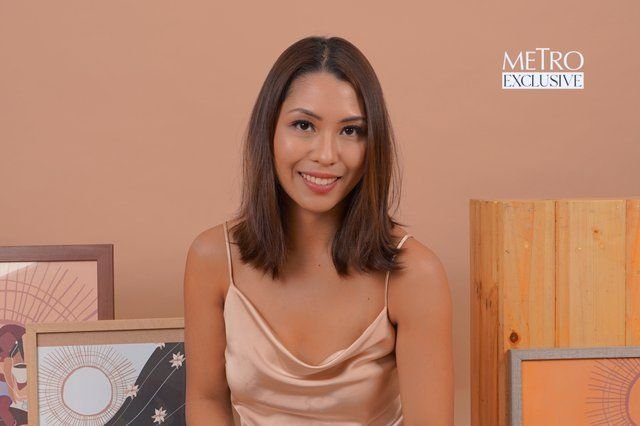
Each great work of art starts with one brushstroke, and every stroke conveys its own significance. While some painters depict what they observe, others express their emotions through their artwork.
Grancinha “Inha” Arceo
accomplishes both—giving birth to a universe where feelings materialize as potent movements, vivid blossoms, and profoundly intimate stories.
What began as a pastime has transformed into a globally acknowledged art form. Having delved into painting throughout the pandemic, this Filipino artist has showcased her creations in Monaco and Madrid. She is now gearing up for a major achievement: her first solo exhibit in Manila, entitled “
Break Free
.“
Taking place from
March 31
to
April 13
at
RiseSpace Art Gallery
This exhibition transcends her artistic creations; it stands as a declaration of liberty and genuine self-expression.
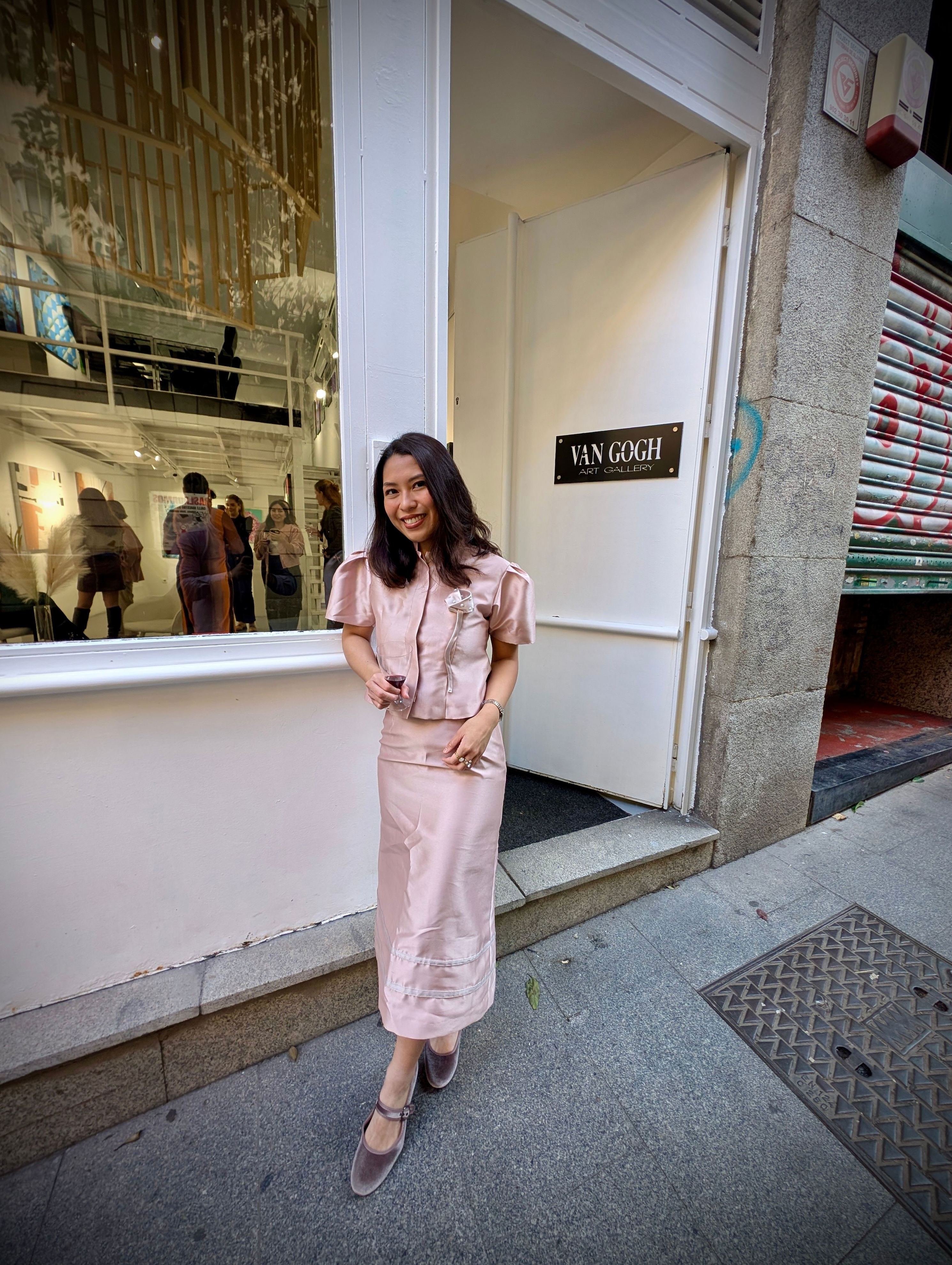
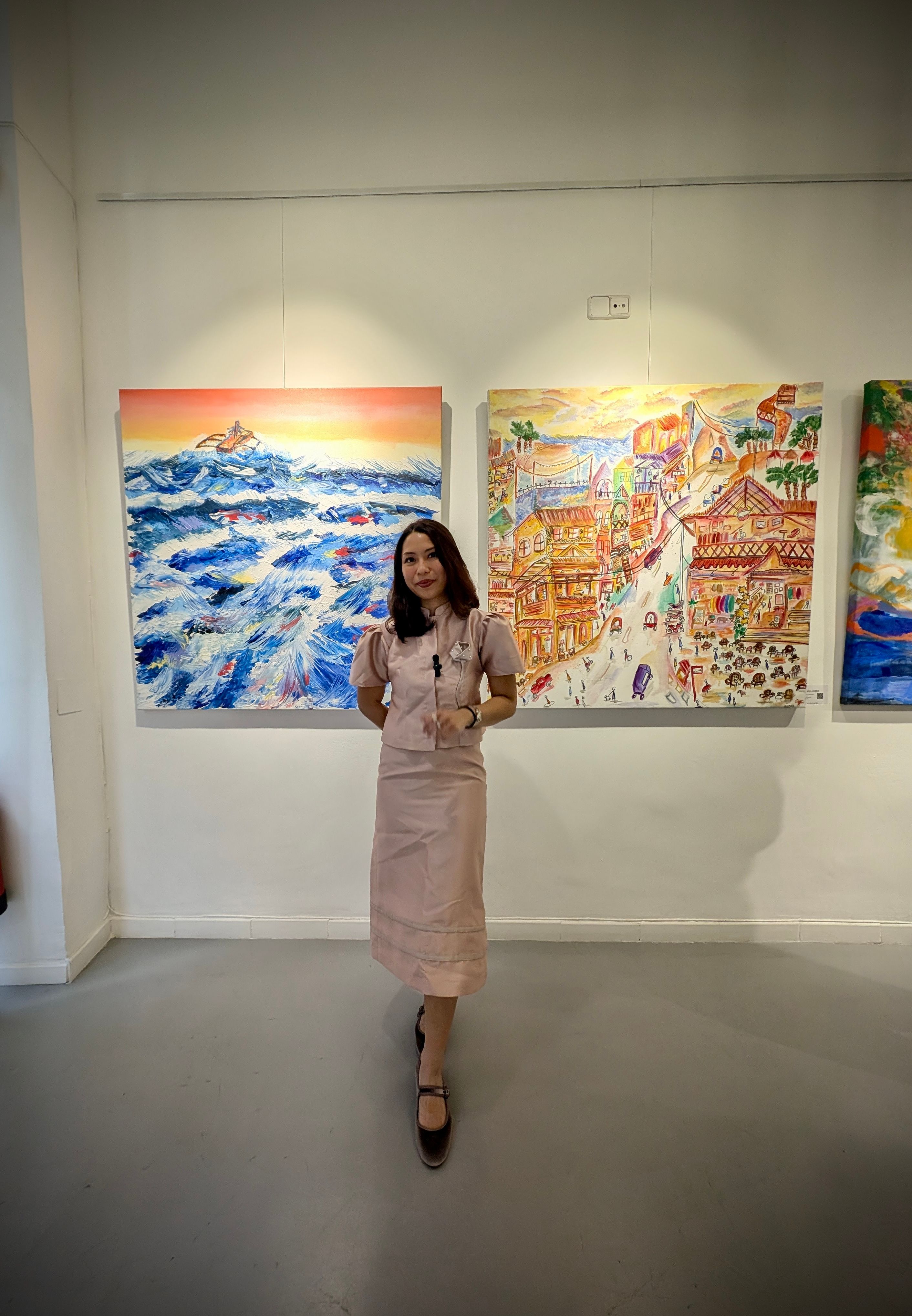
Inha Arceo at the Madrid Art Show 2024
Breaking free
“In this exhibition, every section represents my individual story. My aim was to welcome spectators to revisit their personal paths and embrace all the beauty as well as perhaps the less attractive aspects of themselves. This would help them liberate themselves,” she explained.
Metro.Style
Through her creations, Inha encourages both herself and those who view them to embrace their authentic identities without holding back.
The motif of freedom runs through her art, reflecting her discovery of how to convey the playful aspect of her imaginative mind. “I experiment extensively with various hues since I aim to capture that daring spirit of bravery, embracing comfort within myself,” she stated. In this way, every creation serves as a vibrant homage and mirrors her artistic development too.
For Inha, painting acts as a healing mechanism, offering an environment where she can convey her feelings and innermost reflections free from criticism. She stated, “I believe making art fosters a kind of mental liberation, which means being able to produce work without limitations. This practice not only alleviates my stress and worries but also enhances my personal confidence.”
“It essentially provides a secure platform for creativity. Art enables individuals to convey their personal feelings and stories, particularly those which may be difficult to put into words,” Inha mentioned additionally.
Her works often explore the theme of breaking free from oppressive norms and grappling with personal psychological challenges. Painting serves as an escape for her, particularly during times when feelings overwhelm her; she expresses this sentiment: “Honesty and vulnerability have truly provided me with a sense of release, which I believe comes through in my art.”
Inha characterizes her artwork as a sequence of everyday metamorphoses, emphasizing that development usually stems from minor, incremental alterations instead of dramatic upheavals. “Most times, it isn’t about significant shifts. Rather, it’s these subtle day-to-day adjustments within me—these tiny internal evolutions—that make me feel more positive.”
[[PHOTO ALBUM]]
Regarding her development as an artist, distinctive aesthetic, and creative approach
Inha’s artistic heritage runs profound. Drawing motivation from the works of her deceased great-grandfather and grandfather—both accomplished painters—it was not until 2020 that she committed herself fully to pursuing painting seriously.
“I previously worked in the corporate world for a decade. Starting in 2020, I managed to build my career as an artist alongside my corporate job. It wasn’t until last year that I decided to leave completely. Thus, yes, I launched my own venture, and during the pandemic, I successfully sold artwork promoting self-love and authenticity,” she said.
After five years, Inha has become a dedicated artist with approximately 446 unique pieces under her belt, along with various commissioned works. Her hobby swiftly evolved into a flourishing profession.
When prompted to select a preferred piece, Arceo paused and remarked, “Picking a favorite is incredibly difficult since each work I created for this exhibition holds a distinct narrative or represents another stage in my life. So, opting for only one feels akin to selecting merely an element of who I am.”
However, she acknowledged a particular affection for ”
Bottled Up Emotions
“A pre-sold collection of artworks. These paintings depict a figure dressed in traditional Filipino attire with an unemotional facial expression; however, upon closer inspection, one can see a whirlwind of emotions ready to erupt from within. This truly embodies the concept of suppressed sentiments.”
The multi-talented modern-day artist feels she has cultivated a distinct artistic approach through the years. She explained, “Throughout recent years, my investigation into various subjects keeps focusing on strong human feelings and encounters—many of these being deeply personal.” Often, she senses that her creations have evolved as reflections of herself and her inner world.
Her artwork stands out due to its lively hues and dynamic strokes, with striking images of women taking center stage. These depictions embody concepts such as self-acceptance, recovery, and optimism.
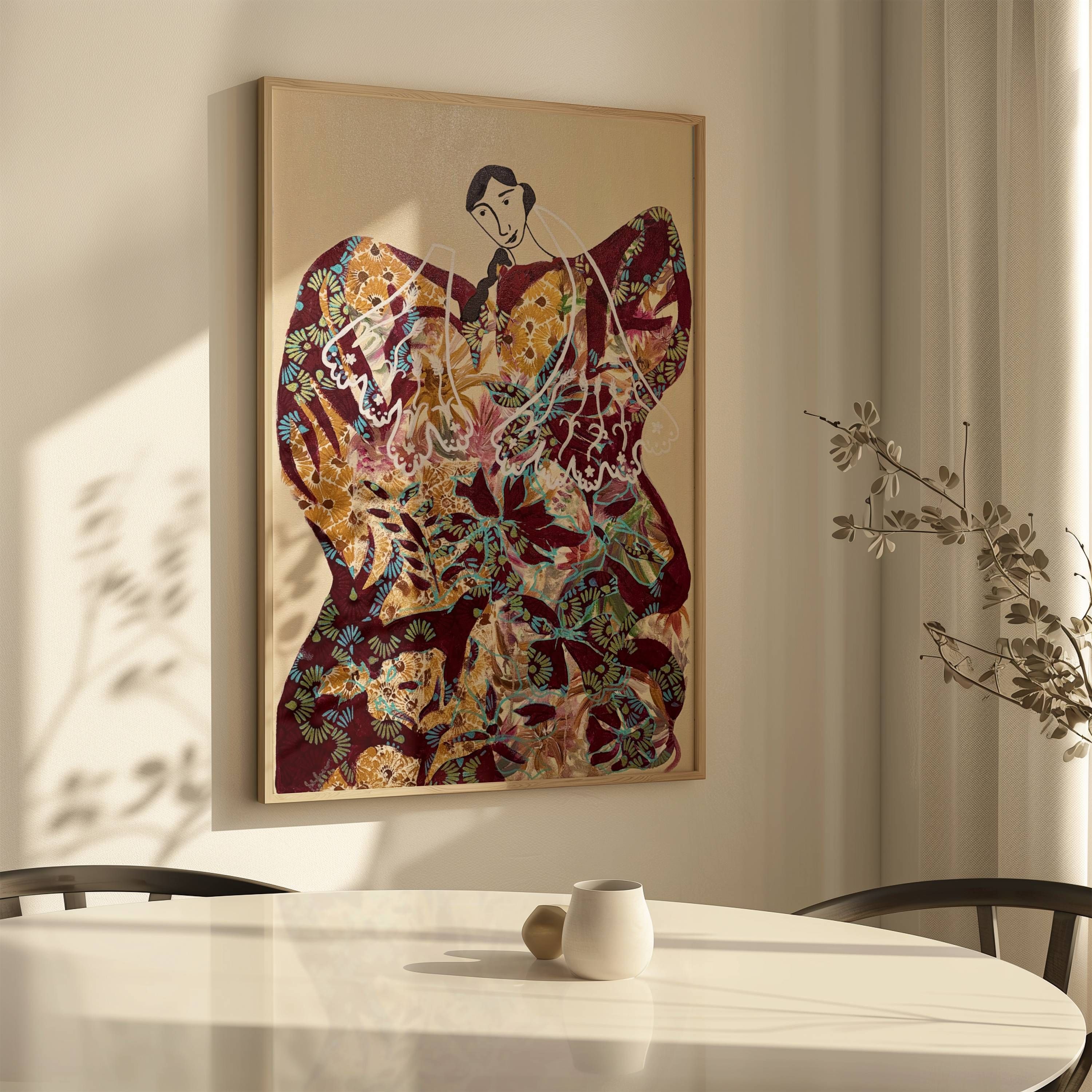
“Bottled Up Emotion” – Ginhawa
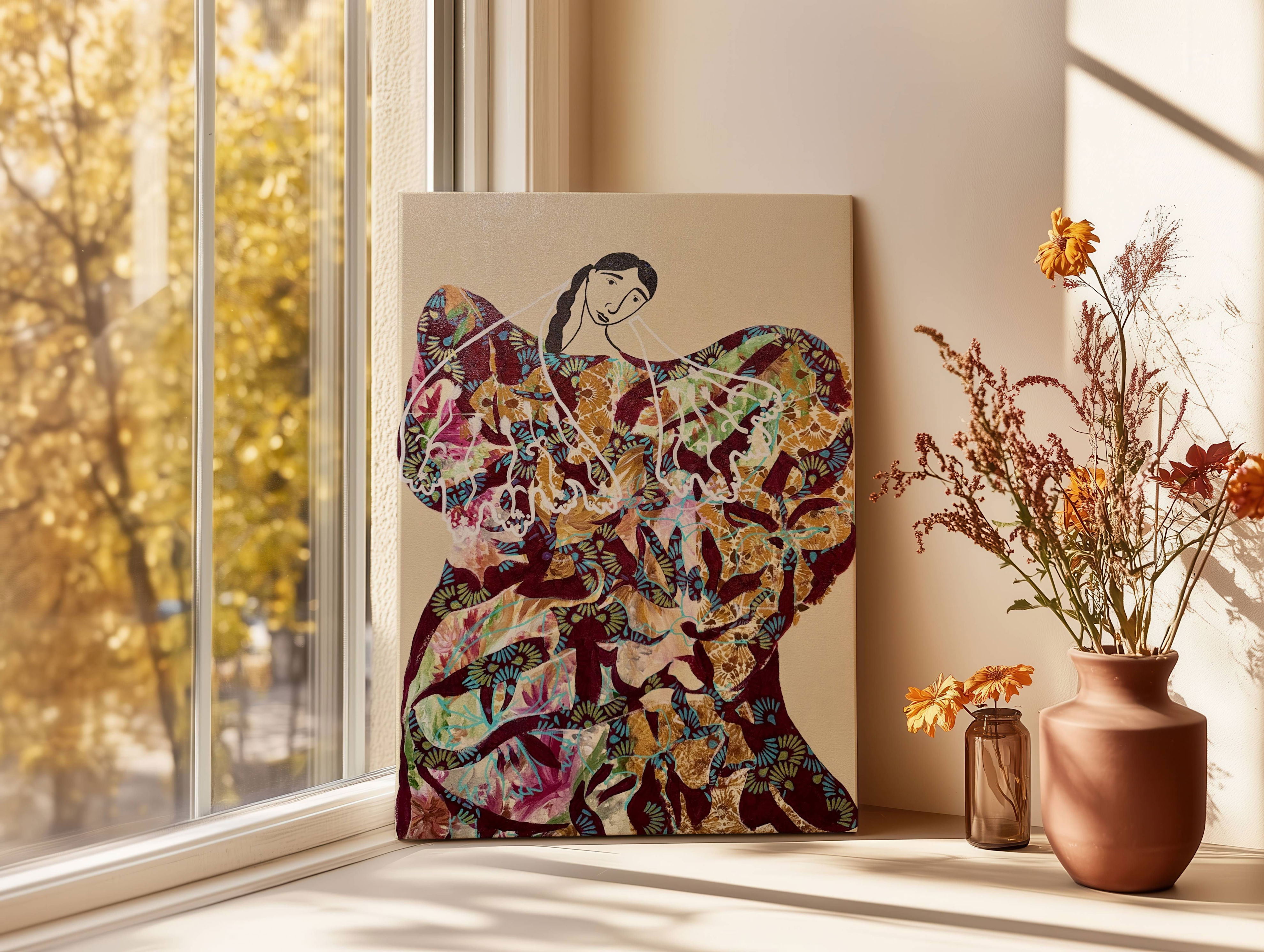
“Bottled Up Emotion” – Alalang Alaya
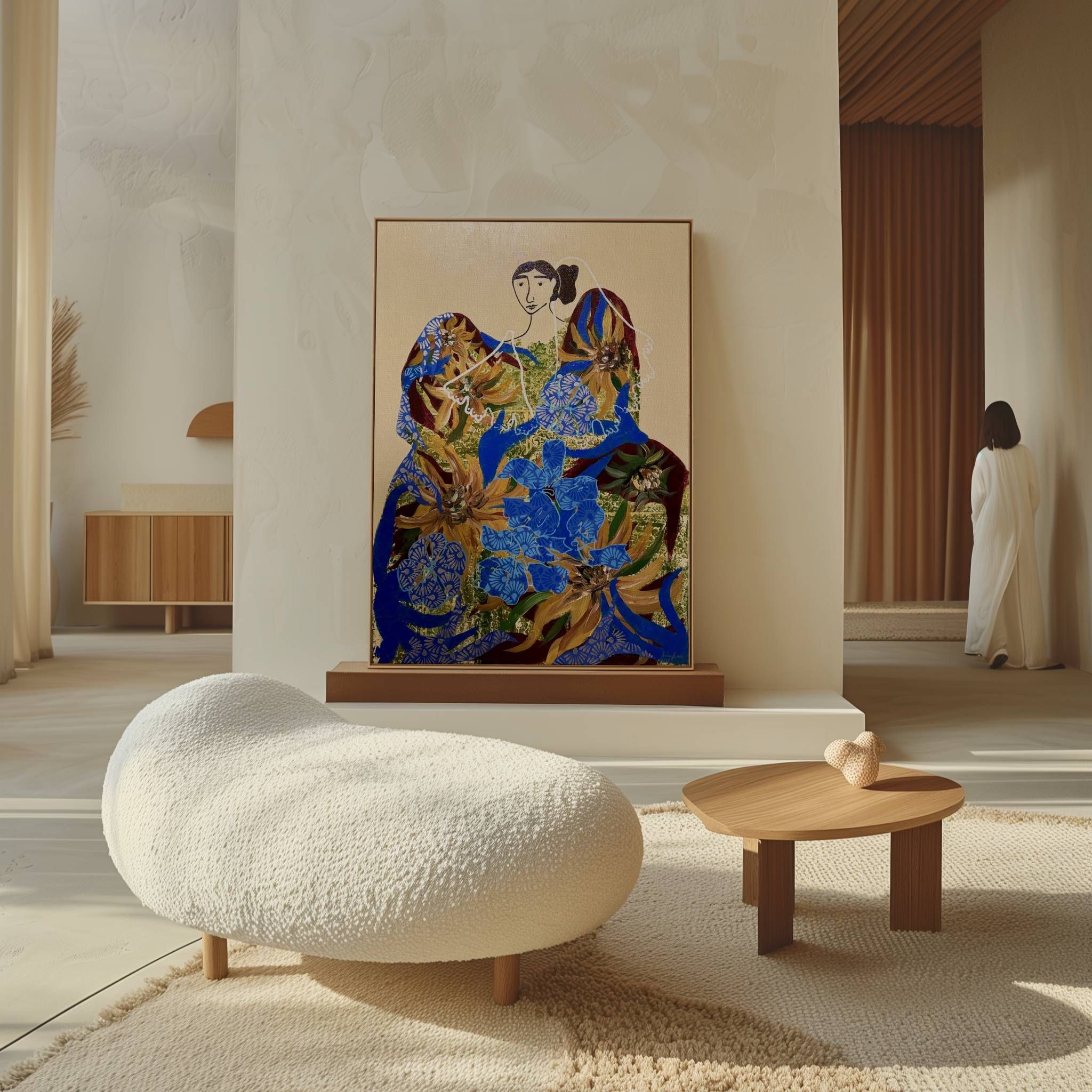
Lungkot Lilit Ngunit Nakakabigay ng Hangin – Bottled Up Emotion
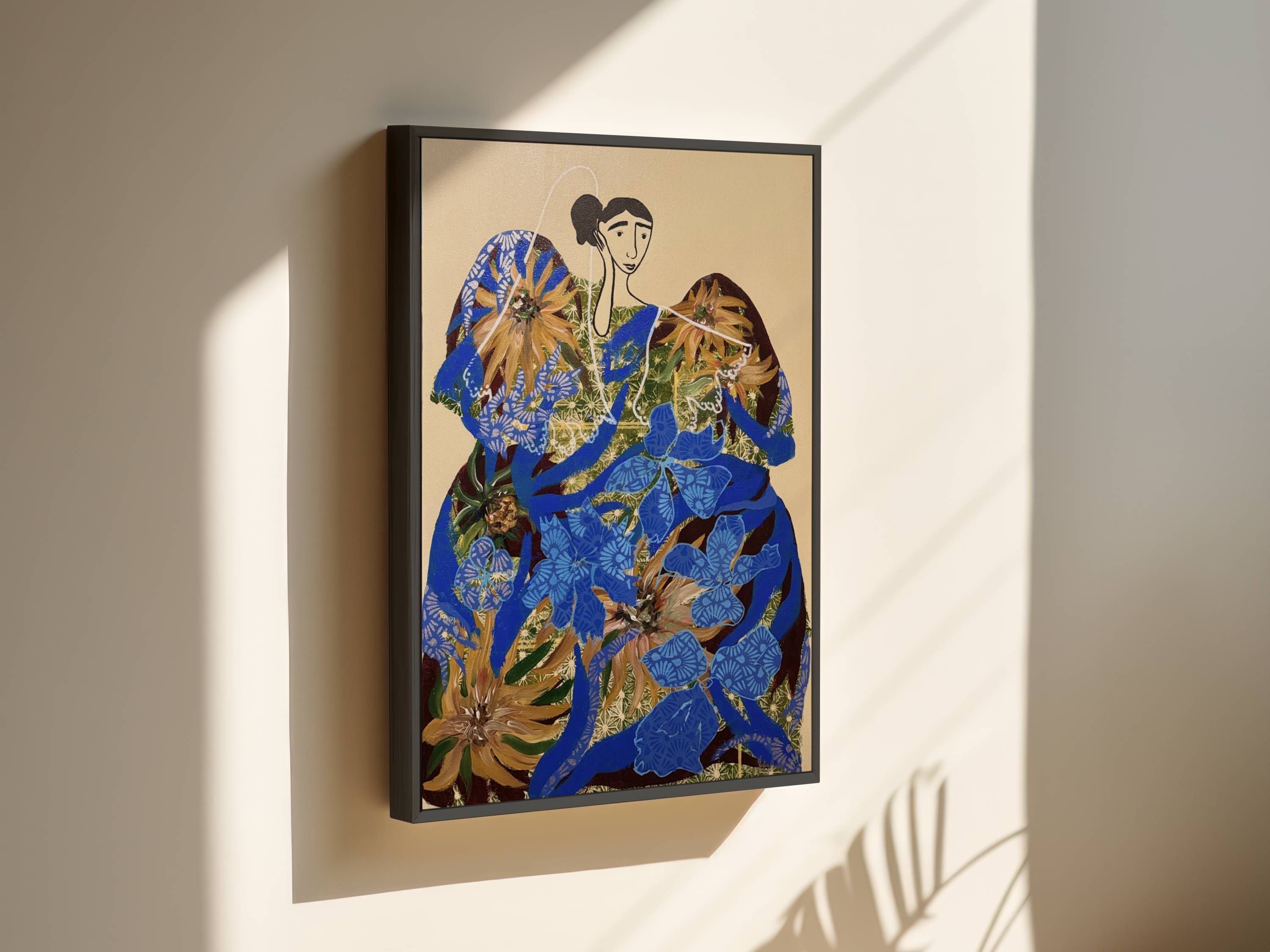
Naglaon ang Damdamin – Gulat
I possess a lively range of colors too. This is reflected in my flower paintings, which convey optimism and happiness,” said Inha. Among these, sunflowers feature prominently in numerous pieces she’s created. She added, “It’s really about the color; yellow specifically caught my attention. Since then, it has had a profound impact on my creations.
Inha acknowledges the importance of storytelling in art: “As for me, values can also turn into really strong stories that people can relate to. I think that’s very important, especially since, you know, who buys your art at the end of the day? I guess someone who actually relates [to] you and resonates with the kind of work that you do.”
When asked about her creative approach, Inha draws inspiration from the straightforwardness of daily existence. Women and flowers frequently emerge as key motifs in her work, evoking strong feelings for her and enabling her to forge an emotional connection with viewers across different backgrounds.
“I believe that individuals can connect deeply with my work in this regard. Perhaps it helps them come to terms with their own lives. Occasionally, I receive feedback such as, ‘Seeing your artwork makes me feel better.’ This fills me with great motivation as an artist,” she said brightly.
“I’m equally motivated by how my artwork can make others feel better once more. Beyond just being driven, it feels as though I’m crafting something almost magical, particularly through artistic expression. This allows me to achieve a deeper sense of fulfillment,” she mentioned additionally.
Inha mainly focuses on working with acrylics, utilizing brushstrokes to generate expressive textures. For custom orders, she explores watercolor mediums as well. To broaden her creative methods, she integrates digital resources such as the Gelli plate along with her iPad into her process.
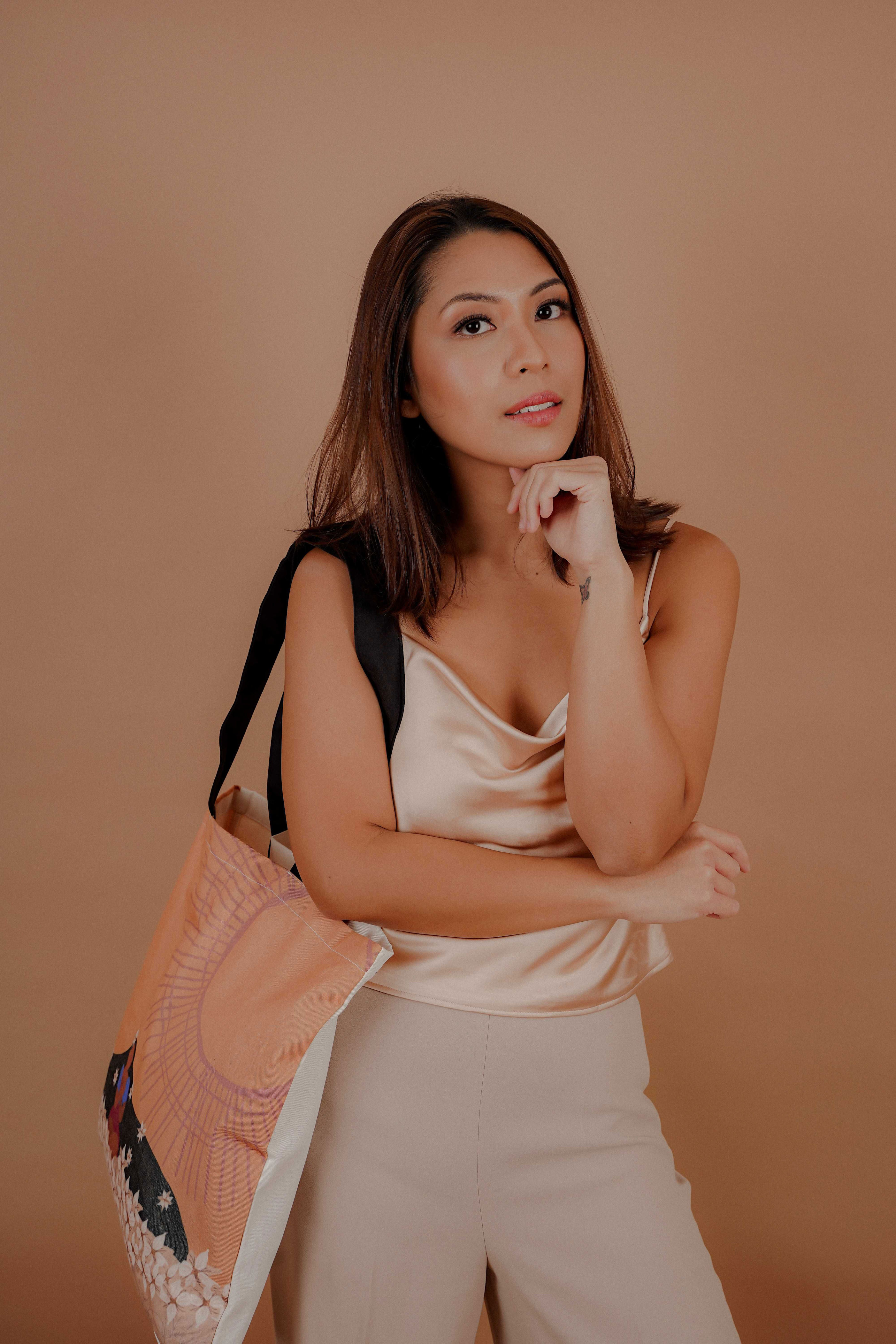
Global acknowledgment, valuable insights, and upcoming ambitions
Inha’s travels have led her around the globe via participation in collective shows in Monaco and Madrid.
“The Monaco International Art Fair is indeed one of the largest art exhibitions in all of Europe. It took place back in August 2024. My displayed works were presented virtually—primarily pieces from my series inspired by self-love,” she reminisced.
Last October, she took part in a contemporary exhibition in Madrid with artists hailing from numerous countries. She mentioned, “It was here that I encountered a variety of artists and art collectors along with diplomats representing several organizations linked to the global arts community.”
Exposure to international art scenes has influenced her current work: “That is why I think in terms of perspective, I was able to develop more openness to kinds of styles that I wanted to introduce into my current exhibit this coming March 31. It was a learning experience for me and definitely an eye-opener.”

Her piece, “
General Luna, Siargao
A four-foot-by-four-foot acrylic piece served as a centerpiece at her global exhibitions. This artwork, steeped in Philippine heritage and national identity, attracted considerable interest and resulted in several commission opportunities for her.
“I aimed to highlight more Filipino artworks within the global contemporary landscape, something that really intrigues many Europeans. As quoted by my Spanish curators overseas, they often mention how audiences get enthusiastic whenever a Filipino artist exhibits their work,” she explained. “So this is great news for our nation. I feel incredibly proud to be Filipina.” She also emphasized that the focus should extend beyond merely increasing sales; rather, it’s crucial to represent the country effectively through these artistic endeavors.
Inha acknowledges her contemporaries in the art community for their significant impact on her journey. By engaging in discussions with seasoned professionals who specialize in exhibitions, she has acquired crucial knowledge about maneuvering through the intricacies of the art field. Beyond mere business connections, these exchanges have blossomed into sincere friendships, forming a robust support system that encourages creative development.
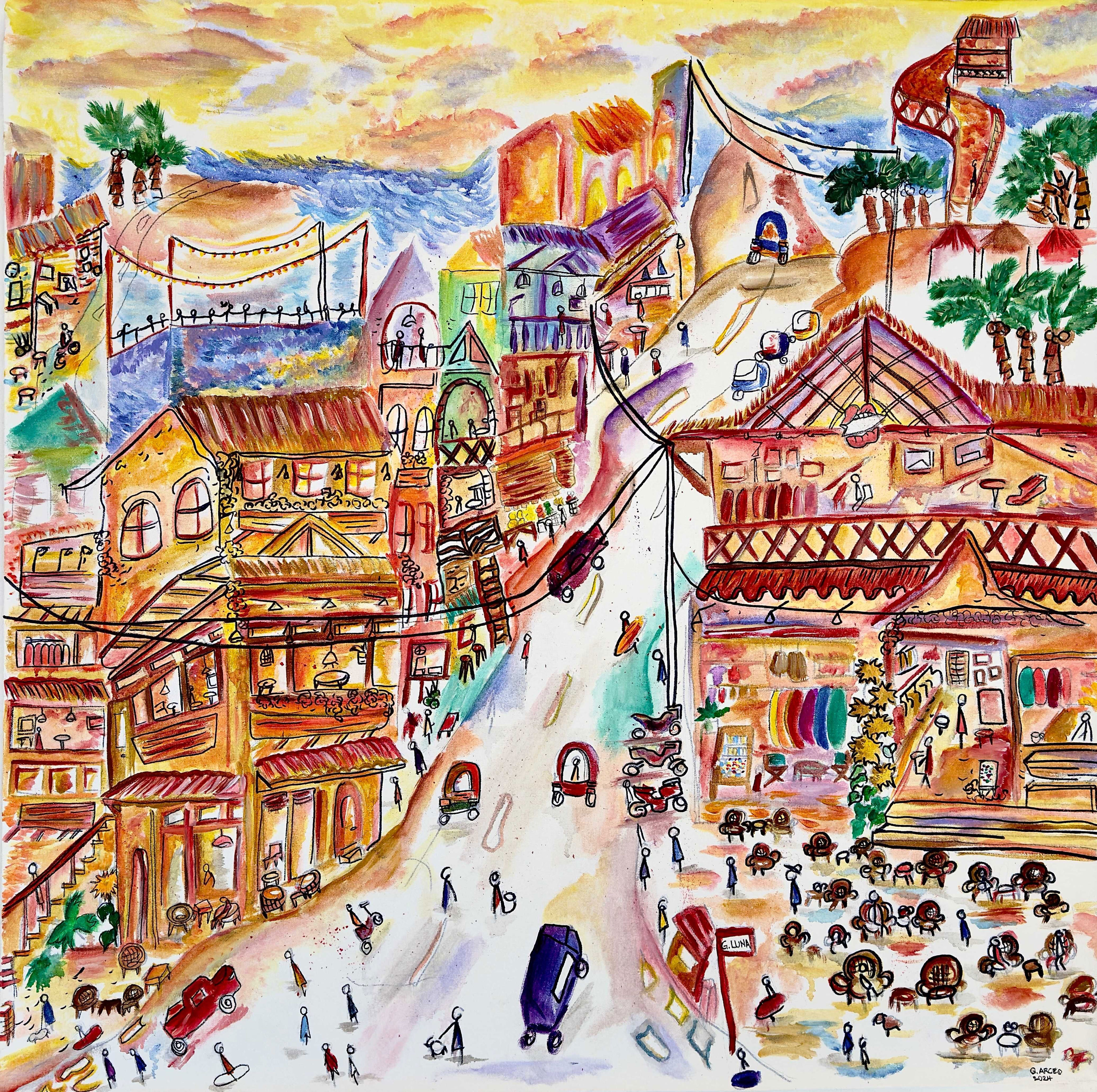
General Luna, Siargao
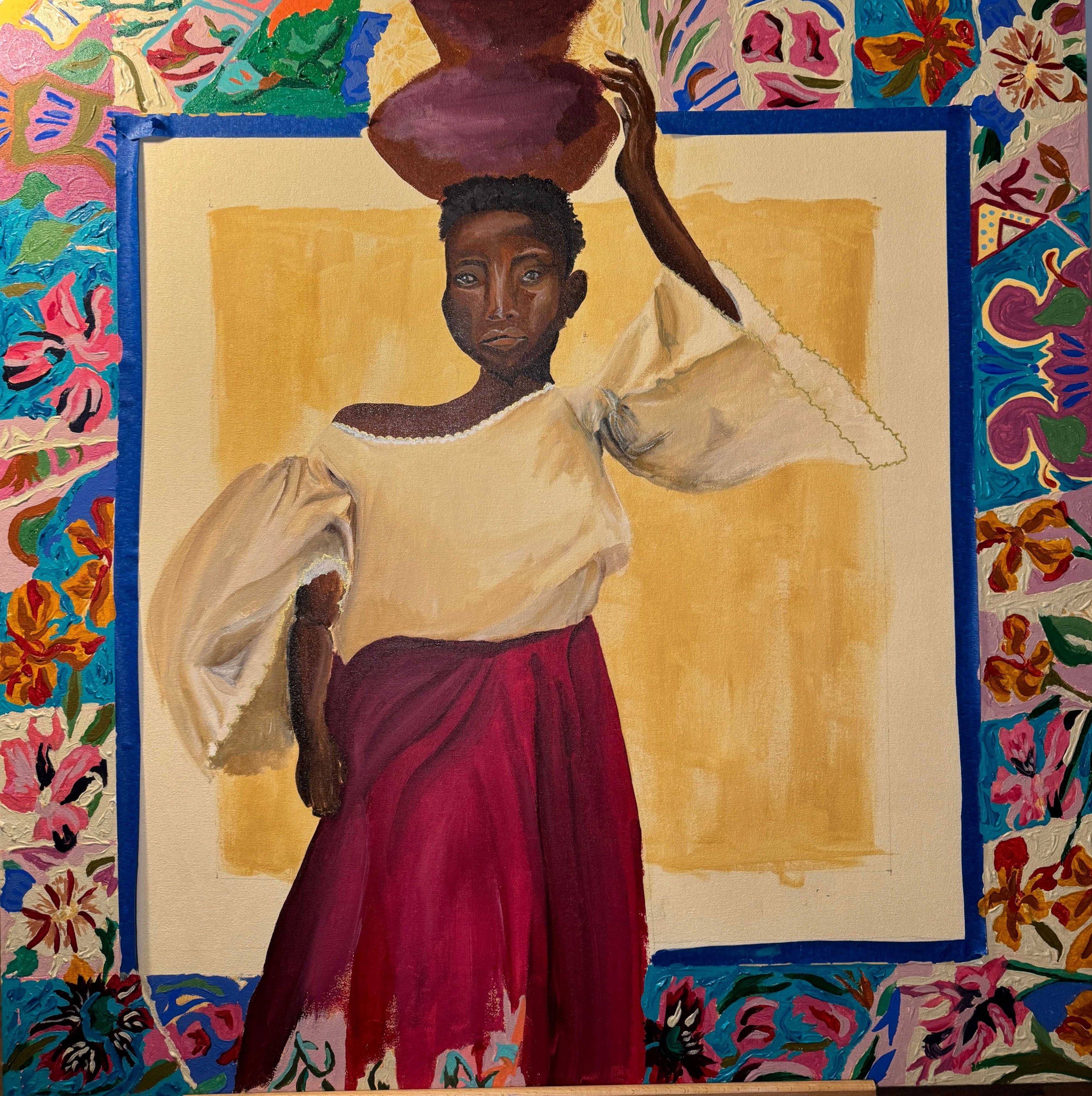
Filipina – Buhat (WIP)
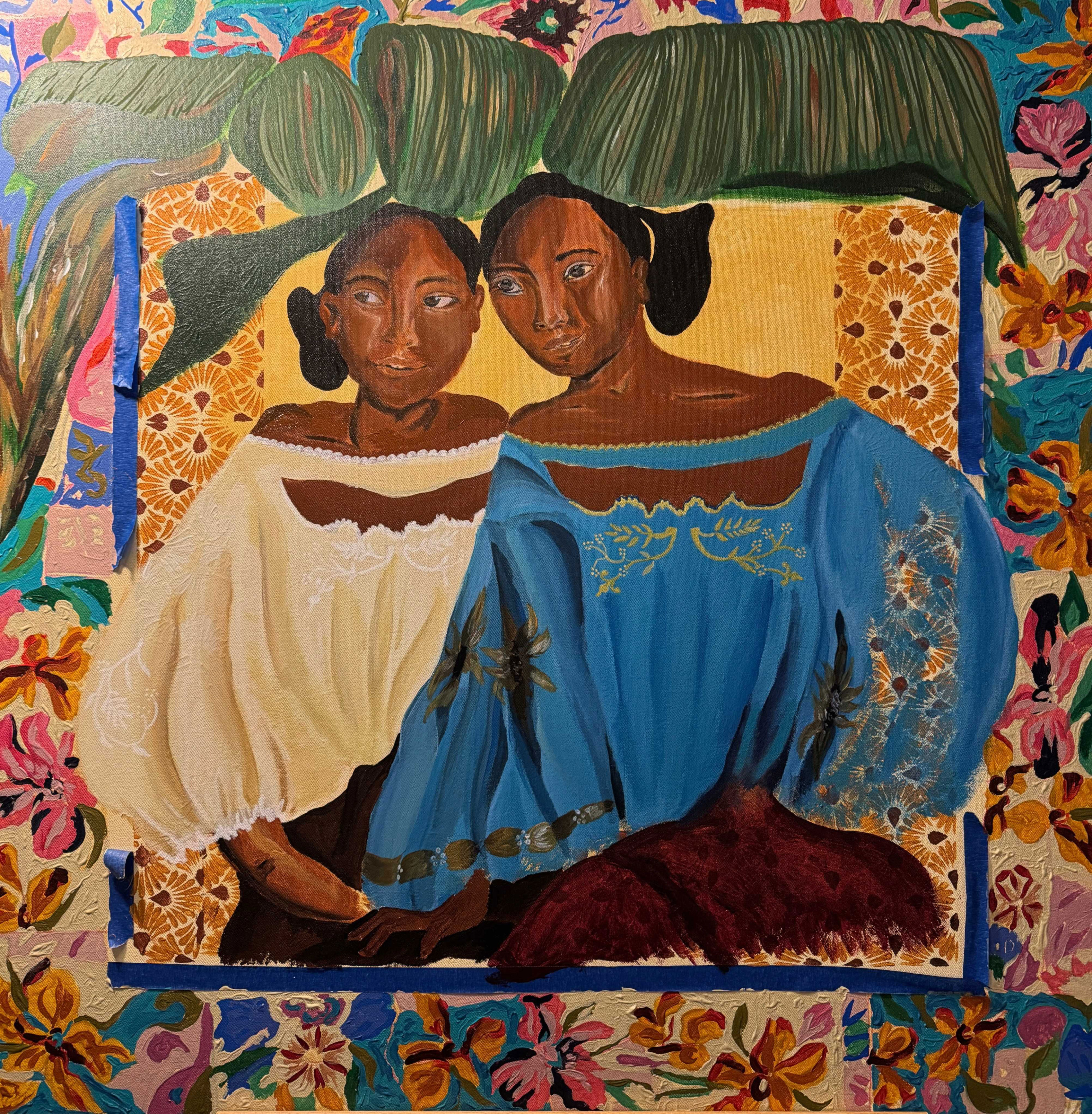
Filipina – Kwento (WIP)
“I’ve worked with several colleagues whom I often converse with. They too are artists and possess far greater experience than myself regarding the exhibition circuit, yet we developed a close friendship over time. Many of these individuals are grounded and approachable; thus, learning from their personal journeys has been quite beneficial,” she mentioned.
Apart from benefiting from peer mentoring, she has gained valuable insights through interactions with gallery curators. She emphasizes how these encounters have been particularly influential both within the Philippines and internationally. One key moment came during her visit to Madrid, Spain, when she engaged with experts from various art disciplines.
She pointed out that being exposed to various curators with differing artistic styles has greatly influenced her perspective on conceptualizing ideas and exhibitions, which indeed requires a significant amount of effort.
Inha pointed out that one of the major misunderstandings regarding artists is believing that bringing a creation to life is the toughest aspect. Actually, she believes that developing the concept usually takes more effort and time.
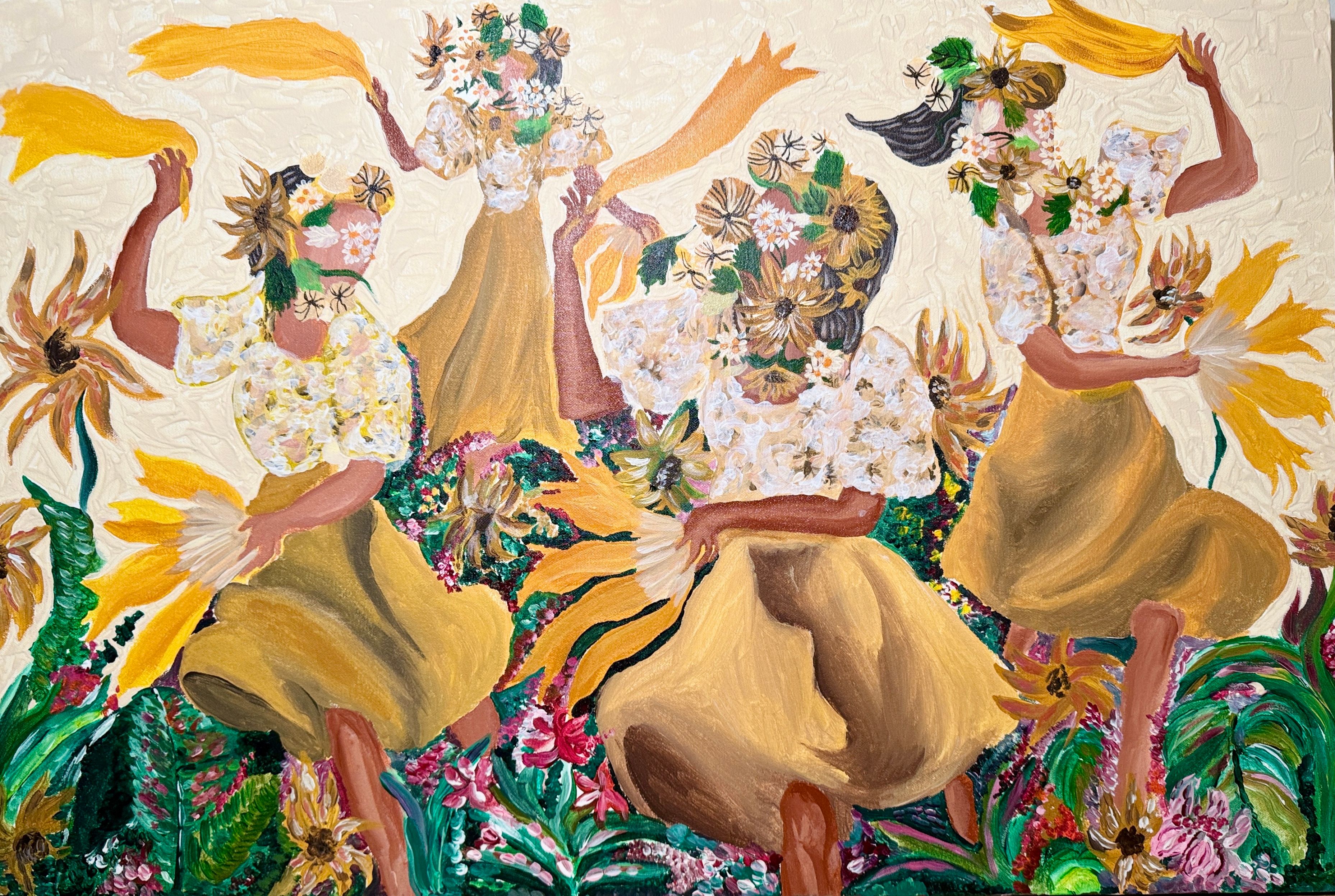
Sunflower Dance
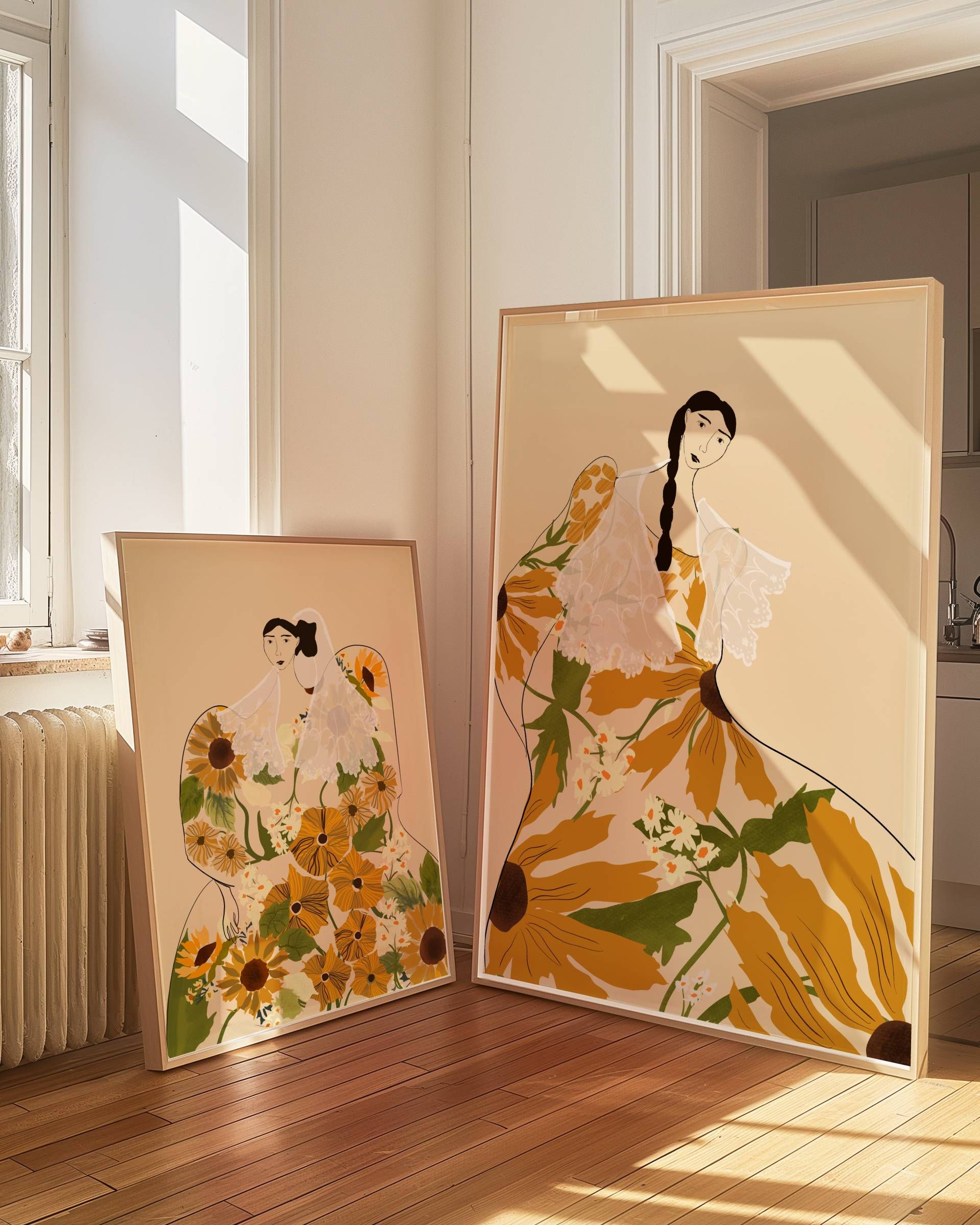
Sunflower Ladies
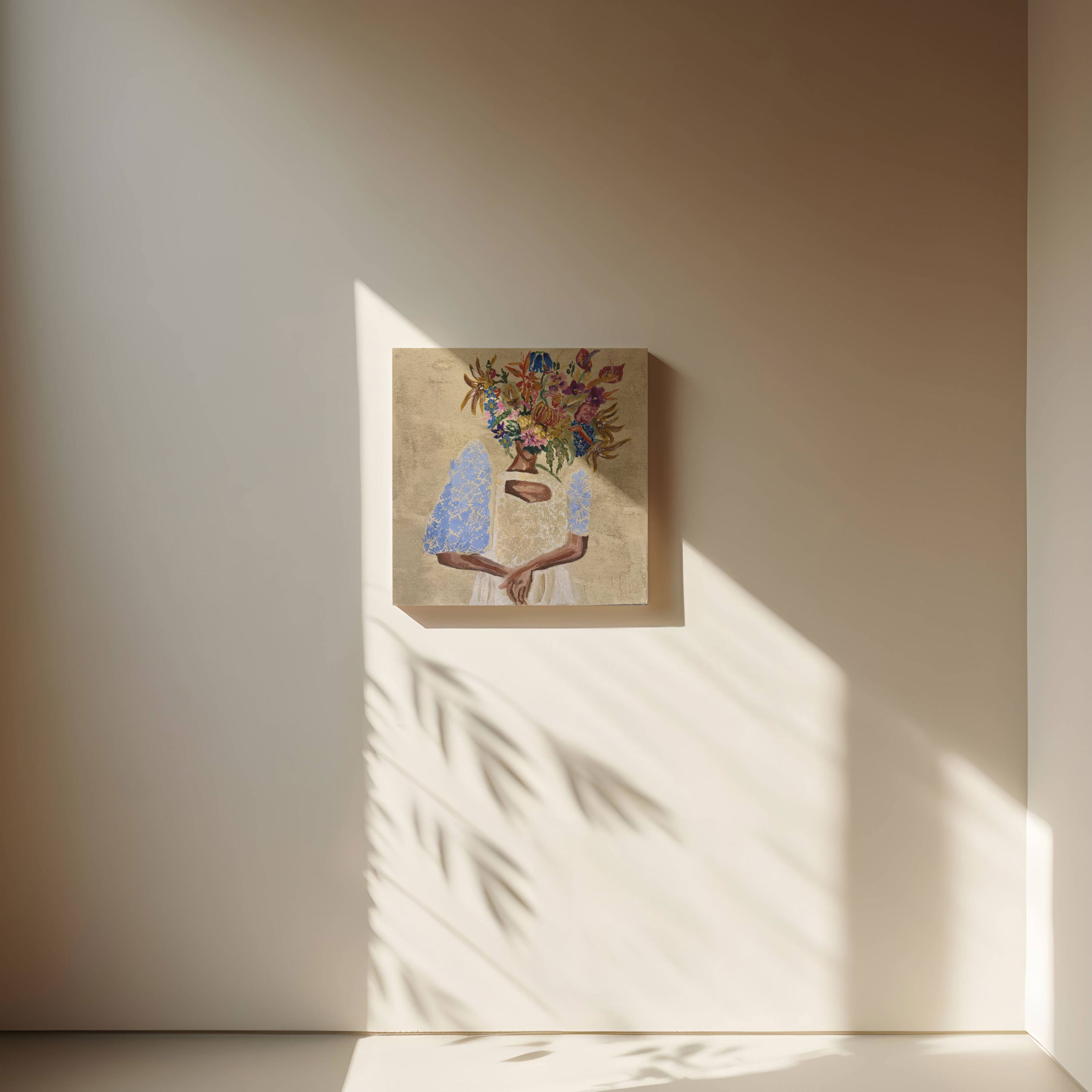
Flora
She places great importance on insights shared by her patrons. With experience in marketing under her belt, she recognizes how crucial customer input can be for growth. She stated, “Client feedback holds significant weight with me. After all, the client is paramount. Honest and even tough criticism means a lot since those who purchase my work truly care about it; therefore, their perspective helps me learn and pushes me to develop artistically.”
In the future, Inha has well-defined objectives. This Philippine artist aims to grow within the domestic market, participate in additional collective exhibitions and contests, and host further individual showcases. On an international scale, she aspires to promote Filipino modern art at more events across Europe, with ambitions of displaying her pieces in renowned venues such as the Guggenheim museum in Bilbao, Spain, or in New York City.
Her go-to museum? The Rijksmuseum in Amsterdam. “I must have visited the Netherlands around four or five times, and every time I find myself ending up there. You know, both Amsterdam and the Netherlands are famous for showcasing many contemporary artists, and I believe my artwork would blend nicely with what they display.”
Although painting is her primary profession, Inha dedicates herself to the business aspects of art, such as selling prints and limited-edition items. Additionally, she produces content for various brands. Besides these activities, she also engages in practice
jiu-jitsu
, a martial art she characterizes as being both physically demanding and mentally stimulating.
When asked about the most important guidance for budding artists, she responded, “Discover your distinct creative voice or unique style. This is what will help you establish your place in the art community.”
“There will always be a certain or distinct reason why individuals connect with your creations. This connection truly stems from their ability to see themselves in who you genuinely are as an artist and understand your core values,” Inha stated.
Photos courtesy of
Inha Arceo

oleh admin | Mar 27, 2025 | art, art history, asia, news, visual arts
The director of Asia’s largest contemporary art fair on finding her voice through art and immersing herself in the artistic community
During my early years, I lived in Mainland China. My mother traveled with me across various regions of China due to her work, which spanned journalism, trading, and publishing. The precise sequence of her career changes eludes me, but I recall moving from one place to another frequently.
Shanghai, Shenzhen
And Nanning, close to the Vietnamese border. When I was about 12 years old, I was dispatched to England. Similar to numerous youngsters during that period, I was among the tide of children who were sent overseas for education.
Luck of the draw
In primary school, we were encouraged to maintain a journal. I recall my teacher mentioning, “There’s no need to begin your diary with ‘
jintian
‘Today, you could begin by illustrating your day; perhaps opt for a more artistic approach.’ When I was around eight or nine years old, I clearly preferred coloring my days rather than merely documenting events.
Finding a forte
Back when I was in mainland China, fields like art were not seen as legitimate subjects; they weren’t taken seriously compared to literature and sciences. Therefore, it wasn’t until I relocated to England that I discovered my passion for art and design. It took getting an A-Level art scholarship for me to realize, “Maybe this could actually be a viable career option.”
Are you looking for insights into the most significant issues and global developments? Find your answers here.
SCMP Knowledge
Our latest platform features handpicked content including explainers, FAQs, analyses, and infographics, all provided by our acclaimed team.
Express permission
When I was around 15 or 16 years old, my teacher first showed me
Alberto Giacometti’s work
His creations aren’t particularly simple to appreciate—they’re not the most visually appealing or vibrant. However, I found myself intrigued by the story behind them and the reasons driving this artist to produce such somber works. The paintings and sculptures exuded a profound sense of weightiness. For me, this represented the duality of art—it’s not merely about beautiful aspects of life. This realization led me to view art as more than decoration; instead, it became for me a form of expression and a historical record.
Master plan
My mom was skeptical about my choice of pursuing a fine arts degree. She felt I should opt for something closely related to art, but with better prospects for employment. As a result, I went ahead with that alternative option.
urban design and planning
At University College London, they offered me an unconditional place to pursue my master’s degree. I convinced my mother once more to let me study art history for my master’s since I had taken architectural history as part of my foundational coursework.
Goodbye, Gagosian
During my master’s degree, I worked in galleries and also had an internship at the Pinta Art Fair. Later, I received an invitation from the Gagosian to join as a registrar. However, I chose to relocate to Dubai with my then boyfriend instead of accepting the position at Gagosian.
Hello, Dubai
The first time I went to Dubai, sometime between 2008 and 2009, the city was just starting to develop its modern art community. I searched for galleries but could find only one or two. After interning at Art Dubai, I started looking into various possibilities until I connected with an individual collector named Rami Farook. He gave me a position within his collection. At that point, I informed my mom, “I’ve secured a role in Dubai.”
Moving on up
I applied to
Art Basel
Since I learned about the plan for a new fair opening in Hong Kong back in 2012, I decided to apply, not really expecting anything to come of it. However, I received a phone call the very next day offering me the position. Before I could fully process everything, three weeks had passed, and I found myself relocating to Hong Kong.
Community spirit
Upon arriving in Hong Kong
When I returned to Dubai, the art scene had expanded significantly since my initial arrival. However, the strong sense of community where everyone supported one another remained unchanged, which made the adjustment smooth. From Rami, I understood the significance of having a supportive community, a lesson I’ve carried with me ever since. Over these past 13 years, I have witnessed and been part of the growth of Hong Kong’s artistic circle alongside it.
In the family
I am a parent to two kids, and engaging with art has been an integral aspect of their upbringing. In contrast, this wasn’t something present during my own childhood. By the time my eldest child arrived in early February, the nearby Art Basel event took place just weeks later in March. Even at merely a month old, he attended his inaugural Art Basel exhibition. This tradition continued as he joined us for each subsequent show.
My young ones exhibit remarkable creativity through painting; they’re free to convey themselves without constraints imposed by notions of correctness or error within artistic expression. For them, making art comes naturally—almost like second nature—an inherent trait woven into who they are from birth.
More Articles from SCMP
China celebrates US YouTuber IShowSpeed, who attracts 10 million viewers during live streams in Beijing and Shanghai.
Investors bet on increased AI-fueled gains in stocks from Hong Kong, Singapore, and the U.S., according to an HSBC poll.
China and Europe share similar concerns regarding unilateralism and have the potential to collaborate effectively on this issue, according to the ESM director.
China-based food vlogger Li Hangze, with 35 million followers, reveals to her audience that she is actually male.
The article initially appeared on the South China Morning Post (www.scmp.com), which is the premier source for news coverage of China and Asia.
Copyright © 2025. South ChinaMorning Post Publishers Ltd. All rights reserved.
oleh admin | Mar 24, 2025 | art, europe, exhibitions, french, news
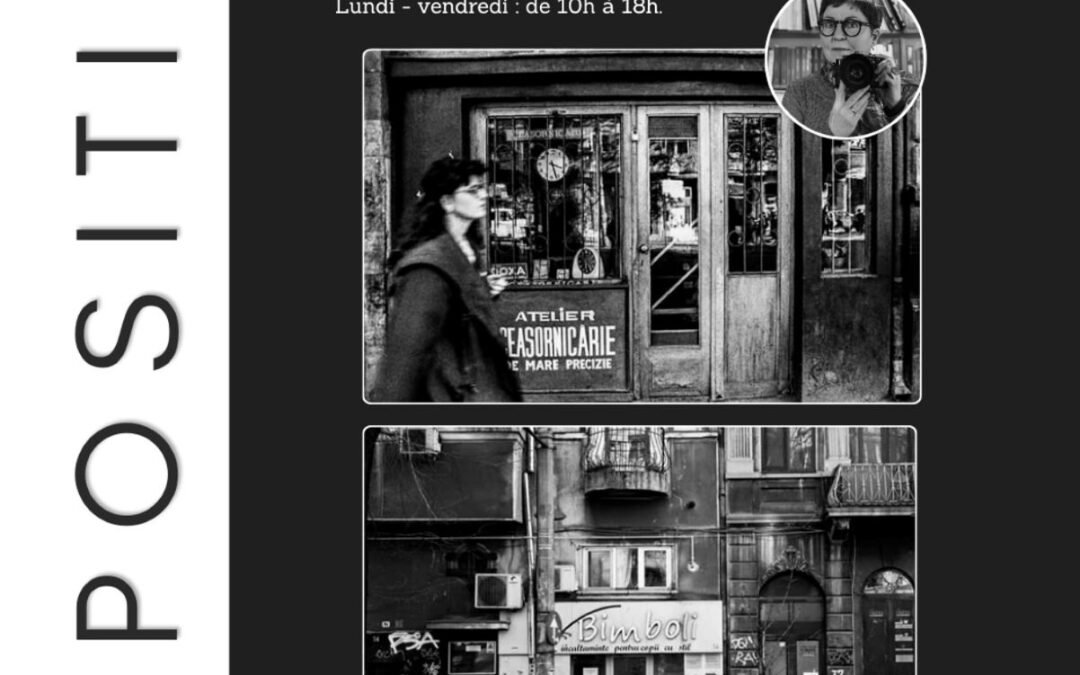
Bucharest – Thirty Years Later
An exhibit featuring photographs by Laure Hinckel is set to debut at the Macadam Gallery in Paris later this week.
The exhibition, presented by the Romanian Cultural Institute (ICR) in Paris, presents “a visual conversation on the evolution of Bucharest across thirty years.”
This features 18 photos captured across different locations in Bucharest during 1994 and 2024, alongside a set of collectibles such as posters, postcards, and notebook pages.
An initial exhibit, showcasing photographs taken in 1994, took place in January 1995 at the French Institute in Bucharest.
Bucharest – Three Decades On
This visual conversation continues and strengthens the cultural connections between France and Romania,” according to a statement about the event.
Laure Hinckel is a French translator who focuses on Romanian literature. Following her studies in journalism at Tours, she worked with various publications in France before moving to Romania as a journalist. Her translation portfolio includes works by Camil Petrescu, Ștefan Agopian, Matei Vişniec, Andrei Pleșu, and Mircea Cărtărescu.
She was honored with the Antoaneta Ralian Translation Award, presented by Radio Romania during the Gaudeamus Book Fair, for her bilingual album.
Bucharest – Three Decades On / Bucarest – Trente Ans Après
.
The album
Bucharest – Thirty Years Later / București – După Treizeci De Ani
will be showcased in April at the
Festival du Livre 2025
in Paris.
The exhibition will be accessible from March 27 to June 1.
(Illustration: ICR)
simona@romania-insider.com

oleh admin | Mar 23, 2025 | art, celebrities, music, musicians, news
Lifehack My ID
,
Jakarta
– Musisi dan penyanyi,
Ariel NOAH
ikut angkat bicara perihal polemik hak cipta yang tengah ramai diperbincangkan. Melalui video berdurasi 7 menit 4 detik yang diunggah ke Instagram pribadinya pada Ahad, 23 Maret 2025, ia menjelaskan duduk perkara yang membuatnya, bersama 28 musisi lain, menggugat Undang-Undang Nomor 28 Tahun 2014 tentang Hak Cipta ke Mahkamah Konstitusi (MK).
Ariel dari NOAH Bicarakan Dua Aturan yang Kontradiktif
Dalam video tersebut, Ariel memaparkan masalah utama yang menjadi pemantik dalam polemik hak cipta, yaitu pertentangan antara Pasal 9 ayat (3) dan Pasal 23 ayat (5) dalam
UU Hak Cipta
Pasal pertama menggarisbawahi bahwa menggunakan karya secara komersial tanpa persetujuan dari pembuatnya merupakan pelanggaran. Di sisi lain, pasal kedua mengizinkan pemanfaatan karya untuk tujuan komersial tanpa perlu mendapatkan persetujuan terlebih dahulu selagi bersedia membayarkan royalti lewat Lembaga Manajemen Kolektif (LMK).
“Ambang batas tersebut tampaknya bertolak belakang,” kata Ariel. Meski demikian, dia menjelaskan bahwa para musisi telah menyadari bahwa kedua hal tersebut pada dasarnya saling mendukung agar hak keekonomian penulis lagu dan artis dapat diteruskan tanpa hambatan. Penyanyi ‘Separuh Aku’ itu pun mengamati bahwa sampai saat ini, penyanyi yang memainkan lagu-lagu karangan orang lain di konser cuma perlu membayarkan royalti kepada LMK.
Namun, muncul wacana
direct licensing
,
yaitu persetujuan langsung dari pembuatnya tanpa melalui LMK. Ariel menganggap bahwa ide tersebut muncul karena kekecewaan para penulis lagu atas performa LMK. “Menurut saya, hal ini berawal dari tidak puasnya para penyusun lirik lagu terhadap operasi LMK.” Ariel menyimpulkan.
direct licensing
Ini terjadi karena ketidakpuasan para penggarap lagu terhadap LMK yang bertanggung jawab untuk memperjuangkan hak ekonomi mereka,” katanya.
Menurut dia, laporan yang tidak jernih, prosedur yang sederhana, dan kebingungan dalam sistim menyebabkan penulis lagu berkeinginan untuk merebut kembali kontrol terhadap hak cipta mereka. Dia menambahkan bahwa hal tersebut bukan hanya dihadapi oleh penulis lagu tetapi juga pihak-pihak lain seperti produsen acara konser,” ungkap Ariel.
Perdebatan tentang
Direct Licensing
Ariel tak menampik bahwa
direct licensing
Adalah hak pemilik asli dari sebuah lagu. Akan tetapi, orang tersebut juga mengindikasikan adanya berbagai ketidaksesuaian dalam sistem ini. “Namun demikian, hal itu bukanlah sesuatu yang sering diterapkan oleh sebagian besar aktor di industri musik Indonesia,” ungkapnya. Sampai saat ini, detail operasional masih kabur: betapa efektifnya metode ini secara nyata, cara pembagiannya atas laba dan rugi, serta proses implementasi pajak royalty yang telah lama ditangani oleh lembaga manajemen lisensi.
Masalah lain timbul untuk para penyanyi asli—yang pertama kali membawa sebuah lagu ke panggung hiburan. Dalam pandangan Ariel, bila persetujuan hanya diajukan ketika lagu tersebut sudah terkenal, pembicaraan tentang tarif bisa tidak merata. “Lebih bagus lagi kalau.permohonan seizin dilakukan sejak awal,” katanya.
direct licensing
“Sudah ditentukan sejak awal kolaborasi antara penyanyi dan penulis lirik, tidak tiba-tiba muncul ketika lagu tersebut sudah terkenal,” katanya.
Dalam sistem yang sedang diterapkan, penyelenggara konser membayarkan royalti kepada para pencipta lagu melalui Lembaga Manajemen Kolektif (LMK). Akan tetapi, kompleksitas masalah bertambah setelah muncul usulan supaya penyanyi secara langsung membayar royalti kepada pencipta lagu dan bukannya pada pihak penyelenggara acara tersebut. “Hal ini sebetulnya telah ditentukan oleh UU Hak Cipta meskipun masih ada perdebatan tentang siapa yang harus menyelesaikan pembayaran,” ungkap Ariel.
Harapan dari Ariel: Negara Wajib Hadir
Ariel dari NOAH mengatakan bahwa para musisi tidak memiliki wewenang untuk menentukan aturan. Oleh karena itu, dia berharap pemerintah dapat segera menyediakan petunjuk jernih tentang hal ini, termasuk melalui partisipasi orang-orang di bidang hiburan. “Saya kira, mereka yang menciptakan regulasi adalah satu-satunya yang boleh menjelaskan apa cara kerjanya,” ungkap artis kelahiran tahun 1981 tersebut.
UUD yang ada akan segera mendapatkan revisi. Meski demikian, Ariel menganjurkan agar selama periode peralihan tersebut, pemerintah harus turun tangan untuk memberikan pengawalan sementara. “Harapannya jangan sampai membuat pemain di industri musik Tanah Air merasa kebingungan, khawatir, apalagi dirugikan hanya karena ingin membawakan lagu karya orang lain,” katanya.
Selanjutnya, Ariel pun mengakui bahwa dirinya belum merasa siap untuk menerapkannya.
direct licensing
Secara personal, “Masih diperlukan LMK bagi saya untuk memperoleh atau menjaga hak-hak saya, pastinya LMK yang terpercaya dan dapat diandalkan,” imbuhnya. Menurut Ariel, hak cipta tidak hanya berkaitan dengan aspek finansial, tetapi juga tentang kemudahan akses.
Di tengah kontroversi tersebut, dia berharap karyanya tetap dapat dinyanyikan banyak orang. “Saya sebagai penulis lagu ingin membuatnya mudah bagi orang lain untuk membawakannya. Ini sejalan dengan tujuan utama saya dalam menulis lagu, yakni untuk hiburan setiap individu yang merasakan kegembiraan melaluinya,” jelasnya.
Musisi-musisi Membawa Kasus ke Mahkamah Konstitusi
Ariel dari NOAH tidak sendirian dalam menyuarakan keprihatinannya ini. Dia merupakan salah satu di antara 29 artis yang mendobrak Undang-Undang HAKI di Mahkamah Konstitusi. Pengajuan judicial review tersebut diajukan tanggal 7 Maret 2025 dengan kode 33/PUU/PAN.MK/AP3/03/2025. Para seniman itu mencolokkan ketidaktentuan hukum seputar lisensi lagu, sistem royalti, serta sanksi pidana terhadap penyanyi yang mempersembahkan lagu-lagu hasil ciptaan pihak lain.
Daftar musisi yang turut mengajukan gugatan di antaranya adalah Armand Maulana, Vina Panduwinata, Titi DJ, Rossa, Raisa, Judika, sampai dengan Ruth Sahanaya. Sebagian besar musisi ini merupakan anggota Asosiasi Vibarsi Suara Indonesia (VISI). Mereka merasa beberapa pasal dalam Undang-Undang Hak Cipta menciptakan keraguan tentang proses pengambilan lisensi, sistem royalti, dan sanksi pidana. Musisi-musisi tersebut meminta penjelasan lebih lanjut tentang cara mendapatkan izin: apakah mereka harus berurusan secara langsung dengan pembuat lagu atau cukup melalui Layanan Managemen Kekayaan Intelektual (LMK). Selain itu, mereka juga khawatir akan adanya bentrokan kepentingan saat memberikan izin, hal ini dapat dipengaruhi oleh subyektifitas sang kreator.
INSTAGRAM | MAHKAMAH KONSTITUSI